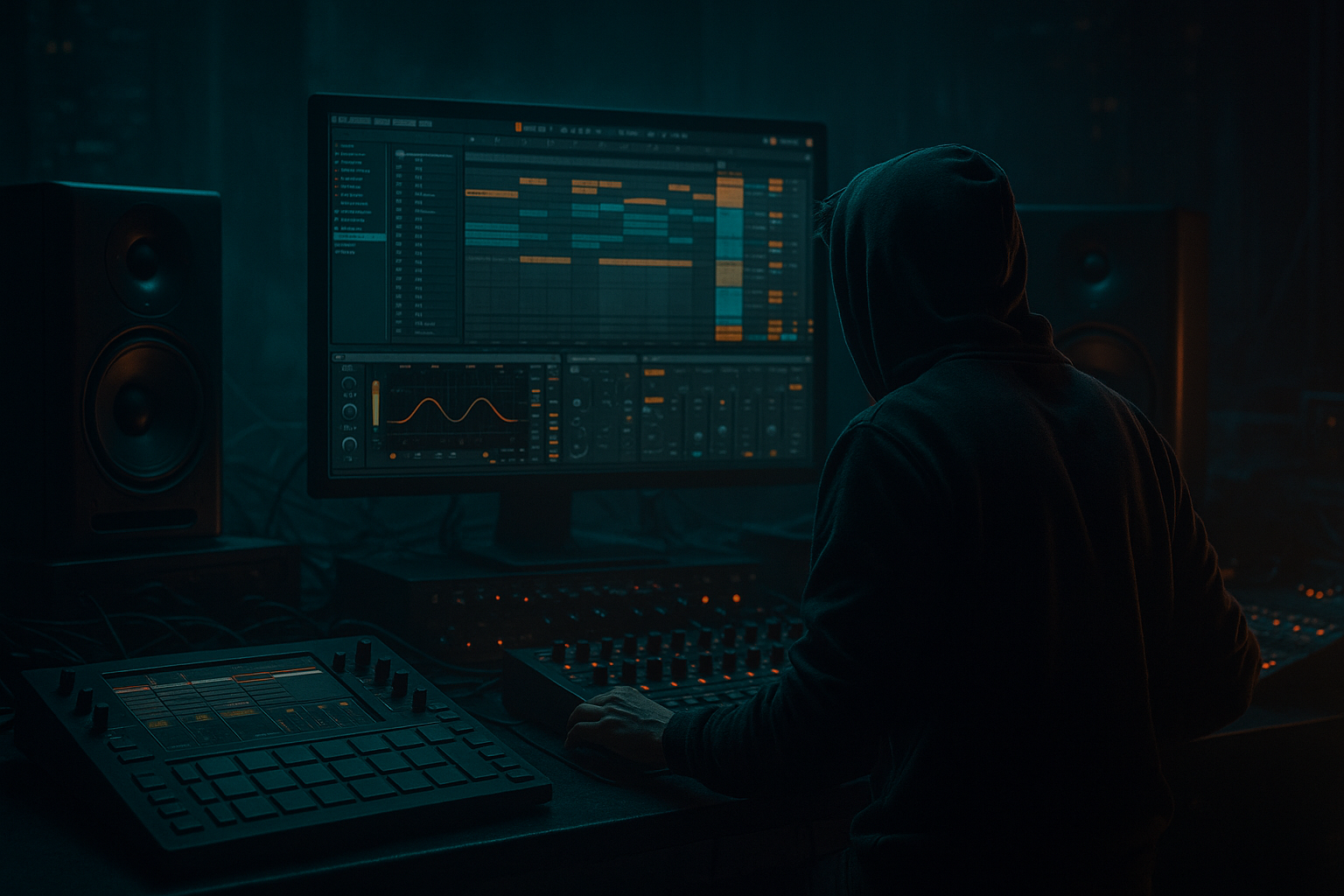
Main tutorial
Lesson Overview
This lesson is about building a heavy 808 tail pitch blueprint in Ableton Live 12 so your sub hits with that oldskool jungle / early DnB impact: short, punchy drum-and-bass weight at the front, then a controlled falling tail that makes the bass feel bigger without swallowing the kick and breaks.
In DnB, the bassline often needs to do two jobs at once:
- hit hard on the drop
- leave space for fast drums and break edits
- It gives your bassline a strong front edge and a musical tail
- It helps you create call-and-response with breaks and fills
- It adds movement and tension without needing a complicated synth patch
- It works well when the arrangement needs a heavy drop, a switch-up, or a DJ-friendly breakdown
- starts with a solid, mono sub hit
- drops in pitch over a short tail for that 808 dive
- sits under breakbeats and jungle-style drums
- can be used as a single note impact, a bass stab, or a repeatable bassline phrase
- sounds controlled enough for a real mix, not just a loud demo
- a one-note drop bass under a Reece or break loop
- a call-and-response bass hit every 2 bars
- a phrase that answers the snare in a classic oldskool DnB arrangement
- a bass punctuation before a switch-up or drum fill
- Making the pitch drop too extreme
- Letting the tail ring too long
- Forgetting to tune the note
- Using stereo width in the sub
- Over-saturating too early
- Writing too many bass notes
- Automate pitch envelope amount on the drop
- Use a tiny bit of glide only if the style needs it
- Pair the 808 tail with a break fill
- Layer atmosphere behind it, not inside it
- Use Return tracks for space
- Resample the best version
- Use small variations every 2 or 4 bars
- Version 1 should feel clean
- Version 2 should feel heaviest
- Version 3 should feel most aggressive
- keep the sub mono
- tune the 808 to the track
- use a short downward pitch envelope
- leave space for the breaks and snare
- add distortion and texture only after the core movement works
A pitched 808 tail is perfect for this because you can create a quick sub impact, then a descending tail that gives motion, menace, and that classic rave/warehouse feel. It’s especially useful in jungle, rollers, and darker DnB where the bassline should feel like it’s moving under the track rather than just playing notes.
Why this matters:
In this lesson, you’ll build a simple but effective Ableton workflow using stock devices to shape an 808 sample into a weighty sub weapon that fits authentic DnB structure. 🔥
What You Will Build
By the end, you’ll have a bass sound that:
Musically, this could work as:
Think:
tight drum loop + sub hit + falling tail + space for atmosphere
Step-by-Step Walkthrough
1. Start with a clean MIDI bass lane
Create a new MIDI track and load Simpler. Drag in a clean 808-style one-shot or short sub sample. If you already have an 808, choose one with a strong low end and not too much click.
In Simpler:
- Set Mode to Classic
- Turn Warp off if available on the sample
- Set Trigger so each note plays the sample fully
- Keep the sample starting at the transient
For beginner workflow, keep it simple: one sampler, one sound, one lane.
Why this works in DnB: a clean starting sample gives you a solid sub foundation. DnB low end needs to be controlled, and starting from a simple sample makes it easier to shape a tail that still cuts through fast drums.
2. Shape the initial punch before the pitch drop
Open Simpler’s Filter and gently trim the top end if needed. You want the bass to feel deep, not buzzy.
Try these starting points:
- Low-pass filter cutoff: around 120–250 Hz if the sample has too much click
- Filter resonance: low, around 0–15%
- Volume envelope attack: 0–5 ms
- Release: short to medium, around 100–250 ms
If the sample feels too long, shorten the release. If it disappears too fast, lengthen it a bit.
Then add Saturator after Simpler:
- Drive: 2–6 dB
- Turn on Soft Clip if needed
- Keep the output from clipping
This gives the bass more density on smaller speakers and helps it sit with the drums.
3. Create the tail pitch envelope
This is the core of the blueprint.
In Simpler, use the Pitch Envelope to make the note start slightly higher and fall down quickly. That creates the classic “thump then dive” feeling.
Good beginner starting settings:
- Pitch Envelope Amount: around +7 to +12 semitones
- Pitch Envelope Attack: 0 ms
- Pitch Envelope Decay: 80–180 ms
The idea is simple:
- the note begins with a punch
- then it slides down into the sub range
- that descending movement gives the tail impact and attitude
Keep it subtle at first. Too much pitch range can make it sound cartoonish or out of tune with the track.
A useful DnB note: for oldskool/jungle-style bass, the pitch movement often feels most powerful when it’s short and aggressive, not overly long. You want movement, not a dramatic EDM dive.
4. Lock the sub into mono and keep the low end centered
DnB bass should usually be mono in the sub region. That makes the kick and bass relationship more stable and gives you cleaner club translation.
Add an Audio Effect Rack or simply use stock devices on the track:
- Utility: set Width to 0% if you want the whole bass completely mono
- Or use Utility only on a low bass layer if you later add stereo texture on top
- Keep the sub centered and focused
If you want to add movement later, do it above the sub range, not inside the sub itself.
Practical rule:
- Sub = mono
- texture = optional stereo later
This matters in DnB because fast drums, rewinds, and break layers can make the low end messy fast. Mono sub keeps the groove solid.
5. Program a short bassline phrase, not just one note
Open the MIDI clip and start with a simple phrase. Beginner-friendly DnB bass often works best with short, spaced notes rather than busy melodic runs.
Try this pattern approach:
- One note on the downbeat
- A second note answer 1/2 bar later
- A longer gap to let the breaks breathe
- Repeat with variation every 2 or 4 bars
Example arrangement feel:
- Bar 1: bass hit on beat 1
- Bar 2: bass hit on the “and” of 2
- Bar 3: no bass, let drums speak
- Bar 4: bass hit with a slightly different note or octave
In oldskool DnB, this kind of phrasing works because the bassline behaves like a rhythmic instrument, not a constant drone. It leaves room for snares, ghost notes, and break edits to stay alive.
6. Tune the bass to the track key
Very important: an 808 tail only feels massive if the note is in tune with the track.
In Ableton:
- Use the Tuner device if needed
- Find the root note of your track
- Place your 808 notes around the root, fifth, or octave
For a beginner, start with:
- root note
- octave below or above
- occasional fifth for variation
If the bass feels weak, it may not be a level problem — it may be a tuning problem. A slightly off 808 tail can make the whole drop feel muddy instead of heavy.
7. Control the envelope so it punches through breakbeats
Add a Compressor after Saturator if the sample needs tighter control. You’re not trying to squash it flat — just keep the front of the note consistent.
Starting point:
- Ratio: 2:1 to 4:1
- Attack: 10–30 ms
- Release: 50–120 ms
- Adjust threshold so the compressor only grabs the loudest part
If you want more snap, use transient shaping by envelope rather than overcompressing.
You can also automate:
- Simpler Volume Envelope Decay
- Simpler Pitch Envelope Amount
- Saturator Drive for drops or fills
Why this works in DnB: breakbeats are fast and detailed, so the bass has to be disciplined. A controlled envelope helps the 808 cut through without turning the low end into one long note smear.
8. Add a second layer only if the sub is working
Once the sub tail feels good, you can make it heavier by duplicating the track or layering carefully.
A simple beginner layer:
- Keep one track as the pure mono sub
- Duplicate it and add Erosion, Overdrive, or Saturator for texture
- High-pass the texture layer so it doesn’t fight the sub
Good texture settings:
- High-pass filter: around 120–200 Hz
- Saturator drive: 3–8 dB
- Erosion Amount: subtle, just enough to add grain
This is useful for darker DnB because the sub stays clean while the top layer adds a little grit and urgency.
9. Place the bass in a full drum context
Loop the bass with a classic DnB drum foundation:
- kick on the low-end anchor
- snare on 2 and 4, or half-time feel depending on the style
- chopped break or ghost notes around the snare
- bass hits leaving gaps for the break accents
Try this arrangement idea:
- Intro: drums only, tease bass with filtered hits
- Drop 1: full bass tail on the first bar
- Bar 5–8: repeat the phrase with one note changed
- Switch-up: remove the bass for half a bar, then bring back a stronger tail pitch on the return
In jungle and oldskool DnB, bass impact often lands harder because it is phrased around the drums, not over them. Let the breaks breathe.
10. Do a quick mix check and adjust the low-end balance
Use Spectrum or Tuner if helpful, and listen in context.
Check:
- Is the bass too loud compared to the kick?
- Is the pitch tail too long?
- Does the low end blur when the drums come in?
- Does the bass still feel solid in mono?
Helpful checks in Ableton:
- Put Utility on the master and test mono
- Compare with the track at lower volume
- Reduce bass release if it masks the kick
- Lower Saturator drive if the bass is getting harsh
A good beginner target: the bass should feel huge, but you should still hear the snare crack and break detail clearly.
Common Mistakes
- Fix: reduce the pitch envelope range to around +7 to +12 semitones
- Too much range can sound sloppy and lose DnB weight
- Fix: shorten the Simpler release or decay
- DnB needs space for rapid drums and bass syncopation
- Fix: match the 808 to the key of the track
- Untuned sub feels weak, even if it is loud
- Fix: keep the bass mono below the low end
- Use width only for higher texture layers
- Fix: add distortion after the envelope is working
- If the pitch tail is bad, saturation will only make it messier
- Fix: simplify the phrase
- In DnB, space and timing often hit harder than busy note count
Pro Tips for Darker / Heavier DnB
- Make the first hit slightly more aggressive, then reduce it later in the phrase for contrast
- For older jungle vibes, keep it mostly tight and percussive
- For darker rollers, a touch of glide between notes can add menace
- Let the bass hit answer a snare roll or break edit
- This creates a classic call-and-response feel
- Add a vinyl noise bed, dark pad, or reverb wash in the arrangement
- Keep the bass dry and focused
- Put reverb or delay on a return, not directly on the sub
- Filter the return heavily so the low end stays clean
- Once the 808 tail feels right, resample it to audio and chop it like a drum
- This is very useful for jungle-style arrangement and gives you more control
- Change one note, shorten one tail, or add a muted hit
- That keeps the bassline alive without overcomplicating it
Mini Practice Exercise
Spend 10–20 minutes building a two-bar DnB bass phrase using this technique:
1. Load an 808-style sample into Simpler
2. Set a pitch envelope that falls quickly over 80–180 ms
3. Write a two-bar MIDI pattern with only 3–5 notes
4. Tune the notes to the key of your track
5. Add Saturator and a little Utility for mono control
6. Loop it with a drum break or simple DnB drum pattern
7. Test three versions:
- short tail
- medium tail
- slightly more distorted tail
Your goal:
Listen back and decide which version cuts best with the drums. Make notes on what changed and why.
Recap
The key idea is simple: a great DnB 808 tail is not just a bass sound, it’s a rhythmic impact tool.
Remember:
If you get the tail pitch right, your bassline instantly feels more like real Drum & Bass: heavy, controlled, and ready to hit hard in a jungle or oldskool-inspired drop.

