Main tutorial
Lesson Overview
A switch-up layer is one of the smartest ways to refresh an Amen-based DnB section without blowing up your CPU or your arrangement. In this lesson, you’ll build a lightweight “Amen Science” edit layer in Ableton Live 12: a chopped, mutated break variation that can appear for 1–4 bars before or after a drop, or under a bass call-and-response, to create tension and movement without replacing your main drum groove.
This matters because in Drum & Bass, especially in rollers, jungle, darker liquid, and neuro-adjacent tracks, the listener needs constant forward motion. You don’t always need a brand-new drum pattern; often you just need a micro-shift in texture, accent placement, or groove energy. A switch-up layer gives you that “something changed” moment while keeping the main drum identity intact. That’s exactly what makes edits feel expensive and intentional.
Why this technique works in DnB:
- It keeps the main break recognizable, which preserves momentum.
- It creates contrast for drop design, DJ-friendly phrasing, and repeat listens.
- It uses tiny edits, resampling, and stock devices instead of heavy layering, which saves CPU and keeps the mix clean.
- It helps you shape tension around bass statements, especially when your sub or reese needs space.
- sit quietly behind your main drum loop,
- jump forward for 1-bar or 2-bar edits,
- add ghost-note energy and break variation,
- support darker bass music phrasing without cluttering the low end,
- and remain light on CPU because it uses simplified audio clips, envelope shaping, and stock devices only.
- tighter transient emphasis on the snare and hat fragments,
- selective stutters and reverses for edit flair,
- short, controlled atmosphere tails,
- and optional saturation/compression to make it feel “processed” without becoming mushy.
- Using too much low-end in the switch-up
- Over-chopping the Amen until it loses pulse
- Stacking too many effects
- Making the switch-up louder than the main drum loop
- Ignoring groove alignment
- Leaving stereo width too wide in the low mids
- Forgetting the role of the bassline
- Use a short reverse snare into the switch-up
- Layer light distortion only on the midrange hit
- Automate a tiny filter movement
- Duplicate the switch-up, then mute alternate ghost notes
- Use a ghosted reese or bass stab under the edit
- Lean into roller tension
- Keep transient shaping intentional
- Think like a DJ
- one for a jungle-style switch-up with more break movement
- one for a darker roller with fewer notes and more tension
- Build switch-up layers from small Amen slices, not full re-edits.
- Keep the low end out of the layer and protect your bass lane.
- Use stock Ableton devices like Simpler, EQ Eight, Drum Buss, Saturator, Utility, Auto Filter, and resampling.
- Place edits at phrase boundaries so they feel musical and DJ-friendly.
- Commit to audio when the idea works to save CPU and lock the groove.
- In DnB, the best edit layers create tension, contrast, and momentum without stealing the drop.
We’re going to use Ableton Live 12 stock tools to make a minimal-load switch-up layer from an Amen break, then arrange it like a proper DnB edit: punchy, controlled, and easy to drop into a full track. 🔥
What You Will Build
By the end of this lesson, you’ll have a compact switch-up layer built from the Amen that can:
Musically, the result is a gritty Amen variation with:
Think of it as a switch-up lane inside your drum arrangement: the main loop keeps rolling, and this layer supplies the edit drama.
Step-by-Step Walkthrough
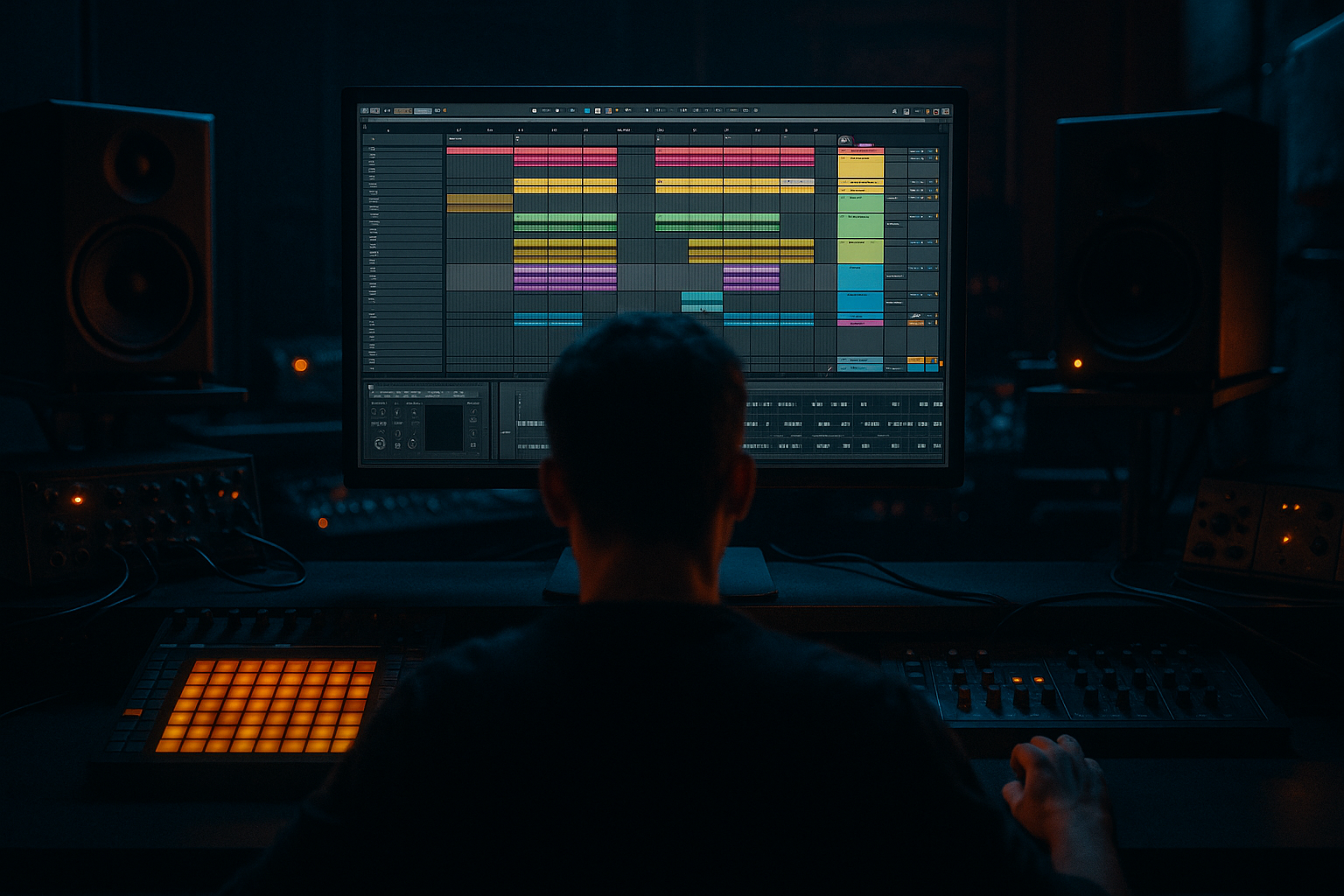
1. Set up a dedicated switch-up group
In Ableton Live 12, create a new audio track called `Amen Switch-Up`. If you already have your main Amen loop, duplicate the track first so you can compare before committing to edits.
Keep this layer separate from your main drum bus. The point is not to redesign the full break; it’s to create a controlled alternate version that can be automated in and out.
Practical workflow:
- Color-code it differently from your main break.
- Warp the clip to match your project tempo.
- If needed, consolidate the section you want to edit into a 1-bar or 2-bar clip so the CPU stays light and your edits are faster.
Best use case: a 174 BPM roller where your main break runs consistently, and this switch-up layer appears every 8 or 16 bars to reset the ear.
2. Build the edit from a small, musical slice of the Amen
Don’t start by chopping everything. Start with a focused slice: one strong snare hit, one kick, one hat pickup, and maybe a little ghost tail.
In the Clip View:
- Slice out a 1-bar or 2-bar region from your Amen.
- Use Warp markers only where needed to keep the groove tight.
- Pull small audio slices into a new clip if you want a cleaner edit lane.
A strong DnB choice here is to preserve the snare’s identity. The Amen snare is your anchor. You can mangle the hats and small percussion more aggressively, but keep the backbeat readable.
Suggested edit ingredients:
- one main snare hit
- one ghost snare before or after it
- one kick or kick tail
- one hat fragment
- one fill accent or reverse tail
This gives you enough motion without forcing a heavy sample stack.
3. Use Simpler or Sampler only if you need extra control
If you want the switch-up to be more flexible, drag your chosen Amen slices into Simpler on a new MIDI track. This is especially useful if you want to trigger variations with MIDI notes rather than constantly editing audio.
For a lightweight setup:
- Use Simpler in Classic mode for a slice-based break edit.
- Set Voices low if you’re layering multiple hits.
- Keep the sample short and avoid unnecessary time-stretching.
Good parameter starting points:
- Filter cutoff: around 8–14 kHz for hats, lower for grit sections
- Envelope decay: 80–180 ms for clipped edits
- Glide/portamento: off unless you want a very obvious slide effect
If you prefer pure audio edits, that’s fine too. For minimal CPU, audio clips with careful slicing often beat multiple samplers and layered processors. The key is to keep the source narrow and intentional.
4. Shape the switch-up with transient control, not heavy processing
Put a Drum Buss or Saturator on the switch-up layer, not on the entire drum group, unless you specifically want group glue. The aim is to make the layer punchy and tactile while leaving the main break room to breathe.
Try this chain:
- EQ Eight
- Drum Buss
- Saturator
- Utility
Suggested starting settings:
- EQ Eight: high-pass around 120–180 Hz to protect the sub lane
- Drum Buss Drive: 5–20%
- Drum Buss Transients: +5 to +20 for extra crack
- Saturator: Soft Clip on, Drive 1–4 dB
- Utility Width: 0–60% depending on how mono-safe you want the edit
Why this works in DnB:
The listener feels the edit as a punchy midrange drum event, not as extra low-end junk. That keeps your bassline clear, especially when a sub or reese is hitting underneath.
If the break loses snap, reduce Drive before you add more EQ. In DnB, too much distortion on the Amen can flatten the groove fast.
5. Create a call-and-response edit pattern
The best switch-ups in DnB often answer the bass, rather than just existing beside it. Program your edit layer to answer a bass phrase every 2 bars or 4 bars.
Arrangement example:
- Bars 1–2: main Amen and bass groove
- Bar 3: bass drops out for half a bar
- Bar 4: switch-up layer answers with a snare-stutter and reverse hat
- Next phrase: full drop resumes
In practice, you can automate the clip start position, gain, or device on/off to create these phrases. A very effective option is to have the switch-up layer only appear on the last half of bar 4 before the next phrase.
Good musical contexts:
- Jungle rollers: use the edit as a mini reload cue
- Neuro-influenced DnB: use it to clear space before a heavy bass hit
- Dark halftime/DnB crossover: use a single Amen switch-up bar as the “lift” into a bigger impact
This gives your track real arrangement logic instead of random drum decoration.
6. Add movement with automation, but keep it minimal
Since this is a low-CPU workflow, use automation on a few high-impact parameters rather than stacking more devices.
Smart automation targets:
- EQ Eight filter cutoff
- Drum Buss Drive
- Auto Filter cutoff
- Utility gain
- Reverb Dry/Wet for tiny throws only
Concrete automation ideas:
- Automate Auto Filter cutoff from 1.2 kHz down to 300 Hz over 1 bar for a filtered-down switch-up.
- Automate Utility gain down by 3–6 dB when the main bass returns, so the edit doesn’t fight the drop.
- Automate Reverb dry/wet to 5–12% only on the last snare or hat fragment for a short “tail” into the next section.
Keep the automation curves sharp and deliberate. In DnB edits, subtle can be powerful, but it still needs edge.
7. Use resampling to freeze the idea and reduce CPU
Once the switch-up feels good, resample it. Create a new audio track called `Amen Resample` and set its input to Resampling or to the switch-up track output.
Record 4–8 bars of your edit while the arrangement plays. Then:
- Consolidate the best bar
- Trim silence
- Warp only if needed
- Replace the live chain with the recorded audio if the sound is locked
This is one of the best CPU-saving steps in Ableton Live 12. Instead of running multiple clips, devices, and automation lanes every time, you commit the sound into a short audio file.
Extra benefit:
Resampling often creates a more cohesive edit because the micro-impacts, tails, and device saturation get printed together. That can make the switch-up feel more “record-like” and less sterile.
8. Place the switch-up where it helps arrangement, not everywhere
Don’t overuse the layer. In DnB, too many edits erase impact. Use it with intention:
- before a drop for anticipation
- at the end of an 8-bar phrase for a mini-reset
- between bass call-and-response sections
- in a breakdown to hint at the groove before the drop returns
Strong arrangement strategy:
- Intro: keep the switch-up out, or use a filtered ghost version only
- Drop A: main break stays dominant
- Bar 8 or 16: one-bar switch-up for variation
- Drop B: bigger switch-up with extra hat reversal or snare drag
- Outro: strip it back to the main loop again
This keeps the track DJ-friendly while still sounding arranged and intentional.
9. Finish the layer with mix discipline
Put your switch-up layer in mono or near-mono if it contains critical midrange hits. A good rule is to keep the low end mono and the edit layer mostly center-focused unless you’re using stereo atmosphere intentionally.
Use these checks:
- Utility: Width 0–80% depending on the sound
- EQ Eight: remove unnecessary lows below 120–180 Hz
- Mono check: make sure the snare doesn’t vanish
- Level target: the switch-up should feel exciting, not louder than the drop itself
If the layer feels too sharp, tame the 3–6 kHz zone with a gentle EQ dip. If it feels too dull, bring back a little 8–10 kHz hat texture or add a very short reverb throw.
The goal is a layered edit that supports the groove, not a separate drum song.
Common Mistakes
- Fix: high-pass the layer around 120–180 Hz and leave sub duties to the bass track.
- Fix: keep at least one readable backbeat anchor, usually the snare.
- Fix: use one or two strong devices, then resample. Minimal CPU means committing early.
- Fix: automate it as an accent, not a second drop. It should enhance contrast.
- Fix: line edits up with bar endings, snare hits, and bass phrase changes. DnB edits live or die by timing.
- Fix: keep the important hits centered. Wide atmosphere is fine; wide kick/snare energy usually isn’t.
- Fix: if the bass is active, make the switch-up simpler. If the bass drops out, the break can get more expressive.
Pro Tips for Darker / Heavier DnB
- A 100–250 ms reverse tail can create a nasty pull into the next bar.
- Put Saturator or Drum Buss on the switch-up, not the whole drum bus, for controlled grit.
- A 200 Hz to 2.5 kHz sweep over one bar can make a loop feel alive without adding new samples.
- This creates A/B edit variations with almost no extra load.
- If the arrangement allows it, a very short low-mid bass stab can make the edit feel heavier, but keep it separate from the sub.
- For darker rollers, use fewer fills and more micro-variation. A subtle snare drag or hat skip often hits harder than a full jungle flurry.
- Drum Buss Transients up for impact, down if the edit gets too spiky. DnB needs punch, but not brittle ears.
- If you’d want to mix over it, the switch-up is probably useful. If it stops the groove dead, it may be too busy.
Mini Practice Exercise
Spend 10–20 minutes building a switch-up layer for an 8-bar Amen-driven DnB loop.
1. Choose one 1-bar Amen phrase from your project.
2. Duplicate it and make a second version with:
- one snare ghost note,
- one reversed hat,
- and one short fill at the end of the bar.
3. Add EQ Eight and high-pass at 150 Hz.
4. Add Drum Buss with Drive around 10% and Transients around +10.
5. Automate the track volume or Utility gain so the layer appears only in bars 4 and 8.
6. Resample 4 bars of the result.
7. Replace the live version with the resampled audio and compare CPU load and groove.
Challenge: make two versions:
Listen back and decide which version supports the bass better. That judgment is the real skill.

