Main tutorial
Lesson Overview
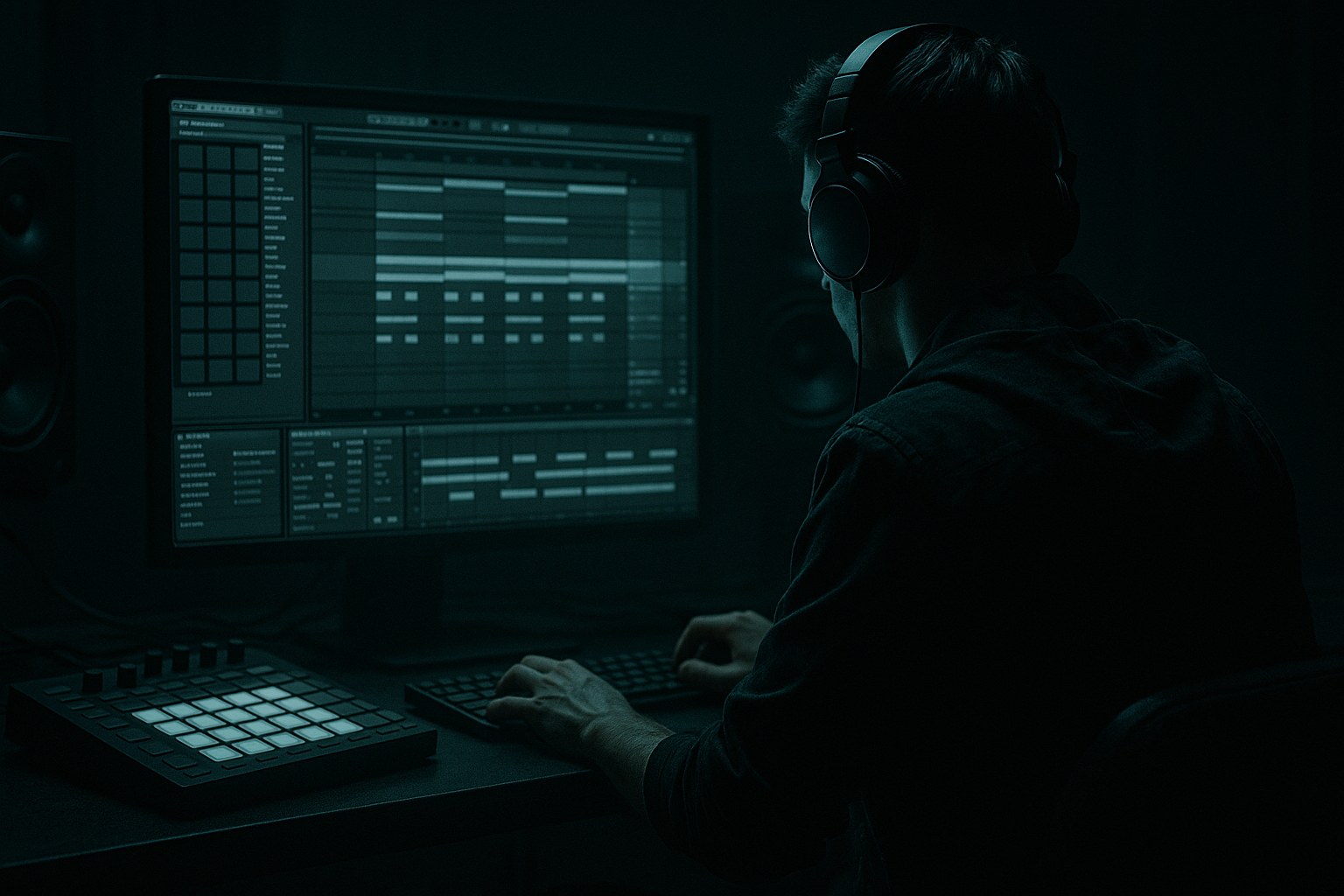
A warehouse intro in Drum & Bass is the opening section that sets the mood before the drop, usually with space for DJ mixing, tension-building atmospheres, and enough rhythmic clarity to keep the crowd locked in. In a club context, this intro has to do two jobs at once: it must feel dark, heavy, and cinematic, while also being clean and structured enough that a DJ can beatmatch and blend it into the previous tune.
In Ableton Live 12, this is especially useful because you can build the intro from simple stock devices, organize it tightly in Arrangement View, and shape the energy with automation instead of overloading the mix. For beginners, this lesson matters because intro design teaches you the core language of DnB arrangement: phrasing, headroom, tension/release, and how to introduce drums and bass without rushing the drop.
We’re going to build a warehouse-style intro for darker DnB, jungle, rollers, or neuro-leaning material — the kind of intro that feels like a cold concrete room, with DJ-friendly 16-bar phrasing and enough movement to stay interesting without stealing focus from the drop.
What You Will Build
You will create a 16-bar warehouse intro in Ableton Live 12 with:
- A dark atmospheric bed made from stock devices
- A DJ-friendly drum entrance with clean phrasing
- Low-end hints of the bassline without revealing the full drop
- Subtle risers, impacts, and transitions
- Controlled energy progression that leads naturally into the drop
- Enough space for a DJ to mix in the tune smoothly
- Bars 1–4: atmosphere only
- Bars 5–8: add light percussion or a break texture
- Bars 9–12: introduce kick/snare pulse or chopped drum loop
- Bars 13–16: add bass tease and transition energy
- Oscillator: saw or triangle-based tone
- Filter: low-pass around 300–800 Hz
- Resonance: low, around 10–20%
- Attack: 100–300 ms
- Release: 1.5–4 seconds
- EQ Eight: cut below 120 Hz, gently reduce harshness around 2.5–5 kHz if needed
- Reverb: decay 2.5–5 seconds, dry/wet 15–30%
- Echo: low feedback, low-pass the repeats so they sit behind the drums
- A filtered breakbeat loop with the top end softened
- Kick on 1, snare on 2 or 3 depending on style
- Light ghost hats or shuffles for movement
- Warp on
- Use a low-pass filter in Simpler or Auto Filter
- Cut highs so the break feels distant
- Keep transients controlled so it doesn’t compete with the drop drums
- Keep the kick dry and punchy
- Use a snare with a short tail for structure
- Add a closed hat every 1/8 or 1/16 only if the groove needs movement
- Drive: 5–15%
- Transients: slightly up for snap
- Boom: minimal or off for the intro
- Damp: adjust to soften brightness if needed
- A sine or triangle sub layer
- A low-pass filter around 120–250 Hz
- Slow amplitude envelope with short notes or spaced hits
- Use 1-2 bass notes every 2 bars
- Keep them low and simple
- Automate the filter opening slightly across the intro
- Add Saturator with Drive around 2–6 dB for grit
- Auto Filter cutoff opening over 8 or 16 bars
- Reverb dry/wet decreasing as drums come in
- Echo feedback rising briefly before a transition
- Drum group volume creeping up by 1–2 dB for section lift
- Noise or atmosphere layer getting slightly louder, then pulling back before the drop
- Bars 1–4: atmosphere only, more filtered
- Bars 5–8: open slightly and add transient detail
- Bars 9–12: add drums and let the filter move more
- Bars 13–16: reduce space, then add a final rise or fill
- Reverse cymbal or noise swell in Simpler
- Short riser made with white noise and Auto Filter
- Impact hit with a long reverb tail
- Snare fill using a duplicated snare with delay and reverb
- Put a crash or impact on bar 15 or 16
- Automate a high-pass filter opening on the effect
- Keep the low end clear so the drop can arrive hard
- Keep the Master fader at 0 dB
- Leave headroom on your track; aim for peaks around -6 dB on the master during the intro
- Use EQ Eight on the atmosphere and bass to prevent low-end clash
- Keep sub frequencies centered and mono
- Use Spectrum to see if the intro is becoming too dense in the low mids
- Group drums, bass, atmosphere, and effects
- Name clips clearly: “Intro Atmos 1,” “Break Light,” “Bass Tease”
- Consolidate clips if needed for neat editing
- Duplicate the 16-bar intro once you like the shape, then refine
- Too many layers too early
- Bass is too exposed before the drop
- Breaks are too loud or too bright
- No clear phrase changes
- Intro has no headroom
- Transition feels random
- Atmosphere masks the drums
- Use subtle distortion on the drum bus
- Keep the sub mono, always
- Resample your own atmosphere
- Add call-and-response even in the intro
- Use reverb as depth, not width
- Let one sound feel “far away”
Musically, think of a cold, urban intro: distant pad noise, filtered breakbeat fragments, a dry kick/snare pattern, rumbling bass tease, and a final tension rise before the drop lands. This is the kind of intro that works in a warehouse set where the DJ needs predictable phrasing and the crowd needs a sense of atmosphere before the impact.
Step-by-Step Walkthrough
1. Set up your intro section in 16-bar blocks
Open Arrangement View and create a clear intro zone from bars 1–16. For beginner-friendly DJ structure, keep the intro in clean 4-bar and 8-bar phrases so it feels easy to mix. A reliable warehouse intro format is:
Why this works in DnB: DJs rely on predictable phrasing to mix records cleanly. Four- and eight-bar changes are standard in drum & bass because they give enough time for blending without making the arrangement feel static.
If you are building a longer track, this intro can sit before the first drop and also work as an outro if needed. That flexibility is a very “DJ record” approach.
2. Build a dark atmosphere with stock Ableton devices
Create a new MIDI track and load Wavetable, Drift, or Simpler if you have a suitable sampled ambience. If you’re using Wavetable, start with a basic sustained patch and keep it simple.
Useful starting points:
For a warehouse feel, add an Audio Effect Rack with these stock devices:
You can also layer a noise bed by using Simpler with a vinyl crackle, field recording, or a short industrial texture. Keep it low in the mix; this is not the main event. It should feel like space and concrete, not a wash that blurs everything.
3. Add a drum foundation with a restrained break or pulse
Now create a drum track using Drum Rack or Simpler. For beginner ease, use a short break loop or build a simple kick-snare pattern from stock drum samples.
Good intro drum choices for DnB:
If using a break loop in Simpler:
If building from one-shots in Drum Rack:
A clean intro drum sound often benefits from Drum Buss on the drum group:
4. Shape the intro’s low end carefully
In DnB, even in the intro, the sub matters. But you do not want the full bassline yet. Instead, tease the low end with filtered movement or a single-note rumble.
Create a bass track using a simple synth like Operator, Wavetable, or Drift. You can design a restrained intro bass using:
Try this beginner-friendly approach:
If you want a darker neuro touch, duplicate the bass track and keep one layer as pure sub in mono while the second layer provides midrange character. Use Utility on the sub layer and set Bass Mono if needed, or simply keep the low end narrow and centered. The goal is to hint at power, not reveal the full riff.
Why this works in DnB: sub weight creates physical tension, but sparse bass phrasing keeps the intro mixable. The listener feels the bass before the drop fully arrives, which makes the drop hit harder.
5. Use automation to create forward motion
This is where the intro starts to feel professional. In Arrangement View, automate movement across the 16 bars so the energy rises gradually.
Useful automations:
Keep the automation subtle. For a beginner, even small moves matter. A 200–800 Hz filtered atmosphere opening over time can be enough to create tension.
A very practical pattern:
This kind of progression is ideal for a warehouse intro because the track feels like it’s coming into focus as the energy builds.
6. Add a DJ-friendly transition element at the end of the intro
The final 1–2 bars before the drop should signal a change without being messy. Use a simple transition tool from Ableton’s stock effects.
Good options:
A clean setup:
For darker DnB, avoid overusing giant festival-style risers. The best warehouse intros feel functional and heavy, not overproduced. A short, gritty noise rise often works better than a huge glossy sweep.
7. Check your mix for headroom and clarity
Since this lesson sits in the Mastering category, you need to think about the intro as part of the final record, not just a rough draft. Even though you are building arrangement, you should already be protecting the mix.
Basic checks in Ableton Live:
A common DnB issue is the intro sounding huge in solo but muddy in context. If the kick, snare, atmosphere, and bass tease all occupy the same low-mid region, the drop will feel weaker. Cut unnecessary low mids on atmospheres and keep the sub element simple.
8. Organize the arrangement for fast decisions
Use color coding, track groups, and clear naming so you can work fast. In DnB, speed matters because arrangements often evolve through many small edits.
In Ableton Live 12:
This is especially useful for beginners because it stops the intro from becoming a pile of random sounds. If you can see the structure clearly, you can hear the structure more clearly too.
A strong workflow choice is to mute and unmute layers while looping bars 1–16. Ask yourself: does each new layer add purpose? If the answer is no, remove it.
Common Mistakes
Fix: Start with atmosphere only, then add one element every 4 bars.
Fix: Keep intro bass sparse, filtered, and lower in level.
Fix: Use EQ Eight or Auto Filter to soften the top end and keep them background-friendly.
Fix: Make sure something changes every 4 or 8 bars, even if it’s just a filter move or drum entrance.
Fix: Pull back the group levels and check the master for peaks around -6 dB before mastering.
Fix: Place a clear impact, snare fill, or riser at the end of the 16-bar phrase.
Fix: High-pass the pad/noise layer and reduce muddy low mids around 200–500 Hz.
Pro Tips for Darker / Heavier DnB
Try Saturator or Drum Buss with low Drive to add grit without crushing the transient. A small amount can make the intro feel more underground.
Dark DnB needs weight in the center. Use Utility or careful synth programming so anything below the low bass region stays tight and centered.
Print a noise texture, pad, or bass tease to audio, then chop it up in Simpler. This often sounds more unique and “warehouse” than a perfectly clean synth tone.
For example, let a bass tease answer a snare hit or let a reversed texture respond to the breakbeat. This keeps the intro alive without overcrowding it.
Long reverbs can create a huge room feel, but too much stereo wash will weaken the drop. High-pass your reverb return and keep it under control.
A distant metallic hit, rumble, or processed foley layer can instantly create the sense of a warehouse space. Filter it heavily and keep it low.
Mini Practice Exercise
Spend 10–20 minutes building a 16-bar warehouse intro from scratch:
1. Create one atmospheric track with Wavetable, Drift, or Simpler.
2. Add one drum layer using a filtered break or a simple kick-snare pattern.
3. Add one bass tease with only 1–2 notes every 2 bars.
4. Automate an Auto Filter opening slowly across the whole intro.
5. Add one transition hit or reverse noise in the final 2 bars.
6. Loop the section and check whether something changes every 4 bars.
7. Export or bounce the intro and listen back at lower volume.
Bonus challenge: make the intro work both as an opening and as a DJ mix-in section. If it feels easy to blend, you’re on the right track.
Recap
A strong DnB warehouse intro is about control, not clutter. Build in 4- and 8-bar phrases, keep the sub tight and restrained, and use automation to create tension over time. Use Ableton’s stock devices like Wavetable, Drift, Simpler, Auto Filter, EQ Eight, Saturator, Reverb, Echo, Drum Buss, and Utility to shape atmosphere, drums, and low-end focus.
Most importantly: make the intro DJ-friendly, keep headroom intact, and let the drop feel earned. In Drum & Bass, the intro is not just an opening — it’s the pressure chamber before impact.

