DNB COLLEGE

AI Drum & Bass Ableton Tutorials

LESSON DETAIL

Bassline design session with DJ-friendly structure in Ableton Live 12 for jungle oldskool DnB vibes (Beginner)

An AI-generated beginner Ableton lesson focused on Bassline design session with DJ-friendly structure in Ableton Live 12 for jungle oldskool DnB vibes in the Ragga Elements area of drum and bass production.

Free plan: 0 of 1 lesson views left today. Premium unlocks unlimited access.

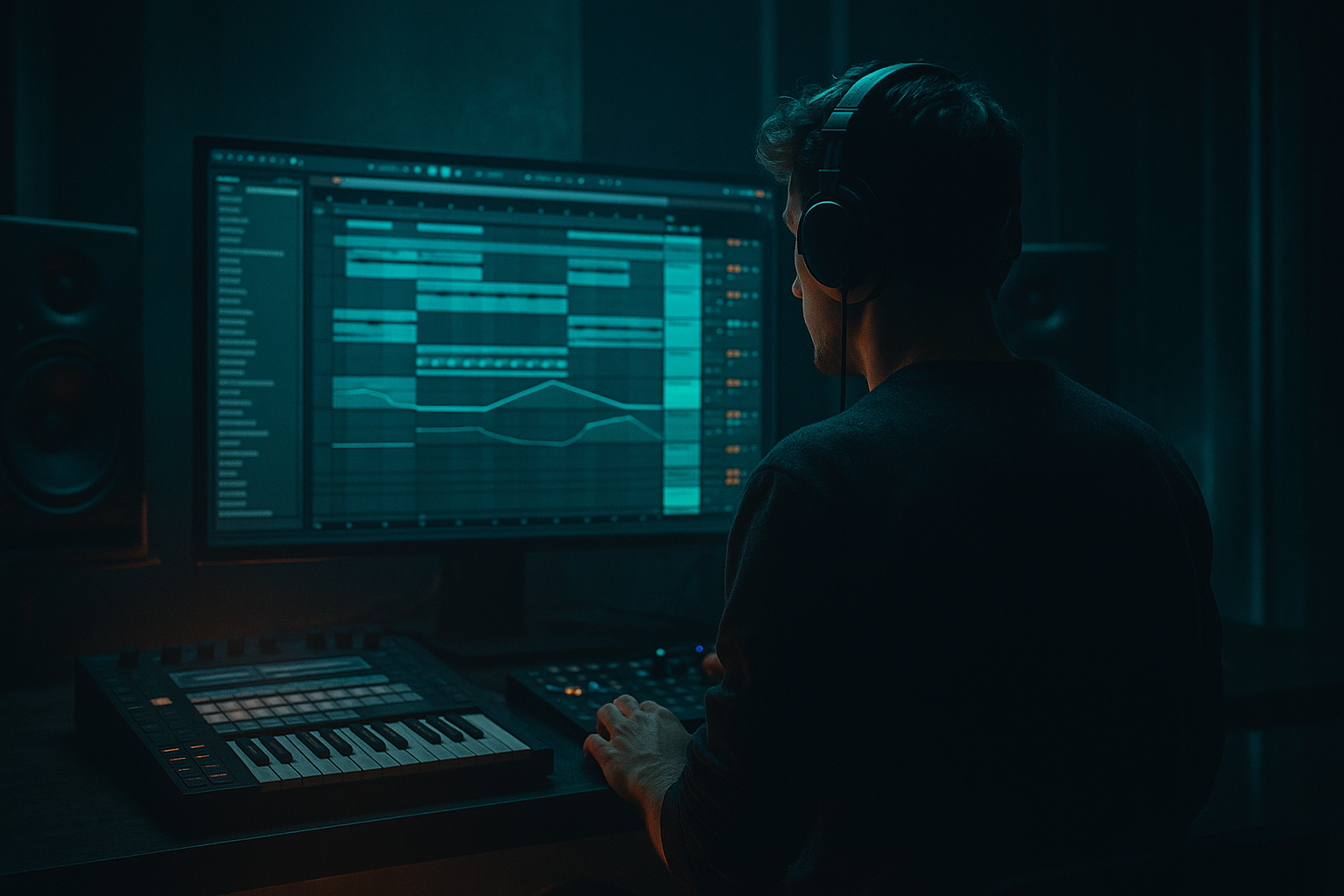
Bassline design session with DJ-friendly structure in Ableton Live 12 for jungle oldskool DnB vibes (Beginner) cover image

Narrated lesson audio

The voice track includes the tutorial plus extra teacher commentary.

Open audio file

Main tutorial

Lesson Overview

In this lesson, you’ll build a DJ-friendly oldskool jungle / DnB bassline session in Ableton Live 12 with a ragga-inspired call-and-response feel. The goal is to create a bass part that works like a real dancefloor tool: heavy enough for the drop, simple enough for DJs to mix, and musical enough to give the track character.

This matters because in Drum & Bass, the bassline is not just “a low sound.” It is the identity of the track. In oldskool jungle, the bass often sits between:

  • a deep sub foundation
  • a midrange Reese or wobble movement
  • and short ragga-style phrases that answer the drums
  • A beginner often tries to make the bassline too busy. For this style, the better move is to design a bass system that leaves space for the breakbeat, lets the vocal/ragga vibe breathe, and still hits hard in the drop. That is what gives you a track that feels authentic, mixable, and replay-worthy.

    You will use Ableton stock devices like Wavetable, Operator, Auto Filter, Saturator, Drum Buss, EQ Eight, Utility, and Compressor to create a clean but dirty bassline that feels at home in jungle, rollers, and darker DnB.

    What You Will Build

    By the end of this lesson, you will have a 2-bar bass loop that can be used as the core of an oldskool DnB drop.

    The result will include:

  • a tight mono sub following a simple root-note pattern
  • a mid-bass layer with a rough Reese-style edge
  • a ragga call-and-response phrase that leaves room for the kick/snare and break edits
  • a DJ-friendly arrangement with an intro, drop, and outro that can be mixed by a DJ
  • basic automation for filter sweeps, movement, and tension
  • Musically, think:

  • Intro: drums and atmosphere only
  • Drop: sub + Reese bass + ragga stab response
  • Switch-up: a small phrase change every 8 or 16 bars
  • Outro: drums and stripped bass for mixing out
  • This is not a huge “song arrangement” lesson. It is a bassline design session that helps you build a foundation for a proper jungle/DnB track.

    Step-by-Step Walkthrough

    1. Set up a clean DnB writing template

    Start a new Ableton Live 12 set and set the tempo to 170 BPM. That’s a classic sweet spot for jungle and oldskool DnB, and it helps you feel the break energy correctly.

    Create these tracks:

    - Drum track for your breakbeat

    - Sub Bass track

    - Mid Bass track

    - Ragga Bass Stab track or MIDI track

    - Return track for delay or reverb if needed

    Keep the session organized from the start:

    - Color the bass tracks differently from the drums

    - Rename clips clearly, like “Sub 2-bar,” “Reese 2-bar,” and “Ragga stab”

    - Leave headroom on the master. Aim for peaks around -6 dB while building

    Why this works in DnB: speed and clarity matter. DnB arrangements move fast, and if your session is messy, you’ll overcomplicate the bass and lose the groove.

    2. Build the drum/break foundation first

    Before designing bass, drop in a classic breakbeat loop or program a simple break pattern using Drum Rack with chopped audio. If you have a break sample, slice it to MIDI or duplicate a loop and edit hits manually.

    For beginner-friendly timing, start with:

    - Kick on the downbeat

    - Snare on the backbeat

    - Break slices filling the spaces between

    Use Simpler in Slice mode if you want to chop a break quickly:

    - Slice by transient

    - Map slices to MIDI

    - Nudge ghost notes and stray hits for groove

    Add EQ Eight on the break bus and make a small cut around 250–400 Hz if the loop is muddy. If the hats are sharp, gently tame 7–10 kHz with a small dip.

    Keep the drums punchy but not huge. The bass must have room to speak.

    3. Program a simple 2-bar bass MIDI pattern

    Create a new MIDI clip on your Sub Bass track. Use just 2 bars to begin.

    Keep the pattern simple:

    - Use mostly root notes and one or two note changes

    - Leave gaps so the snare and break can breathe

    - Use short note lengths at first rather than long sustained notes

    A beginner-friendly oldskool DnB pattern might look like this idea:

    - Bar 1: root note on beat 1, another note after the snare space

    - Bar 2: root note again, then a small rise or repeat for tension

    Try these musical choices:

    - Use notes in a minor key for a darker vibe, such as F minor, G minor, or A minor

    - Keep the phrase simple enough that the DJ can mix it for at least 16 bars without fatigue

    - Let one bar be slightly more active than the other

    Don’t make it too “melodic” yet. In jungle, the bass often functions like a groove instrument more than a sung melody.

    4. Create the sub bass with Operator

    On the Sub Bass track, load Operator. This is a great stock synth for clean low-end.

    Start with:

    - Oscillator A: sine wave

    - Turn off extra oscillators for now

    - Set the volume so the sound is steady, not too loud

    Suggested settings:

    - Attack: 0–5 ms

    - Decay: 80–150 ms if you want a little pluck

    - Release: 50–120 ms

    - Sustain: medium to full, depending on whether you want short or long notes

    Add Utility after Operator and turn on Mono. Keep the sub centered and stable.

    If the bass feels too clean, add a gentle Saturator after Utility:

    - Drive: 1–4 dB

    - Soft Clip: on

    This adds harmonics so the bass is easier to hear on smaller speakers, while keeping the lowest layer controlled.

    Why this works in DnB: a pure sub gives you weight without clutter. The drums need their own attack space, and the sub should mostly be felt, not “heard as a melody.”

    5. Build the mid-bass Reese layer

    Create a new MIDI track and load Wavetable. This is your mid-bass character layer.

    Start with a darker wavetable or a simple saw-based tone. You want movement, not a bright EDM wobble.

    Suggested starting point:

    - Oscillator 1: saw or slightly detuned saw

    - Oscillator 2: saw, tuned slightly off from Osc 1

    - Unison: light detune, not extreme

    - Filter: low-pass with moderate resonance

    Useful ranges:

    - Filter cutoff: around 150 Hz to 1 kHz, depending on brightness

    - Resonance: low to medium, about 10–30%

    - Unison detune: subtle, not huge

    Add movement with LFO inside Wavetable:

    - Set a slow LFO to the wavetable position or filter cutoff

    - Keep the amount low so the bass shifts rather than wobbles wildly

    Then add Auto Filter after Wavetable and automate the cutoff for your drop opening:

    - Open slightly on the first hit

    - Close a touch during the phrase to make room for the snare

    - Open again for the switch-up

    Add EQ Eight and high-pass gently around 30–40 Hz if the mid layer is competing with the sub.

    Keep this layer in mono or near-mono with Utility Width at 0–30%. Oldskool DnB works best when the true low-end stays narrow.

    6. Add ragga-style call-and-response bass stabs

    This is where the ragga element comes alive. Create a third MIDI track or use the same mid-bass instrument if you want to keep it simple.

    Make a short bass stab phrase that answers the drums. Think of it like a vocal response, not a lead synth solo.

    Good ragga-inspired phrasing ideas:

    - A short offbeat note after the snare

    - A two-note bounce that repeats every 2 bars

    - A call phrase in bar 1, response phrase in bar 2

    Make it playful and sparse:

    - One or two notes per bar

    - Use rests to create attitude

    - Slightly vary the final note every 4 or 8 bars

    Add Saturator or Drum Buss for grit:

    - Saturator Drive: 2–6 dB

    - Drum Buss Drive: 5–20%

    - Boom: keep low or off if it muddies the sub

    If you want a more “toasted” ragga vibe, use a short delay with Echo or Delay:

    - Very short feedback

    - Low wet mix

    - Filtered repeats so it doesn’t clutter the groove

    This call-and-response is important because ragga-influenced jungle often feels like the bass is “talking” to the drums.

    7. Shape the bass/drum relationship with sidechain and space

    Put Compressor on the bass group or on the mid-bass track and use sidechain from the kick or the main drum bus.

    Suggested sidechain starting point:

    - Attack: 1–5 ms

    - Release: 60–120 ms

    - Ratio: 2:1 to 4:1

    - Threshold: set so the bass ducks just enough to reveal the kick/snare energy

    Don’t overdo it. In DnB, the bass should pump only enough to let the groove breathe.

    Also use EQ Eight to carve space:

    - If the break is crowded around 200–300 Hz, reduce the bass there slightly

    - If the bass feels harsh, tame a little around 1.5–4 kHz

    - Keep the sub and mid layer separated by design

    Check in mono using Utility on the master or on your bass group. If the sound collapses badly, reduce stereo width on the mid layer.

    Why this works in DnB: breakbeats are full of transients and midrange detail. Sidechaining and EQ separation stop the bass from smothering the swing.

    8. Add automation for tension, intro-to-drop, and DJ-friendly phrasing

    Now make the loop usable in a real track. Create an arrangement that feels easy to DJ mix.

    A beginner-friendly structure:

    - Bars 1–16: intro with drums, atmosphere, and filtered bass hints

    - Bars 17–32: full drop with sub + Reese + ragga stabs

    - Bars 33–48: variation with small note change or extra fill

    - Bars 49–64: stripped outro for mixing

    Automate these elements:

    - Filter cutoff on the mid-bass

    - Saturator Drive for extra energy in the drop

    - Delay send on a ragga stab at the end of a phrase

    - Volume mute or low-pass on the bass during the intro

    For DJ-friendliness:

    - Keep the intro relatively clean

    - Let the drop arrive after a clear buildup

    - Leave the outro simple enough for beatmatching and transition

    Add a small switch-up every 8 or 16 bars:

    - remove one note

    - add a short pick-up

    - change the last stab

    That small variation keeps the loop alive without losing the oldskool structure.

    9. Freeze, flatten, or resample if you want more character

    Once the MIDI bass parts feel good, resample them for extra texture. This is very DnB-friendly, especially for jungle and darker styles.

    In Ableton:

    - Create a new audio track

    - Set the input to resample or route from the bass group

    - Record a few bars of the bassline

    Then use the audio clip to:

    - Trim awkward tails

    - Warp lightly if needed

    - Reverse a tiny stab for a transition

    - Cut one hit into a fill

    If you want more grime, add Drum Buss or Saturator on the resampled audio:

    - Drum Buss Drive: modest amounts

    - Transients: use carefully

    - Boom: only if it doesn’t fight the sub

    This is a strong beginner workflow because it turns a “synth idea” into something that feels like a sample-based jungle record.

    Common Mistakes

  • Making the bassline too busy
  • Fix: reduce the number of notes. In oldskool DnB, space is part of the groove.

  • Letting the sub and mid-bass overlap too much
  • Fix: keep the sub in mono and let the mid layer sit above it. Use EQ Eight to separate them.

  • Using too much stereo width in the low end
  • Fix: narrow the bass with Utility. Keep the deep sub centered.

  • Over-saturating everything
  • Fix: add grit in layers, not everywhere at once. A little distortion on the mid-bass goes a long way.

  • Ignoring the drums while designing the bass
  • Fix: always listen to the bass with the breakbeat. Bass that sounds huge solo can wreck the groove in context.

  • Forgetting DJ structure
  • Fix: make clean intros and outros. DJs need time to mix in and out.

  • Making the ragga element too literal or cluttered
  • Fix: use short, punchy call-and-response phrases. Think attitude, not constant vocals.

    Pro Tips for Darker / Heavier DnB

  • Use a very subtle chorus-free Reese approach: detuned saws, but keep the stereo width controlled so the bass still feels serious and underground.
  • Add movement with filter automation instead of louder volume changes. In darker DnB, tension often comes from opening and closing the sound, not just adding more notes.
  • Try a tiny pitch drop on the start of a bass stab for extra impact. Even a small downward envelope can make the hit feel more aggressive.
  • Use Drum Buss on the mid layer, not the sub. That keeps the low end clean while giving the upper bass more edge.
  • Keep one version of the bassline stripped for the intro/outro and one full for the drop. DJ-friendly arrangement is a huge part of authentic DnB workflow.
  • If the bass feels weak on small speakers, add harmonics with Saturator rather than turning up the sub. That preserves mix clarity.
  • For a darker ragga vibe, combine a rough bass stab with a short, filtered echo tail. Just keep the feedback low so it doesn’t wash out the break.
  • Mini Practice Exercise

    Spend 10–20 minutes making a 2-bar bass idea using only Ableton stock devices.

    1. Set tempo to 170 BPM

    2. Load a simple breakbeat loop

    3. Create a Sub Bass with Operator using a sine wave

    4. Create a Mid Bass with Wavetable using a detuned saw sound

    5. Write a 2-bar MIDI pattern with only 3–5 notes total

    6. Add one ragga-style response stab

    7. Sidechain the bass lightly to the drum bus

    8. Automate the filter cutoff across 8 bars

    9. Export or resample 4 bars of the result

    10. Listen back and ask: does the bass leave space for the drums?

    Goal: make it feel like a real DJ tool, not a loop that tries too hard.

    Recap

  • Build the bass around sub + mid + ragga response
  • Keep the low end mono, simple, and controlled
  • Use Operator for clean sub and Wavetable for character
  • Shape movement with filters, saturation, and light automation
  • Let the drums breathe by using space, sidechain, and arrangement
  • Make the loop DJ-friendly with clear intros, drops, and outros

If you get these fundamentals right, your jungle/DnB bassline will already feel more authentic, heavier, and easier to finish.


Ask GPT about this lesson

Chat with the lesson tutor, get follow-up help, or use quick actions.

Bigup 👽 Ask me anything about this lesson and I’ll answer in context.

Narration script

Show spoken script
Alright, let’s get into it.

In this lesson, we’re building a DJ-friendly oldskool jungle and drum and bass bassline session in Ableton Live 12, with that ragga-inspired call-and-response energy. The goal here is not to make the most complicated bassline ever. The goal is to make something that hits hard, leaves space for the breakbeat, and still feels musical enough to give the track real personality.

And that’s a big DnB lesson right there: the bassline is not just a low sound. It is the identity of the track. In jungle, the bass usually works as a system. You’ve got the deep sub for weight, the mid-bass for character and movement, and then short ragga-style phrases that answer the drums. That combination is what gives you that classic oldskool vibe.

So if you’re a beginner, the first thing to remember is this: do not overfill the bassline. In this style, space is part of the groove. A bass pattern that feels simple in MIDI can sound way bigger in the mix than something that’s busy and overworked.

We’re going to use stock Ableton devices only, which is great because it keeps the workflow fast and beginner-friendly. We’ll use Operator for the sub, Wavetable for the mid-bass character, and then tools like Auto Filter, Saturator, Drum Buss, EQ Eight, Utility, and Compressor to shape everything into a clean but dirty jungle-ready bassline.

First, set up a clean project. Open a new Ableton Live 12 set and set the tempo to 170 BPM. That’s a classic sweet spot for jungle and oldskool DnB. It gives you the right sense of forward motion, and it makes the breakbeat feel alive.

Now create a few tracks. You want one drum track for your breakbeat, one Sub Bass track, one Mid Bass track, and one Ragga Bass Stab track, or just another MIDI track if you want to keep it simple. If you like using returns, add a send for delay or reverb, but keep it minimal. This session should stay organized from the start. Rename your clips clearly, like “Sub 2-bar,” “Reese 2-bar,” or “Ragga stab.” Color code the bass tracks differently from the drums. And while you’re building, keep an eye on your master level. You want headroom. Don’t crush the mix early. A good target is peaking around minus 6 dB while you write.

That headroom matters because DnB can get loud fast. If your session is messy or clipping early, you’ll start making bad decisions with the bass. Clean setup, clean thinking.

Next, build the drum foundation first. Before you design the bass, you need something for it to lock to. Load in a classic breakbeat loop, or program a simple break using Drum Rack and chopped audio. If you have a break sample, Simpler in Slice mode is your friend. Slice by transient, map the slices to MIDI, and then nudge a few hits around to get the groove feeling right.

If you’re just starting out, keep the rhythm clear: kick on the downbeat, snare on the backbeat, and break slices filling the spaces around it. That gives you a solid oldskool foundation. Then put EQ Eight on the drum bus and make a small cut around 250 to 400 Hz if the loop feels muddy. If the hats are a bit sharp, gently tame the 7 to 10 kHz area with a small dip. Nothing extreme. We want punch, not harshness.

Now comes the fun part: the bassline itself.

Start with the sub bass. Create a MIDI clip on your Sub Bass track, and keep it to 2 bars. For this style, simple is powerful. Use mostly root notes, maybe one or two note changes, and leave gaps so the snare and break can breathe. Short note lengths usually work better at first than long sustained notes. A simple oldskool DnB idea might be a root note on beat one, another note after the snare space, then the root again in the second bar with a small rise or repeat for tension.

If you want a darker vibe, try a minor key like F minor, G minor, or A minor. But don’t get too melodic yet. In jungle, the bass is often more like a groove instrument than a lead line. It should feel like it’s driving the track, not singing over it.

Now load Operator on the Sub Bass track. Start with oscillator A as a sine wave. Turn off the extra oscillators for now. A sine wave is perfect for a clean low end because it gives you weight without clutter. Set the attack very short, around 0 to 5 milliseconds. If you want a little pluck, use a decay around 80 to 150 milliseconds. Keep the release short to medium, and adjust the sustain depending on whether your notes are supposed to be tight or longer.

After Operator, add Utility and turn on Mono. That keeps the sub centered and stable. That’s really important in DnB. Your sub should feel solid in the middle of the mix, not spread out or wandering around the stereo field. If the sound feels too clean or too soft, add a gentle Saturator after Utility. A little drive, maybe 1 to 4 dB, with Soft Clip turned on, can add harmonics that help the bass show up on smaller speakers without making the low end messy.

That’s the whole point of a good sub in this style: it gives you weight that you feel, but it doesn’t fight the drums for attention.

Now let’s add the mid-bass layer. Create a new MIDI track and load Wavetable. This is where the bass gets attitude. Start with a darker wavetable or a saw-based sound. You want movement, but not an obvious EDM wobble. Think rough Reese energy, not huge festival bass.

A good starting point is two saw oscillators, with one slightly detuned from the other. Use light unison if you want a little width, but don’t go wild. Set a low-pass filter with moderate resonance. The cutoff can sit anywhere from around 150 Hz up to about 1 kHz depending on how bright you want it, but keep it controlled. A little resonance can add personality, but too much makes it squeal and fight the break.

Then add movement inside Wavetable with a slow LFO. You can assign it to wavetable position or filter cutoff. Keep the amount subtle. We’re not trying to make the bass wobble all over the place. We’re just giving it a little shift so it feels alive.

After that, add Auto Filter and automate the cutoff through the drop. Open it slightly on the first hit, close it a bit during the phrase to leave room for the snare, then open it again for the switch-up. That kind of movement is a huge part of oldskool jungle energy. The tension comes from opening and closing the sound, not just from making it louder.

Use EQ Eight on the mid layer and high-pass gently around 30 to 40 Hz so it doesn’t compete with the actual sub. And keep the width narrow. Utility with a width around 0 to 30 percent is a smart move here. The low end in jungle should stay tight and centered.

Now we bring in the ragga-style call-and-response stab. This is where the track starts talking. Create another MIDI track or use the same mid-bass instrument if you want a simpler setup. Write a very short phrase that answers the drums. Think of it like a vocal response, not a solo.

A good ragga-style bass phrase might be one short offbeat note after the snare, or a two-note bounce that repeats every two bars. Keep it sparse. One or two notes per bar is usually enough. The attitude comes from the timing and the rests, not from stuffing in more notes.

For grit, add Saturator or Drum Buss. A little drive goes a long way. If you use Drum Buss, keep the boom low or off if it starts to muddy the sub. You can also add a short delay using Echo or Delay. Keep the feedback low and the wet amount subtle, and filter the repeats so they don’t take over the groove. That little echo tail can make the stab feel more ragga and more animated, without cluttering the break.

This call-and-response idea is huge in jungle. It makes the bass feel like it’s conversing with the drums. That’s the vibe we want.

Now we need to make the bass and drums work together properly. Put a Compressor on the bass group, or on the mid-bass track, and sidechain it from the kick or the main drum bus. Start with a fast attack, maybe 1 to 5 milliseconds, and a release around 60 to 120 milliseconds. Use a ratio somewhere between 2 to 1 and 4 to 1. Then adjust the threshold so the bass ducks just enough to let the kick and snare breathe.

Don’t overdo the sidechain. In DnB, you want the groove to breathe, not to pump like a house track. The ducking should be subtle but effective.

This is also the time to check EQ separation. If the break is crowded around 200 to 300 Hz, make a small cut in the bass there. If the bass feels harsh, tame a bit in the 1.5 to 4 kHz area. And keep checking in mono. If your mid layer collapses badly in mono, reduce the stereo width. That’s a classic beginner mistake, especially in bass-heavy music. The low end needs to stay strong when summed down.

Now let’s arrange it in a way that a DJ can actually mix it.

Think in sections. A simple structure could be: bars 1 to 16 for an intro with drums and atmosphere, bars 17 to 32 for the full drop with sub, Reese, and ragga stabs, bars 33 to 48 for a variation, and bars 49 to 64 for a stripped outro. That’s not a full song arrangement lesson. It’s a bassline design session. But even in a loop, the structure matters.

Automate the filter cutoff on the mid-bass, automate the Saturator drive if you want more energy in the drop, automate a delay send on the ragga stab at the end of a phrase, and mute or low-pass the bass during the intro. Make the intro clean. Let the drop hit clearly. Then make the outro simple enough for beatmatching and mixing out. That DJ-friendly mindset is a big part of authentic jungle and DnB workflow.

Also, every 8 or 16 bars, make a tiny switch-up. Remove one note. Add a pickup. Change the last stab. Small changes keep the loop alive without losing the oldskool feel. You do not need a full rewrite. You just need enough movement to stop the pattern from becoming stale.

If you want to push the sound further, resample it. This is a very jungle thing to do. Create a new audio track, route the bass group into it, and record a few bars. Once you’ve got the audio, you can trim tails, reverse a tiny stab for a transition, or cut one hit into a fill. If you want more grime, add Drum Buss or Saturator on the resampled audio, but keep it controlled. A little dirt on the right layer can make the whole bassline feel more like a sampled jungle record.

Here are some teacher-style reminders while you work.

Think in layers with jobs. One sound is for weight, one is for attitude, and one is for movement. If every layer tries to do everything, the groove gets blurry really fast.

Also, in jungle-style bass writing, less note data usually sounds bigger. A short phrase with good placement will hit harder than a complicated run that steps all over the drum pattern.

Always test the bass against the snare accents. If the bass fights the snare, the mix gets smaller, even if the bass sounds huge by itself. And keep checking the full loop, not just one bar. Some bass ideas sound cool for a moment and then become annoying after 8 or 16 bars.

If the bass feels floppy, shorten the note lengths before adding more processing. Tight MIDI often solves more than plugins do. And save a version before each big change. Bass design moves quickly, and it’s easy to overcook the sound if you don’t keep checkpoints.

A few advanced variation ideas can help too.

Try question and answer phrasing. Make bar 1 end with a low hit, then make bar 2 answer with a slightly higher or more filtered hit. That creates a conversation feel without adding extra notes.

Or build a drop evolution. Start the first 8 bars with the simplest version, add a ghost note or pickup in bars 9 to 16, then remove that note again in the next phrase so the track breathes.

You can also use a call-back motif. Pick one short rhythm and bring it back later with a different ending. That helps the track feel coherent, like the bassline remembers itself.

And if you want a darker jungle feel, try a half-time illusion. Even at 170 BPM, you can space one bass accent so it feels like a slower, heavier hit. That can sound huge in darker sections.

For sound design extras, keep the sub clean and narrow. Put low-cut filtering only on the non-sub layers, not on the actual sub synth. For the mid-bass, a light Auto Filter resonance bump before saturation can make the sound feel more animated without increasing volume. If you want more bite, distort a duplicated mid layer and blend it under the clean version. Parallel dirt often sounds better than destroying the main sound.

If the bass feels too sterile, add a very quiet texture layer, maybe a little noise or a filtered top layer, but keep it high-passed so it doesn’t fight the drums or the sub.

For the arrangement, think like a DJ. Make a mix-intro version with drums and filtered bass hints. Use an 8-bar energy plan if that helps: sparse, then full groove, then a small variation, then strip back a little. And in the outro, remove the busiest elements first, not the main sub right away. That keeps the track mixable while still sounding intentional.

Here’s a quick practice challenge to lock it in.

Set the tempo to 170 BPM. Load a simple breakbeat loop. Make a sub with Operator using a sine wave. Make a mid-bass with Wavetable using a detuned saw sound. Write a 2-bar MIDI pattern with only 3 to 5 notes total. Add one ragga-style response stab. Sidechain the bass lightly to the drum bus. Automate the filter cutoff across 8 bars. Then export or resample 4 bars and listen back.

And ask yourself one simple question: does the bass leave space for the drums?

If the answer is yes, you’re doing it right.

So to recap: build the bass around sub, mid, and ragga response. Keep the low end mono, simple, and controlled. Use Operator for the clean foundation and Wavetable for character. Shape movement with filters, saturation, and light automation. Let the drums breathe with space, sidechain, and arrangement. And make the whole thing DJ-friendly with clear intros, drops, and outros.

If you get those fundamentals right, your jungle and DnB bassline will already feel more authentic, heavier, and easier to finish.

Now go make it hit.

Background music

Premium Unlimted Access £14.99

Any 1 Tutorial FREE Everyday
Tutorial Explain
Generating PDF preview…