Main tutorial
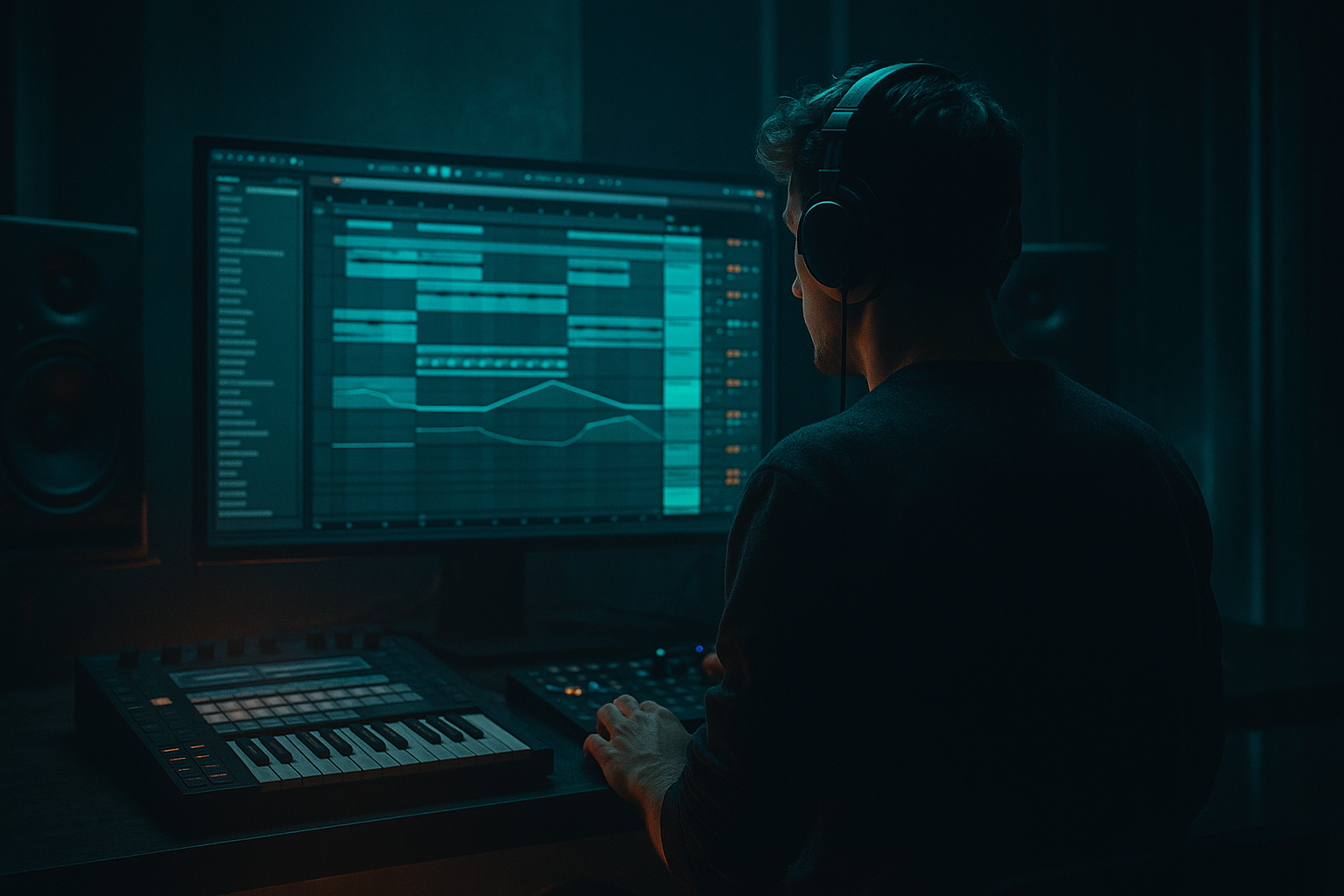
Break Clarity in Dense Arrangements (DnB Masterclass) — Arrangement View in Ableton Live 🥁⚡
Skill level: Advanced • Category: Mixing • Context: Drum & Bass / Jungle / Rolling Bass
---
1) Lesson overview
In modern DnB, your break has to cut through: sub-heavy reeses, wide pads, aggressive tops, and layers of percussion — without becoming harsh or thin. This lesson shows you how to get break clarity in dense arrangements using Arrangement View as the control center: automation, clip gain, transient shaping, strategic EQ, multiband control, parallel chains, and arrangement “windows.”
You’ll focus on three clarity pillars:
1. Time-domain clarity (transients, micro-dynamics, groove)
2. Frequency clarity (pockets and overlaps)
3. Arrangement clarity (when elements stop fighting)
---
2) What you will build
By the end you’ll have a mix-ready break bus that stays crisp and audible even when:
- Sub + mid bass are slamming,
- Synth layers are wide and busy,
- The drop is at full density.
- A Break Bus chain (stock devices) for punch + definition
- A parallel “Snap” bus for transient presence
- Arrangement View automation lanes for break-forward moments (without wrecking the master)
- A repeatable workflow template for rolling DnB drops
- HP filter: 24 dB/oct at ~30–45 Hz (remove rumble; keep weight if needed)
- Mud dip: -2 to -4 dB around 200–350 Hz (Q ~1.2) if it’s boxy
- Presence: small +1 to +2 dB around 3–5 kHz if snare definition is masked
- Optional air shelf: +1 dB at 10–12 kHz if it’s dull (careful with harshness)
- HP filter: 24 dB/oct at ~200–400 Hz
- Harsh control: notch 6–9 kHz if it’s fizzy (Q ~3–6)
- HP at ~80–120 Hz
- Emphasize crack: +2 dB at 2–4 kHz if needed
- Drive: 5–15% (start low)
- Transient: +10 to +25 (this is your “break reads on small speakers” lever)
- Boom: OFF (usually) or very low if you need body; don’t compete with sub
- Damp: adjust to tame brittle highs (often 10–30%)
- Mode: Analog Clip or Soft Sine
- Drive: 1–4 dB (subtle)
- Soft Clip: ON
- Optional: enable Color and roll a touch of top if it’s spitty
- Low band (up to ~120 Hz): usually leave alone or very gentle (you likely HP’d already)
- Mid band (120 Hz – 5 kHz): the “break fights bass” zone
- High band (5 kHz+): control hash
- Ratio: 2:1
- Attack: 5–15 ms
- Release: 60–140 ms (match groove)
- GR: 0.5–2 dB on break hits
- Focus compression on mid/high band
- Sidechain input: `Breaks Bus`
- Light GR (1–2 dB) when breaks strike
- Add EQ Eight
- Switch to M/S mode
- Attack: 10 ms
- Release: Auto
- Ratio: 2:1
- GR: 1–2 dB max
- Reese/bass distortion is a break killer: tame 2–5 kHz on bass with EQ Eight if it’s stepping on snare crack.
- Use Roar (if you have Live 12 Suite) on bass instead of pushing break saturation too far; keep break transient clean.
- For neuro/techy darkness, try a parallel “Crush” return:
- Short room reverb can add density without wash:
- If your break feels “behind” the bass: nudge break track -5 to -15 ms (Track Delay) very slightly. Don’t overdo or you’ll break the groove.
- Control levels first (clip gain + consistent relationships)
- Carve pockets on layers, not just the bus (EQ Eight)
- Add definition with Drum Buss + Saturator carefully
- Use parallel Snap for presence without harshness
- Multiband the midrange bloom so breaks stay stable
- Duck competitors (bass/pads) with sidechain for “psychoacoustic space”
- Use Arrangement View automation windows to create moments where breaks lead
- Finish with light Glue only after clarity is solved
You’ll build:
---
3) Step-by-step walkthrough
Step 0 — Session setup (Arrangement View discipline) ✅
Goal: Make decisions fast and automate cleanly.
1. Put all break layers (main break, ghost break, top loop, foley hats) into a Group Track:
Group name: `BREAKS BUS`
2. Color-code + label:
- `Break Main` (amen/think/steppers)
- `Break Tops` (hi-passed loop)
- `Ghost` (low-layer or transient layer)
3. Create Return tracks:
- `A - Break Snap` (parallel transient/upper bite)
- `B - Break Crush` (parallel distortion / sustain)
4. Set the Arrangement Loop around the densest 16 bars of the drop. You’ll mix where it’s hardest.
---
Step 1 — Gain staging for clarity (clip gain before plugins) 🎚️
Why: Breaks lose clarity when plugins are compensating for inconsistent levels.
1. On each break audio clip, adjust Clip Gain so the Breaks Bus peaks around -10 to -6 dBFS (pre-master).
2. If you have multiple break layers, set their relationship first:
- `Break Main`: primary transient + groove
- `Break Tops`: -6 to -12 dB lower than main
- `Ghost`: just enough to “read” (often -12 to -18 dB)
Tip: If your sub/bass is already loud, don’t “win” by turning breaks up — win by carving space and shaping transients.
---
Step 2 — Create frequency pockets with EQ Eight (surgical but musical) 🔧
Put EQ Eight on each break layer (not just the bus). This keeps the bus processing cleaner.
On `Break Main`:
On `Break Tops` (hi-passed loop):
On `Ghost` layer (if it’s for punch):
Arrangement View move:
Create a named locator: `DROP - Full Density`. Your EQ decisions should be made there first.
---
Step 3 — Transient definition with Drum Buss + Saturator (controlled bite) 🔥
Put these on BREAKS BUS in this order:
#### 3.1 Drum Buss (stock)
If your break gets clicky: reduce Transient and use Snap bus (next step) instead.
#### 3.2 Saturator (stock)
Why this works in DnB: You’re adding harmonic “readability” so the break stays audible when the bass dominates.
---
Step 4 — Parallel “Snap” return for clarity without harshness ✂️✨
On Return A: `Break Snap`, add:
1. EQ Eight
- HP 24 dB @ ~250–500 Hz
- Gentle boost +2 dB @ 4–7 kHz if needed
2. Drum Buss
- Drive: 10–25%
- Transient: +25 to +40
3. Glue Compressor
- Attack: 3 ms
- Release: Auto
- Ratio: 4:1
- Aim for 1–3 dB GR (not more)
4. Limiter (just as safety)
- Ceiling: -0.3 dB
- Don’t slam it; it’s to catch spikes
Send amount from BREAKS BUS: start at -18 dB, move up until the break “speaks,” then back off slightly.
Key idea: Parallel snap adds definition without making your main break brittle.
---
Step 5 — Multiband control with Multiband Dynamics (stop the low-mids from blooming) 🎛️
On BREAKS BUS after saturation:
Multiband Dynamics (stock)
Start with Multiband Compression preset, then tweak:
- Ratio: 2:1
- Attack: 15–30 ms (let transients through)
- Release: 80–160 ms
- Aim for 1–3 dB reduction when the arrangement is dense
- Ratio: 1.5–2:1
- Fast-ish release 50–120 ms
- Just kiss it; don’t dull the top
Advanced move: Automate the Mid band threshold slightly lower during the densest 8 bars of the drop to keep the break consistent.
---
Step 6 — Sidechain the right things (Arrangement View automation > set-and-forget) 🧠
Break clarity often dies because bass and synths eat the same perception space. Instead of over-EQ’ing the break, duck competitors.
#### 6.1 Duck the bass slightly from the break (yes, sometimes)
On your Bass Group, add Compressor with Sidechain from `Break Main` (or `Breaks Bus`):
This is subtle but makes breaks read in rolling sections.
#### 6.2 Duck pads/atmos from break high band using dynamic EQ technique
Ableton doesn’t have a native dynamic EQ, but you can fake it with Multiband Dynamics on the pad bus:
Arrangement View advantage: Automate this only in the drop (don’t squash intros).
---
Step 7 — Arrangement View “clarity windows” (the secret weapon) 🪟
When everything plays all the time, nothing feels loud.
Create clarity by micro-muting and automation:
1. Bass fills: In the first 2 beats of every 8 bars, automate bass group down -1 to -2 dB (or filter slightly) so breaks establish dominance.
2. High layer rotation: Alternate hat loops:
- Bars 1–4: hat loop A
- Bars 5–8: hat loop B
This reduces masking while keeping energy.
3. Automate reverb throws: Keep break hits mostly dry; throw reverb on end-of-phrase snares, not constant wash.
Practical tool:
Use Utility on competing groups (Pads/Synths/Bass) and automate gain in Arrangement View. It’s clean and reversible.
---
Step 8 — Mid/Side management for breaks in a wide mix 🌐
If your synths are wide, your break can vanish in the center clutter.
On BREAKS BUS:
- Mid: small presence boost +1 dB @ 3–5 kHz (snare clarity)
- Side: gentle shelf -1 to -2 dB @ 8–12 kHz if sides are getting splashy
DnB logic: Keep break “readability” in the mid, let width come from atmos and top loops.
---
Step 9 — Final bus glue (only after clarity is solved) 🧩
On BREAKS BUS, last in chain:
Glue Compressor
If you need more loudness, do it on the master later. Here it’s about cohesion.
---
4) Common mistakes 🚫
1. Over-EQ’ing the break instead of ducking competitors
You end up with a thin, papery loop.
2. Too much transient shaping on the main bus
Makes hats spitty and snare clicky — use parallel Snap instead.
3. Ignoring clip gain consistency across the arrangement
A break that changes perceived level every 4 bars will never feel “clear.”
4. Constant top loops + wide synths + bright distortion = masking soup
Rotate layers; create windows.
5. Solo-mixing the break
Break clarity is a context problem. Mix in the drop.
---
5) Pro tips for darker/heavier DnB 🖤
- Redux (bit reduction lightly)
- Saturator (harder)
- EQ Eight (band-limit 700 Hz–7 kHz)
- Blend very low for texture.
- Reverb: Decay 0.3–0.6s, Pre-delay 10–20 ms, HP 300 Hz, LP 8–10 kHz
- Put it on snares only (or automate sends).
---
6) Mini practice exercise 🎯
Goal: Make a break audible in a dense 16-bar drop without increasing its peak level.
1. Pick a classic loop (Amen/Think/Hot Pants) and layer a top loop.
2. Build a dense drop: sub + reese + pad + hats + ride.
3. Rules:
- You may only raise the break bus +0.5 dB max.
- You must use one arrangement trick (mute/automation window).
- You must use one parallel return (Snap or Crush).
4. Deliverable:
- A/B two bounces: “Before” and “After”
- Listen on low volume: break should still be readable.
Self-check: If you turn your speakers down and the snare disappears, you still need transient/readability work.
---
7) Recap ✅
To get break clarity in dense DnB arrangements in Ableton Arrangement View:
If you want, share a screenshot of your Arrangement View (tracks + devices) and I’ll suggest exact automation lanes and pocket frequencies based on your specific drop.

