Main tutorial
Lesson Overview
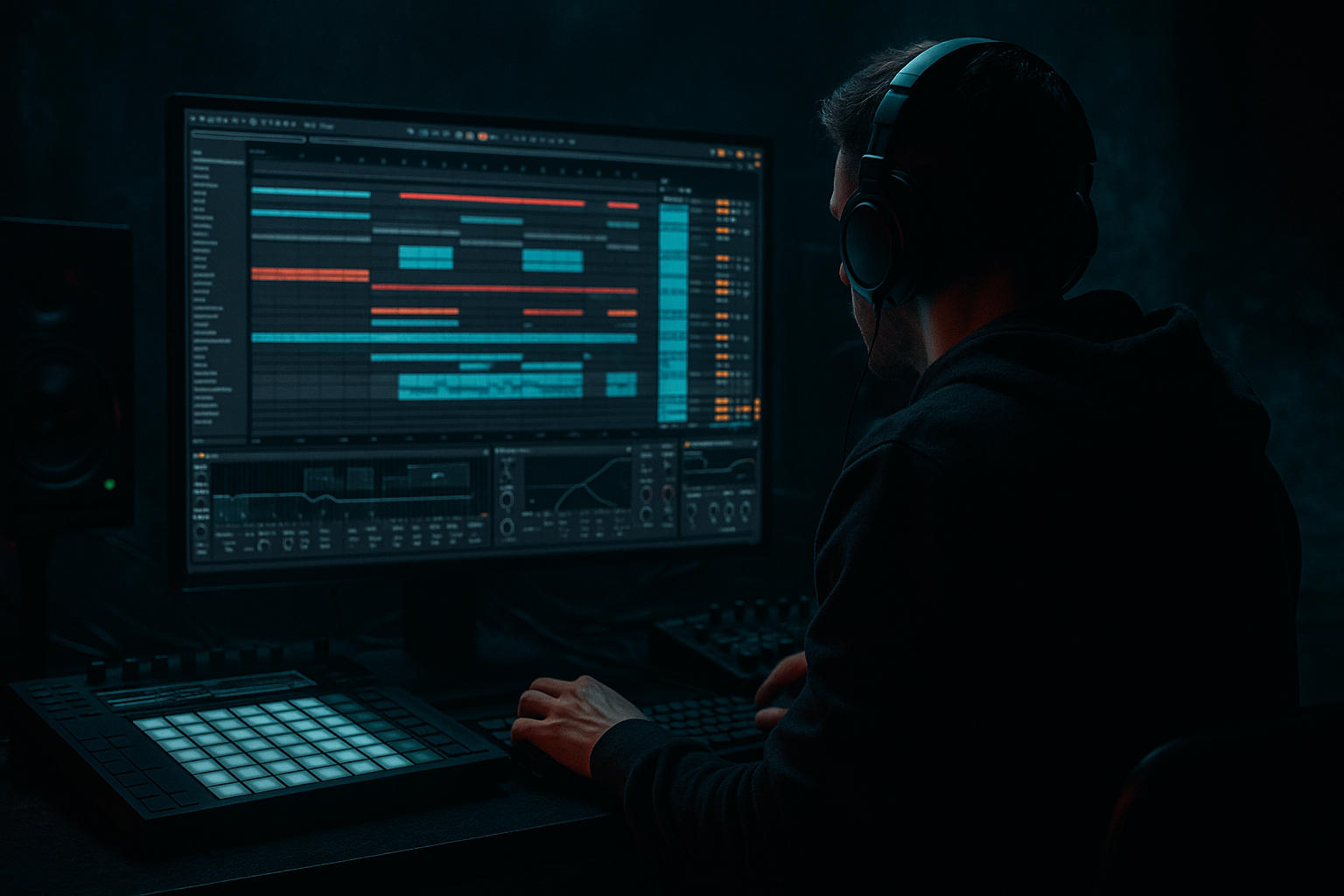
In this lesson, you’ll build a warm, tape-grit Drum & Bass breakbeat in Ableton Live 12 using sampling, simple editing, and stock effects. The goal is not just to make a break sound “old,” but to make it feel like a real DnB loop that can carry a 16- or 32-bar section in a track.
This technique sits right in the heart of DnB production: jungle-style break programming, rollers with character, darker halftime switch-ups, and any track where the drums need to feel alive rather than robotic. A tight sampled break can do a lot of heavy lifting in a tune:
- it gives your track instant groove
- it creates the human swing that makes DnB bounce
- it leaves space for the sub and bassline to hit hard
- it adds tape-style grit that feels underground and musical
- a 1-bar or 2-bar breakbeat loop built from a sampled drum break
- a warm, slightly crushed tape-style texture
- edited ghost notes, snare emphasis, and micro-groove
- a drum rack or audio track setup you can reuse in future DnB projects
- a version that works for:
- a simple arrangement idea: intro → break groove → bass drop → variation
- a punchy snare on the backbeat
- hats and ghost hits creating movement
- some transient softness from tape-style saturation
- enough low-end cleanliness to leave room for a sub bassline
- turn on Warp
- set Warp mode to Beats
- try Preserve = 1/16 or 1/8 for tighter break edits
- adjust the Transient Loop Mode if needed so the break stays sharp
- rearrange hits
- duplicate snare layers
- remove weak hits
- create ghost notes
- build your own groove from the original loop
- kick on the main downbeat
- snare on beats 2 and 4
- hats and shuffled break fragments in between
- rename the Drum Rack to something like “Warm Break 170”
- color the snare pads and kick pads
- consolidate the clip once you like the pattern
- keep the snare strong and consistent
- place ghost hits lightly around the main snare
- nudge some hats slightly late for a more relaxed roller feel
- leave tiny pockets of silence so the bass can breathe
- snare velocity: main snare around 100–127, ghost notes around 20–60
- hat velocity: vary between 40–90
- if the break feels stiff, use Groove Pool with a subtle swing preset and keep the Timing amount around 10–25%
- lower the volume of overly sharp hits
- shorten long cymbal tails if they clutter the groove
- duplicate the snare pad and layer a cleaner snare underneath if needed
- use Clip Gain to balance individual sections
- cut the clip at key hit points
- add tiny fades to avoid clicks
- kick a little lower than the snare if the break is too heavy
- boost ghost hits just enough to be felt, not heard as separate “extra drums”
- keep cymbal noise under control so the loop doesn’t turn harsh
- Drive: around 5–15%
- Transient: small boost, around 5–20%
- Boom: very carefully, or off at first for beginner clarity
- Saturator
- Drum Buss
- Glue Compressor
- cut mud around 200–400 Hz if the break gets boxy
- gently tame harshness around 5–9 kHz
- if needed, high-pass very low rumble below 25–35 Hz
- use EQ Eight to remove unnecessary sub content
- keep the break’s deepest energy focused and controlled
- if the break has a heavy kick, decide whether it is the main kick of the track or just part of the rhythm
- high-pass around 30–45 Hz if the break is muddy
- small cut around 100–160 Hz if kick and bass clash
- if snare body is too thick, reduce 180–250 Hz a little
- keep the bass mostly mono
- avoid stacking too much low-mid energy in the break
- check your mix in mono using Ableton’s Utility on the master or bass group
- remove one hat hit for a bar
- add a quick snare pickup before the downbeat
- mute the break for half a beat before a drop
- duplicate a ghost note to create a fill
- automate a little more saturation in the build
- Saturator Drive up slightly in the last 1–2 bars before a drop
- Reverb send on one snare hit only, for a transition moment
- Auto Filter low-pass opening gradually on the break for an intro build
- Utility Gain to create a tiny drop-out before the bass comes in
- Bars 1–8: intro with filtered break, no bass yet
- Bars 9–16: main break groove enters
- Bars 17–24: bassline or sub starts
- Bars 25–32: variation with extra snare fills and drum cutoff
- Bars 33–40: drop return or switch-up
- intro texture: filtered and quieter
- main groove: full-bodied and punchy
- transition tool: fill or stop-start pattern
- drop support: chopped but stable
- Use a parallel drum bus
- Make the snare the anchor
- Add tiny rests
- Use mono discipline on the low end
- Resample your own processed break
- Try a darker intro version
- Add call-and-response with bass
- start with a musical sampled break
- keep the groove human and intentional
- use light saturation and drum bus processing for warm tape-style grit
- protect the sub range so the bass can hit properly
- add small variations to keep the loop moving
- arrange the break so it supports tension and release
Why this matters: in DnB, the drums are not just drums. They are the engine. If your break has swing, texture, and controlled dirt, everything around it feels more professional. A basic loop can become a proper DnB foundation with a few smart edits, some saturation, and good arrangement thinking. 🎛️
What You Will Build
By the end, you’ll have:
- roller-style groove
- jungle-inspired break energy
- darker intro or drop support
Musically, think of a loop with:
Step-by-Step Walkthrough
1. Start with a solid break sample
In Ableton Live, drag a drum break into an Audio Track. Good beginner-friendly choices are short, classic breaks with clear kick/snare placement and some hat detail. You want a loop that already has movement, because sampling in DnB is often about enhancing a good source rather than building everything from scratch.
Once the sample is in the timeline:
If the break feels too long or loose, trim it to a 1-bar phrase or isolate the first 2 bars. Beginner tip: keep it simple. A clean, musical break is easier to turn into a solid DnB groove than a messy one.
Why this works in DnB: the genre depends on rhythmic identity. A sampled break brings in that classic jungle/DnB feel instantly, and Warp lets you lock it to tempo without losing the human swing.
2. Slice the break so you can re-arrange the groove
Right-click the break clip and choose Slice to New MIDI Track. Use transients as the slicing method. Ableton will create a Drum Rack with each hit mapped to pads.
Now you can:
Start with a basic 1-bar MIDI pattern:
For beginners, don’t over-edit yet. Use the original break as a reference and only move a few hits. A strong breakbeat usually comes from small edits, not total destruction.
A good workflow move here:
3. Build the core drum groove first
Before adding any grit, make sure the groove feels right.
In the MIDI editor:
Useful groove targets for DnB:
If you want a darker, more modern roller feel, keep the loop tight and simple. If you want jungle energy, allow a little more break chatter and syncopation.
A practical musical example: imagine an 8-bar drop where bars 1–4 hold a steady break loop, and bars 5–8 add extra ghost snare hits and a tiny hat fill before the bass switch. That’s classic DnB phrasing: stable first, variation later.
4. Shape the break with Drum Rack or clip-level editing
Now make the loop more controlled.
If your break is in Drum Rack:
If you want to stay in Audio Track format:
Beginner-friendly rule: don’t chase perfection on every hit. Focus on the kick-snare relationship and the overall motion.
Try these basic balances:
If the break needs more punch, add Drum Buss on the drum track or drum group:
5. Add tape-style grit with stock Ableton effects
This is where the warm character comes in.
Put a gentle effect chain on the break bus or drum group:
1. Saturator
2. Drum Buss or Glue Compressor
3. EQ Eight
Suggested settings:
- Drive: 2–6 dB
- Soft Clip: On
- Output: trim down to match level
- Drive: 5–10%
- Crunch: very light, around 5–15%
- Damp: adjust until hats stop sounding brittle
- Ratio: 2:1
- Attack: 10–30 ms
- Release: Auto or 0.1–0.3 s
- Aim for only 1–3 dB gain reduction
For tape-style character, the goal is not extreme distortion. You want the break to feel slightly softened, denser, and more glued together. A little harmonic thickness makes the loop sound like it’s coming off tape or an old sampler.
Use EQ Eight after saturation:
Why this works in DnB: the saturation adds density, which helps the drums stay audible over strong sub bass and reese movement without needing to be turned too loud.
6. Control the low end so the bass can hit
DnB lives or dies by low-end separation. Your break should support the sub, not fight it.
On the drum track or drum bus:
Beginner settings to try:
A solid DnB workflow is to let the sub bass own the true low end, while the break contributes punch, rhythm, and midrange body. If you are building a roller, that separation is essential.
If you use a bassline later:
7. Add movement with small variations and automation
Static loops get boring fast. DnB needs evolution, even in minimal rollers.
Create subtle differences every 4 or 8 bars:
Good automation ideas in Ableton:
Keep these changes subtle. In DnB, too much drum movement can break the drive. You want enough variation to feel alive, but not so much that the loop stops locking.
8. Design a simple arrangement around the break
Now place the loop into a practical DnB structure.
A beginner-friendly arrangement might look like this:
For a darker roller, the break might stay steady while the bassline changes call-and-response phrases. For jungle, you can let the break become busier with little edits before each section change.
Use the break in different roles:
A useful arrangement trick: cut the drums for 1/2 bar or 1 bar before the drop to create tension. Then let the break slam back in with the bass. That release is a big part of DnB energy.
Common Mistakes
1. Over-processing the break
- Problem: too much distortion makes the loop brittle and flat.
- Fix: use smaller amounts of Saturator/Drum Buss and compare against the dry loop.
2. Losing the original groove
- Problem: slicing every hit destroys the natural swing.
- Fix: keep some of the original break’s phrasing and only edit the key accents.
3. Too much low-end in the break
- Problem: kick and bass fight each other.
- Fix: high-pass gently and let the sub own the deep range.
4. No variation across 8 bars
- Problem: the loop feels like a practice pattern, not a track.
- Fix: create small changes every 4 or 8 bars.
5. Harsh hats and cymbals
- Problem: the mix gets tiring fast.
- Fix: use EQ Eight to tame bright peaks and reduce over-crushed transients.
6. Ignoring headroom
- Problem: the drum bus gets too loud early and the mix collapses later.
- Fix: keep the drum group peaking safely below clipping and leave space for bass and master processing.
Pro Tips for Darker / Heavier DnB
- Duplicate the drum group or send it to a return track with heavier Saturator/Drum Buss, then blend it in quietly. This adds grit without flattening the main break.
- In darker DnB, a strong snare gives the track its spine. If the groove feels weak, boost the snare’s presence before touching the kick.
- A short gap before a snare or bass hit can make the next hit feel much heavier. Space is weight.
- Keep kick, sub, and low drum energy centered. Stereo width should mostly live in hats, ambience, and effects.
- Once the loop sounds good, record it to audio and treat it like a new sample. This is a classic DnB move and helps commit to a sound.
- Create a filtered copy of the break with Auto Filter and lower the cutoff for intro bars. Then open it up for the drop. Instant tension.
- Let the break leave a hole where the bass answers. That interaction is especially powerful in rollers and neuro-influenced arrangements.
Mini Practice Exercise
Spend 10–20 minutes making a two-bar warm break loop in Ableton Live:
1. Import one drum break and warp it to your project tempo.
2. Slice it to a Drum Rack.
3. Build a simple 2-bar loop with a clear snare backbeat.
4. Add at least 3 ghost notes.
5. Put Saturator and Drum Buss on the drum group.
6. Tune the saturation so it feels warmer, not distorted.
7. Use EQ Eight to remove muddiness and harsh top end.
8. Make one 4-bar variation by removing or shifting one hit.
9. Bounce the loop and listen in context with a temporary sub bass.
10. Check if the break still feels good when the bass comes in.
Goal: make the loop feel like it could sit in a real DnB intro or drop without needing extra fancy processing.
Recap
A strong DnB breakbeat in Ableton Live comes from a few key ideas:
If you remember only one thing: in DnB, the break should feel alive, controlled, and ready for the bass to speak.

