Main tutorial
Call and Response Bass Architecture for Clean Mixes in Drum and Bass 🎶
1. Lesson Overview
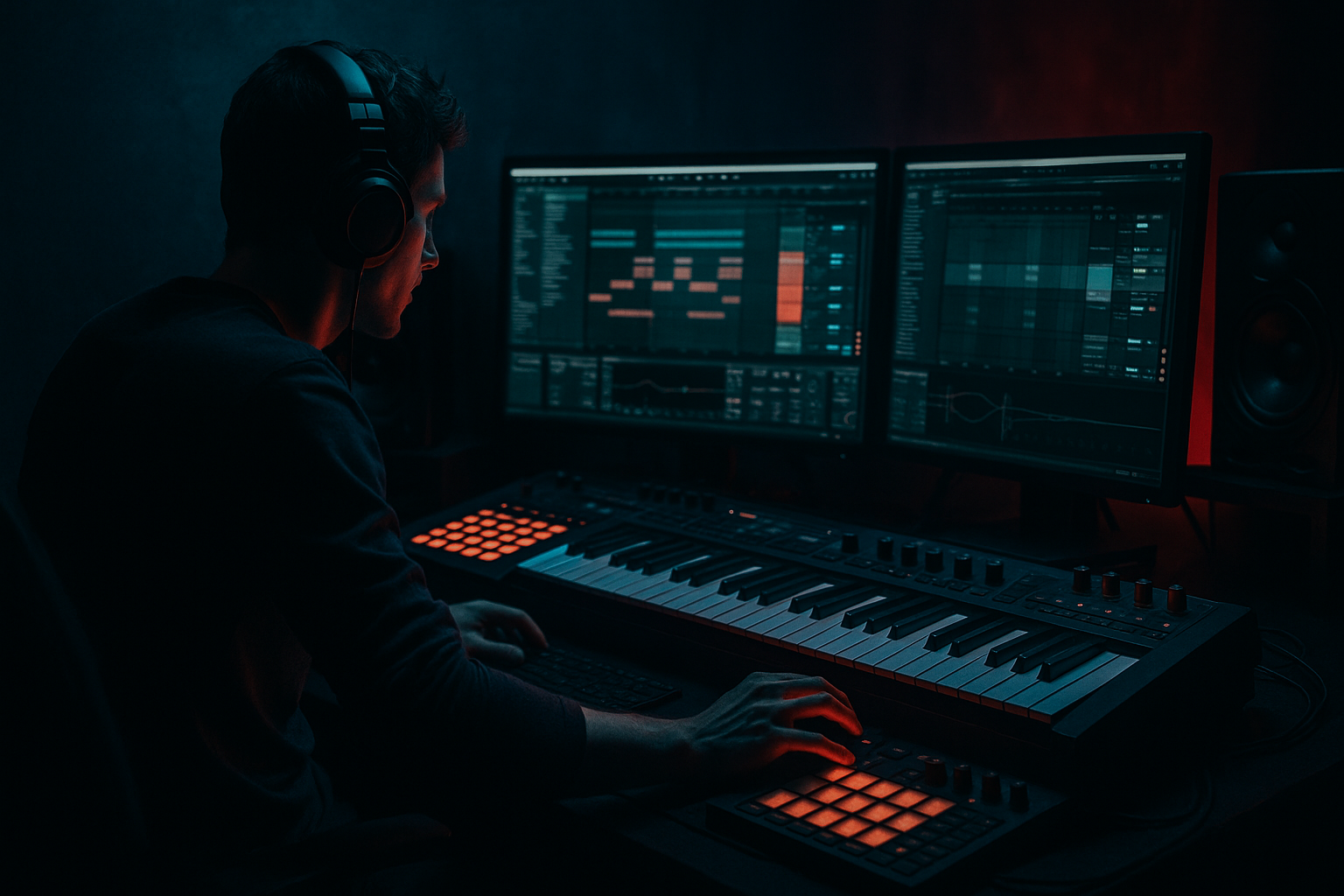
Welcome to this vibrant session on crafting dynamic call and response basslines in Drum and Bass using Ableton Live! In this tutorial, we'll explore how to design basslines that not only sound powerful but also remain clear in your mix. You'll develop skills to create movement and tension through call and response techniques, tailoring basslines to sit well in both DnB and jungle genres.
---
2. What You Will Build
By the end of this tutorial, you'll produce a clean call and response bassline that incorporates:
- A primary bass sound (the "call").
- A counter bass sound (the "response").
- Perfectly aligned usage of Ableton’s stock devices to shape your sound.
- An arrangement that showcases interaction and balance among elements in the mix.
- Overprocessing: Don’t drown your bass in effects. Keep it simple with essential EQ, compression, and a touch of saturation.
- Ignoring Space: Ensure your bass calls and responses don’t clash. Use the Panning feature to give them space in your mix.
- Static Patterns: Avoid static bass patterns; shift note placements to create a groove.
- Incorporate Reverb: A subtle, dark reverb can add depth, particularly to the response bass.
- Use Distortion: Experiment with Saturator set on “Analog Clip” mode, to add grit and weight to heavier sounds.
- Layering Sounds: Layer additional textures—like sub-bass layers using a low sine wave to ensure your bass doesn't lose its low-end strength.
---
3. Step-by-Step Walkthrough
Step 1: Setting Up Your Project
1. Open Ableton Live and set your project tempo to around 170 BPM, a standard speed for DnB.
2. Create a new MIDI track (CMD+Shift+T or CTRL+Shift+T).
Step 2: Designing Your Main Bass Sound (Call)
1. Instrument Selection:
- Load Operator (Ableton's built-in FM synth).
2. Sound Design:
- Set the oscillator to a sine wave for warmth.
- Adjust the envelope for the amplitude (roughly 0.5 seconds attack, 0.2 seconds decay) and keep sustain low for punch.
- Tweak the filter (low-pass) to around 120 Hz; adjust resonance slightly to add character.
3. MIDI Input:
- Draw in a MIDI clip and input a simple rhythm: perhaps a repeated note every half bar (C1, C#1, which are common DnB bass notes).
Step 3: Creating the Response Bass Sound
1. Duplicate the bass channel you just created (CMD+D or CTRL+D).
2. On this duplicated track, apply Simpler or Analog if you prefer a classic analog feel.
3. Sound Selection:
- Choose a saw wave or square wave for a more aggressive tone.
- Use a low-pass filter similar to the main bass sound but adjust the cutoff (around 200-250 Hz).
4. MIDI Input:
- Draw in notes that “respond” to your call; this could involve working around the notes of the call with a rhythmically contrasting pattern.
Step 4: Arrangement
1. Start with an 8-bar loop:
- Bars 1-4: Main bass "call."
- Bars 5-8: Response. Introduce some variation here, like a syncopated rhythm or pitch bend.
2. Make sure to transpose the response notes slightly for interest. 😉
Step 5: FX Processing
1. Group your bass tracks (select both and CMD+G or CTRL+G).
2. Insert a Drum Buss to add presence and subtle saturation:
- Keep the drive at a low level (around 10%).
3. Use EQ Eight to carve out unnecessary frequencies; cut below 30 Hz and slightly dip around 200-300 Hz to provide space for other elements.
4. Add Compressor with a soft knee, setting the ratio to around 4:1 for a gentle squeeze that balances dynamics.
---
4. Common Mistakes
---
5. Pro Tips for Darker/Heavier DnB
---
6. Mini Practice Exercise
1. Create a new MIDI track, replicate the call pattern, and alter the response with a different rhythm or octave.
2. Experiment with different Synths, sounds, or even sample-based basslines to find a diverse palette.
3. Mix the new basslines with your initial call and response to create a fuller sound and visualize your arrangement.
---
7. Recap
Today, we've journeyed through the fundamentals of creating a call and response bass architecture, focusing on sound design, arrangement techniques, and mix clarity. You’ve learned how to navigate Ableton Live’s powerful devices and achieve clean, professional-sounding DnB basslines.
Now it’s time to dive deeper into your creative flow! 🎉 Keep experimenting and push the boundaries of your sound!
Happy producing! 🎧

