Main tutorial
Lesson Overview
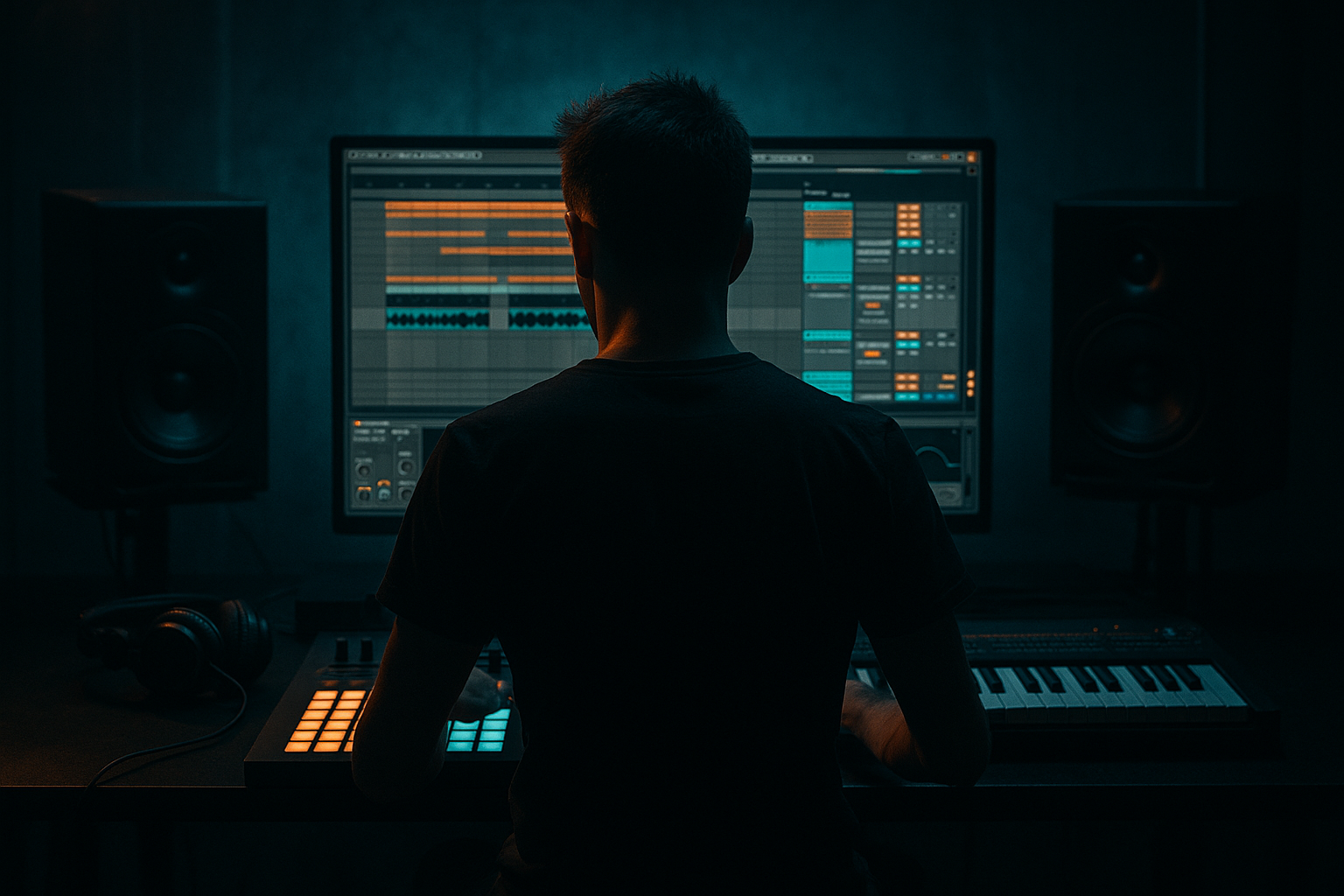
This lesson shows you how to create a darkside fill resample in Ableton Live 12 using stock devices only, built for jungle / oldskool DnB vibes. The goal is to take a simple drum or break pattern, chop it into a short fill, resample it into audio, and then reshape it into a gritty, tension-building moment that feels authentic in a DnB arrangement.
Why this matters: in Drum & Bass, fills are not just “drum decoration.” They are part of the phrasing. A good fill tells the listener, “the drop is about to change,” “the bass is about to answer,” or “the track is moving into the next 8 bars.” In jungle and darker rollers, fills often sound rough, chopped, and energetic because they come from break manipulation, resampling, and small automation moves rather than polished, overly clean drum programming.
By the end of this lesson, you’ll know how to:
- build a short 1-bar or 2-bar fill from a break,
- resample it into a new audio clip,
- process it with stock Ableton devices,
- and place it in an arrangement so it supports the vibe of a dark, oldskool DnB track.
- the end of an 8-bar drum loop,
- the last half of a 4-bar pre-drop section,
- or the last beat before a bass switch-up.
- a broken, urgent drum fill with oldskool jungle energy,
- a bit of grit and crunch from resampling,
- small pitch or filter movement for tension,
- and a clean enough shape that it still works in a modern DnB arrangement.
- a drop change,
- a snare fill into a new bass phrase,
- or a DJ-friendly transition in the breakdown.
- Drum Rack
- Simpler
- Audio recording / resampling
- EQ Eight
- Saturator
- Auto Filter
- Glue Compressor
- Utility
- optional Redux or Drum Buss for texture
- Making the fill too long
- Using too much low end in the fill
- Over-processing with too many devices
- Quantizing everything perfectly
- Letting the fill clash with the bassline
- Making the automation too extreme
- Use silence as part of the fill. A gap before the last hit can make the next hit feel massive.
- Try mono fills for impact. Use Utility to collapse the fill if the stereo spread gets messy.
- Saturate before filtering sometimes. A little drive into Auto Filter can make the movement feel more aggressive.
- Layer a tiny ghost break under the main fill. Keep it low in the mix for extra shuffle and grime.
- Use clip gain instead of compressor overuse. For beginners, this keeps the fill punchy and easy to control.
- Make the last hit a little smaller, not bigger. Paradoxically, a reduced final hit can make the drop feel heavier because it opens space.
- Reference oldskool jungle phrasing. Think about how classic breaks lead into the next bar, not how modern pop fills “announce” a chorus.
- Build your fill from an existing DnB break or drum loop.
- Chop it into a short, purposeful pattern.
- Resample it to audio so you can shape it freely.
- Use stock Ableton devices like EQ Eight, Saturator, Auto Filter, and Utility to add grit and control.
- Keep the fill short, tense, and rhythmically useful.
- Place it in a real arrangement where it helps the next section hit harder.
- Protect the sub and keep the low end clean.
This is a beginner-friendly workflow, but it gives you a real producer technique you can use immediately in your own tunes 🔥
What You Will Build
You’ll build a dark, chopped DnB fill that works as a transition between drum phrases, such as:
Musically, the result will feel like:
Think of the sound as a mini “energy burst” that could sit before:
You will use only Ableton stock tools such as:
Step-by-Step Walkthrough
1. Start with a simple DnB break or drum loop
Load a classic-style break, drum loop, or your own programmed DnB drum pattern onto an audio track. If you already have a basic loop, perfect. If not, make something simple:
- kick on 1 and the “and” of 3,
- snare on 2 and 4,
- light hats or ghost hits in between.
Keep it short and loopable. The point is not to make the whole drum arrangement here — the point is to build material for a fill.
For this lesson, think in 8-bar phrasing:
- Bars 1–4: groove
- Bars 5–6: slightly busier
- Bars 7–8: fill and transition
That phrasing is classic in DnB because it gives the listener enough repetition to lock in, then enough movement to avoid boredom.
2. Find 1 bar that has good rhythmic tension
Listen through your loop and choose a part with:
- a snare hit,
- a small ghost note,
- a hat rush,
- or a break accent.
A good beginner move is to copy the last 1 bar of your loop to a new space, then edit only that bar into a fill. You are not trying to reinvent the whole break — just create a moment of variation.
In Ableton, duplicate the chosen clip and trim it so you have a single bar or half bar. If your loop feels too busy, simplify it first by muting some hits.
Why this works in DnB: the genre relies on micro-variation. Small edits feel powerful because the listener is already locked to the groove. A one-bar fill can create more energy than a huge musical change if it lands in the right spot.
3. Chop the drum audio into a fill pattern
Right-click the audio clip and use slicing/editing to create a tighter rhythmic shape. For a beginner-friendly approach, do this manually:
- duplicate the clip,
- split around important hits,
- move slices to create a new pattern.
Try one of these easy darkside fill shapes:
- snare → ghost hit → snare
- kick → hat → snare → empty space
- two quick break slices → one longer tail
- snare flam feel by placing two hits very close together
Keep some silence. In dark DnB, negative space makes the hits hit harder.
If you want a more “jungle” feel, keep the break slices slightly loose rather than perfectly grid-locked. Tiny timing imperfections often feel more alive than rigid quantization.
4. Resample the fill into audio
Now set up an audio track to record the fill. On a new audio track:
- set the input to Resampling or route from your drum track,
- arm the track,
- record the chopped fill for 1 or 2 bars.
This is the key step: you are turning a MIDI or clip-based idea into audio, which gives you more freedom to warp, cut, and distort it later.
Once recorded, consolidate the recorded section so it becomes one clean audio clip. This makes it easier to process and repeat.
Beginner tip: don’t worry if the recorded fill is not perfect. The point of resampling is to capture a moment and then sculpt it.
5. Shape the resampled fill with stock processing
Put these devices on the resampled fill track in this order:
- EQ Eight
- Saturator
- Auto Filter
- Utility
- optional Drum Buss or Redux
Start simple:
EQ Eight
- high-pass around 120–180 Hz if the fill clashes with your sub
- cut harsh top-end around 6–10 kHz if the break is too fizzy
- make small cuts, not giant ones
Saturator
- drive around 2–6 dB
- turn on Soft Clip if needed
- use it to add density, not just loudness
Auto Filter
- low-pass around 8–14 kHz for a darker tone
- automate the cutoff so the fill opens slightly at the end
- use a gentle resonance, around 0.20–0.40, if you want a little edge
Utility
- narrow the width or set the fill to mono if it competes with bass
- use gain to balance the fill without overloading the master
Drum Buss / Redux (optional)
- Drum Buss: add a bit of Drive and a touch of Boom only if it helps the impact
- Redux: use lightly for a more broken, old digital texture
Keep the fill rough but controlled. You want it to feel like a chopped jungle transition, not a destroyed mess.
6. Add pitch or timing variation for tension
This is where the fill starts to feel like a real DnB arrangement move.
Try one simple movement:
- use Clip Envelopes to slightly lower pitch on the last hit,
- or create a tiny reverse-feeling effect by moving a slice earlier,
- or shorten one slice so the rhythm feels like it’s accelerating.
Good beginner parameters:
- pitch down the last slice by -2 to -5 semitones
- reduce the last hit’s clip gain by 1–3 dB
- shorten a final tail so the next downbeat feels stronger
If you’re using Simpler for a slice, you can also adjust envelope/transpose changes per slice. Even a tiny pitch drop can make the fill feel more “darkside” and less generic.
Why this works in DnB: bass music tension often comes from small destabilizing changes just before the drop or phrase change. Pitch dips, filter closes, and chopped timing create anticipation without needing a full melodic buildup.
7. Automate one or two movement controls
In a beginner workflow, less is more. Choose just two automation moves:
- Auto Filter cutoff
- Saturator drive
- or Utility gain
Example automation idea:
- bars 7.3 to 8.1: filter slowly closes from brighter to darker
- final beat of the fill: drive increases slightly by 1–2 dB
- last hit: utility gain drops quickly so the next downbeat lands harder
If your track has a bassline, use this fill to make room for the next bass note or phrase. You can even automate the bass track’s filter or volume a little so the fill and bass do not fight.
Keep the automation smooth and musical. Don’t over-automate every knob. In DnB, a few well-placed moves are often enough to make the transition feel intentional.
8. Place the fill in a real arrangement context
Now put the fill where it would actually live in a track.
A strong beginner arrangement example:
- Bars 1–8: main groove and bass loop
- Bars 9–12: variation with slightly more hats
- Bar 13: fill resample
- Bar 14: drop back into the main groove or introduce a bass switch
You can also place the fill:
- before a new bassline note pattern,
- before a snare roll into the drop,
- or at the end of a 16-bar section as a transition to an outro.
Make sure the fill does not steal the whole moment. It should support the arrangement, not replace the arrangement. In good DnB, the fill is part of the larger groove architecture.
9. Check the low end and keep the fill out of the sub
Darker fills often sound great on their own and then ruin the mix by stepping on the sub. Fix this with simple discipline:
- high-pass the fill if needed,
- keep sub elements on a separate track,
- use Utility to mono low end elements,
- and avoid boosting low frequencies on the fill itself.
If your fill includes a kick or low tom, compare it against the bassline:
- if they clash, remove or reduce the low slice,
- or shift the fill slightly so it hits between key bass notes.
This is especially important in DnB because the drum/bass relationship is everything. The fill should increase excitement, not blur the groove.
10. Bounce, listen, and make one final edit
Once the fill is in place, listen in context:
- Does it create tension before the next phrase?
- Does it feel like oldskool jungle energy?
- Does it leave enough space for the drop or bass switch?
Make only one or two final edits:
- trim the tail,
- shift one hit,
- soften the filter,
- or increase saturation slightly.
Then duplicate the fill and make a second version with one small change. For example:
- Version A: darker, shorter
- Version B: slightly brighter, more open
Having two versions helps you avoid copy-paste arrangement fatigue and gives your track more movement across sections.
Common Mistakes
- Fix: keep it to 1 bar or even half a bar. In DnB, short fills usually hit harder.
- Fix: high-pass the fill or remove low slices. Let the sub stay on its own track.
- Fix: start with EQ Eight and Saturator only. Add more texture only if the fill still feels too clean.
- Fix: keep some break looseness. A tiny bit of swing or timing variation helps the fill feel human and authentic.
- Fix: place the fill where the bass leaves space, or duck the bass slightly during the fill.
- Fix: small filter and drive changes often work better than big dramatic sweeps in darker DnB.
Pro Tips for Darker / Heavier DnB
A strong darkside fill often feels slightly unfinished in isolation but perfect in context. That’s the vibe.
Mini Practice Exercise
Set a 15-minute timer and do this:
1. Build or choose a basic 4- or 8-bar DnB drum loop.
2. Pick one bar near the end and duplicate it.
3. Chop it into a 1-bar fill with at least 3 slices.
4. Resample that fill onto a new audio track.
5. Add only:
- EQ Eight
- Saturator
- Auto Filter
6. Automate the filter cutoff across the fill.
7. Place the fill before a drop or phrase change.
8. Listen in context and make one adjustment only.
Challenge version: make a second fill that is darker and shorter, then compare which one works better before the drop.
Recap
If you remember only one thing: in DnB, the best fills are often small, chopped, and resampled into something with attitude. That’s how you get darkside jungle energy without overcomplicating the track.

