Main tutorial
Lesson Overview
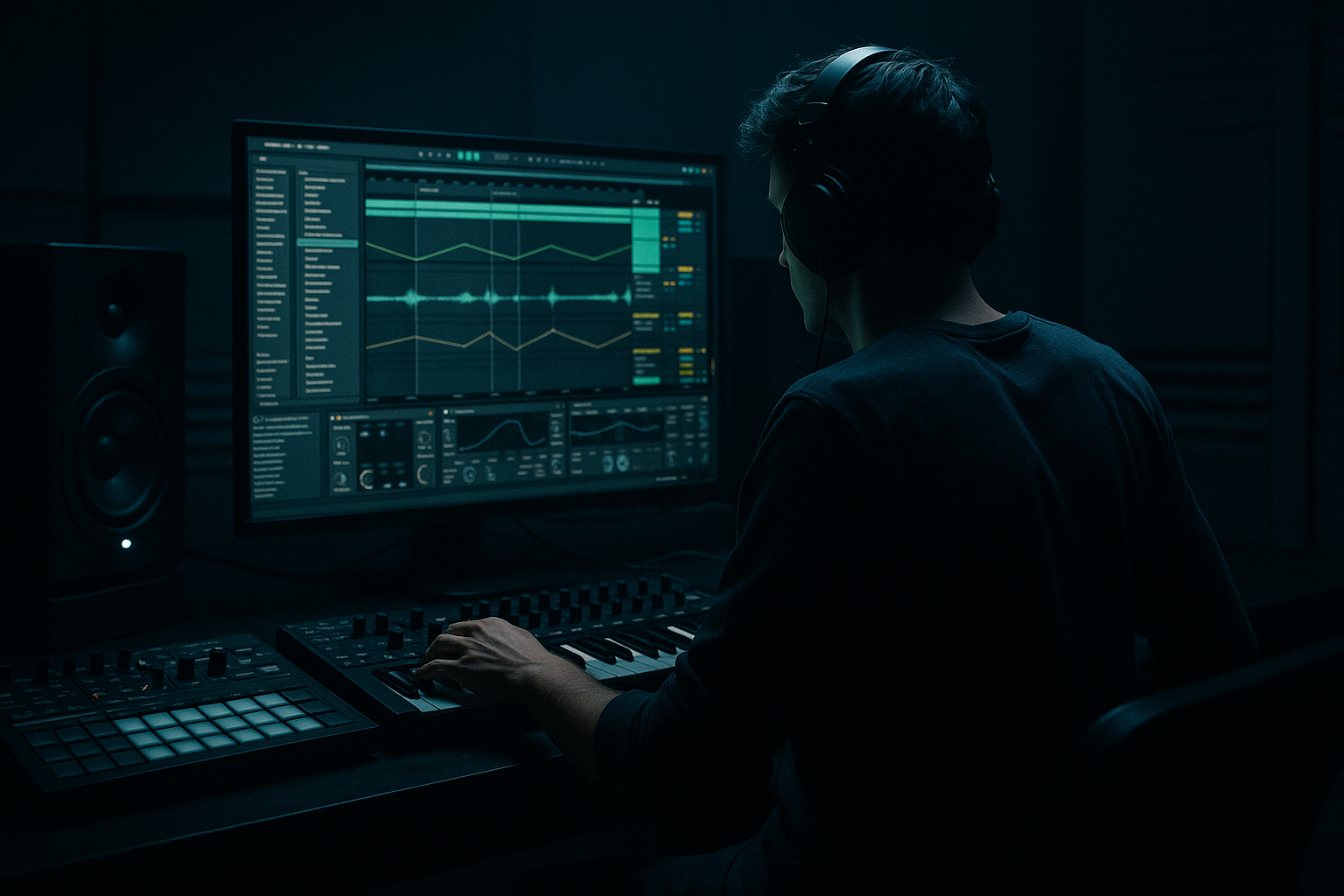
A strong DJ intro is one of the most valuable parts of a Drum & Bass track, especially if you’re aiming for that smoky warehouse, oldskool jungle, heads-down selector energy. In this lesson, you’ll build a DJ-friendly intro in Ableton Live 12 that feels like it could open a set: deep atmosphere, pitched textures, filtered break energy, and just enough bass presence to hint at the drop without giving it away.
This matters because DnB intros are not just “empty space before the drop.” They are functional arrangement tools. They give DJs room to mix, create tension for the crowd, and establish the record’s identity before the kick snare hits hard. For jungle and oldskool-inspired DnB, the intro often carries the vibe: dusty ambience, chopped breaks, dubby space, pitch-shifted loops, and subtle movement that feels alive in a warehouse system.
We’re going to make an intro that sounds dark, dusty, and cinematic, but still works in a proper DJ mix. The approach will use Ableton stock devices and practical automation choices so you can build it fast and reuse the method in future tracks. Think: low-lit room, fog, concrete walls, flickering light, and a break starting to wake up in the corner. 🌫️
What You Will Build
By the end of this lesson, you’ll have an 8- to 16-bar DJ intro for a jungle/oldskool DnB tune with:
- A pitched-down atmospheric bed for smoky warehouse tension
- A filtered break loop with movement and grit
- A subtle sub or bass hint that teases the main drop
- Transition FX that make the intro feel intentional, not looped
- A clean arrangement that gives a DJ space to mix
- Enough low-end discipline that the intro feels heavy without muddying the drop
- Making the intro too busy
- Letting the sub creep into atmosphere and FX tracks
- Using a full drop bassline too early
- No phrase movement
- Breaks sounding too clean or too modern for the vibe
- Reverb washing out the mix
- Resample your intro atmosphere in place once it feels good. Then chop it, reverse small bits, and reintroduce them for a more haunted feel.
- Use parallel saturation on the break bus with Saturator or Drum Buss so you can add grit without flattening transients.
- Keep bass mono below 120 Hz and check the intro in mono. Smoked-out warehouse vibes still need a stable center.
- Use call-and-response inside the intro: a ghost snare answers a filtered stab, or a bass tease answers a reversed hit.
- Let the high end degrade slightly with filtering or darker delays. That oldskool darkness often feels more believable when the top end isn’t overly pristine.
- Automate tiny level moves rather than huge effects. A 1–2 dB lift on a break fragment can feel more musical than a giant riser.
- Reference classic jungle DJ intros and notice how often they prioritize groove and space over complexity.
- Use Drum Buss carefully on the intro break to add punch, but don’t push the Boom so hard that it clashes with the drop’s sub.
Musically, this will sound like a dark opening phrase in the style of a classic ravers’ intro: atmospheric wash, chopped break textures, and a restrained bass pulse that suggests the groove to come. The intro will be designed to hand off naturally into a full-drop section at bar 17 or 33, depending on your track layout.
Step-by-Step Walkthrough
1. Set up the intro section and reference the role it plays
In Ableton Live 12, create a new group called something like `INTRO ATMOS`. Keep this separate from your main drums and bass so you can shape the intro like a scene rather than a loop.
Set your intro length to either 8 bars or 16 bars. For an intermediate DnB arrangement, 16 bars is often better if you want a DJ to blend in and ride the tension. If your track is more direct and rolling, 8 bars can work.
Place an Arrangement Locator at the start of the intro and another at the drop entry. This helps you think in phrases. In DnB, phrase structure is huge: 4-bar and 8-bar tension ramps feel natural, especially when the kick/snare drop lands cleanly after the intro.
Why this works in DnB: DJs need predictable phrasing to mix records cleanly. A well-shaped intro gives them breathing room while still sounding alive and atmospheric.
2. Build the smoke layer with a pitched atmosphere
Start with an atmospheric audio clip or a resampled texture you’ve made from noise, vinyl crackle, field recording, a rave stab tail, or even a chopped break tail. Drop it onto an audio track.
Add Ableton’s Complex Pro Warp mode if you’re stretching a musical or textured loop. Then pitch it down by:
- -3 semitones for a slightly darker, more musical shift
- -5 to -7 semitones for a more warped, murky jungle feel
Next, put EQ Eight after the clip:
- High-pass around 120–180 Hz to keep it out of the sub
- Pull a little around 300–500 Hz if it gets boxy
- If it feels harsh, gently reduce 3–6 kHz by 1–3 dB
Add Reverb with:
- Decay: 4–8 seconds
- Dry/Wet: 15–30%
- Low cut: 200 Hz or higher
- High cut: around 6–10 kHz
Then add Auto Filter and automate the cutoff from low to medium over the intro. Start around 250–500 Hz and open gradually toward 2–5 kHz depending on how bright you want the texture to become.
This layer should feel like air moving through the room, not like a lead sound. Keep it wide enough to create space, but don’t let it compete with the drop.
3. Create a broken, dusty drum bed from a jungle break
Drag in a classic-style break or build one from a break loop in Simpler. If you’re sampling, use Slice to New MIDI Track to chop the break into playable pieces. This is ideal for intermediate jungle-style arrangement because you can control the groove instead of just looping a full bar.
In your drum rack or Simpler chain, focus on:
- Kick/snare backbone
- Ghost hits
- Tiny hat or rim fragments
- One or two reversed or offset hits for swing
Add Drum Buss on the break group and try:
- Drive: 5–15%
- Boom: very light, around 5–10% if needed
- Transients: push slightly if the break needs more snap
For a smoked-out oldskool feel, use EQ Eight before or after Drum Buss:
- High-pass the break bed around 90–120 Hz if there’s too much low-end conflict
- Let the snare body live around 180–250 Hz
- Be careful with the 2–4 kHz zone if the break gets crunchy in a bad way
Add subtle Auto Pan for movement:
- Rate: 1/2 bar or 1 bar
- Amount: 10–25%
- Phase: 180° for a wider motion
Keep the break energy restrained in the intro. You want enough motion that the track feels alive, but not so much that the full drop loses impact.
4. Use a hidden bass tease, not the full drop bass
Now create a bass hint. This can be a single sub note, a filtered reese fragment, or a muted low stab that implies the main bassline. For jungle and darker rollers, the intro bass should be more about suggestion than statement.
Use Operator or Wavetable for a simple low oscillator layer:
- Oscillator: sine or a soft square
- Filter: low-pass
- Envelope: short decay, modest sustain
- Tune it to a root note or a simple pedal tone
If you want a reese teaser, duplicate the bass track and detune two oscillators slightly:
- Detune spread: around 5–15 cents
- Filter cutoff: low, around 150–500 Hz
- Resonance: low to moderate
Add Saturator or Overdrive very lightly:
- Saturation amount: just enough to hear harmonics on smaller speakers
- Keep the sub itself clean below about 100 Hz
Automate a filter opening only near the end of the intro so the bass hint becomes more obvious in bars 13–16. That creates a sense of “something’s coming” without giving away the main groove.
If you’re layering sub and reese, keep the sub mono with Utility set to Mono or use Utility on the bass bus to check mono compatibility.
5. Shape the DJ-friendly tension with automation
The intro needs to evolve. A static loop can work for 4 bars, but for a proper DnB DJ intro, you want phrase-based movement.
Automate these across the intro:
- Auto Filter cutoff on the atmosphere
- Reverb dry/wet on the ambient layer, especially for wash-outs before phrase changes
- Send levels to Delay or Reverb for one-shot tails
- Volume automation for break elements so the groove slowly becomes more exposed
- Pitch automation on a resampled effect hit if you want a subtle rise or fall
A strong arrangement pattern could be:
- Bars 1–4: atmosphere only, filtered and wide
- Bars 5–8: break fragments enter, still filtered
- Bars 9–12: bass hint appears and the break becomes more rhythmic
- Bars 13–16: filter opens, tension increases, and you prepare the drop
Use short automation ramps rather than dramatic jumps. Oldskool DnB energy comes from controlled evolution, not huge cinematic swoops.
6. Add transition FX that fit the underground tone
Keep the FX useful and restrained. Use stock Ableton devices like Reverb, Echo, Auto Filter, and even a resampled noise hit to make transitions feel deliberate.
Good FX choices for this style:
- A reversed break tail into the bar 5 or bar 9 phrase
- A short filtered noise swell with Auto Filter
- A dubby delay send from a snare ghost hit
- A one-shot impact with heavy low-cut so it doesn’t muddy the bass
For Echo, try:
- Feedback: 10–25%
- Dry/Wet: 8–20%
- Filter the delay so repeats get darker over time
You can also use Simpler to resample a tiny fragment of the intro, reverse it, and place it right before the drop. This is a classic jungle move: a little unstable tape-like motion that feels raw and physical.
The key is to make FX support the phrasing, not dominate it. Your intro should still feel like a DJ tool.
7. Lock the low end and keep the intro mix clean
This is where a lot of intros fall apart. If the intro has too much low-frequency content, the drop won’t feel bigger. In DnB, contrast is everything.
On your atmosphere and FX tracks, use EQ Eight to remove unnecessary low-end:
- Atmospheres: high-pass around 150–250 Hz
- FX and noise: high-pass around 200–400 Hz
- Break bed: keep only the useful body, not full-spectrum mud
On your bass tease, use Utility and Spectrum to check what’s really happening. Make sure the sub is centered and the intro doesn’t get too wide in the low end.
If you want a heavier intro without more bass, add perceived weight through:
- Slight saturation on mids
- Midrange texture in the break
- Controlled room reverb on atmosphere
- Short transient hits placed sparingly
This creates the illusion of density while keeping the actual low end clear for the drop.
8. Arrange the drop handoff like a selector would mix it
The final bar before the drop should feel like a clean, confident handoff. In DnB, especially on a DJ intro, the transition should invite mixing and also give the crowd a proper payoff.
A good arrangement move is:
- Remove the atmosphere low-mid wash in the last 1–2 bars
- Let the break get more exposed
- Open the bass tease slightly
- Use a final snare pickup or reversed hit into the downbeat
Example context: if your drop starts at bar 17, bars 13–16 should act as a ramp. You might automate the atmosphere filter open from 2 kHz to 8 kHz, then pull it back down right before the drop so the first hit lands with maximum contrast.
If you’re writing for a more classic jungle arrangement, you can leave a little break chatter right into the drop. If it’s more neuro or modern rollers, keep the intro cleaner and more surgical so the drop feels massive.
Common Mistakes
Fix: remove anything that isn’t helping tension, groove, or mixability. A DJ intro should breathe.
Fix: high-pass aggressively on non-bass elements. Keep the low end reserved for the kick/sub relationship.
Fix: tease the bass with filtered harmonics or a simplified low note pattern instead.
Fix: automate at least one element every 4 or 8 bars, even if it’s subtle.
Fix: add gentle saturation, resampling, and a little transient roughness. Jungle energy often comes from texture and imperfection.
Fix: high-cut and low-cut the reverb return, and automate it only where needed.
Pro Tips for Darker / Heavier DnB
Mini Practice Exercise
Spend 10–20 minutes building a DJ intro from scratch in Ableton Live 12:
1. Choose one atmosphere source: a noise sample, pad, field recording, or chopped break tail.
2. Pitch it down by -3 to -7 semitones and add EQ Eight plus Reverb.
3. Build a simple 2-bar break loop using Simpler or a sliced break, then process it with Drum Buss.
4. Add a bass tease with Operator or Wavetable using only 1–2 notes.
5. Automate filter cutoff on the atmosphere and break over 8 or 16 bars.
6. Add one transition FX element: reversed hit, delay throw, or noise swell.
7. Check the intro in mono and remove any low-end clutter.
Goal: make the intro feel like a real record opener, not just a loop. When you’re done, export it and test whether you’d trust it in a DJ mix.
Recap
A strong smoky DnB DJ intro is about tension, space, and phrasing. Use pitched atmosphere, a controlled break bed, and a subtle bass tease to create oldskool jungle energy without overcrowding the mix. Automate in phrases, keep low-end disciplined, and make every element serve the handoff into the drop. If the intro feels like it could open a warehouse set and still leave room for the main bassline to hit harder, you’ve nailed it.

