Main tutorial
Lesson Overview
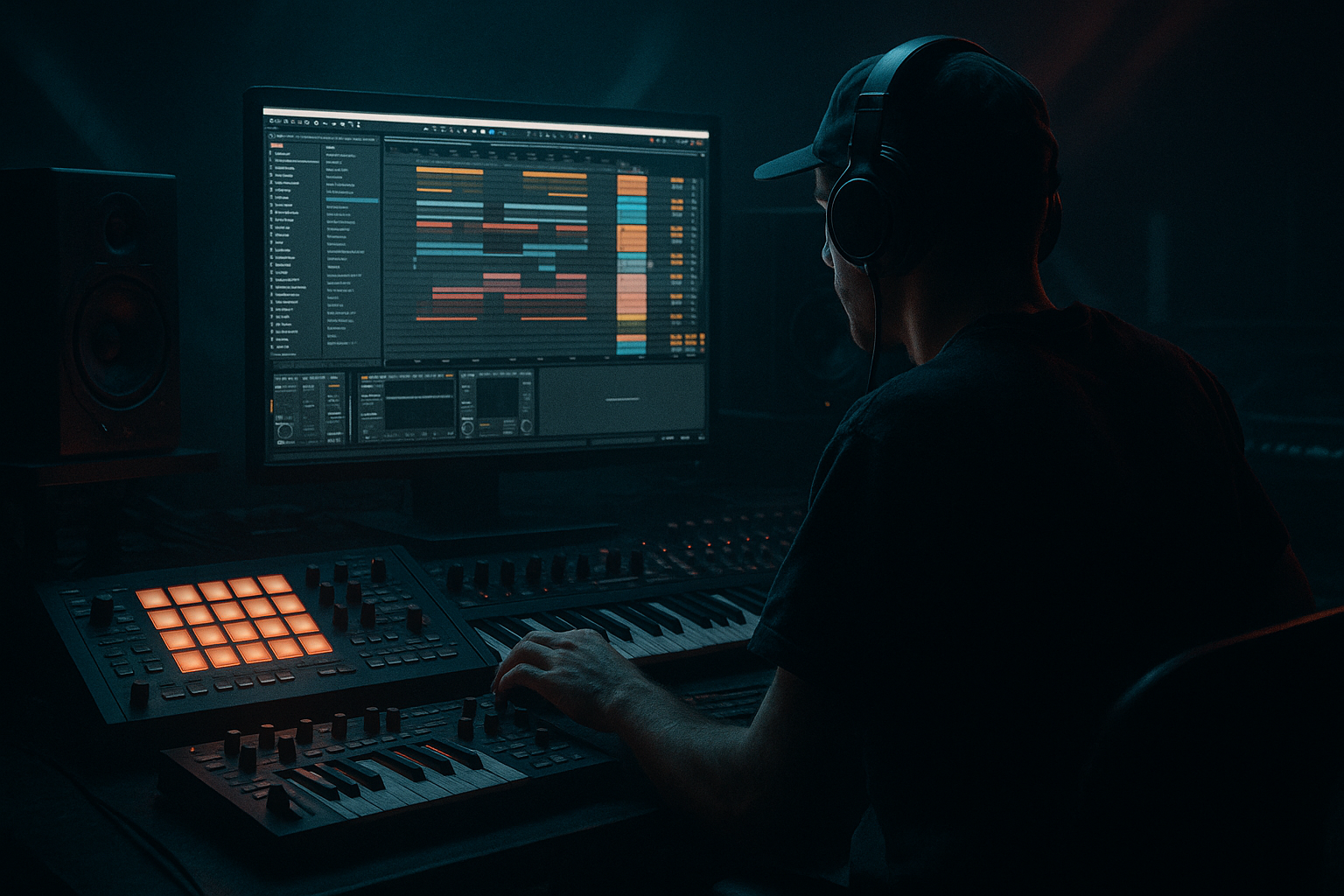
In this lesson, you’ll learn how to clean up a DnB drop in Ableton Live 12 so it still feels ragga-infused, rude, and dangerous without turning into muddy chaos. The goal is not to sterilise the energy — it’s to make the drop hit harder by controlling what is allowed to stay loud, wide, and aggressive, and what needs to be trimmed, filtered, automated, or moved out of the way.
This sits right in the drop section of a Drum & Bass track: after the intro build, after the tension, when the full drums, sub, bass movement, and vocal chops all arrive. In ragga-infused DnB, the drop often has:
- a big sub line
- fast break edits
- call-and-response vocal cuts
- rough bass stabs or reese movement
- FX chaos like sirens, crashes, rewinds, and delay throws
- Sub layer: solid mono foundation, tight and controlled
- Bass layer: a gritty reese or ragga-style bass stab that answers the vocal
- Drums: punchy kick and snare with an edited break for swing and movement
- Vocal chops: short ragga phrases or shouts placed as call-and-response accents
- FX cleanup: risers, impacts, and noise used to frame the drop, not smear it
- Arrangement shape: a DJ-friendly drop that works in a club and leaves space for mixing
- Bars 1–2: first impact, main hook or bass phrase
- Bars 3–4: variation, extra drums, vocal response
- Bars 5–6: small switch-up or break edit
- Bars 7–8: reload feel or tension lift into the next section
- Drums
- Bass
- Vox / Ragga
- FX
- Atmospheres
- Oscillator: sine wave
- Octave: low, around -1 or -2 octaves
- Amp envelope: short attack, moderate sustain
- Release: around 50–120 ms so it doesn’t blur between notes
- Width: 0%
- Bass Mono: ON if needed
- Gain: adjust so the sub sits below the kick, not above it
- Start with a saw or wavetable-based patch
- Add a low-pass filter
- Use a short MIDI phrase, not a long held note
- Make the bass answer the vocal, not sit over it all the time
- Filter cutoff: around 200 Hz to 1.2 kHz, depending on the sound
- Filter envelope: medium attack, short decay for punch
- Drive/Saturation: light to medium
- Glide/portamento: subtle, if you want sliding movement
- Soft Clip: ON
- Drive: around 2–6 dB
- Output: trim back so volume stays controlled
- Put the break in Simpler in Slice mode, or on an audio track with Warp enabled
- Chop out the hits you want
- Layer them under your main kick/snare
- snare accents
- ghost notes
- tiny hat hits
- break shuffles between the main hits
- High-pass around 120–200 Hz to remove low-end mud
- Cut harsh resonances if needed around 2–5 kHz
- Keep only the useful crackle and movement
- Drive: 5–20%
- Boom: only if needed, and keep it subtle
- Transients: slightly up if the break is too flat
- a one-shot “hey”
- a cut-up “pull up”
- a rhythmic phrase like “badman” or “listen”
- on bar starts
- before snare hits
- as responses to bass stabs
- at the end of 2-bar phrases
- Simpler or audio clip
- EQ Eight: high-pass around 120–180 Hz
- Auto Filter: automate the cutoff to open on key words
- Echo: short throw on the last word only
- Reverb: small or medium room, keep it short
- Auto Filter on bass for movement into switches
- Utility width on FX and atmospheres
- Echo send for vocal throws at the end of bars
- Filter cutoff on noise risers or downlifters
- Saturator drive only on selected bass hits
- Open the bass filter slightly in bars 3–4 for more intensity
- Pull the vocal send up only on the last word of a phrase
- Mute the break for half a bar before a reload-style drop back in
- Automate a low-pass filter on atmospheres so the drop clears out
- Drum Group
- Bass Group
- Vocal Group
- FX Group
- EQ Eight: remove unnecessary low-mid clutter, especially if the reese is too thick around 200–500 Hz
- Compressor: only gentle control, maybe 1–3 dB gain reduction
- Utility: check mono and keep width disciplined
- Drum Buss for punch
- Glue Compressor for cohesion, with light settings
- EQ if the snare feels boxy or the kick is muddy
- shorten bass note length
- move the bass note off the exact kick transient
- cut low-mid mud from the bass layer, not the sub
- a reversed cymbal or noise swell into the drop
- a short impact on bar 1
- a reverb tail that stops before the next kick phrase
- a downlifter into the next section
- Reverb on a return track for shared space
- Echo for throw-style transitions
- Auto Pan on noise or atmospheres for movement
- Utility to kill or reduce width on the main drop impact if it gets blurry
- a clean drum intro for mixing
- a stripped outro with kick, snare, and sub
- leave headroom for DJ beatmatching
- Use more space, not just more distortion. A short gap before a bass stab can feel heavier than stacking extra layers.
- Resample your bass. Print a bass phrase to audio, then chop it into hits. This gives a more solid, DJ-tool-like feel.
- Add grit in the mids, not the sub. Keep the sub clean and add character higher up with Saturator or mild overdrive.
- Use ghost notes in the break. Quiet snare or hat details make the groove feel more human and dangerous.
- Automate filter movement on the ragga vocal. A little opening at the right moment makes the phrase punch through the drop.
- Check mono often. If the drop loses energy in mono, the mix is too dependent on width.
- Let one element lead each bar. For example: bar 1 bass, bar 2 vocal, bar 3 break fill, bar 4 reload hit. That keeps the chaos readable.
- Use a darker ambience layer sparingly. A low-passed atmos pad can make the drop feel bigger, but keep it tucked far back.
- Build the drop around a mono sub, a controlled bass layer, and a tight break edit.
- Treat ragga vocals like rhythmic DJ tools, not constant clutter.
- Use EQ Eight, Utility, Saturator, Drum Buss, Glue Compressor, Echo, and Auto Filter to clean and shape the chaos.
- In DnB, space is power: short gaps, tight phrasing, and clean low-end separation make the drop hit harder.
- Keep the arrangement DJ-friendly so the tune works in a mix and in the club.
The trick is making all of that feel wild but still readable.
Why this matters: in DnB, the drop is usually moving at 174 BPM, which means there is very little time for messy sounds to hide. If your bass, drums, and vocal chops all fight for the same space, the drop loses impact. A clean drop sounds bigger because each element has a job. That is especially important in ragga-style chaos, where the vibe comes from contrast: tight control underneath, madness on top.
---
What You Will Build
You will build a clean, hard-hitting DnB drop section that feels like this:
By the end, your drop will feel like a proper DnB system tune: subby, sharp, and controlled, with enough room for the ragga flavour to cut through.
---
Step-by-Step Walkthrough
1. Set up a clean drop section in Arrangement View
Open a new section in Arrangement View and focus on just the drop area. For a beginner workflow, keep it simple: make an 8-bar drop first, not a 16-bar epic.
A basic DnB drop layout could be:
This helps you work like a DJ tool builder: the drop should be easy to mix in and out of, and it should have clear phrasing.
Use colour coding or track groups:
That organisation matters because DnB gets busy fast.
2. Build the sub first and keep it mono
Start with your sub bass using Operator or Wavetable. For beginners, Operator is the easiest route.
Set up a simple sub:
If you use MIDI notes, try a simple two-note or four-note pattern with space between hits. In DnB, a sub that leaves gaps often feels heavier than one that plays constantly.
Add Utility after the instrument:
Why this works in DnB: the sub is the foundation of the drop. In ragga-infused chaos, a stable mono sub keeps the whole tune grounded while your upper bass and vocals can go wild.
3. Shape the bass call-and-response with a stock synth
Now create the main bass movement. For a beginner-friendly route, use Wavetable or Operator, then add saturation.
A simple DnB bass recipe:
Try these starting settings:
Then add Saturator:
If the bass is reese-like, duplicate the track or use two detuned voices in the synth and keep the low end under control with EQ Eight. High-pass the bass layer above the sub region so it doesn’t compete with the sub.
A useful rule: the sub plays the weight, the bass layer plays the attitude.
4. Edit your drum break so the groove stays sharp
A lot of DnB drop energy comes from the break edit, not just the kick and snare. Drag a break into Simpler or onto an audio track and slice it neatly.
Good beginner workflow:
Focus on:
Use EQ Eight on the break:
Then use Drum Buss on the break group:
Why this works in DnB: the break adds motion between the big hits, which is essential in jungle-influenced or ragga-infused DnB. It makes the drop feel alive without needing more layers.
5. Place ragga vocals like DJ tools, not full-time clutter
This is where the “ragga-infused chaos” lives. But the vocals should behave like DJ tools: short, punchy, and placed with intent.
Use vocal chops, shouts, or call phrases such as:
Instead of letting the vocal run constantly, place it:
Processing chain example:
Keep vocal chops tight. In DnB, too much vocal sustain can blur the drums. A chopped ragga phrase can carry more energy than a full vocal line because it leaves room for the rhythm to punch back.
6. Use automation to clean the drop while keeping it alive
The “clean it” part is mostly automation. Your drop should evolve, but not all at once.
Automate these stock devices and parameters:
Useful automation ideas:
A classic arrangement move is a half-bar drop-out before a key bass return. That tiny gap makes the return feel huge.
7. Clean the low end with routing and group processing
Group your drums and bass separately. This keeps the mix manageable and gives you control.
Suggested routing:
On the Bass Group:
On the Drum Group:
If the bass and kick fight, do not just make everything louder. Reduce overlap:
This is one of the most important DnB mixing habits: protect the sub, sharpen the kick, and keep the mid-bass out of the way when the drums hit.
8. Add DJ-friendly transitions around the drop
Since this lesson is about DJ tools, think like a selector: the drop needs clean entry and exit points.
Add:
Try these stock devices:
For a club-friendly intro/outro, keep some elements simple:
That makes your tune more usable and more professional.
---
Common Mistakes
1. Too many bass layers fighting each other
Fix: keep one true sub, one main bass voice, and maybe one texture layer max.
2. Vocal chops too long or too loud
Fix: shorten them and place them like percussion. Let silence do some of the work.
3. Breaks with too much low end
Fix: high-pass the break and let the sub own the bottom.
4. Stereo widening on the low end
Fix: keep sub mono and check with Utility. Wide low end can sound huge alone and weak in a club.
5. No arrangement breathing room
Fix: remove sounds for half a bar or a bar. DnB drop impact often comes from contrast, not density.
6. Harsh reese sounds dominating the mix
Fix: tame upper mids with EQ and use saturation carefully instead of just boosting volume.
---
Pro Tips for Darker / Heavier DnB
Why this works in DnB: heavier tracks rely on controlled contrast. A disciplined low end and tight drum arrangement make the aggressive elements feel louder and more dangerous.
---
Mini Practice Exercise
Spend 10–20 minutes making a drop cleaner without adding new sounds.
1. Pick an existing 8-bar DnB drop in Ableton.
2. Solo the sub and make sure it is mono using Utility.
3. High-pass any break or percussion layer that is muddy below 120–200 Hz.
4. Shorten one bass note or remove one bass hit so it leaves space for the kick.
5. Cut one vocal chop so it becomes a tighter ragga accent.
6. Automate one Echo throw at the end of bar 4 or bar 8.
7. Mute one element for half a bar before the drop restarts.
8. Listen once in mono and once in stereo.
Goal: make the drop feel clearer, heavier, and more deliberate without making it smaller.
---
Recap
If you can clean a ragga-chaos drop, you can make it feel bigger, darker, and more professional at the same time.

