Main tutorial
Lesson Overview
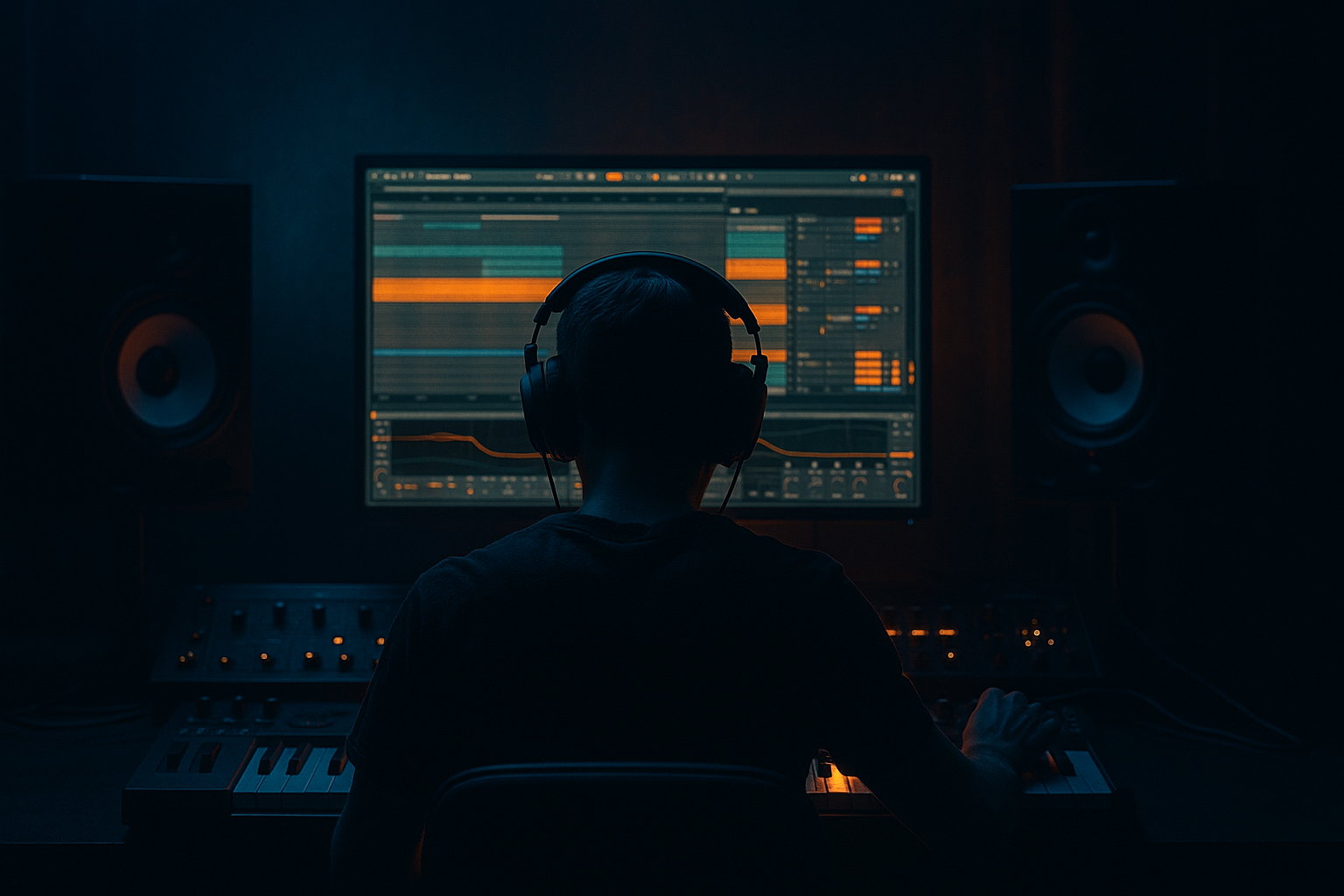
This lesson is about building a dubwise, chopped-vinyl texture layer in Ableton Live 12 that sits inside a jungle / oldskool DnB track without turning into messy lo-fi wallpaper. The goal is not just to make something “dusty”; it’s to create a rhythmic texture that behaves like a playable arrangement element: it adds swing, history, and tension, while still leaving room for the break, the sub, and the snare to hit hard.
This technique lives in the midrange and upper-mid groove layer of a DnB track. Think of it as the bit that bridges your drums and bassline: chopped vocals, vinyl stabs, off-grid FX, micro-slices of break ambience, and short echo tails that feel hand-cut and dub-processed. In jungle and oldskool DnB, this matters because the genre is built on sample culture, groove mutation, and negative space. A great chopped-vinyl texture can make a loop feel alive; a bad one just smears over the drums.
Technically, this is about using Ableton’s stock sampling, warping, filtering, saturation, and automation tools to create motion without wrecking the low end. Musically, it helps you make the track feel like it’s constantly “breathing” between snare hits and bass phrases. This works especially well for dark jungle rollers, dubwise halftime-to-doubletime hybrids, and oldskool-inspired DnB where the arrangement needs character, not just aggression.
By the end, you should be able to hear a texture that sounds worn, chopped, and intentional — like a dubplate fragment or an old record loop sliced into a controlled rhythmic instrument. A successful result should feel like it pushes the groove forward without stealing focus from the drum break or sub, and it should still make sense when you drop it into the full arrangement.
What You Will Build
You will build a chopped-vinyl texture rack made from a short sample loop, a few tiny edits, and automation-first processing in Ableton Live 12. The finished part should sound like:
- a dusty, syncopated vinyl/dub texture
- with small pitch and filter shifts
- delayed fragments that appear and disappear around the snare
- a slightly unstable stereo edge above the low mids
- and a strong mono-safe centre so it can sit above the drums without collapsing the groove
- Use filtering as menace, not just tone-shaping. A slowly opening Auto Filter on a chopped vinyl stab can create tension that feels like pressure building under the break. Try moving cutoff only a small amount — enough to imply motion, not enough to reveal the whole source.
- Let one slice stay ugly. In darker DnB, a single noisy, resonant, or slightly clipped chop can make the whole texture feel more underground. Keep one fragment rough while the others stay controlled. That contrast reads as intention.
- Print the tail, then edit the tail. If a delay throw sounds good but too long, bounce or consolidate it and trim the tail manually. This gives you more precise phrasing than relying on the return to behave perfectly.
- Use octave discipline. If the source has tonal information, try moving only the top fragment up an octave or the darker fragment down subtly, but keep the body of the layer out of the sub zone. Movement is great; low-end relocation usually is not.
- Build tension with negative space. For heavier tracks, the best move is often removing a chop before the snare, not adding another one. That little empty pocket makes the next hit feel bigger and more dangerous.
- Keep mono compatibility in check. If your chopped-vinyl layer relies on stereo width for its identity, test it collapsed to mono. The track should still feel like the same part, just narrower. If it vanishes, the centre content is too weak.
- Use subtle pitch variation as wear. Tiny clip transpose moves — even a few semitones up or down on selected fragments — can create that “different take / different record” feeling that suits oldskool DnB. Keep it small enough that the groove remains coherent.
- Use only one source sample
- Use no more than 4 slices
- Use only stock Ableton devices
- Limit yourself to one main automation move and one send effect
- Keep the texture high-passed above the low end
- a clear chop pattern
- one automated filter movement
- one delay or reverb throw on a transition moment
- a version that still feels solid when played with drums and bass
Rhythmically, it should feel partly quantized, partly human, with chopped events that either answer the snare, anticipate the kick, or leave deliberate holes. Its role in the track is to provide movement, atmosphere, and “record culture” energy in intros, breakdowns, and drop sections. Mix-ready means it should be textured but controlled: no flabby low end, no harsh fizz, and no uncontrolled stereo smear.
If you’ve done it right, the listener should feel that the track has weight and age, like the source material has been cut, bounced, and re-voiced inside the arrangement rather than pasted on top.
Step-by-Step Walkthrough
1. Choose a source that already has attitude
Start with a short sample that contains some of the texture you want: a vocal phrase, a horn stab, a dusty chord hit, a break tail, or a few bars of mono-ish vinyl ambience. In Ableton, drag it into an audio track and warp it only if you need the timing to line up with your project. For this style, sources with midrange personality work better than pristine material.
Good starting points:
- a single bar of a soulful vocal
- a 2–4 beat dub chord stab
- a break fragment with room tone
- a tiny old record chop with noise in it
You are not building a clean sample library here; you are building a foreground texture. If the sample already has a bit of crackle or room noise, that’s useful as long as the noise doesn’t dominate the drum space.
Why this works in DnB: oldskool/jungle production thrives on recognizable source fragments being re-contextualized. The listener doesn’t need a perfect sound; they need a convincing slice of history that grooves with the break.
2. Slice the sample into playable fragments
Right-click the audio clip and use Slice to New MIDI Track if you want a fast, performance-friendly approach. For a more hands-on edit, duplicate the clip and cut it into tiny pieces directly in Arrangement View. Aim for slices around:
- 1/8 note
- 1/16 note
- or very short transient fragments around 50–150 ms
Keep 4–8 useful slices, not 30. You want a controlled vocabulary of chops, not a cluttered mess. Put the strongest hits on the downbeats or just after the snare, and leave a couple of slices as “answer” notes.
What to listen for: the slices should still feel related, but each one should have a slightly different attitude. One might be more noisy, another more tonal, another more percussive.
Workflow tip: if you find a good pattern, freeze/flatten or consolidate it to audio once the chop timing feels right. Commit early enough that you stop endlessly auditioning the same loop.
3. Build a groove pattern that leaves the drums room
Program the chops so they sit around your break rather than fighting it. In a classic jungle context, try a pattern that answers the snare instead of doubling it. A useful starting point is a 2-bar phrase with:
- one chop before the snare as a pickup
- one chop on the offbeat after the snare
- one silent beat in the middle to preserve punch
- a variation in bar 2 to avoid a rigid loop
If your main break already has busy hats and ghost notes, keep the vinyl chops simpler. If the drums are sparse, the texture can be a little more active.
A versus B decision:
- A: Tight, chopped, almost percussive — good for darker rollers and sharper rhythmic control.
- B: Loose, more smeared and dubby — good for breakdowns, intros, and foggier jungle atmospheres.
Choose A if your bassline is already animated and you need clarity. Choose B if the track feels too clinical and needs more smoke.
4. Shape the source with a simple stock-device chain
Use a focused processing chain that protects the groove. A strong starting chain is:
EQ Eight → Saturator → Auto Filter → Utility
Suggested moves:
- EQ Eight: high-pass somewhere around 120–250 Hz depending on the sample; dip any boxy area around 250–500 Hz if it clouds the snare; tame harshness around 2.5–5 kHz if the chop gets spitty.
- Saturator: start with 2–6 dB Drive, Soft Clip on if needed, and listen for density rather than obvious distortion.
- Auto Filter: low-pass around 6–12 kHz for a more dubwise finish, or use a band-pass if you want the chop to feel narrower and more sampled.
- Utility: reduce width if needed or keep it centered until the texture is sitting correctly.
If the sample is too clean, a little Saturator drive can make it feel like it’s been printed through a chain rather than dropped in from nowhere.
What to listen for: the texture should become thicker and more “record-like” without losing the attack of the chop. If the transient blunts completely, back off the drive.
5. Use automation-first movement instead of piling on devices
This is the core of the lesson. Instead of adding five modulation layers, automate a few important parameters so the texture evolves over the phrase. In Ableton, draw automation on:
- Auto Filter cutoff
- Saturator Drive
- Track volume
- Sample Transpose or clip gain
- Reverb or Delay send amount if you have a send/return setup
Start with a 4- or 8-bar cycle. For example:
- Bars 1–2: filter slightly closed, low send level
- Bars 3–4: open the filter by a small amount and raise delay send on selected chops
- Final bar: pull the volume down or close the filter to set up the next section
Keep the moves modest. A dubwise texture works best when the automation feels performance-based, not like a sweeping EDM build.
Why this works in DnB: the break and bass need predictability; the texture layer supplies movement. Automation gives you change without changing the identity of the groove every bar.
6. Add dub-style space, but keep the centre clean
Create a Return track with Echo or Delay and a Reverb if you want atmospheric tails. Use short, controlled values:
- Delay time around 1/8, 1/8 dotted, or 1/16 depending on tempo and density
- Reverb decay around 1.2–2.5 seconds
- Filter the return so the effect doesn’t flood the low mids
- Keep wet levels low, then automate send amounts on selected chops
For this style, send only certain fragments into the delay — usually the last chop before a section change, a vocal cut, or a stab that needs to “answer back.” Do not blanket the whole loop in delay unless you want a breakdown.
What to listen for: the space should feel like it is coming out of the sample, not sitting on top of it. If the delay becomes rhythmic clutter, shorten the feedback or reduce the send. If the reverb washes over the snare, high-pass the return more aggressively.
7. Check the texture against drums and bass before you go further
Put the full drum break and sub in context now. This is where the idea either earns its place or gets cut. Solo is not enough — you need to hear whether the texture supports the track.
Listen for:
- Does it steal the snare’s snap?
- Does it mask the ghost notes in the break?
- Does it create a rhythm that fights the bassline?
- Does it make the drop feel deeper, or just busier?
If the sub is strong and the break is busy, reduce the texture’s low mids and keep it above the body of the snare. If the bassline is sparse, the texture can do more call-and-response work.
Stop here if... the groove already feels convincing in context. If the texture makes the drums feel smaller, do not keep adding effects. Fix the arrangement space first.
8. Use a second processing chain only if the flavour demands it
Sometimes the first chain is enough. If you need more grit or movement, a second valid route is:
Auto Filter → Drum Buss → EQ Eight
This works best when the texture needs to feel more like a crushed sampled layer than a clean chopped audio part.
Suggested settings:
- Auto Filter: high-pass or band-pass to isolate the useful chunk
- Drum Buss: low Drive amounts, maybe 5–20% character depending on material, and just enough Crunch to rough up the midrange
- EQ Eight: cut anything muddy that appears after the compression/distortion
Decision point:
- Choose the EQ Eight → Saturator → Auto Filter chain if you want a more controlled, dubwise, mix-friendly texture.
- Choose Auto Filter → Drum Buss → EQ Eight if you want more aggressive sampled grime and a harder “printed” feel.
Both can work; the right choice depends on whether the track wants smoke or bite.
9. Automate phrasing like a DJ-friendly arrangement tool
This layer should help the arrangement, not just repeat. In a 16-bar section, use it like this:
- Bars 1–4: sparse, filtered, almost background
- Bars 5–8: more active chops, slight delay throws
- Bars 9–12: reduce activity to make space for a drum fill or bass change
- Bars 13–16: bring back a more recognisable motif to signal the transition
In a drop, this means the texture can act like a subtle lift into the next 8-bar phrase. In an intro, it can be the thing that makes the tune feel already “alive” before the full break lands. In a second drop, you can automate the same pattern to become more open, more distorted, or more sparse for contrast.
A useful arrangement trick: make the texture answer the snare on bars 3, 7, 11, 15 of a 16-bar section, then drop out briefly just before the transition. That little absence gives the next section more impact.
10. Commit, edit, and refine like a real production move
Once the pattern is working, print it to audio if the automation and chopping are feeling good. This helps you stop over-editing and makes the part easier to arrange. You can then make tiny clip edits:
- nudge one chop a few milliseconds late for laid-back swing
- shorten a tail so it doesn’t overlap a snare
- mute a fragment at the start of a bar to create negative space
If the part feels too static after printing, duplicate the audio lane and create a second variation with a different filter position or a different one-bar chop density. Use one as the “main texture” and the other as a fill or transition layer.
The finished result should sound like a purposeful, slightly unstable vinyl-derived groove element that feels welded to the drums, not pasted over them.
Common Mistakes
1. Making the texture too full-range
- Why it hurts: low mids and sub content compete with the kick, snare body, and bass.
- Fix: use EQ Eight to high-pass the texture around 120–250 Hz, then re-check in context with the sub on.
2. Letting the chops land on every strong drum accent
- Why it hurts: the break loses pocket because the texture doubles the groove instead of complementing it.
- Fix: move some chops onto offbeats or just after the snare; leave deliberate holes on busy drum moments.
3. Over-widening the layer
- Why it hurts: stereo smear makes the texture sound exciting in solo but weak in mono and vague in the mix.
- Fix: keep the core texture centered with Utility, and if you widen anything, do it only above the low mids and check mono regularly.
4. Using too much delay feedback
- Why it hurts: the tail clouds the next snare and turns a controlled dub move into rhythmic mush.
- Fix: reduce feedback, shorten delay time, and automate send only on selected chops rather than all of them.
5. Distorting before you’ve chosen the right sample
- Why it hurts: distortion can exaggerate a bad source instead of improving it.
- Fix: swap the source first, then use Saturator or Drum Buss to enhance the sample’s strongest tonal feature.
6. Ignoring the bassline relationship
- Why it hurts: a texture that feels great in solo can still fight the bass phrase and reduce track impact.
- Fix: audition the layer with the bass and kick playing; if needed, reduce the texture’s activity on the same beats as the bass notes.
7. Automating too many things at once
- Why it hurts: the movement stops sounding dubwise and starts sounding random.
- Fix: automate one main control per phrase — usually filter, send amount, or volume — and let the chops do the rest.
Pro Tips for Darker / Heavier DnB
Mini Practice Exercise
Goal: build one 8-bar chopped-vinyl texture that works over a jungle break and subline without masking the drums.
Time box: 15 minutes
Constraints:
Deliverable: an 8-bar loop with:
Quick self-check: mute the texture and unmute it. If the groove gets worse without it, you’ve probably built a useful part. If the drums feel smaller when it comes in, simplify the chops or cut more low mids.
Recap
A strong dubwise chopped-vinyl texture in Ableton Live 12 is about controlled movement, not decorative noise. Keep it tied to the drums, protect the low end, and let automation do the evolving. Use a tight source, small chops, filtered space, and deliberate phrasing. If it sounds like a worn, rhythmic layer that adds menace and history without stealing the snare or sub, you’ve hit the right zone.

