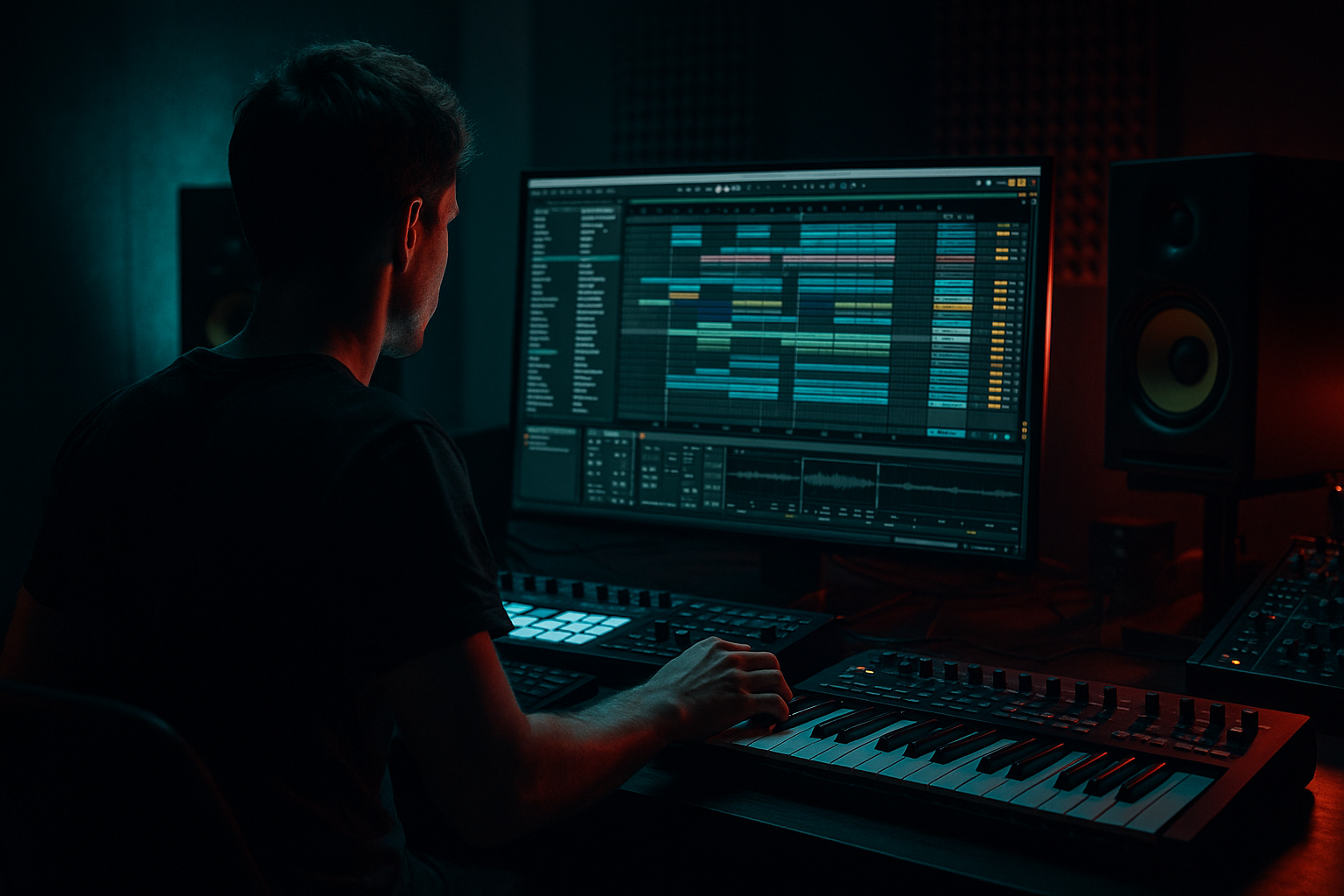
Main tutorial
Lesson Overview
This lesson shows you how to build a Heatwave-style bass wobble blueprint in Ableton Live 12 for oldskool rave pressure in a Drum & Bass track. The goal is not just to make a bass sound “wobbly” — it’s to create a mix-ready, club-effective bass movement that feels like jungle energy, rave urgency, and DnB weight all at once.
In DnB, this kind of bass usually sits in the drop, but it can also appear in builds, switch-ups, and second-drop variations. Think of it as the low-end hook that answers the drums: the bass should breathe around the breakbeats, not fight them. That’s why this technique matters. A wobble bass with good mixing discipline gives you:
- Sub weight that holds the floor
- Movement that feels musical, not random
- Space for breaks and snares
- Oldskool rave character without muddying the drop
- A clean mono sub that anchors the low end
- A mid bass wobble layer with movement and oldskool rave character
- Light saturation and filtering for grit
- Controlled automation for wobble speed and drop energy
- A basic mix balance that leaves room for your kick/snare and breakbeat
- A loop that sounds ready for a 16-bar drop or a roller-style groove
- Bar 1–4: simple call-and-response
- Bar 5–8: more wobble motion
- Bar 9–12: variation with filter or rhythm change
- Bar 13–16: short switch-up or fill into the next phrase
- Drums
- Bass Sub
- Bass Mid
- FX / Atmos
- Reference if you use one
- Keep the master peaking around -6 dB to -3 dB while building
- Avoid pushing the limiter too early
- Oscillator A: Sine
- Turn off unnecessary oscillators
- Set the filter very lightly or leave it open
- Keep the sound clean and stable
- Write short notes that follow the root movement of your bassline
- Start with notes around 1/4 to 1 bar
- Avoid overly busy sub rhythms at first
- Velocity: fairly even
- Octave: usually -1 or -2
- Note length: short enough to leave space between hits, but not so short that the sub disappears
- Oscillator 1: saw or square-based wavetable
- Oscillator 2: detuned slightly, around +7 to +12 cents
- Low-pass filter: active, with a moderate resonance
- Keep it mono at the source if possible for cleaner low end
- Filter cutoff: around 150–500 Hz depending on brightness
- Resonance: 10–25%
- Oscillator detune: low to moderate
- Glide/portamento: subtle, if you want that liquid oldskool slide between notes
- Assign an LFO to the filter cutoff
- Set rate to 1/8, 1/16, or synced dotted values if you want more swing
- Amount should be enough to hear the wobble, but not so high that it becomes a wobble mess
- Auto Filter
- Saturator
- EQ Eight
- Optional: Overdrive or Roar if you want more aggression
- Auto Filter: low-pass around 200–800 Hz, depending on how much top edge you want
- Saturator: Drive around 2–6 dB
- EQ Eight: cut a little muddiness around 200–400 Hz if needed
- Keep the bass body strong in the mid layer, but let the sub layer do the true low-end work
- If the wobble layer is too full, high-pass it gently around 80–120 Hz so it doesn’t fight the sub
- Start with a 1-bar or 2-bar loop
- Put bass hits after the kick or between snare hits
- Leave gaps where the break can speak
- Bar 1: short note on beat 1, wobble answer on the off-beat
- Bar 2: longer note before the snare, then a short tail
- Bar 3–4: repeat with one note changed for tension
- Call: low note on beat 1
- Response: wobble hit on the “and” of 2 or 3
- Resolution: root note before the snare
- Filter cutoff
- LFO amount or rate
- Saturator drive
- Auto Filter resonance
- Send levels to delay/reverb for transition moments
- Automate the filter cutoff to open slightly on the last 2 beats of every 4-bar phrase
- Increase wobble rate from 1/8 to 1/16 for a small lift
- Push saturation a little harder in the second half of the drop
- Bars 1–4: controlled wobble, lower cutoff
- Bars 5–8: brighter and more aggressive
- Bars 9–12: brief filter dip or rhythmic change
- Bars 13–16: open the filter and add a tiny fill before the switch
- Glue Compressor for gentle control
- EQ Eight for cleanup
- Optional Utility for mono control
- Glue Compressor: 1–2 dB of gain reduction max
- Attack: slower side if you want to preserve punch
- Release: auto or a medium setting
- Utility: set bass to mono below the low end by keeping the width at 100% or less on the bass bus, or use it to narrow the mid layer
- Keep the kick and snare punchy but not oversized
- If your bass hits on top of the kick, reduce one of them slightly
- Check for clash around 50–90 Hz depending on your kick
- Toggle the bass on/off while listening to the break and snare
- If the snare loses impact, the bass may be too wide or too loud in the low mids
- If the kick disappears, reduce the sub sustain or move bass notes away from the kick transient
- Echo on a send for short throw-ins at phrase ends
- Reverb very lightly on the mid bass or drums, not the sub
- Auto Pan very subtly on the mid layer if you want extra motion, but keep depth moderate
- Echo time: 1/8 or 1/4
- Feedback: low, around 10–20%
- Reverb decay: short, around 0.6–1.5 s for subtle space
- Dry/Wet: low
- Chop the best hits
- Reverse a short phrase for a fill
- Add a tiny fade-in/out to avoid clicks
- Layer the audio with your MIDI bass if needed
- Keep the sub mono
- Narrow the mid bass if needed
- Check your bass in mono regularly
- High-pass the mid layer around 80–120 Hz
- Let Operator or a sine layer handle the real sub
- Start at 1/8
- Only move to 1/16 when the arrangement needs more energy
- Place bass hits around kick/snare gaps
- Use call-and-response phrasing
- Listen to where the snare lands and leave space for it
- Use light Saturator drive first
- If you want more aggression, add it to the mid layer only
- Use a second bass variation for the second drop: keep the first drop simpler, then add a more aggressive filter opening or a different wobble rhythm later.
- Automate not just cutoff, but resonance: a small rise in resonance can create a sharper rave edge without adding extra notes.
- Layer a short noise hit under the bass attack using a tiny clipped sample or filtered noise from a synth. This helps the bass read on smaller speakers.
- Use ghost notes in the drums to support bass movement. A subtle break edit can make the wobble feel more alive.
- Clip the mid bass lightly with Saturator or a soft limiter-style feel to add density, but keep the sub untouched.
- Use tension notes sparingly: a minor 2nd, flattened 5th, or quick passing note can bring darker energy, but don’t overcrowd the phrase.
- Check the low end at low volume. If the bass still feels present quietly, it usually translates better in a club.
- Reference a classic rollers or jungle track and compare bass length, not just tone. DnB basses often work because of rhythm first, sound second.
- Build the bass in two layers: clean sub + moving mid bass
- Use Operator for the low end and Wavetable/Analog for the wobble
- Keep the sub mono and simple
- High-pass the mid layer so it doesn’t fight the sub
- Shape the groove so the bass answers the drums
- Use automation to create phrase movement and drop energy
- Keep the mix tight: headroom, mono checks, and drum/bass separation are everything in DnB
We’ll keep it beginner-friendly, using mostly Ableton stock devices and practical routing. The result is a bass blueprint you can reuse for rollers, jungle, darkstep, and even neuro-influenced DnB when you want a more ravey, nostalgic edge.
What You Will Build
By the end, you’ll have a two-layer DnB wobble bass in Ableton Live 12:
Musically, this will feel like a bassline that can sit under a classic DnB rhythm:
The sound target is pressure, not chaos: enough movement to keep the listener locked in, but stable enough to translate on club systems. 🔊
Step-by-Step Walkthrough
1) Start with a clean DnB project layout
Open a new Ableton Live 12 set and set the project around 174–175 BPM, which is a classic DnB zone. Before sound design, organize your session so the low end stays under control.
Create these tracks:
Why this matters in DnB: the drums are fast and busy, so your bass needs a clear lane. A tidy session helps you make mix decisions quickly instead of guessing.
On your Master, leave headroom:
If you like working fast, color-code the bass tracks and group them into a Bass Bus later. That makes mixing much easier.
2) Build the sub first using a simple Operator patch
Create a MIDI track for your sub and load Operator.
Use a basic sine-based sub:
Programming tips:
Suggested sub levels:
If your line is in F minor, for example, keep the sub centered around F, Ab, C, or passing notes that support the drop. The sub should feel like the foundation, not the melody.
Why this works in DnB: fast drum patterns and syncopated snares can make low-end feel messy quickly. A clean sine sub gives the track solidity and helps the kick and snare punch through without competition.
3) Create the wobble layer with a gritty, simple synth
Duplicate the sub track or make a new MIDI track for the mid bass. Load Wavetable or Analog if you want a classic ravey movement. For beginners, Wavetable is a great choice because it gives you clear control without getting too deep.
Good starting setup:
Useful starting settings:
Now add motion with LFO:
For a Heatwave-style oldskool pressure feel, try a wobble that’s more rhythmic than extreme. It should feel like a deliberate pumping bass phrase, not a dubstep growl.
4) Shape the bass with stock effects for mix clarity
Now add a simple effect chain to the mid bass track:
Suggested chain order:
1. Auto Filter
2. Saturator
3. EQ Eight
Settings to start with:
Important mixing move:
This is a classic DnB mixing approach: separate the duties. The sub gives power, the mid gives character.
5) Write a bassline that answers the drums
Now program the actual musical phrase. In DnB, basslines work best when they interact with the drum groove. Don’t just place notes on every beat. Use space, syncopation, and repetition.
A beginner-friendly approach:
Example phrasing idea:
Try a call-and-response pattern:
This kind of phrasing is perfect for oldskool rave pressure because it feels direct and memorable. It also leaves room for classic DnB drum energy, especially if you’re using a chopped break with ghost notes.
6) Make the wobble breathe with automation
Now automate the movement so the bass feels alive across the drop. In Ableton Live, you can automate:
For a beginner-friendly setup:
Example arrangement idea:
This works in DnB because repetition is powerful, but variation keeps the floor engaged. The listener feels forward motion without losing the groove.
7) Lock the bass and drums together in the mix
Now do the most important part: make sure the bass and drums work together.
On the Bass Bus, add:
Suggested settings:
Drum-side tips:
A quick reference habit:
8) Add a little grit and room, but keep the low end dry
Oldskool rave pressure often feels alive because of texture — but in DnB, too much space in the low end can blur the groove. Keep the sub dry and mono, and use effects mostly on the mid layer or in transition moments.
Good stock FX moves:
Suggested FX choices:
Use FX like seasoning. In darker DnB, less is often more. You want pressure and size, not washed-out bass.
9) Resample a few bars if the wobble needs more character
If the patch feels too clean, resample it. In Ableton, record 4–8 bars of your bass and audio-edit it. This is a very useful DnB workflow because it lets you commit to a sound and then shape it like a sample.
What to do after resampling:
This is especially useful for jungle-leaning or rollers-style basslines because sampled movement can feel more organic than a perfectly clean synth line.
Common Mistakes
1) Making the wobble too wide
Wide bass sounds exciting in solo, but in DnB it can wreck the low end.
Fix:
2) Letting the mid bass cover the sub
If the wobble layer has too much low end, the mix will feel foggy.
Fix:
3) Overdoing the wobble rate
Too-fast movement can turn into noise instead of groove.
Fix:
4) Ignoring the drums
Bass that doesn’t relate to the breakbeat can feel disconnected.
Fix:
5) Too much distortion
A little saturation adds bite; too much can kill the low end.
Fix:
Pro Tips for Darker / Heavier DnB
Mini Practice Exercise
Spend 10–20 minutes making a basic 8-bar Heatwave-style DnB bass loop:
1. Set tempo to 174 BPM
2. Build a clean sine sub in Operator
3. Add a Wavetable mid bass with a low-pass filter and LFO wobble
4. Write an 8-bar phrase with:
- 2 bars of simple notes
- 2 bars of a repeat with one variation
- 2 bars with slightly more wobble
- 2 bars with a small fill or filter opening
5. Add Saturator to the mid bass
6. High-pass the mid layer around 100 Hz
7. Balance the bass against a kick and snare
8. Check the bass in mono
9. Automate the filter cutoff across the last 2 bars
10. Save the whole rack or track group as a template
Goal: by the end, your bass should feel like it could sit under a proper DnB drop, not just sound good solo.
Recap
If you get the balance right, this Heatwave-style wobble blueprint gives you that oldskool rave pressure while still sounding clean, modern, and ready for a proper drum & bass drop.

