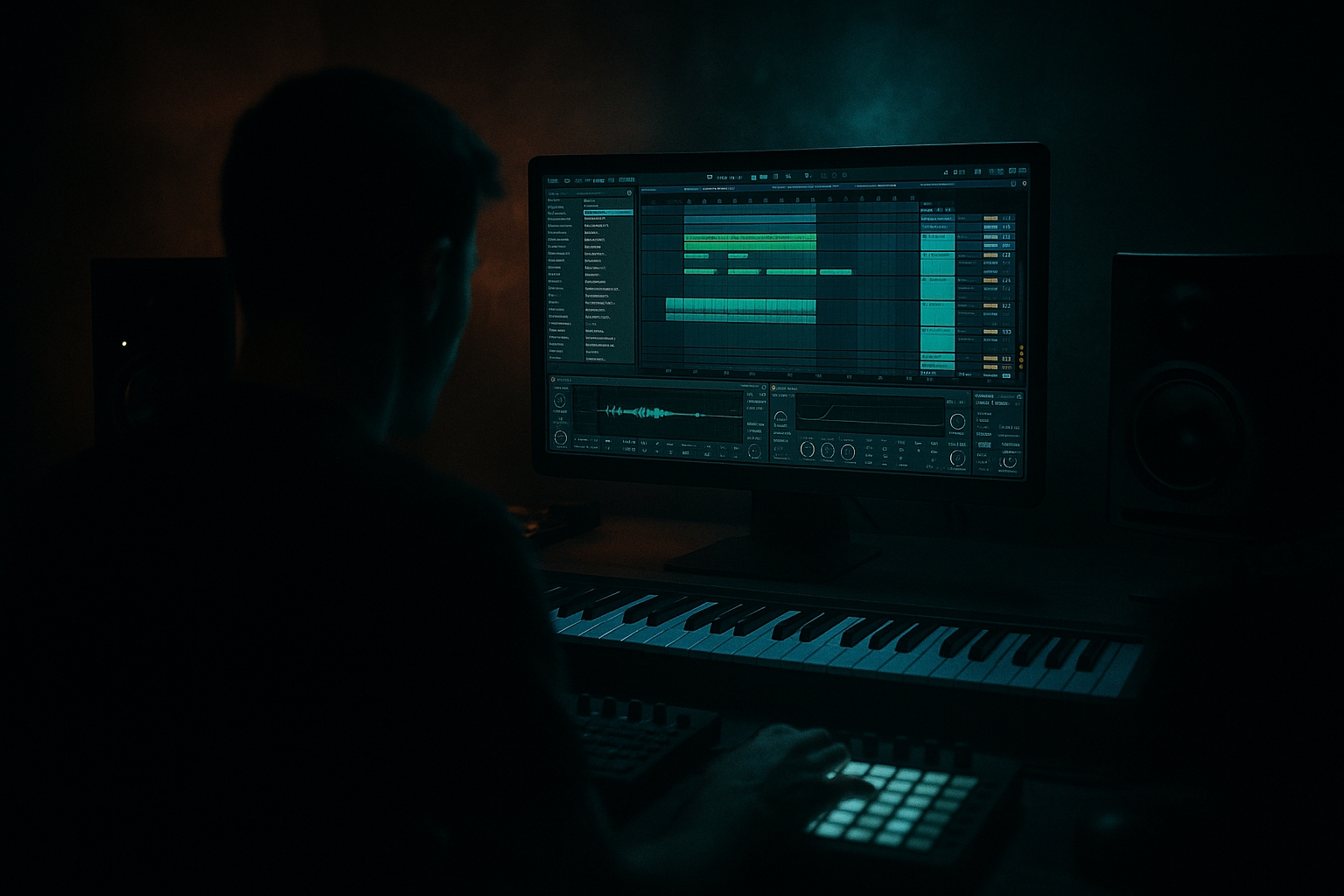
Main tutorial
Lesson Overview
This lesson is about building a sunrise-style intro lift for a Jungle / oldskool DnB track in Ableton Live 12, using the bassline as the emotional engine rather than just a drop-only tool. The target vibe is that warm, reflective “Heatwave” moment: early morning energy, after-hours haze, but still with enough drive and tension to make the crowd lean in before the drop.
In Drum & Bass, the intro is not dead space. It’s where you establish identity, groove DNA, and low-end psychology. For sunrise set emotion, you want a bassline that starts restrained and then slowly reveals movement: a filtered sub pulse, a reese shadow, or a chopped oldskool phrase that feels nostalgic but forward-moving. This technique matters because DnB intros often need to do three jobs at once:
1. DJ-friendly phrasing for mix-ins,
2. emotional setup for the drop, and
3. subtle bass narrative so the track already feels alive before full drums arrive.
We’ll build a bass-led intro that works for jungle / rollers / darker bass music aesthetics, but with a sunrise emotional arc. You’ll use stock Ableton devices, routing, automation, and arrangement choices that keep the intro musical, mix-safe, and ready for later reworking into a full track. 🌅
What You Will Build
By the end, you’ll have a 16- to 32-bar intro build that feels like a DJ-ready section from a real DnB tune:
- A filtered sub + midbass bassline phrase that gradually opens up
- A reese layer with movement but controlled stereo width
- Breakbeat edits and ghost-note drum detail that support the bassline
- An emotional atmosphere made from vinyl crackle, field texture, or soft pads
- A tension lift using automation on filter, distortion, reverb send, and pitch or note density
- Clear arrangement for a sunrise set transition into the drop
- Making the bassline too busy
- Letting the reese fight the sub
- Over-widening the bass
- Using too much reverb on the bass
- Neglecting drum/bass interaction
- Automating everything at once
- Not checking the intro as a DJ mix tool
- Add a very subtle layer of distortion on the reese with Roar or Saturator to bring out harmonics without turning it into noise.
- Use call-and-response phrasing: one bass hit, one drum answer, then a gap. That tension is very DnB.
- Try pitch dips or tiny note slides at the end of an 8-bar phrase for a darker, more nervous feel.
- Resample the bass through a short chain and re-chop it. That gives you more of a jungle record feel than endlessly tweaking MIDI.
- Put a short transient snare or rimshot on the last beat before the drop to sharpen the transition.
- Use Return tracks for atmosphere and echo, so you can automate build intensity without bloating the dry bass channel.
- For heavier character, layer a midrange growl very quietly under the reese, but high-pass it enough that the sub remains dominant.
- If the intro lacks underground grit, add a little clip-style saturation on the drum bus and reduce pristine high-end sheen slightly.
- Build the intro around a sparse but musical bassline
- Keep the sub clean, mono, and rhythmically intentional
- Let the reese layer open gradually for sunrise emotion
- Use break edits and ghost notes to give the intro real DnB movement
- Protect the mix with filtering, bus control, and mono discipline
- Automate with purpose so the section works as both an emotional build and a DJ-friendly intro
Musically, this could sit in something like A minor, D minor, or F minor, with a bassline that starts sparse on the first 8 bars, then becomes more rhythmic and harmonically exposed in the next 8 bars. Think: oldskool jungle energy on the drums, but with a modern, spacious intro that feels like dawn light hitting the room.
Step-by-Step Walkthrough
1. Set the tempo, key center, and intro length first
Start at a classic DnB tempo: 172–174 BPM. For sunrise emotion, 174 BPM often feels better because the emotional phrasing still has urgency.
Decide your key center before sound design. Good sunrise-friendly DnB keys are:
- A minor: moody but open
- D minor: classic darker DnB tension
- F minor: weighty and emotional
In Ableton Live 12, lay out a 32-bar intro if you want a DJ-friendly version, or 16 bars if the track is more direct. For this lesson, build the bassline phrase so it can breathe in:
- Bars 1–8: filtered tease
- Bars 9–16: groove reveal
- Bars 17–24: tension lift
- Bars 25–32: pre-drop energy
Why this works in DnB: the genre often relies on tight phrasing and clean sectional contrast. A long intro can still feel exciting if the bassline evolves in layers instead of simply “starting later.”
2. Program a minimal sub bass line with strong note phrasing
Create a MIDI track with Operator or Wavetable for the sub. For a clean DnB sub, Operator is ideal because it’s fast and reliable.
Settings to start:
- Oscillator: sine
- Amp envelope: short attack, medium sustain, short release
- Filter: low-pass or no filter if it’s pure sub
- Mono: on
- Glide/portamento: subtle if you want slides, around 40–90 ms
Write a bassline that is musical but sparse. Use 1-bar or 2-bar phrasing with rests, not constant notes. Example concept:
- Bar 1: root note on beat 1, then a short offbeat answer
- Bar 2: root note plus a passing tone, then space
- Bar 3–4: repeat with a variation at the end
Keep the sub mostly below 100 Hz. If you want movement, use short note lengths and occasional note slides rather than complex harmony.
Good parameter range:
- Sub level: keep conservative, around -12 to -18 dB peak contribution before bus processing
- Note length: try 1/8 to 1/4 note durations with gaps
- Velocity: modest variation, around 70–100, if using a MIDI instrument with response
For oldskool jungle flavor, let the sub phrase answer the drums instead of sitting on top of them. That call-and-response feel is a huge part of the energy.
3. Build a midbass/reese layer that opens slowly
Add a second MIDI track for a reese-style bass using Wavetable, Analog, or a resampled sound. If you want that classic wide-but-controlled DnB texture, use two detuned saws or a saw + square blend, then tame it.
Suggested starting chain:
- Wavetable with a saw-based wavetable
- Detune slightly, around 5–15 cents
- Unison: if used, keep it modest
- Filter: low-pass around 200–600 Hz at the start
- Saturator after instrument, Drive 2–6 dB
- Auto Filter for movement
- Utility to keep low end mono if needed
MIDI writing approach:
- Double the sub rhythm with the reese, but don’t copy it perfectly
- Use octave jumps sparingly
- Add one note that trails or rises into the next phrase
- Leave gaps so the drums breathe
Automate the Auto Filter cutoff from dark to open over 8 or 16 bars. Start around 200–300 Hz and end around 1–2 kHz depending on how aggressive you want the reveal.
This is the emotional turn of the intro. The sub is the body; the reese is the mood. In DnB, a restrained reese opening up over time creates that sunrise-lift feeling without needing a huge melodic lead.
4. Resample the bass into an audio clip for jungle-style edits
For more authentic oldskool/jungle character, resample your bass phrase to audio and chop it. In Ableton, route the bass track to a new audio track or use Freeze/Flatten if needed.
Once audio is recorded:
- Slice the phrase into 1/2-bar, 1/4-bar, or even 1/8-note chunks
- Use Simpler in Slice mode, or manually edit clips
- Rearrange small bits to create a broken call-and-response pattern
- Add a little silence before a key note for tension
Good tools here:
- Warp if timing needs small corrections
- Fade handles to avoid clicks
- Transient shaping with clip gain or device compression
- Groove Pool with a light swing if your break needs more human movement
Add tiny ghost-note bass hits between the main phrase notes. This is where the intro starts feeling like a record rather than a loop. Jungle and oldskool DnB often thrive on micro-edits that sound almost accidental but are actually very intentional.
5. Layer and edit the drums so they support the bass narrative
Bring in a breakbeat, even if the intro is bass-led. Use a classic break or a layered break structure with:
- Main break for body
- Top break for hats and snap
- Optional ghost percussion for movement
In Ableton Live 12:
- Use Drum Rack for layered break pieces
- Use Simpler for sliced break hits
- Apply EQ Eight to carve low end from the break layer that doesn’t own the sub region
- Use Drum Buss lightly for glue and punch
Processing ideas:
- High-pass non-essential break layers around 120–180 Hz
- Add Drum Buss Drive around 5–15%
- Use Transients control carefully; too much can make oldskool breaks sound plastic
- Add a touch of Saturator or Roar for grit if the loop feels too clean
Make the drums interact with the bassline:
- Let a kick or break accent land right before a bass note
- Remove one snare hit at the end of a phrase to create anticipation
- Use a small fill every 8 bars to signal structure
Why this works in DnB: the groove in drum & bass is often defined by the relationship between break energy and bass phrasing. If the bass and drums breathe together, the intro feels intentional and DJ-friendly.
6. Create atmosphere without washing out the low end
The sunrise feel comes from space, but in DnB you must protect the bass. Add an atmosphere track with:
- vinyl noise
- field recording
- filtered pad
- reversed cymbal texture
- light chord shimmer
Use Ableton stock effects:
- Auto Filter high-passed around 250–500 Hz
- Hybrid Reverb with a short-to-medium decay
- EQ Eight to remove muddiness
- Optional Echo with subtle feedback for movement
Keep this layer quiet. It should be felt more than heard. Automate a filter opening or reverb send over the intro so it blooms just before the bassline opens fully.
A useful arrangement move: let the atmosphere lead the ear into the bass reveal by coming in one bar earlier than the bass re-entry. That one-bar offset adds emotional lift without crowding the mix.
7. Automate the intro build like a DJ tool, not a pop song
Now shape the energy with automation across the group or individual channels. In DnB intros, automation should feel functional and musical.
Useful automation lanes:
- Filter cutoff on the reese
- Reverb send on the atmosphere or break
- Saturator drive on the bass for extra urgency
- Utility width on mid/high bass layers
- Gain on the bass bus for a subtle lift into the drop
Suggested ranges:
- Filter cutoff: move from 200–400 Hz up to 1–2 kHz
- Reverb send: keep subtle, around 5–15%, then push higher in the final 4 bars
- Width: start narrower, then open the mid layer only; keep sub mono
- Bass bus gain lift: a tiny rise of 1–2 dB can feel huge if done cleanly
Use an 8-bar crescendo into the transition. In many DnB arrangements, the final 2 bars before the drop are where you can:
- thin out the drums
- let a bass note hold slightly longer
- throw in a reverse impact or snare fill
- mute the sub for half a bar to make the drop feel bigger
8. Shape the bass bus for glue, weight, and mono discipline
Route sub, reese, and any chopped bass layers to a Bass Group. This lets you manage tone and level as one unit.
On the bass bus, try:
- EQ Eight: high-pass very gently only if needed below 20–30 Hz
- Saturator: Soft Clip on, Drive 1–4 dB
- Glue Compressor: light compression, around 1–2 dB gain reduction
- Utility: width at 0% for sub-dominant sections, or keep the sub chain separate and mono
Practical mix move:
- Keep the sub mono
- Allow only the midbass/reese layer to carry width
- Check the bass in mono regularly
If the intro feels big in stereo but weak on club systems, the problem is usually too much width in the low mids. In DnB, clarity wins. You want the bass to feel huge without losing punch or phase focus.
Common Mistakes
- Fix: strip it back to a short motif and use variation, not constant notes.
- Fix: high-pass the reese more aggressively and keep the sub clean and centered.
- Fix: mono the sub completely and keep stereo effects above the low-end core only.
- Fix: use sends lightly and filter the reverb return with EQ Eight.
- Fix: align accents so breaks and bass notes answer each other instead of filling every gap.
- Fix: choose one primary build move and one secondary move. Too many rising elements can flatten the tension.
- Fix: make sure the first 16 or 32 bars can be mixed into or out of cleanly.
Pro Tips for Darker / Heavier DnB
Mini Practice Exercise
Spend 10–20 minutes building a stripped version of this idea:
1. Set your project to 174 BPM and choose A minor or D minor.
2. Create a 4-note bass motif using Operator or Wavetable.
3. Program it as a 2-bar phrase with rests.
4. Duplicate it onto a reese layer and filter it down hard at the start.
5. Add one sliced break loop from the Ableton browser or your own break sample.
6. Automate the reese filter cutoff from dark to open over 8 bars.
7. Add a subtle atmosphere track with high-pass filtering and reverb.
8. Bounce or resample the intro as audio and make one jungle-style chop variation.
9. Check the whole section in mono.
10. Export a rough 16-bar loop and listen as if you’re cueing it in a DJ mix.
Goal: by the end, the intro should feel like it’s about to bloom, not already at full power.

