DNB COLLEGE

AI Drum & Bass Ableton Tutorials

LESSON DETAIL

Impact blend tutorial for 90s-inspired darkness in Ableton Live 12 for jungle oldskool DnB vibes (Intermediate)

An AI-generated intermediate Ableton lesson focused on Impact blend tutorial for 90s-inspired darkness in Ableton Live 12 for jungle oldskool DnB vibes in the Composition area of drum and bass production.

Free plan: 0 of 1 lesson views left today. Premium unlocks unlimited access.

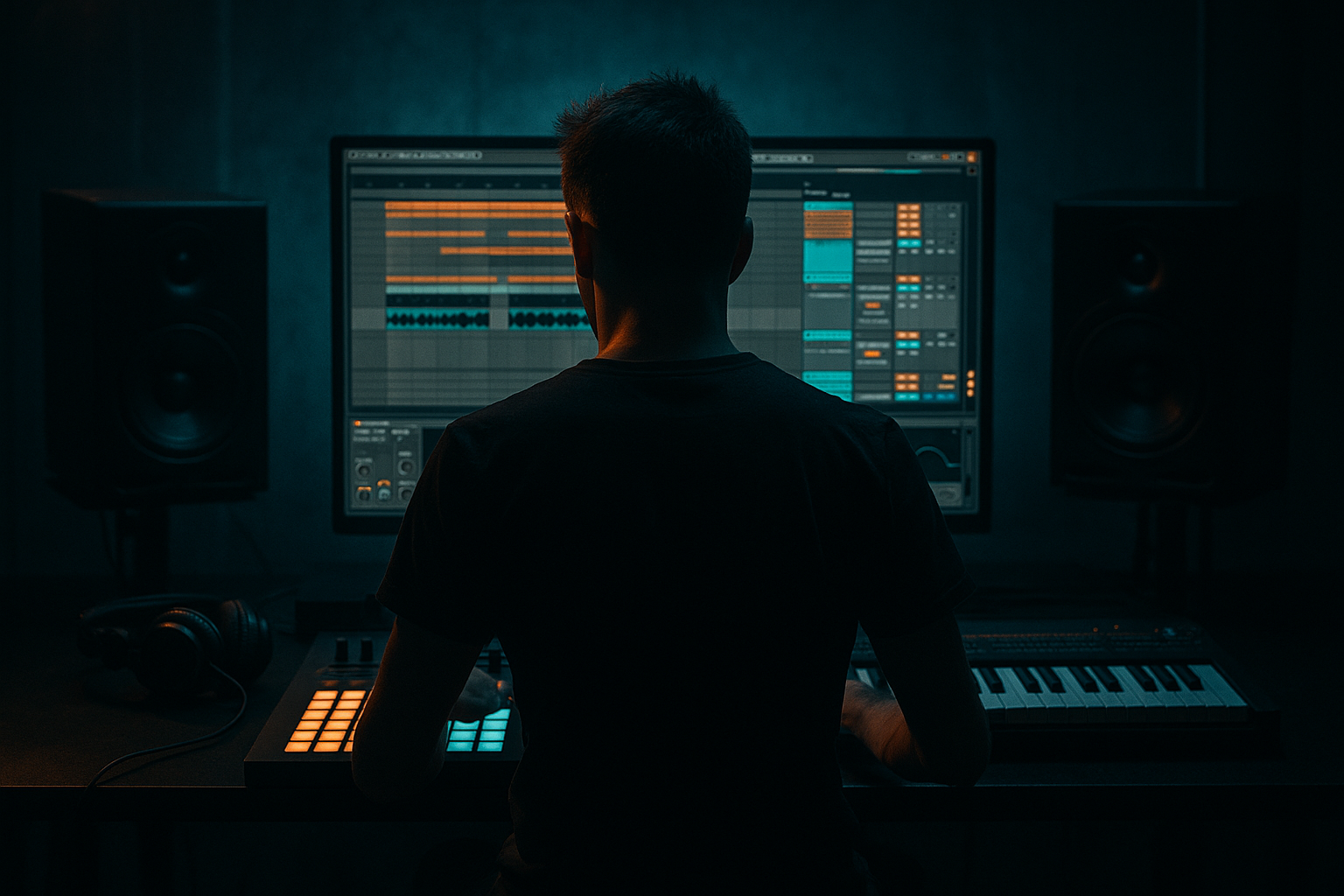
Impact blend tutorial for 90s-inspired darkness in Ableton Live 12 for jungle oldskool DnB vibes (Intermediate) cover image

Narrated lesson audio

The voice track includes the tutorial plus extra teacher commentary.

Open audio file

Main tutorial

```markdown

Impact Blend Tutorial: 90s-Inspired Darkness in Ableton Live 12 (Jungle / Oldskool DnB) 🥁🌑

1. Lesson overview

In 90s jungle and early DnB, impact isn’t just a “big boom”—it’s a layered moment that pushes the groove forward and makes drops feel heavier without needing modern EDM-style risers.

In this lesson you’ll learn a practical impact blend workflow in Ableton Live 12, using mostly stock devices, to create that dark, weighty, slightly grimy oldskool vibe.

You’ll build an impact that works in jungle contexts:

  • Amen/think breaks + sub + reese stabs
  • Dubby atmos + vinyl grit
  • Short, aggressive transitions rather than long modern builds
  • ---

    2. What you will build

    A 3-part impact system you can reuse:

    1. Transient smack (short, mid-focused click/thwack that reads on small speakers)

    2. Low-end weight (controlled sub/low “whomp” that doesn’t wreck your bassline)

    3. Dark space + tail (short industrial/room tail + filtered noise/atmo for era-accurate depth)

    You’ll end with:

  • An Impact Group with macro-style control via Audio Effect Rack
  • A simple arrangement template: pre-drop bar → impact moment → 2–8 bar payoff
  • A dark 90s character using Saturator, Redux, EQ Eight, Reverb, and Echo
  • ---

    3. Step-by-step walkthrough

    Step 0 — Set the session like a jungle tune

  • Tempo: 160–170 BPM (try 165 BPM)
  • Groove: If you’re using breakbeats, apply a subtle groove:
  • - `Groove Pool → Swing 16-XX` lightly, or an MPC-style swing

    - Keep it subtle: Groove Amount 10–20% (too much kills the roll)

    Arrangement context suggestion (classic):

  • 16 bars intro (pads/atmo + filtered break)
  • 16 bars tease (bass hints + breaks open up)
  • 32 bars drop (full)
  • 8 bars breakdown / switch
  • 32 bars second drop
  • Your impact will live at bar 33 (first drop) and again at bar 97 (switch/re-drop).

    ---

    Step 1 — Create an “Impact Group” track

    1. Create 3 audio tracks:

    - `IMP_Transient`

    - `IMP_Low`

    - `IMP_Tail`

    2. Select them → Cmd/Ctrl+G to group → name it `IMPACT BUS`

    3. On the group, add an Audio Effect Rack (this will be your reusable impact “instrument”).

    ---

    Step 2 — Build the Transient layer (mid punch that cuts) 🥊

    This is the piece that makes the impact felt even on small speakers.

    Sound source ideas (pick one):

  • A tight rimshot, snare hit, metal hit, door slam, kick top, or a chopped break transient
  • For 90s vibe: sample something slightly nasty (not too clean)
  • Processing chain on `IMP_Transient`:

    1. EQ Eight

    - HP filter at 120–200 Hz (steep-ish, 24 dB/oct)

    - Small boost around 2–4 kHz (+2 to +4 dB) if it needs crack

    - Optional: gentle notch if it’s harsh around 6–8 kHz

    2. Saturator

    - Mode: Analog Clip

    - Drive: +3 to +8 dB

    - Output: trim so it’s not clipping your bus

    3. Drum Buss (optional but great for smack)

    - Drive: 5–15%

    - Crunch: 5–20%

    - Transients: +10 to +30

    - Boom: OFF (you’ll do low-end separately)

    Editing tip (super important):

  • Keep it short. Fade it tight:
  • - Clip fade-out around 20–80 ms

    This prevents it sounding like a “snare fill” instead of an impact.

    ---

    Step 3 — Build the Low layer (controlled weight, not mud) 🔊

    This is the “whomp” that makes the room move—but in jungle you must protect the bassline.

    Sound source ideas:

  • A low tom, sub drop, pitched kick tail, or synthesized sine hit
  • Use Operator (stock) for total control:
  • - Create a MIDI track temporarily, load Operator

    - Oscillator: Sine

    - Pitch Envelope: amount -12 to -24 semitones, short decay (80–200 ms) for a “down” knock

    - Amp envelope: short decay (150–350 ms), no sustain

    - Render/freeze/flatten to audio, or keep it as synth

    Processing chain on `IMP_Low`:

    1. EQ Eight

    - LP around 120–180 Hz (24 dB/oct)

    - Cut any boxy low-mid around 250–400 Hz if it leaks

    2. Saturator

    - Soft Sine or Analog Clip

    - Drive +2 to +6 dB

    Add harmonics so it translates on smaller systems.

    3. Compressor (sidechain optional)

    - If your drop has a big bassline, sidechain the impact low to the main bass or vice-versa depending on your style.

    - For safety: mild control, Ratio 2:1, Attack 10–30 ms, Release 60–120 ms

    Length tip:

  • Jungle impacts are often shorter than you think.
  • Aim for 200–600 ms low tail, unless it’s a deliberate “sub fall”.

    ---

    Step 4 — Build the Tail layer (dark space + texture) 🌫️

    This is where the 90s darkness lives: short rooms, gritty air, not glossy stadium reverb.

    Sound source ideas:

  • A noise burst, vinyl crackle hit, reversed cymbal very low in level
  • A short industrial hit (metal, pipe, pallet slam)
  • A slice of ambience from your own track resampled
  • Processing chain on `IMP_Tail`:

    1. Auto Filter

    - Mode: LP

    - Cutoff 2–6 kHz (move by ear)

    - Resonance 5–15% for edge

    2. Reverb

    - Algorithm: try Room or Plate

    - Decay: 0.6–1.6 s (keep it tight)

    - Predelay: 10–25 ms

    - Low Cut: 250–500 Hz

    - High Cut: 4–8 kHz

    - Mix: if on insert, keep it low (10–25%); or set to 100% if used as send-return

    3. Redux (for era-grit)

    - Bit Reduction: 10–14 bits (subtle)

    - Downsample: 1.5–4 (very subtle, don’t destroy it)

    4. Echo (optional for dubby shadow)

    - Time: 1/8 or 1/16

    - Feedback: 10–25%

    - Filter it dark: HP 300 Hz, LP 3–6 kHz

    - Mix: 5–15%

    Pro move: consolidate the tail to audio and manually fade it so it ends right before the groove gets busy.

    ---

    Step 5 — Glue the blend on the Impact Bus (the “it hits like a record” stage) 🎛️

    On the `IMPACT BUS` group:

    1. EQ Eight

    - Gentle low shelf cut if it’s too heavy at drop

    - Optional dip around 250–350 Hz if it clouds the break

    2. Glue Compressor

    - Attack: 3 or 10 ms

    - Release: Auto or 0.1–0.3 s

    - Ratio: 2:1

    - Aim for 1–3 dB gain reduction on the hit

    This makes the layers feel like one event.

    3. Saturator (subtle)

    - Drive: +1 to +3 dB

    - Soft Clip: ON

    4. Limiter (safety)

    - Ceiling: -0.3 dB

    - Don’t smash it—just prevent overs.

    ---

    Step 6 — Turn it into a controllable “Impact Rack” (fast workflow)

    Inside the Audio Effect Rack on the group, map a few key parameters to Macros:

    Suggested macros:

    1. Smack → Transient track gain (Utility) or Drum Buss Drive

    2. Weight → Low track gain (Utility) + maybe EQ shelf

    3. Darkness → Tail Auto Filter cutoff (lower = darker)

    4. Tail Length → Reverb decay (0.6–1.6s range)

    5. Grit → Redux Downsample (subtle range)

    6. Glue → Glue Compressor threshold

    Add a Utility at the end of each layer for easy gain mapping.

    This lets you “perform” the impact into different sections quickly.

    ---

    Step 7 — Place impacts like a 90s junglist (arrangement moves that work) 🔥

    A) The 1-beat “slam” (classic)

  • Put the impact exactly on the drop downbeat.
  • Make sure the breaks STOP or thin out for a fraction right before:
  • - Try a 1/8 to 1/4 beat mute on the drum bus just before the drop.

    - Or filter the break with Auto Filter quickly.

    B) The “suck-in” (fast dark pull)

  • 1 bar before drop:
  • - Automate Auto Filter on the master drum loop (LP down to ~400–800 Hz)

    - Add a short reverb throw on a snare slice

  • Impact hits → filter snaps open → full break returns.
  • C) The “ghost impact” (oldskool subtle menace)

  • Put a quieter, darker impact 1 bar before the real one, but filtered and short.
  • Feels like the track is “leaning forward.”
  • ---

    Step 8 — Make it sit with breaks + bass (the jungle reality check)

    After placing it, check these:

  • Does it mask the snare?
  • If yes, reduce 2–4 kHz in transient layer or shorten it.

  • Does it fight the subline?
  • Shorten the low layer or shift it slightly earlier so the bassline speaks on beat 2/3.

  • Does it smear the groove?
  • Tail too long—reduce reverb decay and high cut it more.

    Timing trick: try nudging the transient layer -5 to -15 ms earlier than the low layer.

    That “crack then weight” feels punchy and natural.

    ---

    4. Common mistakes ❌

  • Too much sub tail: it sounds huge solo, but ruins the first bar of the drop.
  • Over-bright reverb: modern shine = not 90s darkness. Filter it down.
  • No midrange in the impact: sub alone won’t translate; add smack/grit.
  • Impacts that are too long: jungle thrives on momentum—keep it tight.
  • Clipping the group bus: distortion is cool, uncontrolled clipping is just messy.
  • ---

    5. Pro tips for darker/heavier DnB 🖤

  • Resample your own impact:
  • Route `IMPACT BUS` to a new audio track, record a few variations, then chop the best one. Oldskool tunes often feel “printed.”

  • Add a tiny reversed texture:
  • Reverse a short cymbal/noise (50–200 ms) into the impact at very low level. It creates tension without EDM risers.

  • Use subtle chorus on the tail only:
  • Ableton Chorus-Ensemble at low mix can widen the darkness without widening the sub.

  • Band-limit like hardware days:
  • Put EQ Eight after tail: roll off above 8–12 kHz for tape-ish, older tone.

  • Make space with micro-mutes:
  • A 1/16 or 1/8 silence before the impact can hit harder than adding more layers.

    ---

    6. Mini practice exercise 🎯

    Build 3 impacts for the same drop using the same rack:

    1. Impact A (Clean punch):

    - Short transient, short low, minimal tail (decay ~0.7s)

    2. Impact B (Filthy dark):

    - More Saturator + Redux on tail, darker filter cutoff

    3. Impact C (Dubby):

    - Slight Echo on tail, longer predelay, but still filtered

    Then:

  • Place A on the main drop (bar 33)
  • Place B on the mid-track switch (bar 97)
  • Use C for a fake-out drop where the drums re-enter after a 1-beat pause
  • Bounce a quick render and compare which one makes the break feel nastiest on re-entry.

    ---

    7. Recap ✅

  • A strong 90s jungle impact is a blend: Smack + Weight + Dark Tail
  • Keep the low end short and controlled, especially with rolling basslines
  • Use EQ Eight, Saturator, Drum Buss, Reverb, Redux, Glue Compressor to get era-appropriate grit and cohesion
  • Arrange like a junglist: micro-mutes, fast filter moves, short tension, then slam the downbeat 🥁

If you want, tell me the tempo and whether you’re using Amen, Think, or a modern break pack—I'll suggest an impact blend that matches your drum tone and bass style.

```

Ask GPT about this lesson

Chat with the lesson tutor, get follow-up help, or use quick actions.

Bigup 👽 Ask me anything about this lesson and I’ll answer in context.

Narration script

Show spoken script
Alright, let’s build a proper 90s-inspired jungle impact in Ableton Live 12. Not a modern EDM “whoosh into a giant boom” situation. This is the kind of impact that feels like it’s printed on the record: short, heavy, slightly grimy, and it pushes the groove forward without stealing the first bar of your drop.

This is an intermediate session, so I’m going to assume you’re already comfortable grouping tracks, basic EQ and dynamics, and you’ve placed at least one drop in Arrangement View. We’re focusing on composition and impact placement, but we are going to do enough sound design and mix control to make it actually work in a real tune.

First, set the context like a jungle tune.
Set your tempo somewhere between 160 and 170 BPM. I’m going to sit at 165. If you’re using breakbeats, go to the Groove Pool and apply a subtle swing. Keep the groove amount in that 10 to 20 percent zone. Too much swing can make impacts feel late and floppy, and we want this to land like a stamp.

Now, think arrangement. Classic structure: intro, tease, then the first real drop. A good place to put a main impact is right on the downbeat of the drop. In a typical layout, that might be bar 33. Then later, for a switch or re-drop, another impact around bar 97. Don’t get hung up on the numbers, just think “main drop” and “mid-track switch.”

Before we touch any devices, quick coach note: decide what your impact is for.
If it’s drop punctuation, it’s mostly transient and mid texture, with a short low layer. If it’s a section change or switch, you can allow a moodier tail and a little more “printed” distortion. And if it’s a fake-out, the impact is basically replacing the downbeat for a moment, so it needs enough midrange to read even if the break isn’t there.

Cool. Let’s build the impact system.

Create three audio tracks. Name them IMP_Transient, IMP_Low, and IMP_Tail.
Select all three and group them. Name the group IMPACT BUS.
On the group, drop an Audio Effect Rack. This is going to become your reusable impact “instrument,” where you can quickly change the vibe without rebuilding the chain every time.

Now, we’re building a three-part blend:
Transient smack, low-end weight, and dark tail. The magic is not any single layer. It’s how these layers combine, and how short you keep them.

Let’s start with the transient layer, the smack.
This is the part that translates on small speakers. If the impact only has sub, it’ll feel huge in your room and disappear everywhere else.

Pick a sound source that’s got attitude. Rimshot, tight snare hit, metal hit, door slam, kick top, or—my favorite for authenticity—a chopped transient from the same break you’re using. That “same-record” glue is very 90s: the impact feels like it belongs because it literally comes from the same source material.

Drop your sample onto IMP_Transient and do the editing first. This is important.
Shorten it aggressively. Add a tight fade-out, something like 20 to 80 milliseconds. We are not making a fill. We’re making a punctuation mark.

Now process it.
Add EQ Eight. High-pass it somewhere between 120 and 200 Hz, fairly steep, like 24 dB per octave. This layer should not carry the low end.
If it needs bite, add a small boost around 2 to 4 kHz, a couple dB. If it gets harsh, notch a little around 6 to 8 kHz.
Then add Saturator. Set it to Analog Clip. Drive it somewhere around plus 3 to plus 8 dB, then trim the output so you’re not clipping downstream.
Optional but really effective: add Drum Buss. Keep Boom off. We’re doing low end separately. Use a little Drive, a bit of Crunch, and push Transients up—something like plus 10 to plus 30. This gives you that “thwack” that reads as impact, not just a loud snare.

Now, quick gain staging rule so you don’t tweak forever.
Set this transient layer so it peaks around minus 10 to minus 6 dBFS before it hits the group processing. Not on the master, on the track itself. We want headroom so the glue stage can do something musical.

Next, the low layer: the weight.
This is the “whomp,” but in jungle, this is also the part that can ruin your first bar if you let it ring out. Your bassline needs space to speak, and your break needs room to roll.

You can use a low tom, a sub drop, a pitched kick tail. But if you want total control with stock devices, use Operator.
Create a temporary MIDI track, load Operator, choose a sine wave. Then set a pitch envelope so it drops down—try an amount between minus 12 and minus 24 semitones, with a short decay, maybe 80 to 200 milliseconds. That gives you a percussive knock instead of a sustained note.
For the amp envelope, keep it short: decay around 150 to 350 milliseconds, no sustain. The goal is impact, not bassline.
You can freeze and flatten it to audio, or keep it as a synth. Either works. For this workflow, printing to audio is often more “oldskool,” because it pushes you to commit.

On IMP_Low, add EQ Eight.
Low-pass it around 120 to 180 Hz, steep. We’re keeping this layer down where it belongs.
If there’s any boxy leak, cut around 250 to 400 Hz.
Add Saturator. Soft Sine or Analog Clip. Drive plus 2 to plus 6 dB. The reason is translation: a pure sine can vanish on small systems, so harmonics help it read without needing more volume.
Add a Compressor if needed. Keep it mild. Ratio 2 to 1, attack 10 to 30 ms, release 60 to 120 ms. We’re not trying to pump it, we’re just controlling it.
Sidechain is optional here, but here’s the reality check: if your bassline comes in hard on the drop, you must decide who wins. Sometimes you sidechain the impact low a tiny bit to the bass, so the bass note is clear. Other times you duck the bass for a moment so the impact feels like it slams the door open. Both are valid, just choose intentionally.

Length tip: keep the low tail short.
Aim for 200 to 600 milliseconds most of the time. If you want a deliberate sub fall, sure, go longer. But don’t accidentally do it. “Accidental sub fall” is one of the fastest ways to make the first bar feel clogged.

Gain stage this too.
Aim for peaks around minus 12 to minus 8 dBFS on the low layer before group processing.

Now, the tail layer: the darkness and space.
This is where the vibe lives. The mistake people make is using bright, glossy reverb that screams “modern.” We want short rooms, filtered air, and slightly nasty texture.

For the source, you can use a noise burst, vinyl crackle hit, a reversed cymbal turned way down, an industrial slam, or even a slice of ambience resampled from your own track. Anything that feels like it lives in the same world as the break and bass.

On IMP_Tail, start with Auto Filter.
Low-pass it somewhere between 2 and 6 kHz. Add a little resonance, like 5 to 15 percent, just enough edge so it has character.
Then add Reverb. Choose Room or Plate. Keep decay tight, around 0.6 to 1.6 seconds. Predelay 10 to 25 ms.
Set low cut around 250 to 500 Hz so the reverb isn’t muddying the drop. High cut somewhere around 4 to 8 kHz to keep it dark.
If it’s on insert, keep the mix low, like 10 to 25 percent. If you were doing it on a return, you’d go 100 percent wet, but for now insert is fine.
Then add Redux for that old sampler grit. Bit reduction around 10 to 14 bits, and downsample around 1.5 to 4. Keep it subtle. You want “era,” not “broken.”
Optional: add Echo for a dubby shadow. Set time to 1/8 or 1/16, low feedback, like 10 to 25 percent. Filter it dark: high-pass around 300 Hz, low-pass around 3 to 6 kHz. Keep the mix low, 5 to 15 percent.

Then consolidate or at least clip-fade the tail so it ends before the groove gets busy. That’s a big pro move: tails that end cleanly make the drop feel faster and more intentional.

Gain stage this tail lower than you think.
Peaks around minus 18 to minus 12 dBFS. If the tail is loud, you’ll start mixing by reverb, and the impact will feel soft instead of decisive.

Now we glue it on the IMPACT BUS. This is the “it hits like a record” stage.
On the group, add EQ Eight first. If the impact is too heavy, do a gentle low shelf cut. If it clouds the break, dip a little around 250 to 350 Hz. That’s a common “cardboard thud” zone.
Add Glue Compressor. Ratio 2 to 1, attack 3 or 10 ms, release on Auto or around 0.1 to 0.3 seconds. Aim for 1 to 3 dB of gain reduction on the hit. This is what makes the layers feel like one event.
Then add Saturator, subtle. Drive plus 1 to plus 3 dB. Soft Clip on. We’re not trying to destroy it; we’re trying to make it feel printed.
Add a Limiter at the end as safety. Ceiling minus 0.3. Don’t smash it. Just prevent overs.

Now, convert this into a fast workflow tool with macros.
Inside that Audio Effect Rack on the group, you want a few controls you can “perform.”
Add a Utility at the end of each layer track so you can map gain easily.
Macro ideas:
Smack maps to transient gain or Drum Buss drive.
Weight maps to low layer gain, maybe also a subtle EQ shelf if you want.
Darkness maps to the tail filter cutoff, so lower equals darker.
Tail Length maps to the reverb decay.
Grit maps to Redux downsample, in a very small range.
Glue maps to Glue Compressor threshold.

This turns your impact into something you can tweak in ten seconds while arranging, instead of doing an hour of device diving every time you want a new stamp.

Now let’s talk placement, because in jungle, arrangement is half the sound.
Classic move number one: the one-beat slam.
Place your impact exactly on the downbeat of the drop. But here’s the trick: make space for it.
Right before the drop, do a micro-mute. Mute the drum bus for an eighth note to a quarter beat, or quickly filter the break down for a split second. That tiny negative space makes the impact feel twice as heavy, and it’s way more authentic than a long modern riser.

Move number two: the suck-in.
One bar before the drop, automate a low-pass filter on your main drum loop down to around 400 to 800 Hz. Maybe do a short reverb throw on a snare slice. Then the impact hits and the filter snaps open and the full break returns. Fast tension, fast release. That’s the vibe.

Move number three: the ghost impact.
Place a quieter, darker impact one bar before the real one. Filter it, shorten it, keep it subtle. It feels like the track is leaning forward into the drop.

Now, reality checks: make it sit with breaks and bass.
First, does it mask the snare? If your drop snare loses dominance, reduce 2 to 4 kHz in the transient layer or shorten it.
Second, does it fight the subline? If the first bass note feels weak or blurred, shorten the low layer, or shift it slightly so the bass has room. Sometimes moving the low layer just a hair earlier or shorter solves everything.
Third, does it smear the groove? Tail is too long or too bright. Reduce decay and filter it darker.

Here’s a timing trick that makes it feel like a record.
Stagger the layers.
Try nudging the transient 5 to 15 milliseconds earlier than the low layer. Then let the tail be slightly late so it blooms behind the crack.
Do this with Track Delay in Ableton, not by dragging clips, so you can A/B quickly and undo it instantly.

Now a couple of metering tools that actually help.
On the Impact Bus, drop Spectrum after your effects. Watch a few zones:
If 60 to 90 Hz is too hot, the first bar of the drop will feel clogged.
If 180 to 350 Hz is too hot, you’ll get that cardboard thud that blurs the break.
If 2 to 4 kHz is too hot, you’re going to mask snares and cause ear fatigue.
If your low layer is tonal, put a Tuner on IMP_Low and make sure you’re not landing exactly on a frequency that fights your bass root. Keep it close, but keep the decay short so it stays percussive.

Also, reference in mono early.
Put Utility on the Impact Bus and set width to 0 percent occasionally. Oldskool weight is often centered and mono. If your impact disappears in mono, you’re relying on wide reverb or chorus instead of a solid core tone.

Let’s level up with one advanced option: make the impact feel bigger without being louder.
Put a Compressor with sidechain on your Drum Bus and maybe your Music Bus, keyed from the IMPACT BUS. Fast attack, short release, and only 1 to 2 dB of dip. That tiny duck makes room so the impact jumps forward, like a classic mixing illusion.

Another advanced variation you can try: the two-hit impact.
Main hit on beat one, then a smaller answer on beat three, or even the “and” of two. Make the second one darker, shorter, less low layer, maybe a tiny echo flick. This is very rave-jungle call and response.

Now, the last big pro move: resample and commit.
Route the IMPACT BUS to a new audio track, record a few variations while you tweak the macros, then pick the best one-shot. Add a little Saturator warmth, soft clip, then EQ roll off sub-30 Hz and top above 10 to 12 kHz. Slice and replace the rack hit with the printed audio. This instantly makes it feel less digital and more like a finished record.

Mini practice to lock it in.
Make three versions from the same rack:
Impact A: clean punch, short transient, short low, minimal tail, around 0.7 seconds decay.
Impact B: filthy dark, more saturation and Redux on the tail, darker filter cutoff, still controlled low.
Impact C: dubby, a touch of Echo on the tail, longer predelay, but still filtered and short enough to not smear the groove.
Place A on your main drop. Place B on your mid-track switch. Use C for a fake-out where the drums re-enter after a one-beat pause. Then do a quick bounce and listen for one thing: which version makes the break feel nastiest when it comes back in.

Recap the whole concept so it sticks.
A proper 90s jungle impact is a blend: smack, weight, and dark tail.
Keep the low end short and controlled so you don’t ruin the first bar.
Use stock tools: EQ Eight, Saturator, Drum Buss, Reverb, Redux, Glue Compressor, Echo if you want.
Arrange like a junglist: micro-mutes, fast filter moves, quick tension, then slam the downbeat.

If you tell me your tempo, which break you’re using—Amen, Think, or something else—and whether your bass is more reese or more pure sub, I can suggest a specific timing plan and frequency slot for your impact so it lands perfectly in your drop.

Background music

Premium Unlimted Access £14.99

Any 1 Tutorial FREE Everyday
Tutorial Explain
Generating PDF preview…
