Main tutorial
Lesson Overview
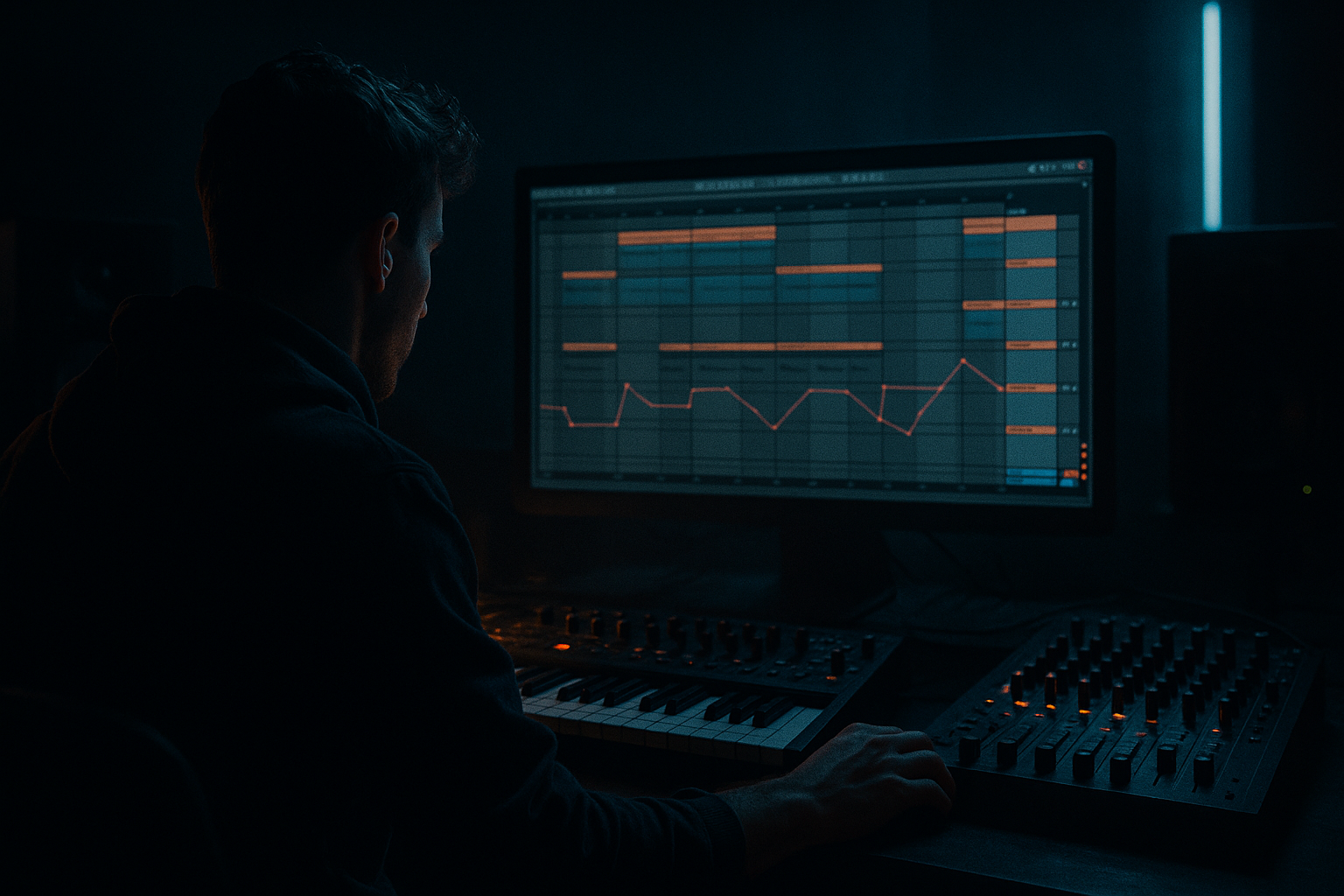
This lesson is about building a chopped-vinyl impact color lab in Ableton Live 12 for oldskool jungle / DnB drop design. The goal is to create those gritty, emotional, slightly unstable impact moments that feel like a battered sample pack from 1994 — but built cleanly in your own project, so you can control pitch, groove, grit, and arrangement.
In real DnB production, impact sounds are not just “hit hard and done.” They’re often the glue between sections: a drop marker, a switch-up cue, a pre-roll into the break, or a transition hit that makes the rhythm feel more alive. In jungle and rollers especially, a strong impact can carry the vibe from one phrase to the next without needing a huge fill or overdone riser.
The “color lab” part means we’re not making one static hit. We’re creating a small palette of resampled impact variations:
- a dry punch
- a vinyl-chopped version
- a distorted or bandwidth-limited version
- a reversed / sucked-in version
- a bass-heavy sub impact version
- a punchy transient hit with chopped-vinyl edge
- a low-end supporting thump or sub stab
- a dusty top layer for character
- a reverse pre-hit for tension
- multiple printable resample variations for different parts of a track
- oldskool jungle intro-to-drop moments
- roller switch-ups
- dark halftime-style impact cues
- neuro-adjacent transition hits that need attitude without clutter
- DJ-friendly breakdowns and rebuilds
- Overloading the low end
- Making the vinyl effect too obvious
- Overprocessing before resampling
- Ignoring phrase placement
- Making everything wide
- Layer a very short sub drop under the impact, but keep it between 40–70 Hz and mono. This adds menace without turning into a bassline.
- Use Frequency Shifter very subtly on a top layer for a metallic, uneasy edge. Small amounts go a long way.
- Create call-and-response with your bassline: let the impact hit on a gap where the reese or roller bass leaves space.
- Use Auto Filter automation to make the impact darken before the drop, then open slightly on the first downbeat.
- Print one version with a slightly unstable pitch envelope. That tiny “wobble” helps mimic chopped vinyl and old sample playback.
- For neuro-leaning darkness, pair the impact with a tight, midrange transient and a controlled distortion layer, but keep the sub separate and clean.
- Use Reverb only as a transition tool: short decay, small wet amount, then resample the tail. Don’t leave the reverb live unless the arrangement needs extra space.
- If the track is roller-focused, make the impact less dramatic and more groove-aware: shorter tail, more body, tighter transient.
- Build your impact as a sound source first, then resample it into character.
- Use chopping, pitching, distortion, and filtering to get oldskool vinyl energy in Ableton Live 12.
- Keep the low end controlled and mono, so the impact supports your DnB kick and sub instead of fighting them.
- Use the impact as a phrase marker in the arrangement, not just a random hit.
- Print multiple versions into a small color lab so you can move fast when finishing jungle, rollers, or darker DnB tracks.
That gives you options for arrangement phrasing, tension/release, and DJ-friendly structure. The chopped-vinyl character keeps it authentic: imperfect timing, transient blur, pitch wobble, and a little dust. That’s exactly the sort of movement that makes oldskool-inspired DnB feel hand-made instead of grid-perfect.
Why this matters in DnB: fast tempos expose weak transitions. At 170–174 BPM, every small detail hits the listener quickly. A good impact can anchor a drop, make a bassline feel bigger, and help breaks and sub work together without overcrowding the mix.
What You Will Build
You’ll build a resampled impact rack in Ableton Live that produces:
Musically, the result will suit:
By the end, you’ll have an organized Ableton workflow where you can quickly resample, edit, and redeploy impacts as arrangement tools instead of one-off sound effects.
Step-by-Step Walkthrough
1. Set up a dedicated impact palette track
Create three tracks in Ableton Live:
- one MIDI track for the source sound
- one audio track for resampling
- one return or grouped track if you want to process the prints together
On the MIDI track, load a simple source that can become a strong impact:
- Operator for a clean sine-to-click impact
- Wavetable for a sharper transient and harmonically rich hit
- Simpler with a short drum, percussion stab, or vinyl noise sample if you want immediate oldskool character
For an oldskool DnB base, a very usable starting point is:
- Operator: sine wave, very short amp decay
- pitch envelope set to fall quickly for a soft “thump”
- add a small amount of noise or click via a second oscillator or layered sample
Keep this track simple. The point is not perfect realism — it’s material to resample and mutate.
2. Design the core impact in a DnB-friendly range
Build a source hit that has three parts:
- transient
- body
- tail
If using Operator:
- Oscillator A: sine, octave around the root of your track
- Amp envelope: attack 0–5 ms, decay 150–350 ms, sustain 0, release short
- Pitch envelope: short downward move, around 12–24 semitones over 20–60 ms for a punchy oldskool thud
If using Simpler:
- choose a short stab, kick, or vinyl hit sample
- set start point to the transient
- reduce decay so it hits and disappears quickly
- use Filter in Simpler to tame highs if the source is too sharp
Add Saturator after the source:
- Drive: +2 to +7 dB
- Soft Clip: on
- Output: compensate so levels stay sensible
Then add EQ Eight:
- high-pass only if the source has unwanted sub rumble below 25–35 Hz
- gentle dip around 200–400 Hz if it feels boxy
- small boost around 2–5 kHz if you need transient bite
Why this works in DnB: an impact needs to cut through fast break programming and sub-heavy bass. A controlled transient plus focused body means it can read clearly at high tempo without stealing space from the kick and bass.
3. Create the chopped-vinyl character with timing, slicing, and instability
Now we make the “vinyl chopped” personality. Duplicate your impact clip or sample into a new audio clip and commit to a rougher treatment.
Use Simpler in Slice mode or resample a few versions manually:
- chop the impact into 3–6 tiny slices
- move one slice slightly late, another slightly early
- let one slice overlap a tiny amount for a worn-tape / chopped-record feel
If using audio clips in Arrangement View:
- split the sample at the transient and tail
- nudge the tail by 5–20 ms
- reverse one small tail fragment for a suction effect
- shorten the very first click so the hit feels like it came off a dusty record
Add Vinyl Distortion sparingly:
- Drive: low to moderate, around 5–20%
- Tracing Model: adjust until you hear grit, not obvious warble
- Lateral/Pinch-style shaping only if it adds movement without smearing the transient
Add Redux if you want rougher digital age grime:
- Downsample subtly
- Bits reduction just enough to roughen the top
- Keep it controlled; too much will flatten the hit
Save at least two versions:
- clean impact
- chopped-vinyl impact
These variations become your palette for arrangement later.
4. Resample the impact into an audio lane for character and commitment
This is the heart of the lesson. Create an audio track set to Resampling. Arm it and record your processed impact as you tweak it in real time.
Here’s the workflow:
- play the MIDI or audio source
- automate or manually adjust a few parameters:
- Saturator drive
- Filter frequency
- Vinyl Distortion amount
- pitch changes on the source
- record 8–16 bars of variations into the resample track
Don’t aim for one perfect sound. Aim for usable moments.
Once recorded, cut the resampled audio into individual hits:
- trim the best transient
- keep a little pre-roll if it helps the chop feel natural
- consolidate each usable hit into its own clip
Now you’ve got printed audio that already contains movement, grit, and inconsistency. That’s exactly the kind of detail that makes jungle-style production feel alive.
Useful stock devices at this stage:
- Utility to control gain and mono
- EQ Eight to shape the printed audio
- Compressor or Glue Compressor if the resample has uneven peaks
- Auto Filter for low-pass or band-pass versioning
5. Build a small “color lab” rack with 4 impact variations
Group the processed impact chain and create a simple versioning system. You want four practical variants:
- A. Dry punch
- minimal processing
- useful for downbeats and transitions
- B. Vinyl-chop
- chopped timing
- vinyl-style grit
- slightly narrower stereo
- C. Dark impact
- low-passed or band-limited
- heavier low-mid emphasis
- great under a break or before bass entry
- D. Reverse suck
- reversed tail or reversed body
- a pre-drop cue or phrase lead-in
If using an Instrument Rack or Audio Effect Rack, map:
- filter cutoff
- drive amount
- width
- reverb send
- decay or sample start
Suggested control ranges:
- Filter cutoff: 250 Hz to 8 kHz depending on role
- Width: 0% for sub-support hits, 80–120% for top-heavy transitional versions
- Reverb send: very low, around 5–15%, only for lift
- Decay/tail length: short for punch, medium for phrase markers
Keep the rack simple enough to recall later. The goal is speed, not complexity.
6. Add low-end support without muddying the kick and bass
A lot of impact sounds in DnB fail because they fight the kick or mask the sub. In oldskool jungle, you often want a hit that suggests weight without actually creating a giant uncontrolled low end.
Build a dedicated low-support layer:
- duplicate the impact
- low-pass it with Auto Filter around 120–250 Hz
- optionally add Saturator or Drum Buss for harmonics
- turn it down until it supports, not dominates
If needed, use EQ Eight:
- cut above 300–500 Hz on the low layer
- focus the thump in the 50–140 Hz zone
- leave space for the kick fundamental and bassline root
Stereo discipline matters here:
- use Utility to keep the low layer mono
- if the impact has a wide top, split the chain so only highs are wide
- check the mix in mono to confirm the hit still reads
In DnB, this is crucial because the bassline is often very active. A low-support impact should feel like pressure, not a second bassline.
7. Shape the hit with drum-bus style processing
To make the impact sit like a real DnB drum element, send it through a bus or group with controlled drum-style processing.
On the group:
- Drum Buss:
- Drive: 5–20%
- Crunch: subtle
- Boom: only if you want a pronounced thud, but keep it careful
- Glue Compressor:
- Ratio: 2:1 or 4:1
- Attack: 10–30 ms
- Release: Auto or 0.1–0.3 s
- Aim for 1–3 dB gain reduction
- EQ Eight after compression to clean up any low-mid bloom
This gives the hit a more “finished record” feel and helps the chopped-vinyl texture sit in the same world as your break edits and bass stabs.
Arrangement context example: use the dry punch on the first downbeat after a 16-bar intro, then answer it with the chopped-vinyl version 2 bars later before the full break returns. That creates a call-and-response that feels intentional and musical.
8. Place the impact in arrangement like a phrase marker, not a random effect
Now use the impact as part of your track structure.
Good DnB placement ideas:
- bar 1 of a 16-bar phrase: strong drop marker
- bar 8 or 12: switch-up cue before a break edit
- last 1/2 bar before the drop: reverse version to create suction
- between kick/snare gaps: fill with a chopped version to keep energy moving
Try this arrangement approach:
- intro: filtered or distant version, low volume
- pre-drop: reverse chopped version
- drop 1: dry punch on the first downbeat
- bar 3 or 4: chopped-vinyl response
- next phrase: darker, lower-band impact for variation
Use automation on:
- filter cutoff
- distortion drive
- reverb send
- volume
- sample start or pitch if using Simpler
This keeps the track dynamic without overcrowding the drums. You’re giving the listener a clear sense of “section change,” which matters a lot in fast DnB arrangement.
9. Print and organize your variations for future use
Once you have a few strong versions, resample them again into a clean folder of audio clips:
- impact_clean_170
- impact_vinylchop_170
- impact_dark_170
- impact_reverse_170
Color-code them in Ableton and keep them grouped by function:
- red for drop markers
- blue for reverse cues
- yellow for tonal hits
- gray for texture-only versions
This may seem basic, but it is a huge workflow win. When you’re building a DnB tune under time pressure, fast auditioning is everything. You want instant access to a small set of reliable, print-ready impacts that already sound like your record.
Common Mistakes
If the impact competes with kick and sub, it will make the drop feel smaller. Fix it by using EQ Eight or Auto Filter to narrow the low-support layer and keep it mono.
The goal is character, not parody. If the hit starts sounding like a novelty record scratch, reduce Vinyl Distortion, shorten the damaged section, or blend in a cleaner parallel layer.
If you stack too many devices before the print, you’ll lose transient control. Resample earlier than you think, then process the printed audio with purpose.
A great impact in the wrong bar can feel random. In DnB, impacts should support 8-, 16-, or 32-bar phrasing and help the drop breathe.
Wide impacts can sound exciting solo but messy in a dense mix. Keep the low band mono and only widen the top where it helps.
Pro Tips for Darker / Heavier DnB
Mini Practice Exercise
Spend 15 minutes making three impact variations for one imaginary 174 BPM jungle track.
1. Build a clean source impact in Operator or Simpler.
2. Process it with Saturator, EQ Eight, and one character device like Vinyl Distortion or Redux.
3. Resample 8 bars of tweaks into an audio track.
4. Cut out three usable hits:
- one dry punch
- one chopped-vinyl version
- one reverse version
5. Place them in a simple 16-bar arrangement:
- dry punch on bar 1
- chopped version on bar 5 or 9
- reverse cue before a new section
6. Check the mix in mono and make sure the impact supports the drums without masking the bass.
If you want to push it one step further, duplicate the impact and make one darker version with Auto Filter around 300–600 Hz and one brighter version with a small EQ lift around 3–5 kHz. Compare how each one changes the emotional feel of the phrase.

