Main tutorial
Lesson Overview
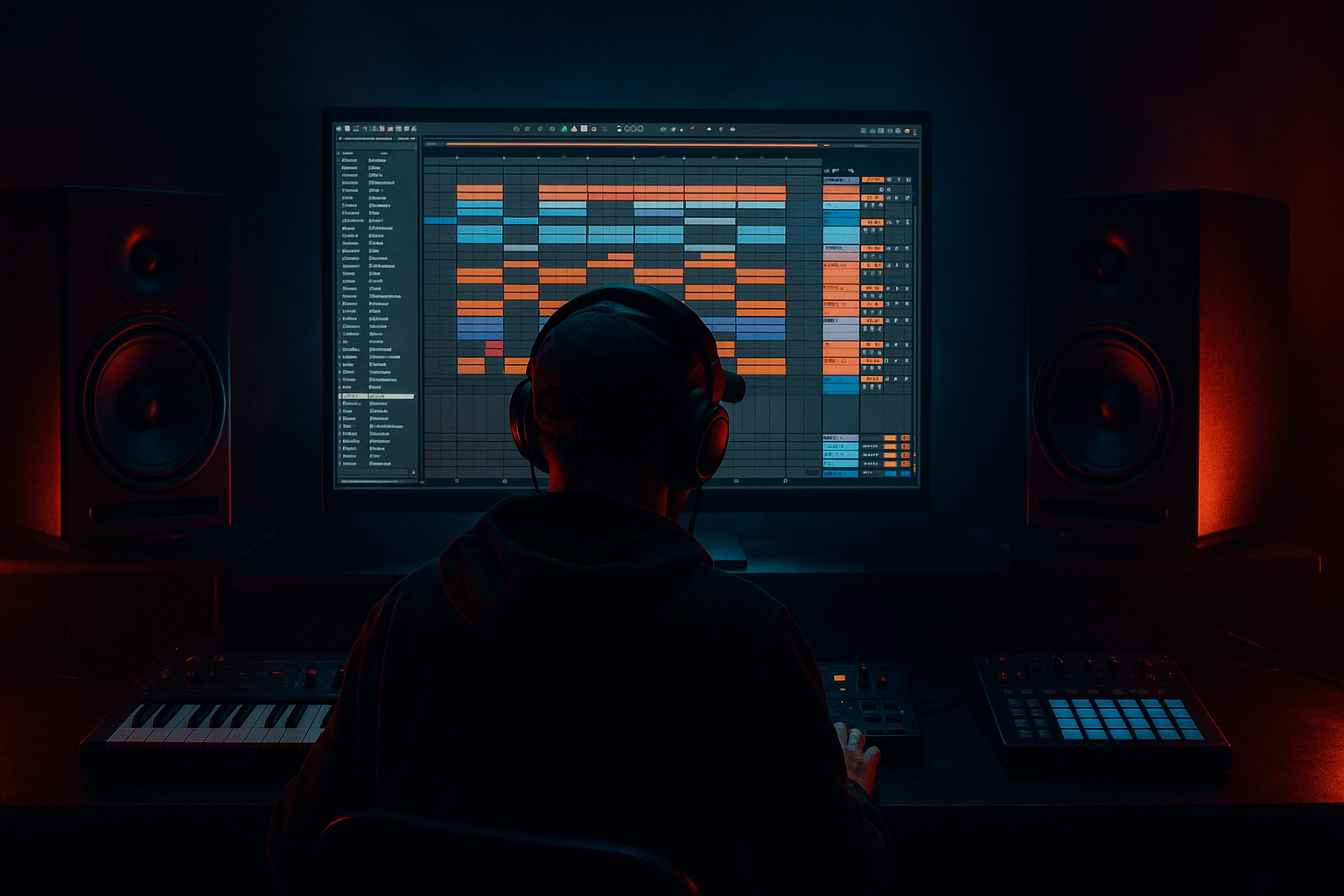
This lesson is about turning a jacked break into a smoky, warehouse-ready jungle/DnB groove inside Ableton Live 12, with the kind of ragged swing, chopped energy, and dark air that sits between oldskool jungle, rollers, and stripped-back warehouse DnB. The goal is not just to “slice a break,” but to make it feel like it has been played, nudged, abused, and rewired into a modern arrangement that still carries that classic tension.
Why this matters in DnB: the break is often the identity of the track. In darker jungle and oldskool-influenced DnB, the break doesn’t just fill space — it creates the human push-pull against the sub, the pressure against the bassline, and the forward motion that keeps the tune feeling alive. If the chops are too clean, the groove gets sterile. If they’re too loose, the mix falls apart. This lesson shows how to find the middle ground: dirty enough to feel smoked-out, tight enough to hit hard on a club system.
We’ll use Ableton Live 12 stock tools to create a performance-ready break system: sliced hits, ghost notes, re-triggered fills, controlled saturation, subtle swing, and automation that supports a dark arrangement rather than just looping endlessly. You’ll end up with a break pattern that can carry an 8-bar drop, evolve through switch-ups, and leave space for a rolling sub or reese to do its job.
What You Will Build
You’ll build a layered jack-break drum groove with:
- a chopped main break loop with oldskool-style instability
- ghosted snare and hat fragments for human bounce
- a secondary texture layer for smoke, grit, and room tone
- drum bus processing that keeps the loop punchy but worn-in
- a break arrangement that can move from DJ intro tension into a warehouse drop
- automation for filtering, decay shifts, and reverb throws
- a groove that leaves enough pocket for a sub-heavy bassline or reese phrase
- Over-quantizing every chop
- Using too many slices at full level
- Letting the break fight the sub
- Over-processing the drum bus
- Ignoring arrangement
- Making the top end too bright
- Resample your processed break and re-chop it for a nastier, more “committed” sound. Second-generation chops often feel more like a record being pushed through gear.
- Use very short reverb throws on individual snares, not on the whole drum loop. A tiny dark room on one drag can create huge depth without washing the groove.
- Try parallel Drum Buss distortion on a return track. Send only the snare and ghost layer, not the sub or kick.
- Automate filter cutoff on the break bus in 8-bar phrases to mimic a DJ working the EQ on a mixer.
- Keep stereo width mostly in the texture layer, while the core kick/snare remains centered.
- Layer a faint vinyl/noise texture very low if the break feels too sterile. It helps sell the smoky warehouse illusion.
- Use note velocity for ghost notes instead of making them louder. In jungle, the quieter hits often create the most motion.
- If the break is too clean, lower the sample rate feel with Redux subtly or add mild saturation before final EQ.
- choose a break with natural attitude
- slice by transient and prioritize strong hits over quantity
- use subtle swing and manual nudging for human groove
- process the drum bus with controlled saturation and transient shaping
- support the drums with a bassline that leaves space
- automate filter, reverb, and drive over the arrangement
- keep the low end mono, clear, and heavy
Musically, think of a track that opens with filtered atmospheres and break fragments, then drops into an A-B-C-D style oldskool jungle groove: one-bar stab motif, 2-bar drum variation, and a call-and-response between the break and the bass. This is perfect for smoky warehouse energy where the drums feel slightly ahead of the bass, but not rushed.
Step-by-Step Walkthrough
1. Choose the right break and prep it for chopping
Start with a break that already has character: something with a strong snare, audible ghost notes, and a bit of room tone. Classic amen-style material works, but so do less obvious funk breaks if they have movement and bite. Drag the break into an audio track and set the project tempo around 170–174 BPM for jungle or 172–176 BPM for darker rolling DnB.
In Ableton Live 12, use Warp carefully. If the break is already close to tempo, try Complex Pro only if you need to preserve tonality; for sharper transient work, Beats mode is often more useful. Set transient preservation around 10–30 ms so kicks and snares stay punchy. If the break feels too grid-locked, don’t over-warp it — the slight drift is part of the charm.
Practical move: consolidate a 1-bar or 2-bar section that has a strong groove, then duplicate it before chopping. You want a “safe” version in case you over-process the original.
2. Slice the break in Drum Rack and create performance-ready chops
Right-click the break and choose Slice to New MIDI Track. For advanced control, slice by transients rather than fixed regions, so the natural hits become your performance palette. Use Drum Rack as the chopping environment.
Once the slices are loaded, audition the key hits:
- kick fragments
- main snare
- ghost snare taps
- closed hats
- open hat tails
- tiny room-noise pieces
Do not treat every slice equally. Build a hierarchy:
- strongest kick = anchor
- snare with room = backbeat
- ghost snare = momentum
- hat fragments = swing glue
- tiny noisy slices = texture
In your MIDI clip, start with a 2-bar pattern rather than a full 4-bar loop. Keep some slices intentionally missing. In smoky warehouse DnB, negative space is part of the groove.
3. Program the main jack groove with deliberate unevenness
Build a loop that feels like a drummer was nudging the pattern forward. A classic approach is to place the snare on the backbeat, but layer chopped fragments before and after it.
Example approach:
- bar 1 beat 2 and 4: main snare hits
- bar 1 off-beats: short ghost taps or hat slices
- bar 2: introduce a kick pickup or snare drag before beat 4
- keep one variation every 2 bars to avoid loop fatigue
Use MIDI note length to control perceived density. Short notes create a tighter, more edited feel; longer notes can let slices ring into each other and create a more “jacked” texture.
Groove-wise, try Ableton’s Groove Pool with something subtle like:
- MPC 16 Swing 55–58
- MPC 16 Swing 57 for a more obvious lilt
- timing around 10–25%
- random around 5–12%
- velocity around 10–20%
Why this works in DnB: the break needs to feel animated against the rigid 16th-note bass ecosystem. A tiny amount of swing gives the drums a human drag that makes the sub feel heavier by contrast.
4. Shape each chop with envelopes and transient discipline
Open the Drum Rack chain for your key slices and add Simpler if you want tighter control over start/end and playback. On the stronger hits, keep the attack intact; on ghost notes, trim the tail so they don’t clutter the groove.
Useful settings:
- Simpler start: adjust so the transient lands immediately, not after a soft pre-hit
- Fade: short, usually 5–20 ms for rough-edged slices
- Vol envelope/amp decay: shorten ghost notes so they behave like punctuation
- Transpose: try dropping some snare fragments by -2 to -5 semitones for a darker, slightly more rotten tone
For a smoky warehouse vibe, don’t over-quantize. Instead, manually nudge a few ghost notes:
- some kicks slightly early for urgency
- some hats slightly late for drag
- one snare drag leading into bar 2 or bar 4 for oldskool tension
Keep an eye on transient control. If a chop is too sharp, it can dominate the bass. If it’s too soft, the groove loses authority. The sweet spot is a break that sounds chopped, not sliced to death.
5. Add a break bus and shape it like a record being driven hard
Route the whole Drum Rack to a Drum Bus or group track and process it as one instrument. Start with EQ Eight to clean the extremes:
- high-pass only if needed, usually very gently around 25–35 Hz
- tame boxy build-up around 250–450 Hz
- if the hats get brittle, dip a little around 7–10 kHz
Then add Drum Buss for weight and attitude:
- Drive: around 5–15%
- Crunch: subtle, enough to roughen the transient edge
- Boom: use carefully; for jungle breaks, a small bump can help, but too much muddies the sub
- Transient: slightly positive if you need extra snap, or slightly negative if the chops are too spiky
Follow with Saturator for controlled grime:
- Analog Clip on
- drive around 2–6 dB
- output compensated to avoid a fake “better because louder” trap
If the break needs width without losing mono focus, use Utility:
- keep low-end elements centered
- widen only the noisy top texture layer, not the kick/snares
6. Layer a smoky texture break underneath for atmosphere and glue
Build a second track with a quieter break layer or a processed room-tone slice. This is the “smoke” layer: it should be felt more than heard. You can duplicate your main break, low-pass it, and crush it slightly.
Suggested chain for the texture layer:
- EQ Eight: low-pass around 6–9 kHz
- Redux: light reduction for grit, not obvious distortion
- Auto Filter: slow movement, sometimes with a band-pass shape
- Reverb: short room or dark plate, low wet amount
- optional Gate if the room noise is too messy
Blend this layer at a low level so it creates the illusion of a larger room and a more “recorded” feel. In warehouse DnB, texture layers help the drums sit inside an environment rather than sounding pasted on top.
Advanced move: resample 4 bars of your processed break, then chop the resample again. This can produce accidental micro-fills and crushed transients that feel more authentic than polished programming.
7. Build call-and-response between drums and bass
The break should not fight the bassline constantly. Instead, let them alternate dominance.
For a darker roller:
- keep the bassline sparse in bars 1–2
- let the break speak with extra ghost chops in bar 2
- let the bass hit harder in bar 3
- open the break again in bar 4 with a fill or reverse hit
Bassline guidance:
- use a sub sine or clean low oscillator
- layer a mid reese only if needed for movement
- keep the sub mono
- avoid bass notes directly masking the snare transient
- phrase bass in 2-bar or 4-bar statements so the break has room to reset
A strong oldskool-influenced trick is to leave a small pocket around the snare hit so the drum retains authority. In a warehouse tune, that tiny pocket is what makes the whole drop feel bigger.
8. Automate movement for arrangement, not just effect
Don’t let the groove loop flat. Use automation to evolve the break over 8, 16, and 32 bars.
High-value automation targets:
- Auto Filter cutoff on the break bus
- Reverb send on snare ghosts for occasional throws
- Drum Buss Drive for drop emphasis
- Utility gain for pre-drop tension
- Beat Repeat only as a transition tool, not as a permanent crutch
A practical arrangement example:
- Intro (16 bars): filtered break fragments, no full snare backbeat, atmosphere building
- Drop A (16 bars): main chopped break, restrained bassline
- Drop B (8 bars): add a fill every 4 bars, increase Drive slightly
- Switch-up (8 bars): remove kick fragments, let hats and snares breathe, introduce a new bass answer
- Outro: strip to room tone, hats, and a filtered snare loop for DJ friendliness
Use automation to create anticipation: a filter opening over 4 bars, a sudden reverb swell on a snare drag, or a quick low-cut lift before the drop can make the break feel much more dramatic.
9. Finalize the groove with mix checks and micro-edits
Once the pattern feels alive, check it in context with the bass and any stabs. Switch to mono for a moment using Utility on the master or drum bus to confirm that the break still punches without stereo trickery.
Key checks:
- kick and sub are not fighting below 120 Hz
- snare has body in the 180–250 Hz zone without sounding boxy
- hat slices are not harsh around 8–12 kHz
- the break still feels exciting at low monitoring volume
Make micro-edits:
- shorten overhanging tails that blur the next snare
- move one ghost hit slightly earlier or later
- mute one chop every 8 bars so the listener feels the next return more strongly
This is where advanced work happens: not by adding more, but by removing the wrong 5%.
Common Mistakes
- Fix: leave some notes slightly late or early. DnB groove needs pressure, not robotic alignment.
- Fix: build a hierarchy. Let one or two hits lead; make the rest support.
- Fix: carve low-end space with EQ Eight and keep the sub mono. If the kick is strong, don’t also let a chopped low tom clutter the same region.
- Fix: use Drum Buss and Saturator in moderation. If the break stops feeling like a break, back off.
- Fix: give the break different roles across the tune. One loop cannot carry the whole record.
- Fix: warehouse vibes need grit, not sparkle. Use gentle high-end control and dark room tone instead of hyped hats.
Pro Tips for Darker / Heavier DnB
Mini Practice Exercise
Spend 15 minutes building a 2-bar dark jungle break loop:
1. Pick one break with strong snare and hat detail.
2. Slice it to Drum Rack by transients.
3. Program a 2-bar pattern with:
- one main backbeat snare
- at least 3 ghost hits
- one fill before bar 2 or bar 4
4. Add Groove Pool swing at a subtle setting.
5. Process the drum bus with EQ Eight, Drum Buss, and mild Saturator.
6. Duplicate the break to a second track, low-pass it, and make it a texture layer.
7. Automate one filter movement and one reverb throw.
8. Check the groove in mono, then remove one chop that feels unnecessary.
Goal: create something that feels playable, not just looped. If it doesn’t make you nod after 8 bars, edit again.
Recap
The core idea is simple: jacked breaks become powerful in DnB when they’re chopped with intention, swung subtly, and arranged like a performance.
Remember the key points:
If you get the balance right, your break won’t just “fill the drop” — it will carry the whole warehouse mood.

