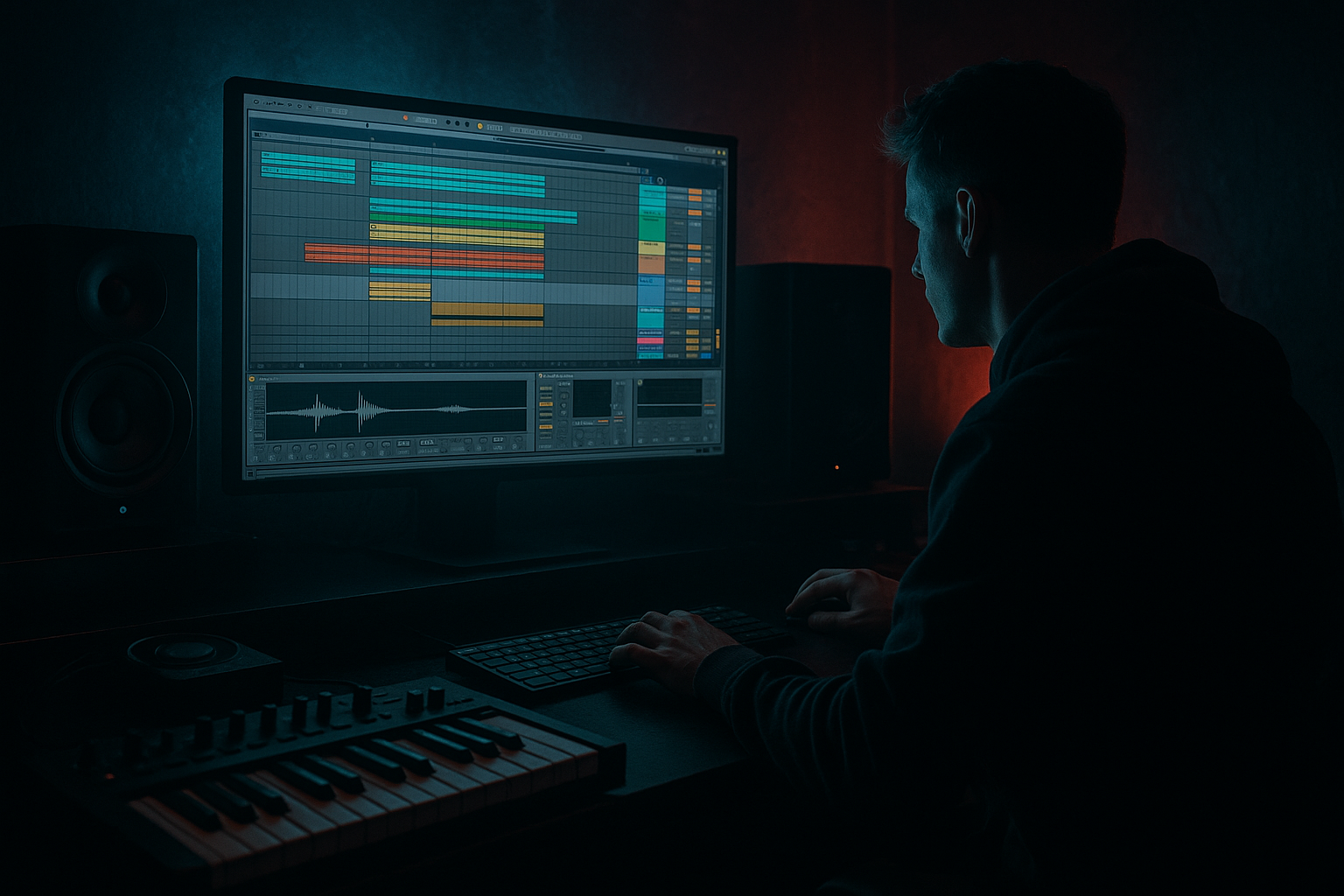
Main tutorial
Lesson Overview
In this lesson you’re building a Jungle Voltage breakbeat: an oldskool DnB drum part with that wired, unstable, rave-pressure feel — part break edit, part synth texture, part arrangement weapon. The goal is not just to make a loop that sounds “jungle-ish”; it’s to build a break that can carry a track, survive a club mix, and still feel alive after eight bars.
This sits right at the heart of jungle, oldskool DnB, hardcore-leaning rollers, and darker break-led tracks. In those styles, the breakbeat is often the identity of the record: it drives the energy, tells the DJ where the phrase changes are, and creates the forward motion that modern programmed drums sometimes miss. Technically, the challenge is getting the break to feel aggressive and elastic without destroying the low end, flattening the ghost notes, or turning the groove into mush.
By the end, you should be able to hear a break that sounds like it has pressure, swing, grit, and intention — not a generic loop, but a break that rolls with the bass, snaps at the right moments, and can be arranged into a proper intro, drop, and switch-up. A successful result should feel like the drums are breathing in a dangerous way: tight enough to hit the club, loose enough to feel human.
What You Will Build
You will build a 2- to 4-bar Jungle Voltage breakbeat loop in Ableton Live 12, then turn it into a short arrangement section. The finished sound should have:
- a hard, oldskool rhythmic lilt
- cut-up break transients with a strong snare identity
- subtle synthetic voltage movement sitting above or inside the break
- a drum tone that feels darker, slightly broken, and intentionally overdriven
- enough polish to sit in a rough mix with bass and atmospheres, but not so processed that it loses movement
- Does the snare have weight without a papery tail?
- Are the ghost notes audible enough to create motion between the main hits?
- The kick/snare backbone should still feel like one connected performance.
- The ghosts should add propulsion, not sound like random extra taps.
- Drum Buss: Drive around 5–15%, Crunch low to moderate, Boom either off or very restrained if your break already has enough low end.
- Saturator: Soft Clip on, Drive around 1–4 dB, keep the output trimmed so you don’t fool yourself with loudness.
- EQ Eight: high-pass gently only if the sample has useless rumble below about 25–35 Hz; make a small cut around 250–400 Hz if the break is boxy; tame any harsh hash around 7–10 kHz if the hats get brittle.
- Too much Drum Buss boom can make the kick and sub fight.
- Too much saturation can blur the ghost notes and flatten the snare crack.
- Use a short noise or metallic percussion sample.
- Process with Auto Filter in band-pass or high-pass mode.
- Add Erosion lightly for brittle edge.
- Keep it quiet and rhythmic, often following the snare ghost spaces.
- Use Operator or Wavetable with a very short envelope.
- Make a tiny percussive hit with no long sustain.
- Pass it through Auto Filter and a touch of Saturator.
- Choose A if you want a more raw, broken, yard-style jungle texture.
- Choose B if you want a more precise, sinister “powered circuit” feel.
- Does the layer make the break feel more animated without calling attention to itself?
- If you mute it, does the break lose urgency?
- Bar 1: keep the main break pattern strong and recognisable.
- Bar 2: drop one or two less important ghost hits, or move a hat pickup slightly earlier/later.
- Bar 3–4: create a response phrase with a snare pickup, open hat accent, or a short fill before the loop resets.
- reverse tiny sections
- chop fills
- add stutters
- create intentional drop-ins
- automate filter and reverb movement more cleanly
- EQ Eight to clean the low-mid clutter after print
- Drum Buss for one last round of glue and transient edge
- Glue Compressor with very gentle settings if the break needs a touch more cohesion, but avoid squashing the swing
- trim low end below about 30–40 Hz
- reduce one kick hit in the slice pattern
- or choose a less sub-heavy source break for this section
- Can you still hear the snare speak clearly when the bass is active?
- Does the groove feel tighter with the bass, or does it suddenly sound crowded?
- Bars 1–4: stripped intro version, break plus voltage layer, no full bass
- Bars 5–8: bass enters, break repeats with subtle variation
- Bars 9–12: remove one or two main top hits and add a fill or reverse texture
- Bars 13–16: bring the full break back with a new accent pattern or extra layer
- one bar with dense break energy
- one bar with a small gap, fill, or reverse snare
- then repeat with a different accent
- automate a high-pass filter gently opening on a transition
- automate reverb send up for one bar before the drop, then kill it on the impact
- automate a short delay throw on one ghost-hit or snare pickup
- High-pass on transition: only sweep enough to thin the top, not erase the body
- Reverb decay: short to medium, just long enough to suggest space
- Delay feedback: low, unless you want a very obvious throw
- Use break thinning, not just boosting. A heavy jungle break often feels bigger when one or two non-essential hits are removed. Space creates menace.
- Keep the snare emotionally constant. In darker DnB, the snare is your anchor. Let the ghosts move around it, but don’t over-process the main backbeat until it loses authority.
- Resample with intent. Once you’ve found a grimy variation, print it and chop it into new fills. Printed audio lets you create chaos without making the whole arrangement unstable.
- Use midrange grit carefully. A touch of Erosion or Saturator in the 2–6 kHz zone can make the break feel vicious, but if the hats start hissing, pull that energy back immediately.
- Think in phrase pressure. Every 4 or 8 bars, ask: is the break leading the room forward, or just repeating? A tiny fill, reverse hit, or snare pickup can restore momentum.
- Make the wide stuff optional. Keep the core break mono-safe, then let only the upper texture or atmospheric layer widen. That way the club system still gets a solid center.
- Let the bass and break “argue” without clashing. In heavier DnB, the break can have a slightly restless top while the bass holds a stable note or contour. That contrast creates tension without losing dancefloor clarity.
- Use one break sample only
- Use no more than two stock devices for the main break processing
- Add one voltage layer, but keep it very quiet
- Create at least one 2-bar variation
- Check it once with a sub bass underneath
- Can you still hear the snare clearly when the bass plays?
- Does bar 2 or bar 4 do something slightly different from bar 1?
- Does the loop feel like a real jungle phrase rather than a copy-paste repeat?
In track terms, this is your main break engine for an intro, first drop, or second-drop variation. It should be mix-ready enough to audition against a sub bass and a rave stab, and raw enough to leave room for later automation and arrangement payoff. If it’s working, you’ll hear a break that locks to the grid but still feels like it’s skidding across it.
Step-by-Step Walkthrough
1. Start with a break that already has attitude
Drop a classic break sample onto an audio track in Ableton and loop a single clean bar first. For this style, you want a break with a strong snare backbeat and enough top-end detail to survive slicing. If your source break is too polished, that’s fine — the point is to reshape it.
Use Warp only if needed. If the break already sits well at tempo, avoid over-warping it early because oldskool breaks often lose their natural pocket when stretched too aggressively. If it’s drifting, use Beats mode and keep the transient preserve focused enough to maintain the hit.
What to listen for:
If the sample feels too flat, don’t judge it yet — the character usually appears after slicing, saturation, and envelope shaping.
2. Slice the break and create control points
Right-click the break and Slice to New MIDI Track. For this lesson, slice by transient so each meaningful hit becomes addressable. You’re not trying to turn it into a rigid kit — you’re creating control over the moments that matter: kick, snare, ghost snare, open hat, and little break funk details.
Once sliced, open the MIDI clip and simplify the pattern into a 2-bar phrasing foundation. Keep the core break intact first. Then remove anything that fights the groove or clutters the snare lead. In jungle, restraint is often what makes the break feel bigger. Too many hits can hide the pocket.
A useful workflow tip: rename the sliced track immediately and color-code the key hits if you know you’ll be resampling later. That saves time when you’re building edits and variations.
What to listen for:
3. Shape the break with a drum rack-style processing chain
On the sliced break track, build a simple stock-device chain. One strong option:
Drum Buss → Saturator → EQ Eight
Suggested starting points:
This chain works in DnB because the break needs to stay rhythmically alive while also feeling dense enough to compete with a heavy bassline. Saturation adds density to the transient envelope, Drum Buss gives you punch and grain, and EQ prevents the low-mid buildup that kills clarity when the bass enters.
What can go wrong:
If that happens, reduce drive before you start cutting frequencies. Tone first, EQ second.
4. Build the “Voltage” layer: synthetic edge above the break
Now add a second audio or MIDI layer that gives the break its “Voltage” identity — a thin, electrical, unstable tone sitting above or inside the rhythm. This is not a melody lead. It’s a texture that makes the break feel powered.
Two valid options here:
A. Metallic noise tick layer
B. Synth pulse layer
Decision point:
Keep the layer tucked low in the mix. The role is to add nervous energy, not become a second lead.
What to listen for:
5. Edit the rhythm so the break leans forward
Now program the MIDI clip so the break does not simply repeat in a loop. Oldskool DnB breathes through micro-variation. Use the slice hits to create slight phrasing changes every 2 bars.
A practical approach:
Try nudging a selected ghost hit slightly late for laid-back swing, or slightly early for urgency. In jungle, this choice matters a lot. Late ghost notes create rubbery movement; early accents create a panicked, driving feel.
If you’re uncertain, keep the main snare dead-on but let the ghost notes breathe around it. That preserves the head-nod while keeping the break human.
Why this works in DnB:
The bassline usually occupies the long-note movement, so the drums need to provide both stability and instability. The main hits anchor the floor; the micro-edits create adrenaline.
6. Commit the break to audio and resample the best moment
Once the break is feeling good, commit this to audio if the pattern is working. Record or freeze/flatten the processed break into a new audio track so you can treat it like a real piece of sound design rather than a loop you keep endlessly tweaking.
This is a huge workflow win in Ableton: once printed, you can:
After printing, slice the audio into phrases and keep the most powerful 1-bar and 2-bar moments. That gives you arrangement material, not just a loop.
A useful processing example on the printed audio:
EQ Eight → Drum Buss → Glue Compressor
Stop here if the break already feels dangerous and the groove is speaking. If it’s already bouncing with character, don’t overproduce it into sameness.
7. Put the break against a sub bass before you decide it’s finished
Now check the idea in context with a simple sub bass or reese root note. This is where many drum loops fail: they sound exciting solo, then collapse when the bass arrives.
Load a clean low-end bass under the break and listen for whether the kick and bass are fighting in the same moment. If the break has a heavy low kick inside the sample, you may need to:
If the bass is a reese, watch the overlap in the 100–250 Hz region. That’s where the break’s body and the bass’s movement often stack up too much.
What to listen for:
A successful result at this stage should feel like the break and bass are pulling against each other in a controlled way.
8. Design a 4-, 8-, or 16-bar arrangement that actually works in a track
Don’t leave this as an endless loop. Turn it into a phrase that a DJ-friendly DnB record could use.
A strong oldskool structure example:
For a more aggressive first drop, let the full break slam in at bar 1, then create a call-and-response across bars 3–4:
This is where the “Jungle Voltage” identity becomes track-ready. The arrangement should give the DJ clear phrase markers and the listener a reason to stay locked in.
9. Automate tension without wrecking the punch
Use Auto Filter, Reverb, and possibly Delay very sparingly to create section movement. The mistake is to drench the break; the goal is to create controlled lift.
Good automation moves:
Suggested ranges:
If the break loses impact when the automation lands, the effect is too wide or too wet. Pull it back and keep the dry hit dominant.
10. Final balance: keep the break hard, not messy
End with a practical mix pass. The break should hit hard, but it should still leave room for the sub and key elements. Use EQ Eight to remove clutter rather than sculpting too many narrow peaks. If needed, add Utility and check the break in mono.
Mono-compatibility note:
Oldskool breaks often have stereo hat wash or room tone that feels exciting in headphones. In mono, that can collapse into a weak haze. Keep the low end mono, and if the top layer gets too wide, narrow it or reduce the stereo-heavy texture. The core snare and kick must still read in mono.
Your final benchmark: the break should sound finished enough to sit in a rough arrangement, but still flexible enough for later fills, drops, and edits.
Common Mistakes
1. Over-warping the break
- Why it hurts: the groove gets stiff and the transient shape turns unnatural.
- Fix: use lighter warp intervention, or leave the sample closer to its native timing if it already feels good.
2. Too much low end in the break sample
- Why it hurts: it fights the sub bass and muddies the kick area.
- Fix: use EQ Eight to remove useless rumble and consider choosing a cleaner break source for the main section.
3. Turning the voltage layer into a lead
- Why it hurts: it steals focus from the drums and makes the break feel crowded.
- Fix: lower the layer, shorten the envelope, and keep it in a supporting frequency band.
4. Saturating before the rhythm is right
- Why it hurts: distortion can hide weak editing instead of fixing it.
- Fix: simplify the break pattern first, then add Drum Buss or Saturator once the groove is already convincing.
5. No variation across bars
- Why it hurts: even a great break becomes loop fatigue after 8 bars.
- Fix: remove or shift one or two supporting hits every second bar, and add a short fill at the end of a phrase.
6. Too much reverb on the break
- Why it hurts: the snare loses punch and the rhythm loses front-edge urgency.
- Fix: shorten decay, reduce send level, and use reverb for transitions only.
7. Ignoring the bass interaction
- Why it hurts: the break may sound exciting solo but collapse with the low end.
- Fix: audition the break against a real sub or reese before committing to the final version.
Pro Tips for Darker / Heavier DnB
Mini Practice Exercise
Goal: Build a 4-bar Jungle Voltage break that can sit under a bassline and still feel alive.
Time box: 15 minutes
Constraints:
Deliverable: A 4-bar loop plus one 4-bar arrangement pass with a transition into bar 5.
Quick self-check:
Recap
The key to a Jungle Voltage breakbeat is control inside instability. Start with a break that already has character, slice it so you can shape the rhythm, add grit with stock Ableton processing, then introduce a thin synthetic layer that gives the beat an electrical edge. Keep the snare strong, the low end clean, and the arrangement moving every few bars. If it works, the break should feel raw, dangerous, and dancefloor-ready — not polished into deadness.

