DNB COLLEGE

Drum & Bass Ableton Live 12 Tutorials

LESSON DETAIL

Mid bass distortion chains with stock plugins (Intermediate)

An AI-generated intermediate Ableton lesson focused on Mid bass distortion chains with stock plugins in the Basslines area of drum and bass production.

Back to lessons
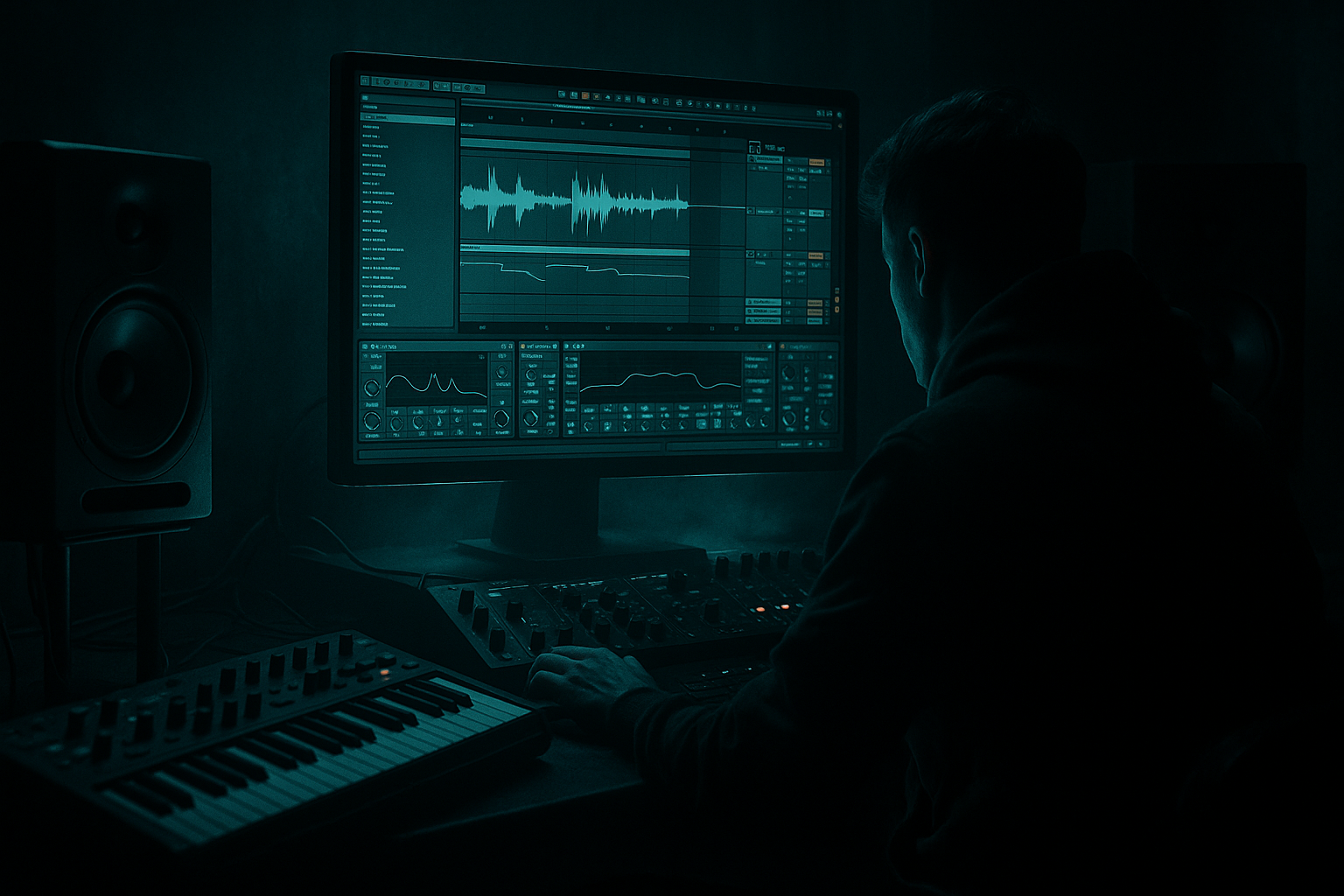
Mid bass distortion chains with stock plugins (Intermediate) cover image

Narrated lesson audio

The voice track includes the tutorial plus extra teacher commentary.

Open audio file

Main tutorial

🎶 Mid Bass Distortion Chains with Stock Plugins in Ableton Live

1. Lesson Overview

Welcome to the exciting world of drum and bass production! In this tutorial, we will focus on creating powerful mid-bass distortion chains using only stock plugins in Ableton Live. Mid-bass plays a crucial role in driving the energy of DnB tracks, and with the right techniques, you can achieve that heavy, gritty sound that keeps party-goers moving! 💃

2. What You Will Build

By the end of this tutorial, you will have crafted a rich mid-bass sound that provides depth and intensity to your track. This stable and distorted bass will be ready to roll, perfect for any DnB track needing that extra punch. 🎤

3. Step-by-Step Walkthrough

Step 1: Set Up Your MIDI Track

1. Create a new MIDI track in Ableton.

2. Load a synth: Use Analog or Operator. For this tutorial, we will use Analog for its warm tone.

3. MIDI clip: Draw in a MIDI clip with a few notes in the range of C1 to C2. Aim for a deep, resonant bass note—C1 is a great starting point!

Step 2: Patch the Basics

1. Oscillator Settings:

- Choose a sawtooth waveform for a richer sound.

- Set the Oscillator 2 to a square wave and slightly detune it for added width.

2. Filter Setup:

- Apply an LP Filter (Low Pass) to shape your sound. Set the cutoff around 200-400 Hz, and increase the resonance to around 30%.

Step 3: Distortion Chain

1. Add Saturator:

- Drag and drop the Saturator onto your MIDI channel.

- Set the Drive to 3-6 dB and select the "Soft Clip" mode. This will introduce some warmth without getting harsh.

2. Add Overdrive:

- Next, add an Overdrive.

- Set the Drive to 5-8 dB. Adjust the Tone knob to find a sweet spot—typically around 1000-2000 Hz will add that aggressive edge.

3. Utilize Erosion:

- Insert the Erosion device after the Overdrive.

- Set the Frequency to a low range (around 500 Hz) and add a bit of Noise for texture by setting the Amount to 10-15%. This will create some nice harmonics.

4. Final Touches with EQ Eight:

- Finally, add an EQ Eight to clean up and highlight the desired frequencies.

- High-pass the low end around 30-40 Hz to remove muddiness.

- Boost slightly around the 150-200 Hz range to enhance the punch of the bass.

Step 4: Sidechain Compression

1. Insert a Compressor:

- Drag a Compressor onto your bass track.

- Enable the Sidechain feature. Set the input from your kick drum track.

2. Adjust Settings:

- Set the Ratio to around 4:1, with a Threshold that triggers with the kick. Fine-tune Attack (around 8 ms) and Release (around 50 ms) for a pumping effect.

4. Common Mistakes

  • Overdistorting: Too much distortion can turn your bass into an undefined mess. Always check your levels and rely on your ears!
  • Not High-Passing: Forgetting to high-pass your bass can result in a muddy mix.
  • Ignoring Sidechain: A powerful kick or snare needs room; neglecting sidechain can make your mix cluttered.
  • 5. Pro Tips for Darker/Heavier DnB

  • Experiment with phase distortion using the Frequency Shifter for a unique wavering effect.
  • Try layering your mid-bass with a sub-bass for depth.
  • Introduce Reverb or Delay on a parallel channel to create a sense of space without losing clarity on your primary bass line.

6. Mini Practice Exercise

1. Create a new MIDI clip and use different notes by drawing a simple bassline (e.g., a short sequence of C1, D1, B1).

2. Experiment with various Drive settings on your distortion plugins and tweak Filter cutoff to find differing tonal qualities.

3. Record a 16-bar loop and get comfortable with mixing the sound within a project.

7. Recap

Today, we explored how to build a mid-bass distortion chain with stock plugins in Ableton Live, focusing on layering techniques that enhance the energy of your DnB tracks. Remember to keep it punchy, clean, and energetic while paying attention to your arrangement and the overall mix. 🔥 Keep experimenting, and soon you'll be creating basslines that rattle the dancefloor!

Now, go create some heavy grooves! 🎧

Ask GPT about this lesson

Chat with the lesson tutor, get follow-up help, or use quick actions.

Turn this into exact step-by-step Ableton actions I can follow.
Sure! Here’s a step-by-step guide for setting up your mid-bass distortion chains in Ableton Live for drum and bass production: ### 🎶 Step-by-Step Actions for Mid-Bass Distortion Chains #### **1. Set Up Your MIDI Track** - **Create a New MIDI Track**: - Right-click in the track area and select **Insert MIDI Track** or use **Cmd + Shift + T** (Mac) or **Ctrl + Shift + T** (Windows). - **Load a Synth**: - In the **Instruments** folder, find and drag **Analog** onto your new MIDI track. - **Create MIDI Clip**: - Double-click on an empty slot in your MIDI track to open a new MIDI clip. - Draw a bass note in the C1 to C2 range (start with C1). #### **2. Patch the Basics** - **Oscillator Settings**: - In the **Analog** interface, set Oscillator 1 to a **sawtooth waveform**. - For Oscillator 2, select a **square wave** and detune it slightly using the **Detune** knob. - **Filter Setup**: - Activate the **LP Filter** and set the **Cutoff** around **200-400 Hz**. - Increase the **Resonance** to around **30%**. #### **3. Distortion Chain** 1. **Add Saturator**: - Drag the **Saturator** from the **Audio Effects** folder onto your MIDI channel. - Set **Drive** to **3-6 dB** and choose **"Soft Clip"** mode. 2. **Add Overdrive**: - Drag **Overdrive** after Saturator. - Set **Drive** to **5-8 dB** and adjust **Tone** to about **1000-2000 Hz**. 3. **Utilize Erosion**: - Insert **Erosion** next in the effects chain. - Set the **Frequency** to around **500 Hz** and adjust **Amount** to **10-15%**. 4. **Final Touches with EQ Eight**: - Add **EQ Eight** at the end of your chain. - High-pass filter at **30-40 Hz** to clean up low muck. - Boost around **150-200 Hz** for added punch. #### **4. Sidechain Compression** - **Insert a Compressor**: - Drag **Compressor** onto your bass track. - **Enable Sidechain**: - Check the **Sidechain** box and set the input from your kick drum track. - **Adjust Settings**: - Set **Ratio** to **4:1** and adjust **Threshold** until it reacts with the kick. - Set **Attack** to **8 ms** and **Release** to **50 ms** for the pump effect. ### 🎵 Tips - Experiment with drive and filter settings to find unique tones. - Ensure your levels are balanced to avoid over-distortion. - Layer additional elements for a richer sound, especially in darker DnB contexts. ### ✅ Quick Checklist - [ ] Set up MIDI track with **Analog**. - [ ] Create MIDI clip (C1 to C2). - [ ] Adjust oscillators (sawtooth & square wave). - [ ] Set filter (cutoff 200-400 Hz & resonance 30%). - [ ] Add **Saturator** (drive 3-6 dB, soft clip). - [ ] Add **Overdrive** (drive 5-8 dB, tone 1000-2000 Hz). - [ ] Insert **Erosion** (frequency 500 Hz, amount 10-15%). - [ ] Apply **EQ Eight** (high-pass 30-40 Hz, boost 150-200 Hz). - [ ] Add **Compressor** with sidechain from kick (4:1 ratio). By following these detailed steps, you'll create a powerful mid-bass sound perfect for your drum and bass tracks! If you need further clarifications or specific requests, feel free to ask! 🎧

Narration script

Show spoken script
Welcome to the exciting world of drum and bass production! In this tutorial, we’ll dive into creating powerful mid-bass distortion chains using only stock plugins in Ableton Live. Mid-bass plays an essential role in driving the energy of DnB tracks, and when you master these techniques, you'll achieve that heavy, gritty sound that keeps dance floors packed!

By the end of this session, you'll have crafted a rich mid-bass sound that's brimming with depth and intensity. This stable, distorted bass is ready to inject some serious punch into your DnB tracks.

Let’s get started with the setup. First, create a new MIDI track in Ableton. The next step is to load a synth. We'll use the Analog synth for its warm tone. Now, draw in a MIDI clip with a few notes around C1 to C2. A deep, resonant note on C1 is a fantastic starting point.

Now, let’s patch the basics! For the oscillator settings, choose a sawtooth waveform. It gives you that rich sound we’re after. Set the second oscillator to a square wave and slightly detune it to add width to your sound.

Next, we need to shape our sound a bit more. Apply a low-pass filter and set the cutoff around 200-400 Hz, with a resonance of about 30%. This will help define our bass nicely.

Moving on to the distortion chain, grab the Saturator and drag it onto your MIDI channel. Set the Drive to 3-6 dB and select “Soft Clip” mode. This step is crucial as it introduces warmth without making the sound harsh.

Up next, let’s add some Overdrive. Set the Drive to 5-8 dB and play with the Tone knob. Typically, you’ll want to find that sweet spot around 1000-2000 Hz to get that aggressive edge we love in DnB.

Now, it’s time to utilize Erosion. Insert it after the Overdrive. Set the frequency to a low range around 500 Hz, and add a bit of noise by setting the Amount to about 10-15%. This can create beautiful harmonic content that enriches your sound.

For our final touches, add EQ Eight to clean up and highlight the best frequencies. A good practice is to high-pass the low end around 30-40 Hz to avoid muddiness. You might also want to boost slightly around the 150-200 Hz range to enhance the punch of your bass.

Let’s not forget about sidechain compression. Drag a Compressor onto your bass track and enable the Sidechain feature with the input coming from your kick drum track. Set the Ratio to about 4:1 and fine-tune the Threshold so it triggers perfectly with the kick. Adjust your Attack to around 8 ms and set the Release to 50 ms. This will create that pumping effect that’s essential in DnB.

Now, let’s touch on some common mistakes to avoid. Overdistorting can ruin your bass; always trust your ears and check your levels. Not high-passing can lead to a muddy mix, and neglecting sidechain compression can clutter your mix. 

As we explore additional techniques, think about layering elements. Don’t hesitate to combine different synths or samples. A well-timed second layer can give a fuller sound. While your focus is on mid-bass, adding some upper harmonics—maybe a gentle EQ boost around 800-1200 Hz—can really help your bass stand out in the mix.

For some variations, consider using modulation. Automating parameters like distortion drive or filter cutoff can create movement throughout your track. And don’t overlook granular effects! Using Grain Delay subtly after your distortion chain can add unique character, especially in drop sections.

Before we wrap up, here’s a quick practice exercise for you: Create a new MIDI clip and experiment with different notes. Try drawing a simple bassline, maybe a sequence of C1, D1, B1. Also, play around with the Drive settings on your distortion plugins and tweak the filter cutoff.

As a recap, today we built a mid-bass distortion chain with stock plugins in Ableton Live, focusing on techniques that enhance the energy of your DnB tracks. Remember to keep your bass punchy, clean, and energetic, while always paying attention to your arrangement and the overall mix. Keep experimenting, and soon, you’ll be creating basslines that will rattle the dancefloor!

So, get out there and create some heavy grooves!

mickeybeam

Go to drumbasscd.com for +100 drum and bass YouTube channels all in one place - tune in!

Generating PDF preview…
