Main tutorial
Lesson Overview
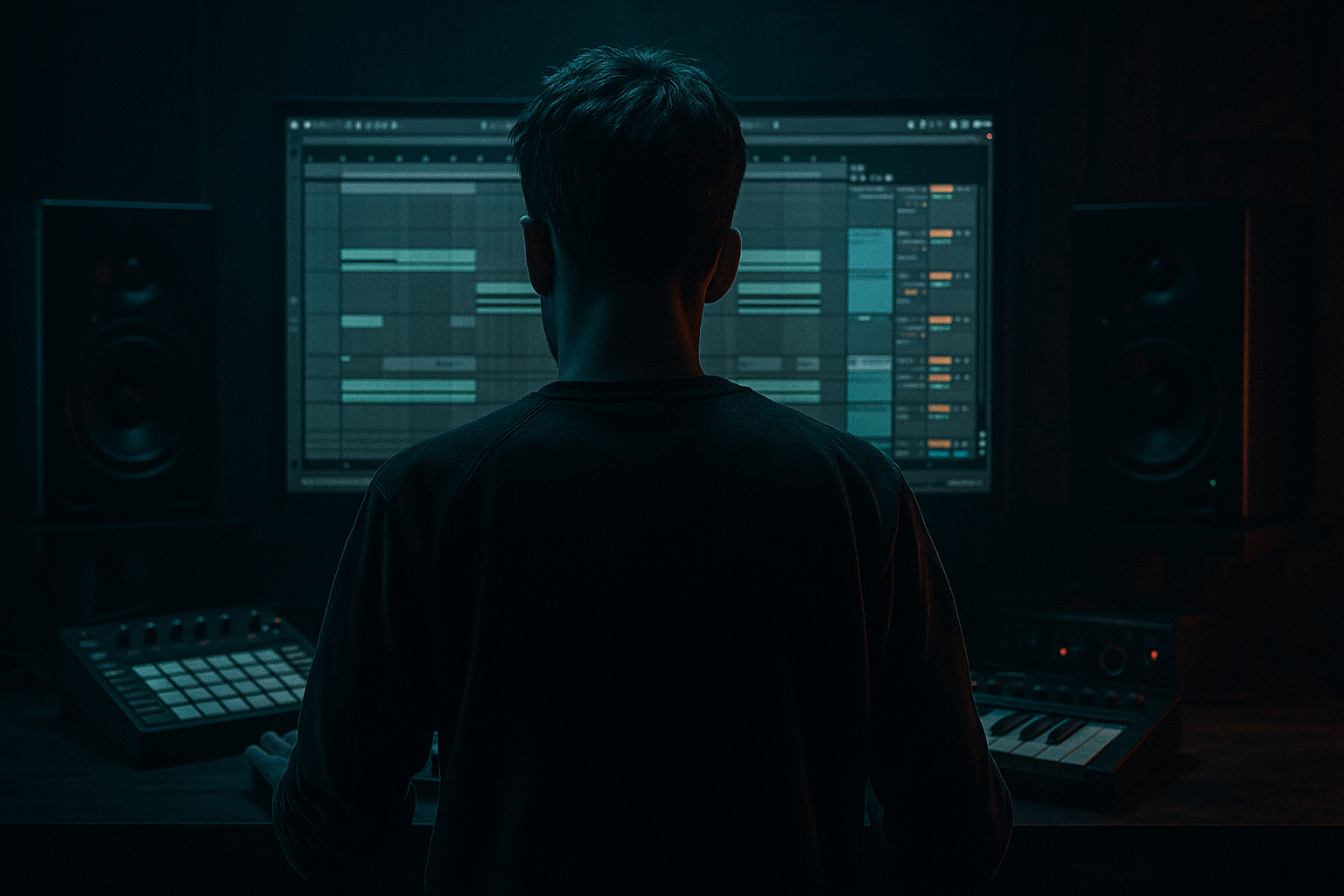
In this lesson, you’re building a Midnight Amen edit: a dark, DJ-friendly intro drive that feels like it came straight out of a late-night set before the drop lands. The goal is to create a bass-led DnB intro section from scratch in Ableton Live 12 that has enough motion, weight, and tension to work as a proper mix-in tool, not just a loop with a filter on it.
This matters because in Drum & Bass, the intro is not dead space. It’s where you establish sub identity, rhythmic personality, and mix compatibility. A good DJ intro drive gives selectors something they can blend for 16–32 bars while still hinting at the energy of the main drop. For darker styles, especially amen-influenced or rollers-oriented edits, the intro often carries the emotional charge through break edits, moving reese bass, careful low-end management, and controlled automation rather than obvious melodic hooks.
We’re aiming for that “midnight” feeling: stripped, weighty, functional, and ominous. Think DJ intro for a half-time set opener, a dark roller transition, or the front end of an amen-heavy jungle/DnB cut. The bassline here is not just support — it is the spine of the arrangement. We’ll design it so the intro can survive club systems, keep headroom for later sections, and still feel alive when looped.
Why this technique matters in DnB:
- It gives you DJ-ready structure for seamless mixing.
- It teaches bassline phrasing that drives energy without overcrowding the spectrum.
- It reinforces low-end discipline: sub, mid-bass, and transient content each get a role.
- It helps you build tension before the drop using automation and arrangement, not just more layers.
- A tight sub foundation that anchors the groove
- A moving reese-style mid-bass layer with controlled stereo width
- Amen break edits or break-derived top percussion to push urgency
- Subtle call-and-response phrasing between bass hits and drum gaps
- Dark FX automation for tension, lift, and transition
- A mix that leaves enough headroom for a later drop, while sounding finished as an intro loop
- 16 bars for a DJ tool-style intro, or
- 32 bars if you want a slower tension build
- Group drums, bass, FX, and atmosphere into separate folders/tracks
- Color-code sub, mid-bass, breaks, and transition FX
- Drop a reference track into a muted audio lane if you want to compare energy and bass density
- Oscillator A: sine wave
- Filter: off or very gentle low-pass if needed
- Volume envelope: short attack, full sustain, short release
- Glide/portamento: subtle, if you want note connection on slides
- Use root notes and a couple of neighboring tones
- Keep most notes in the low register
- Leave space between hits so the drums can speak
- Bar 1: long root note
- Bar 1 end: short pickup note
- Bar 2: rested space + lower passing note
- Keep sub notes around -12 to -6 dB peak before processing
- Use note lengths of roughly 1/8 to 1/2 bar, depending on the rhythm
- Two saw or square-based oscillators detuned slightly
- Low-pass filter set around 120–300 Hz depending on how much mid content you want
- Mild drive or saturation inside the device
- LFO moving the filter cutoff subtly, not theatrically
- Set oscillator detune very small
- Add Chorus-Ensemble very lightly or use Wavetable’s internal unison carefully
- Keep the width under control; the stereo feel should come more from texture than huge widening
- Filter cutoff: start around 180–500 Hz, depending on arrangement
- Resonance: low to moderate, around 5–20%
- LFO depth: subtle enough that the motion is felt, not heard as wobble
- If the sub hits on beat 1, let the mid-bass come in on the offbeat
- Add occasional short stabs before drum fills
- Keep the rhythm sparse enough to leave room for amen transients
- Kick/snare punctuation
- Ghost notes
- Tiny hat fragments
- One or two signature amen ghost hits that imply momentum
- A dry core layer for punch
- A filtered/FX layer for atmosphere
- Optional transient-only top layer if the break needs more presence
- Drum Buss lightly on the break group
- EQ Eight to carve muddy low mids around 200–400 Hz
- Utility to keep the low end stable if your break layer carries too much stereo information
- Leave a gap after a snare hit so the bass can answer
- Let a bass note land just before a drum accent to create anticipation
- Use short stabs in bars 3–4, 7–8, or 15–16 to mark phrase boundaries
- Bars 1–4: minimal intro, sub + sparse break
- Bars 5–8: reese layer opens slightly, amen ghosts become clearer
- Bars 9–12: add a pre-drop percussion hit or reverse
- Bars 13–16: tighten energy and strip away one layer so the eventual drop feels bigger
- Filter cutoff on the bass
- Send amount to reverb or delay
- Reese width or chorus depth
- Drum group filter for opening/closing sections
- One very slow opening across 8 bars
- One sharper “lift” in the final 2 bars before the drop zone
- Echo for short dark repeats
- Reverb for distant tails
- Auto Filter for sweeps
- Corpus if you want metallic resonance on a percussion hit
- Utility to mono down risky low material
- A low drone or noise bed tucked under the intro
- A reverse cymbal or reversed amen tail leading into a phrase change
- A small impact or sub drop on the transition into bar 9 or 17
- High-pass most FX aggressively, often above 200–400 Hz
- Keep reverb tails short and dark
- Use a pre-delay on reverbs so transients stay sharp
- Keep the sub mono
- Ensure the kick/break fundamental and sub aren’t fighting
- Use EQ Eight to remove unnecessary low frequencies from non-bass layers
- Avoid over-compression on the master; preserve headroom
- Use Utility to mono frequencies below the stereo threshold by keeping the sub track mono from the start
- Add Saturator or Roar gently for harmonic presence if needed
- If the bass is too wide, reduce width before it reaches the master
- Use Drum Buss for glue and transient control
- Cut a little boxiness if the break is crowding the bass around 250–500 Hz
- Let the snare cut through without making the whole intro harsh
- Keep the master peaking around -6 dB or lower while building
- Avoid letting any single bass layer dominate below 100 Hz
- Remove one bass layer briefly to create contrast
- Add a short snare fill or amen turnaround
- Open the filter slightly faster in the final bar
- Leave a tail or pickup that would hand cleanly into the drop section
- A predictable bar count
- Clear phrase changes every 4 or 8 bars
- Enough percussion detail to keep momentum
- Enough restraint to leave room for the next tune
- a clean intro edit
- a fuller arrangement version
- Too much bass activity in the low end
- Stereo bass in the sub range
- Amen break competing with the bass
- FX washing out the groove
- No phrase logic
- Overprocessing the master
- Use parallel distortion on the mid-bass only, not the sub, to keep weight and grit separate.
- Try Saturator in soft clip mode with modest drive to thicken reese harmonics without frying the top end.
- Automate a subtle Auto Filter on the bass group so the intro opens over time instead of staying static.
- If the break feels too clean, resample it and add a second-pass layer with slight saturation and EQ roll-off.
- Use ghost snares or tiny chopped amen hits before phrase changes to create underground tension.
- Keep the bassline rhythm slightly asymmetrical. DnB often feels heavier when it doesn’t loop like a perfect grid.
- Use short reverb throws on isolated hits, not constant wash, to preserve impact.
- Check your intro in mono early. If it dies in mono, your club translation will suffer.
- Build the intro around a clear sub foundation and a restrained, moving mid-bass layer.
- Use the amen break as rhythmic pressure, not just decoration.
- Shape the arrangement with 4- and 8-bar phrase logic so it feels DJ-friendly.
- Keep the sub mono, the bass controlled, and the FX disciplined.
- In darker DnB, the intro works when weight, space, and tension are balanced properly.
What You Will Build
By the end, you’ll have a 16-bar or 32-bar DJ intro drive in Ableton Live 12 featuring:
Musically, this sits well in a set where you’d want to bridge from a previous tune into a more hostile or atmospheric one. For example: after a vocal roller finishes, this intro can come in under the outro for 16 bars, letting the DJ beatmatch while the bassline gradually opens up and the amen cuts start to bite.
Step-by-Step Walkthrough
1. Set the frame: tempo, length, and reference zone
Start by setting the project tempo to your target DnB range, usually 172–174 BPM for this kind of edit. If you want a slightly heavier jungle-influenced feel, 170–172 BPM can work well; for modern rollers or neuro-leaning weight, 174 BPM is a solid default.
Create an initial arrangement block of either:
Put a reference marker at bar 17 or 33 so you know where the main drop would arrive later. For this lesson, the intro should feel like it’s actively moving toward that point, even if you’re only building the front end.
In Ableton Live 12, keep your session organized early:
This is important because in DnB, arrangement clarity is part of the groove. If the intro is muddled, the drop won’t land with enough contrast.
2. Build the sub first, but make it musical
Create a MIDI track and load Operator or Wavetable for the sub. For a clean, club-safe foundation, Operator is perfect.
Suggested sub setup in Operator:
Write a simple bass phrase across 1 or 2 bars:
For a Midnight Amen vibe, avoid a constant rumble. Use phrased sub hits that answer the break. A pattern like:
works better than a relentless eighth-note line.
Two practical parameter suggestions:
Why this works in DnB: the sub is the emotional weight of the intro. If it’s too busy, the kick/break interplay gets lost. If it’s too static, the intro feels like a loop instead of a drive.
3. Shape the mid-bass into a restrained reese layer
Now create a second bass track for movement. Use Wavetable, Analog, or even Operator with detuned oscillators if you want a more stripped synth-bass character.
A strong starting point:
If you want a darker, modern reese:
Use Simpler or resample a short bass sustain if you want a grittier edge later. But for the first pass, prioritize note phrasing and tone over complexity.
Practical settings:
Write a complementary MIDI line that answers the sub:
This bassline should feel like it’s leaning forward. In dark DnB, the best intro basses often use negative space as much as sound.
4. Add the amen DNA: break edits and ghost movement
Drag in an amen break, or build a similar break-edited kit from Drum Rack and Simpler if you want more control. For an advanced workflow, slice the break to a new MIDI track using Slice to New MIDI Track, then rebuild the groove.
Focus on:
Use Groove Pool if needed, but don’t over-humanize it. A small swing or extracted groove can help, but the break should still hit with authority.
Layer the break with:
Suggested processing:
- Drive: low to moderate
- Boom: very restrained or off
- Transients: just enough to sharpen the hit
The goal is not to turn the amen into a hyper-edited fill every bar. The goal is to let the break act like a locomotive under the bassline.
5. Lock bass and drums together with call-and-response
Now shape the conversation between the bass and the drums. This is where the intro starts to feel like a real DnB record.
In the MIDI editor:
A strong arrangement context example:
For advanced control, automate:
Try two automation arcs:
This is how you get that DJ intro drive feeling: it keeps moving, but it never fully gives away the drop.
6. Build tension FX without washing out the low end
Add atmosphere and transitions, but keep them disciplined. Use Ableton stock devices like:
Place one or two atmosphere layers:
Suggested approach:
If you want a more underground feel, print a short FX or bass texture, then resample it with saturation and reimport it. Resampling gives you those imperfect, broken edges that make darker DnB feel alive.
7. Mix the low end like a DJ tool
Now focus on clarity and translation. This type of intro can get messy fast because bass, break, and FX all compete for the same space.
Key checks:
On the bass group:
On the drum group:
Two concrete mixing targets:
Why this works in DnB: the bassline has to feel huge while staying clean enough for fast drums. DnB arrangements live or die on low-end separation and transient readability.
8. Finish the intro as a DJ-friendly transition tool
Now think like a selector. The intro should be easy to mix in and should suggest the incoming drop without exhausting the listener too early.
Shape the last 2–4 bars:
A solid DJ intro drive often includes:
If you’re building this for your own set, export both:
That gives you flexibility later without rebuilding the core idea.
Common Mistakes
- Fix: simplify the sub phrase and let the break provide motion.
- Fix: keep sub mono and reserve width for upper bass texture only.
- Fix: carve low mids, shorten tails, and reduce overlapping hits.
- Fix: high-pass atmospheric layers and shorten reverb decay.
- Fix: arrange changes every 4 or 8 bars so the intro evolves like a real DJ tool.
- Fix: keep headroom and shape the groups instead of crushing the full mix.
Pro Tips for Darker / Heavier DnB
Mini Practice Exercise
Spend 10–20 minutes building a 16-bar Midnight Amen intro drive from scratch:
1. Set tempo to 174 BPM.
2. Create one sub track and write a 2-bar bass phrase using only 3–4 notes.
3. Add a second bass track with a detuned reese layer and automate the filter slowly across the first 8 bars.
4. Import an amen break, slice it, and rebuild a simple groove with ghost hits.
5. Add one atmosphere layer and one transition FX hit.
6. Make one bar of call-and-response where the bass answers the snare.
7. Bounce the intro loop and listen in mono.
8. Revise only two things:
- one low-end balance issue
- one arrangement/tension issue
The goal is not perfection. The goal is to make the intro feel like a real DnB selector tool that could sit before a drop in a proper dark set.

