Main tutorial
Lesson Overview
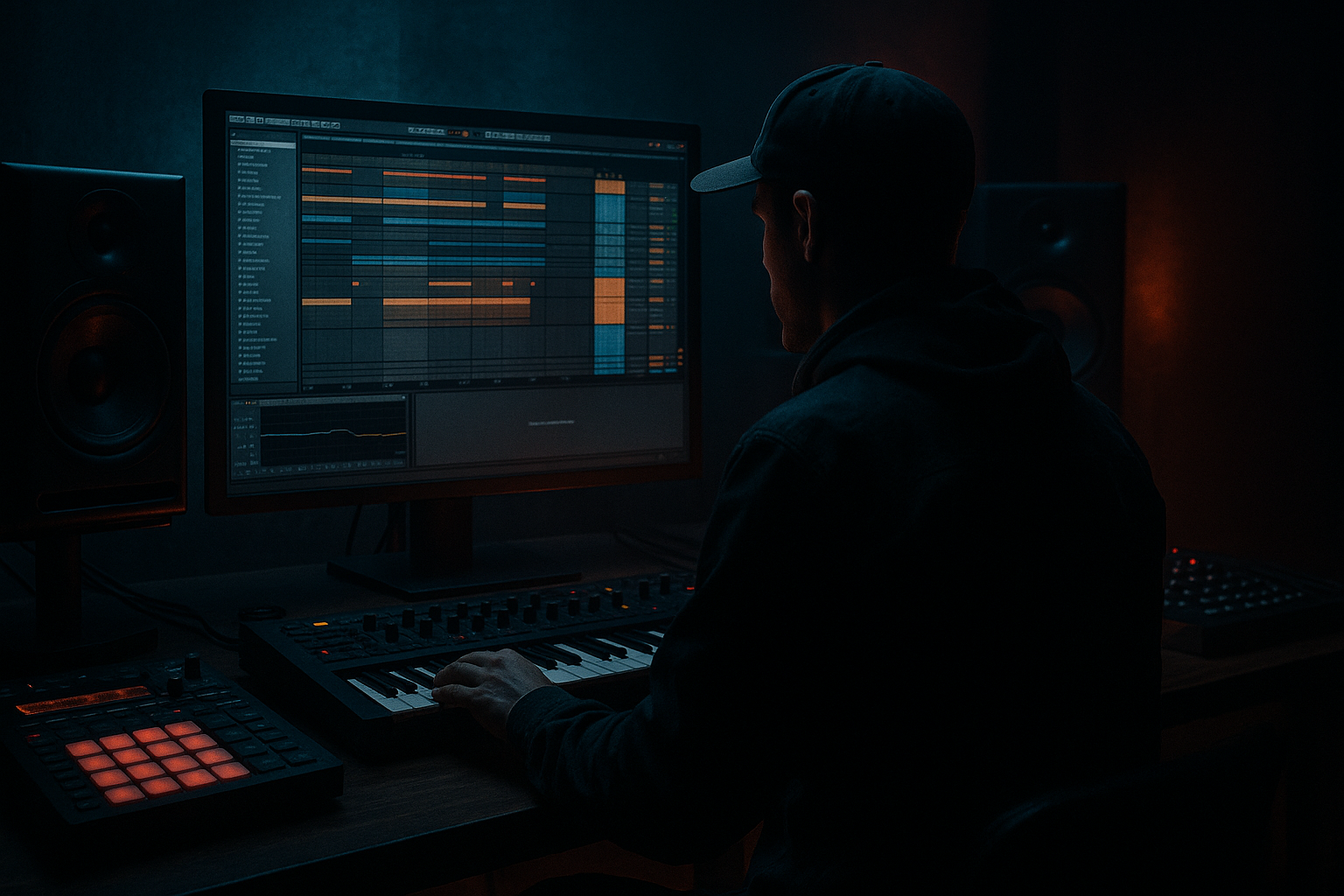
In this lesson, you’ll build a Moonlit Jungle amen variation from scratch in Ableton Live 12: a shadowy, rolling Drum & Bass edit that keeps the classic amen energy but feels fresh, darker, and more controlled. This sits right in the edit / drum arrangement part of a DnB track — the section where you take a raw break and turn it into a performance tool with swing, chops, ghost notes, fills, and tension.
Why this matters: in Drum & Bass, especially jungle, the drum edit is not just “drums playing.” It’s the identity of the drop. A strong amen variation gives your track movement, personality, and forward drive without needing too many extra layers. If the break feels alive, the whole tune feels alive. 🌙
We’ll keep this beginner-friendly, but still make it sound like a real DnB workflow inside Ableton Live 12. You’ll use stock devices, simple routing, and practical edit choices that work in darker jungle, rollers, and heavier bass music contexts.
---
What You Will Build
By the end of this lesson, you’ll have:
- A 1-bar and 2-bar amen variation built from an imported break or a sliced loop
- Tight kick/snare placement with chopped break fragments and ghost hits
- A moonlit jungle feel: dark, atmospheric, slightly smoky, with a rolling backbeat
- Basic drum bus shaping using Ableton stock tools like Drum Buss, EQ Eight, Saturator, and Glue Compressor
- Simple automation for fills, tension, and transitions
- A structure that can work as a drop loop, turnaround, or DJ-friendly edit section
- A drum part that leaves space for a sub, reese, or growling bass to answer the rhythm
- 174 BPM for classic jungle / roller energy
- 170–172 BPM if you want a slightly heavier, darker feel
- Drums / Break
- Drum Layer or One-Shots
- Bass
- Atmos / FX
- Transient Loop Mode: keep it on if the break is repetitive
- Preserve: around Transients
- Transient Envelope: around 80–100 for sharper hits
- Transient markers
- Or 1/16 notes if you want more control and simpler beginner slicing
- Kick-heavy chunks
- Snare hits
- Small ghost notes
- Hat fragments
- One or two reversed or tail slices if available
- Strong kick on the 1
- Snare or main break snare on the 2
- Another strong snare on the 4
- Ghost notes between those anchors for motion
- Place one kick slice on beat 1
- Place a snare slice or break snare on beat 2
- Add a quieter ghost slice just before beat 2 or just after it
- Add a hat or break tail before beat 4
- Finish with a snare or snare variation on beat 4
- Main hits: 100–127
- Ghost notes: 35–80
- Hats or tiny break fragments: 50–90
- A snare drag before the main snare
- A quick kick double to push momentum
- A reverse slice leading into the 4
- A tiny drum fill at the end of the bar
- A ghost note cluster between hits
- Bar 1: kick on 1, snare on 2, snare on 4, light hat movement
- Bar 2: same skeleton, but add a doubled snare pickup near the end and a tiny break fill into the loop restart
- High-pass only very gently if needed, around 25–35 Hz
- Cut a little mud around 200–400 Hz if the break feels boxy
- If the break is harsh, reduce a narrow area around 6–9 kHz
- Drive: 5–15%
- Crunch: low to moderate, around 5–20%
- Boom: usually low for jungle breaks unless you want extra low punch
- Transient: slightly positive if the break needs more snap
- Soft Clip on
- Drive around 2–6 dB
- A tight kick one-shot
- Or a short snare layer
- Layer the kick lightly under the break’s main kick
- Layer the snare for extra crack if the break snare is too thin
- Kick layer should add weight, not become a new kick pattern
- Snare layer should add transient snap, not widen the groove too much
- Cut low muddiness below 40–60 Hz on the snare layer
- Keep the kick layer focused on the low punch
- Operator for a sub
- Or Wavetable for a reese-style mid layer
- Sub note on the root
- Long sustained note under the drop
- Avoid playing the bass exactly where the snare fill needs space
- Let the bass drop out slightly before a fill
- Or automate a short bass mute at the end of bar 2
- Reverb send for selected snare hits
- Delay send on a final fill hit
- Auto Filter for a short intro or breakdown-style movement
- Drum Buss Drive for tension lift into the next bar
- Automate Auto Filter low-pass slightly closed in the first half, then open it on the return
- Send a single snare hit to Reverb at the end of bar 2 for a ghostly tail
- Automate a tiny boost in Drum Buss Drive for the final two beats of the phrase
- Bars 1–2: main amen variation, clear groove
- Bars 3–4: slightly busier ghost notes or one extra snare fill
- Bars 5–6: strip back the fill and make it cleaner
- Bars 7–8: build tension with a snare roll, reversed slice, or filter automation
- Put your bass mostly in mono
- Keep the break’s low end controlled
- Use Utility to check mono compatibility
- Make sure the kick and sub aren’t both blasting at the same time
- Sub lives in the center
- Drum groove can have width in hats, atmospheres, and tiny break textures
- Main kick/snare impact should stay focused and readable
- Use Drum Buss in moderation for extra knock and grime. A little drive goes a long way.
- Add a very quiet texture layer: vinyl noise, jungle ambience, rain, or distant room tone to sell the “moonlit” mood.
- Try reverse break slices before a snare or fill to create tension without making the drop too busy.
- For heavier character, duplicate the break and process the copy with more saturation, then blend it low underneath the clean version.
- Use Auto Filter movement on a break bus for subtle progression across 8 bars.
- If the edit feels too polite, add one late snare drag or extra kick pickup near the phrase end. That tiny bit of instability is often what makes jungle feel alive.
- Keep the sub simple and focused so the drum edit can sound more aggressive without masking the mix.
- In darker rollers, less is often more: one strong fill, one atmosphere hit, one short reverb tail can feel bigger than a crowded FX stack.
- the break
- one bass note
- one subtle atmosphere layer?
- A strong jungle amen variation is built from anchor hits, ghost notes, and selective chops
- In Ableton Live 12, Slice to New MIDI Track, Drum Rack, EQ Eight, Drum Buss, Saturator, and Utility are your core tools
- Keep the groove clear for the snare, tight in the low end, and alive with small rhythmic changes
- Use bar-to-bar variation so the loop feels like a phrase, not a copy-paste
- Leave space for the sub and bassline so the drums and bass can work together
- For darker DnB, aim for weight, tension, grit, and discipline — not just more elements
Musically, think of it as:
breakbeat + controlled chops + ghost note groove + dark atmosphere + bass-friendly spacing.
---
Step-by-Step Walkthrough
1) Set up your project for a clean DnB edit workflow
Start with a fresh Ableton Live 12 set and set the tempo to a standard Drum & Bass range:
Create these tracks:
For now, focus on the drum track. Drag in a clean amen loop or any classic break with good transient detail. If you don’t have a loop, use a break from your sample library and keep it short, ideally 1 or 2 bars.
If your loop is slightly off-grid, use Warp and choose a mode that preserves transients well. For breaks, Beats mode is often a good starting point. Try these settings:
Why this works in DnB: jungle edits rely on a break sounding punchy and intentional. If the break smears, you lose the snap that makes the groove move.
2) Slice the break into playable pieces
Right-click the break clip and choose Slice to New MIDI Track. In Ableton Live 12, this is one of the fastest ways to turn an amen into an editable instrument.
Use slicing based on:
Ableton will create a Drum Rack with slices mapped across pads. Now you can trigger individual snare, kick, hat, and ghost fragments like drum hits.
Keep the slices simple at first:
Don’t try to use every slice. A great DnB edit is usually about selective chopping, not stuffing the bar.
3) Build a core 1-bar groove with anchor hits
Now create a MIDI clip with a simple 1-bar pattern. Your goal is to preserve the DnB anchor points while letting the break breathe.
Use this as a starting logic:
In many jungle edits, the snare on 2 and 4 is the backbone, while chopped fragments fill the space around it. If your break already contains those hits, align your chops so they reinforce the groove instead of fighting it.
Try this practical approach:
Keep velocities varied:
This creates that living, shuffled jungle feel instead of a flat loop.
4) Create variation with call-and-response phrasing
Now make a second bar that answers the first bar. This is where the edit becomes musical, not just mechanical.
In bar 1, keep the groove fairly clear and stable.
In bar 2, add one or two of these ideas:
A beginner-friendly rule:
Bar 1 = establish. Bar 2 = answer.
For example:
This is a classic DnB arrangement trick. It keeps the listener locked in while preventing loop fatigue.
5) Tighten the drums with stock Ableton processing
Now shape the break so it sits properly in a modern DnB mix.
On the break or Drum Rack group, add:
EQ Eight
Use EQ Eight to clean mud and harshness.
Suggested starting moves:
Don’t overdo the cuts. You want the break to keep character.
Drum Buss
Add Drum Buss to add punch and a bit of dirt.
Starter settings:
This helps the break feel more glued and energetic.
Saturator
If the break feels too polite, add Saturator after EQ Eight or before Drum Buss.
Try:
This is especially useful in darker DnB where you want grit without destroying the transient edge.
6) Layer a controlled kick or snare if the break needs more weight
A lot of jungle edits use a break as the texture, but reinforce the low-end drum hits with extra one-shots. This is very common in modern DnB edits.
Create a new track with:
Use Ableton’s Simpler or Drum Rack with stock samples.
Suggested layering approach:
Keep layering subtle:
If needed, use EQ Eight on the layer:
This is useful in rollers and darker bass music where the bassline needs a firm drum foundation.
7) Make the bass leave space for the edit
Even though this lesson is about the amen variation, your drum edit must work with bass. In DnB, the bass and drums are a conversation.
Create a simple bass placeholder using a stock synth:
For beginner clarity, keep it simple:
Useful workflow:
Why this works in DnB: the drum edit feels bigger when the bass stops fighting the same rhythmic spaces. Silence is part of the groove.
8) Add movement with automation and transition FX
Now make the edit feel like a real arrangement section.
Use automation on:
Practical ideas:
For atmosphere, add a low-key pad or vinyl-style texture very quietly in the background. Keep it subtle — the edit should still be the star.
9) Build an 8-bar structure for a real track context
A strong edit doesn’t just loop; it supports arrangement.
Try this simple 8-bar DnB context:
This is useful in a drop section because it creates movement without needing a full drum rewrite. You can make one break loop feel like a progressing phrase.
If you’re building a DJ-friendly arrangement, keep the first and last few bars less busy so they mix well.
10) Check the mix in mono and keep the low end disciplined
Drum & Bass lives or dies on low-end clarity. Make sure the break and bass are not cluttering each other.
Do these quick checks:
A simple beginner rule:
If the break has too much low rumble, clean it with EQ so the sub can breathe.
---
Common Mistakes
1) Over-chopping the break
If every beat is sliced into tiny bits, the groove can lose its human feel.
Fix: keep a few anchor hits intact and use small chops only as accents.
2) Too much low end in the break
A loud break and a loud sub will fight instantly.
Fix: cut mud in the break with EQ Eight and leave the real sub space for the bass track.
3) No velocity variation
Flat velocity makes jungle edits sound programmed in a bad way.
Fix: lower ghost notes and vary repeated hits by a few velocity points.
4) Overusing reverb
Too much reverb can wash out the snare and kill the drive.
Fix: use short sends, automate reverb only on selected hits, and keep the main groove dry.
5) Stereo widening on low drums
Wide low-end drums can collapse in clubs and mono systems.
Fix: keep kick and sub centered; use width on hats, breaks, or FX instead.
6) Filling every gap
DnB needs space to hit hard.
Fix: let some bars breathe. A few well-placed ghost notes are better than constant clutter.
---
Pro Tips for Darker / Heavier DnB
---
Mini Practice Exercise
Spend 10–20 minutes making a mini Moonlit Jungle edit using only stock Ableton tools.
Goal
Build a 2-bar amen variation that feels dark, rolling, and club-ready.
Exercise
1. Import one amen or break loop.
2. Slice it to a new MIDI track.
3. Build a 2-bar pattern with:
- one strong kick anchor
- one main snare on 2
- one main snare on 4
- at least 3 ghost notes
4. Add one small fill or reverse slice in bar 2.
5. Put EQ Eight and Drum Buss on the break group.
6. Use one automation move: reverb send, filter, or Drum Buss Drive.
7. Duplicate the pattern and change only 2–3 hits so the second loop feels like a variation.
8. Play it with a simple sub note underneath and listen for space.
Challenge
Can you make it feel like a real drop loop with only:
If yes, you’re thinking like a Drum & Bass editor, not just a loop arranger.
---
Recap
Master this, and you’ll have a reusable building block for jungle drops, rollers, and darker DnB edits that sound intentional every time.

