Main tutorial
Lesson Overview
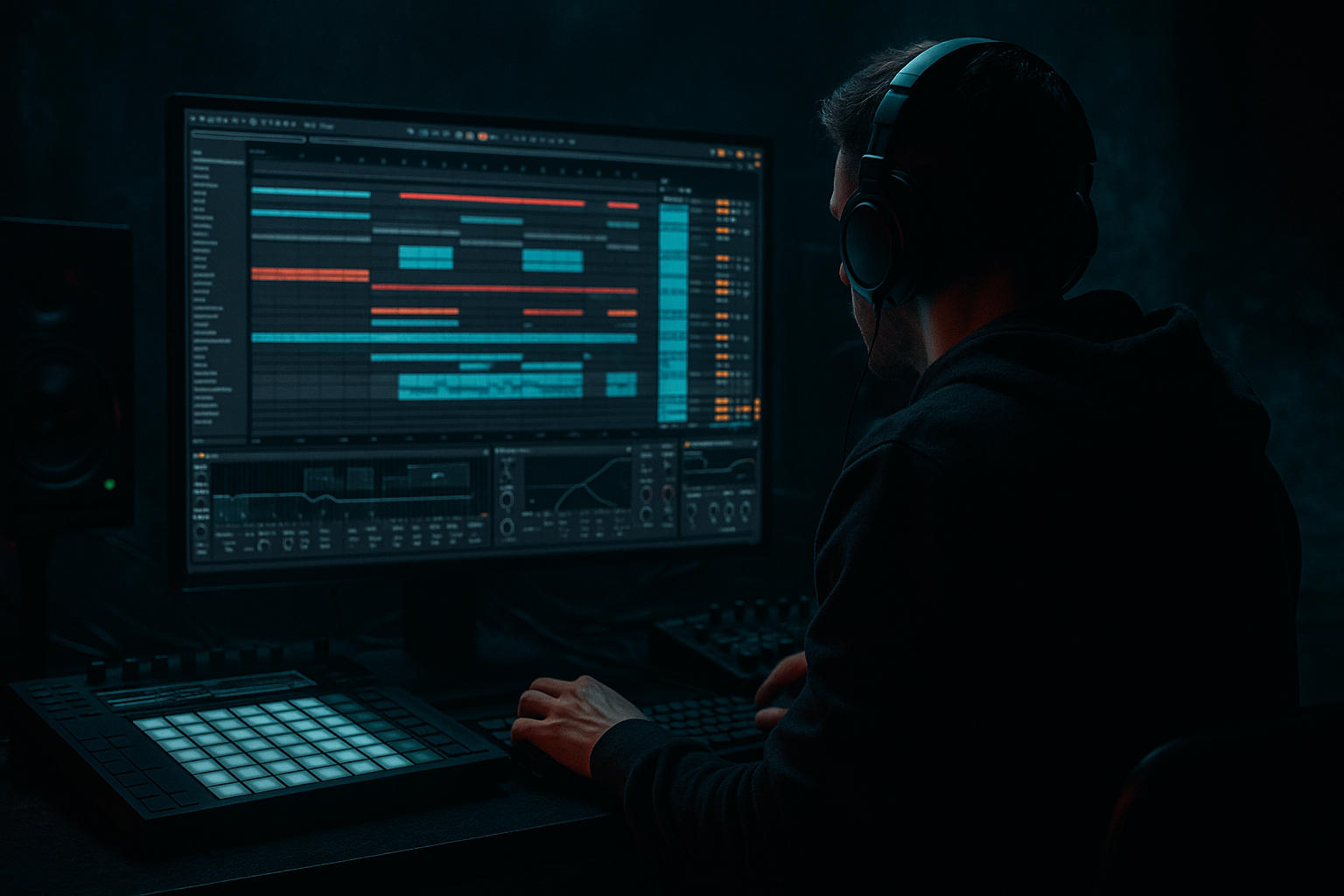
In this lesson, you’ll build a Nightbus-style amen variation warp lab in Ableton Live 12 to add warm tape-style grit to a Drum & Bass track without wrecking the low end. The focus is mixing-friendly break processing: taking an amen break, warping it in a musical way, and giving it that worn, late-night, slightly smoked-out texture you hear in darker jungle, rollers, and atmospheric DnB.
This technique matters because in DnB, the break is often the emotional engine of the track. A clean amen can feel too neat for a moody Nightbus vibe. A little controlled warp, saturation, and resampling can turn it into something that feels alive, human, and old-school, while still sitting properly with a modern sub and bassline.
You’ll learn how to:
- warp an amen break for variation without destroying the groove
- add warm tape-style grit using Ableton stock devices
- keep the kick, snare, and sub region clear
- create a loop that can be arranged into a proper intro, drop, and switch-up
- a 1-bar amen variation loop with a slightly warped, tape-worn feel
- a parallel grit bus that adds warmth and bite without flattening the drums
- a tight drum/bass balance that leaves room for a rolling sub
- a loop that can be used as:
- Over-warping the amen
- Distorting the whole break too much
- Letting low mids build up
- Making the break too wide
- Over-compressing the drums
- Ignoring arrangement
- Print two versions of the same break
- Automate grit, don’t leave it static
- Use ghost-note edits for motion
- Keep the sub boring on purpose
- Use short silence before the drop
- Resample the “good accident”
- Check harshness at volume
- Warp the amen subtly so it feels human and musical.
- Use Saturator, EQ Eight, Glue Compressor, and optional parallel grit to get warm tape-style texture.
- Protect the kick, snare, and sub first; grit comes second.
- Build small variations every few bars so the break stays alive.
- Arrange it like a real DnB section with intro, drop, switch-up, and outro.
Why this works in DnB: jungle and darker rollers often rely on micro-variation in the break. The ear hears tiny timing shifts, ghost notes, and texture changes as movement. If you keep the sub stable and shape the break with intention, the track feels more human and more expensive — even with simple source material.
What You Will Build
By the end of this lesson, you’ll have:
- an 8-bar intro
- a 16-bar drop foundation
- a switch-up section with extra movement and tension
Musically, the result should feel like a dark late-night roller: the break has a slightly aged, dusty texture, the snare still punches, the hats shimmer just enough, and the sub stays centered and clean. Think tape-worn amen energy rather than crushed lofi mush.
Step-by-Step Walkthrough
1. Start with the right source and set up a simple DnB tempo
Open a new Ableton Live set and set the tempo to 170 BPM as a starting point. For darker jungle or halfstep-ish rollers, you can also test 174 BPM or 172 BPM later. Drag in a clean amen break sample onto an audio track.
If you’re using a looped amen, choose one that already has a strong snare and a few ghost notes. If it’s too clean, that’s okay — this lesson is about shaping it.
Set the clip to Warp = On. For now, try:
- Beats mode for tight drum timing
- Transient preservation around 1/16 to 1/8
The goal is not to fully re-time the break yet. We want a version that still feels like a break, not a sliced loop that sounds robotic.
2. Make a basic 1-bar loop and identify the important hits
Duplicate or crop the amen so you have a 1-bar loop. Listen for:
- the main snare
- the kick hits
- any ghost notes or hat movement that give the break character
In DnB, the snare often needs to stay strong and central because it anchors the groove at fast tempos. If your break is busy, don’t try to keep every tiny hit perfectly visible. Keep the core pattern readable.
A good beginner approach:
- keep the main snare on the strong backbeat
- let the ghost notes breathe
- avoid over-editing the timing at first
If the loop feels too straight, slightly move the warp markers so the loop breathes a little. If it feels loose, tighten only the most important hits.
3. Warp the break for variation, not correction
This is the heart of the lab. You’re not “fixing” the break — you’re making it feel played, worn, and musical.
In the clip view, experiment with small warp changes:
- switch the clip to Complex Pro only if the break starts sounding stretched or phasey
- if you stay in Beats, use it for crisp transient behavior
- try moving a few warp markers slightly ahead or behind the grid by a tiny amount
Useful beginner ranges:
- move a ghost note by 5–15 ms early or late
- keep the main snare close to the grid, within a few milliseconds
- leave the kick mostly solid so the groove doesn’t fall apart
Create one variation every 2 bars by making a second copy of the clip and changing just one or two warp points. For example:
- Variation A: snare stays tight, hats slightly late
- Variation B: one ghost note comes earlier, giving a push
- Variation C: a tiny stretch on the tail of the break for drag
This is a classic DnB move: subtle variation creates motion without changing the identity of the drum loop.
4. Add warm tape-style grit with Saturator and EQ Eight
On the break track, add Saturator. This is your first warm distortion stage, and it’s perfect for a tape-style edge.
Start with:
- Soft Clip: On
- Drive: 2 to 5 dB
- Output: adjust so the level matches bypass
- Color: leave neutral at first, then slightly brighten or darken to taste
The point is to add harmonics, not obvious fuzz.
Then add EQ Eight after Saturator:
- high-pass very gently around 25–35 Hz if the break has sub rumble
- if the break gets boxy, cut a little around 200–400 Hz
- if the hats get harsh, tame 6–9 kHz with a small dip
Why this works in DnB: the break needs body and edge to cut through a fast arrangement, but too much low-mid buildup masks the sub bass. Saturation adds perceived loudness and density, while EQ keeps the mix readable.
5. Build a parallel grit bus for control
Instead of destroying the main break, make a separate return or duplicate track for dirt. This is a cleaner beginner-friendly mixing move.
Option A: duplicate the break track and use it as a grit layer
Option B: send the break to a Return Track with a processing chain
On the grit layer, try:
- Redux with very mild settings
- Downsample around 1.2x to 2x
- Bit Reduction only lightly if needed
- Overdrive or Saturator
- EQ Eight to cut lows below 150–250 Hz
Keep the grit layer low in the mix. You should feel it more than hear it as a separate distorted track.
A practical balance:
- main break: the clean, punchy core
- grit layer: about 10–30% of the perceived energy
- if the snare starts sounding papery, turn it down
This gives you tape-like wear without sacrificing punch.
6. Shape the break with Glue Compressor for DnB punch
Add Glue Compressor to the break bus or main drum group if you’ve grouped the drums.
Beginner-safe settings:
- Ratio: 2:1
- Attack: 10 ms
- Release: Auto or around 0.3 s
- aim for just 1–3 dB of gain reduction on peaks
Do not over-compress the amen. In DnB, the transient snap of the snare and kick helps the break drive the track. Glue compression is there to gently unify the hits, not squash them.
If the break starts pumping weirdly, reduce the amount or slow down the release.
Bonus workflow: if the break sounds too sharp after saturation, place Glue Compressor before Saturator and compare. Sometimes a little gentle compression first makes the distortion feel smoother and more tape-like.
7. Add movement with Drum Rack-style layering or resampling
If you want more variation, resample your warped break into audio:
- solo the break and record it into a new audio track
- choose a 4-bar or 8-bar pass
- print a version with your processing chain active
This gives you a “new sample” you can cut and rearrange. You can then:
- slice the resampled break into small pieces
- mute one or two ghost notes for space
- create fill moments before the drop
For a beginner, keep it simple:
- use one printed version for the main loop
- use a second printed version for a transition bar
- automate between them
This is very effective in darker DnB because the listener hears the same break family, but with enough change to keep the loop evolving.
8. Lock the sub and bassline so the grit doesn’t blur the low end
Now add a simple rolling bass or sub. In a Nightbus-style track, the bass is often restrained and deep rather than huge and flashy.
Use Operator or Wavetable for a clean sub:
- keep it mono
- low-pass it or use a simple sine/triangle source
- keep the sub mostly below 80–100 Hz
Then check balance against the break:
- the kick should still punch through
- the snare should stay forward
- the sub should feel stable, not fuzzy
If your break processing adds low-mid mud, carve a small pocket with EQ Eight on the drum bus around 150–300 Hz, but only if needed.
A very useful beginner habit: periodically mute the bass and listen to the break alone, then mute the break and listen to the bass alone. If each part sounds good by itself, the mix usually gets much easier.
9. Arrange the variation like a real DnB section
Put the loop into a simple arrangement:
- 8 bars intro: filtered or reduced break, atmosphere, and bass tease
- 16 bars drop: full amen variation loop with sub
- 4-bar switch-up: more warp movement, extra fill, or a break reversal
- 8-bar outro: remove bass first, then thin the break for DJ-friendly exit
Use automation to make the arrangement feel intentional:
- automate Auto Filter on the break for intro buildup
- automate Saturator Drive up by 1–2 dB into the drop
- automate the grit layer level so the drop feels like it opens up
- automate a slight high-cut on the break in the outro to soften the tail
Musical example: a Nightbus-style intro might start with filtered rain atmospheres and a distant amen, then the full warp-grit break enters on bar 9 with the sub after 4 or 8 bars. That gives you tension before the bass hits.
10. Do a mono check and make sure the mix translates
In darker DnB, the low end and kick/snare relationship must survive club playback. Collapse to mono briefly and listen to:
- does the kick still speak?
- is the snare still clear?
- does the sub vanish or stay centered?
- does the grit layer get weirdly wide or phasey?
Keep the sub mono. Keep the main break mostly centered. If you used stereo effects, high-pass the stereo movement so only the upper part of the drums gets width.
If the mix feels cloudy:
- reduce saturation
- cut a little more low-mid from the grit layer
- lower the break bus level slightly instead of pushing the master
A little headroom goes a long way in DnB. Let the drums breathe before you chase loudness.
Common Mistakes
- Fix: keep main snare hits close to the grid and only nudge ghost notes slightly.
- Fix: use parallel grit or a duplicate layer so the core drums stay punchy.
- Fix: use EQ Eight to trim around 200–400 Hz if the break sounds cloudy.
- Fix: keep the sub mono and avoid stereo widening on the low end.
- Fix: aim for just a few dB of glue reduction. DnB needs transient energy.
- Fix: create a clear intro, drop, switch-up, and outro so the loop becomes a usable track section.
Pro Tips for Darker / Heavier DnB
- One cleaner, one dirtier. Swap them every 8 or 16 bars for subtle tension.
- Raise Saturator Drive slightly into fills or the first hit of a drop.
- Pull one small hit forward before the snare to create push, or slightly behind to create drag.
- In heavy DnB, the sub’s job is stability. Let the break and mid-bass do the movement.
- Even a 1/4-bar break or bass mute can make the warped amen feel bigger when it returns.
- If a warp variation sounds magical, print it immediately and use it as a real arrangement element.
- Tape-style grit can get spiky around the snare top end. If it stings, cut a little around 7–10 kHz.
Mini Practice Exercise
Spend 10–20 minutes and build this:
1. Load one amen break at 170 BPM.
2. Make a 1-bar loop and create two warp variations:
- Version 1: stable main snare, slightly late hats
- Version 2: one ghost note moved slightly early
3. Add Saturator with 2–4 dB Drive and Soft Clip on.
4. Add EQ Eight and cut a little low-mid if needed.
5. Duplicate the track or use a return for a subtle grit layer.
6. Add a simple Operator sine sub underneath.
7. Arrange:
- 4 bars intro
- 8 bars drop
- 2-bar switch-up
- 4 bars outro
8. Do a mono check and lower anything that masks the snare or sub.
Goal: end with a loop that sounds like a real dark DnB section, not just a processed sample.
Recap
If you can keep the break punchy, the sub clean, and the grit controlled, you’ll get that Nightbus-style warped jungle energy that feels ready for a proper DnB mixdown.

