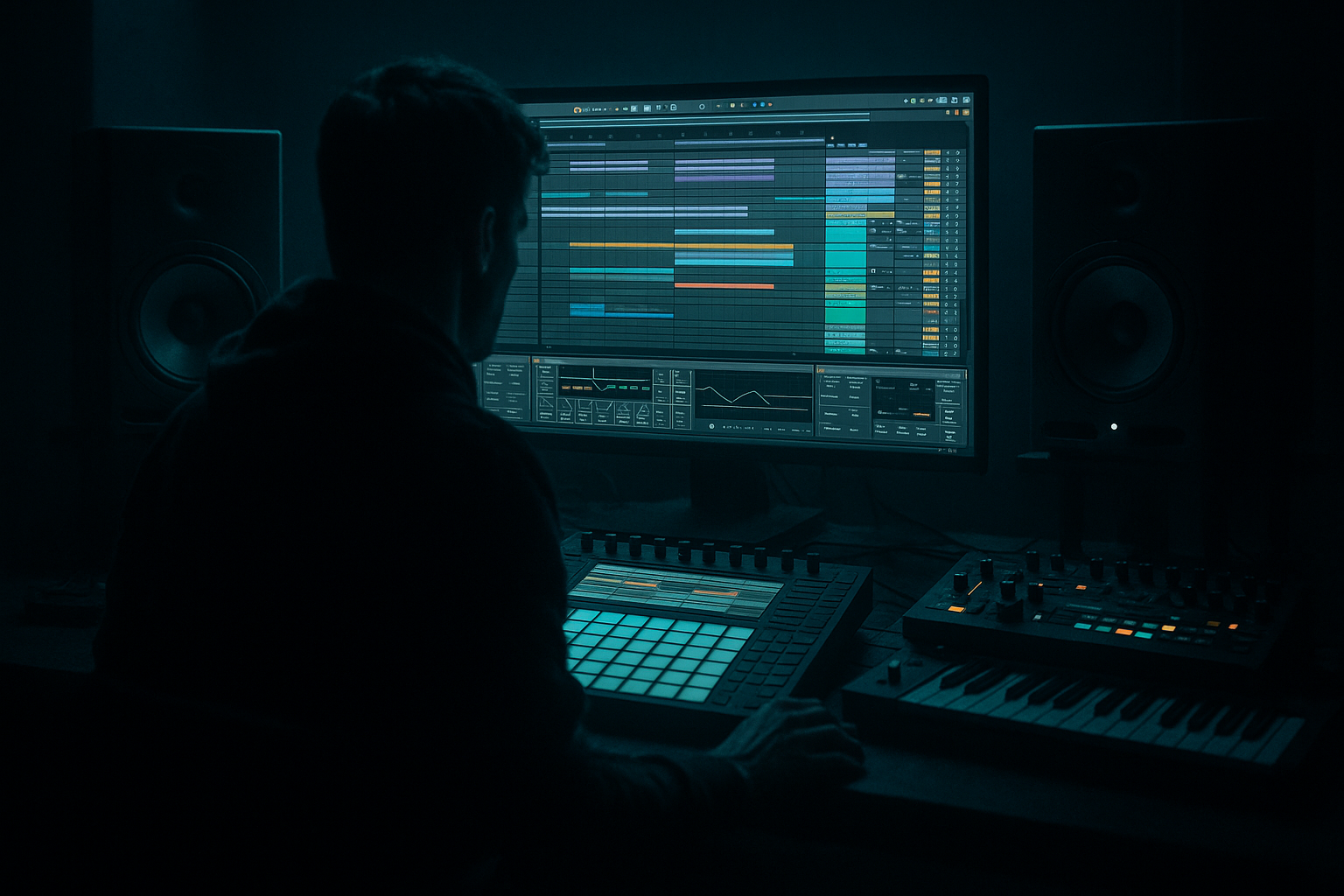
Main tutorial
Lesson Overview
This lesson is about building a jungle-style drum fill blueprint in Ableton Live 12 that feels like it came from oldskool rave energy, but still hits with modern punch and clean low-end impact. In DnB, fills are not just “drum decoration” — they are arrangement tools. They help you move from 8-bar loop to full track, signal drop changes, create tension before a bass switch, and keep the listener locked in when the groove repeats.
For beginner producers, the big win is learning how to make a fill that sounds authentic to jungle and DnB editing culture without getting lost in overly complex sound design. We’ll use Ableton’s stock tools to chop a break, create a short fill phrase, add controlled movement, and make it work in a modern roller, jungle, or darker bass track.
Why this matters in DnB:
- Fills are where you can show personality without cluttering the main groove
- They bridge the gap between breakbeat heritage and modern mix clarity
- A good fill can make a drop feel bigger, a switch-up feel intentional, and a repeat section feel alive
- chopped amen-style energy
- tight snare accents
- quick ghost-note movement
- a little vintage crunch
- but still clean enough to sit in a modern arrangement
- a roller before a bass phrase change
- a dark halftime-to-DnB switch
- the end of an 8-bar loop before the drop repeats
- a DJ-friendly breakdown transition
- a chopped break with snare-led movement
- a couple of ghost notes and tiny edits for swing and human feel
- a small fill hit that punches through the mix
- optional reverse texture / delay throw for tension
- enough space so the sub and bass remain clean
- Too many hits
- Fill is too loud
- Low end gets messy
- Ghost notes sound accidental
- Break loses its character after too much processing
- No arrangement purpose
- Use a shorter, harder snare layer for neuro or dark roller energy, but keep the break underneath so it still feels organic.
- Try parallel distortion on a return track instead of destroying the main fill. Blend it in quietly for extra bite.
- If the fill feels too bright, use EQ Eight to tame harshness around 5–8 kHz before it hits the master.
- Add a subtle stereo-to-mono discipline check with Utility. Keep the fill itself mostly centered so the low end stays solid.
- For darker atmosphere, send the final hit into a very short reverb and then cut it abruptly with automation. That creates a shadowy, underground tail.
- If you want more tension, automate a high-pass filter upward on the fill while the bass briefly drops out. This is a classic pre-drop trick in rollers and jungle.
- Resample your fill, then chop it again. That second generation often sounds more “finished” and more authentic to oldskool edit culture.
- Use a tiny bit of Drum Buss Transients for attack, but don’t overdo Crunch if the track already has aggressive bass.
- Which version makes the drop feel biggest?
- Which one still sounds clean when the sub comes back?
- Which one feels most like jungle, not just generic drums?
- A good DnB fill is an arrangement tool, not just extra drums.
- Start with a simple break edit and build around the snare.
- Use ghost notes, subtle layers, and tight timing for movement.
- Keep the low end clean so the bass and sub stay powerful.
- Use Ableton stock tools like Drum Rack, Simpler, Drum Buss, EQ Eight, Utility, Saturator, and Auto Filter to shape the fill.
- Add just enough texture and automation to make it feel oldskool, modern, and intentional.
We’re aiming for a fill that feels like:
What You Will Build
By the end of this lesson, you’ll have a 2-bar jungle fill blueprint inside Ableton Live 12 that you can drop into:
Musically, the result will be:
The fill will not be a huge, overly busy drum solo. Instead, it will be a practical DnB edit that sounds like a smart production decision, not a random fill.
Step-by-Step Walkthrough
1. Start with an 8-bar loop and choose the fill location
Open a project at your usual DnB tempo: try 170–174 BPM for classic jungle/DnB energy, or 160–170 BPM if you’re writing darker, more spacious rollers.
Pick a place where the fill makes sense:
- last 1 or 2 beats before the drop repeats
- bar 8 of an 8-bar phrase
- bar 16 before a bassline switch
- last half-bar before a new section
In DnB, fills work best when they support arrangement. A fill should feel like it’s answering the groove, not interrupting it.
Practical tip: loop the last 2 bars of your phrase and listen to where the energy naturally wants to lift.
2. Load a break and keep the first edit simple
Drag in a classic break sample or any punchy drum loop you like. If you’re a beginner, start with a break that already has a strong snare, kick, and some top-end texture.
Put the break on an audio track and use:
- Warp on, if needed
- Transient markers or manual slicing for clean edits
- Clip Gain if one hit is too loud
If you want a straightforward workflow, right-click the clip and use:
- Slice to New MIDI Track
- Slice by Transient
This gives you a Drum Rack with individual hits you can trigger and rearrange. That’s a very DnB-friendly way to edit breaks because you can quickly build a fill from tiny snare and kick placements.
Aim for:
- 1 strong snare
- 1 kick or low tom hit
- 1–2 ghost hits
- a final accent or crash if needed
3. Build a 1-bar fill phrase using snare movement
For a jungle-style fill, the snare is usually the anchor. In the MIDI clip or audio slice arrangement, place a snare hit on the main backbeat first, then add smaller notes around it.
Try this beginner-friendly pattern idea:
- Beat 3: main snare
- Late beat 3 or early beat 4: ghost snare
- Beat 4: another snare or rim-style hit
- End of bar: small kick or hat pickup into the drop
Keep it simple. A fill does not need 12 different hits. In DnB, clarity beats quantity.
To make the groove feel more alive:
- shift one ghost hit slightly late
- keep the main snare tightly on grid
- reduce ghost-note velocity so they sit behind the main hit
If you’re using MIDI, lower ghost note velocity to around 35–70 and keep main accents around 90–120 depending on sample level.
4. Shape the break with Ableton’s stock Drum Rack and Simpler tools
If your break is sliced to Drum Rack, open the chain and use Simpler for any hit that needs tone control.
Good beginner settings:
- Simpler mode: One-Shot
- Filter: low-pass slightly open if the sample is harsh
- Start position: trim tiny silence before the transient
- Envelope: short decay for tight edits
For any snare or percussion hit, add a gentle punch with:
- Drum Buss
- Drive: around 5–15%
- Crunch: low to medium, around 5–20%
- Boom: very subtle or off for the fill itself
- Transients: slightly up for snap
Why this works in DnB: break edits need to feel energetic but controlled. Drum Buss gives your fill a more finished, club-ready edge without needing heavy processing.
5. Add a modern punch layer without losing the oldskool feel
The oldskool vibe comes from the break. The modern punch comes from support layers.
Add one of these:
- a short clean snare layer
- a tight clap underneath the snare
- a muted kick click or very small transient hit
- a metallic top percussion tick
Keep these layers subtle. The job is to reinforce impact, not replace the break.
Routing suggestion:
- Send break slices and layers to a Drum Bus
- Group all fill-related drum tracks into a folder or group
- Use a separate Fill Bus if you want to automate the whole fill at once
On the Fill Bus, try:
- EQ Eight: cut a little around 250–400 Hz if it gets boxy
- gentle high shelf boost around 8–10 kHz if the fill needs air
- Glue Compressor with light reduction, around 1–2 dB
Keep the kick and sub unaffected by this bus if possible.
6. Use automation to create tension and release
This is where the fill starts feeling like arrangement, not just drums.
In the last half-bar or bar before the drop, automate one or two of these:
- Auto Filter on the fill bus for a quick high-pass sweep
- Reverb send up briefly on the last snare
- Delay throw on a single ghost hit or rim
- Utility gain down on the main drums for a micro-break, then back up
Good beginner automation ranges:
- Reverb send: from 0% to 15–25%, then back down fast
- Filter cutoff: move enough to hear it, but don’t over-sweep
- Utility gain dip: -1 to -3 dB for a short moment
In DnB, fills often work because they create a tiny vacuum before the next downbeat. That empty space makes the drop hit harder.
7. Make the fill feel oldskool with texture and resampling
If your fill feels too clean, add a bit of character using Ableton stock devices.
Try one of these on the fill group or a return track:
- Saturator: Drive around 2–6 dB
- Redux: very light, just enough to roughen the texture
- Erosion: subtle high-frequency grit for a worn break feel
- Vinyl Distortion if you want a more obvious lo-fi edge, but keep it light
Another powerful technique:
- resample the fill to audio
- then cut the audio so the tail feels tighter
- reverse the final hit or final cymbal for a small lift
This is a classic jungle workflow: edit, resample, refine. It keeps the sound personal and gives you more control over the groove.
8. Lock the fill to the bassline and leave space for the sub
Your fill should not fight the bass. If the bassline is active near the fill, keep the low end of the fill under control.
Best beginner approach:
- high-pass fill layers that don’t need low end
- keep kick fills short and focused
- avoid stacking too many low drum hits at the same moment as the sub
On the bass track, use:
- Utility to check mono compatibility
- EQ Eight to carve out space if a fill snare is masking the midrange
- short volume automation if the bass is too loud into the fill
Arrangement example:
- Bars 1–7: roller groove with bass movement
- Bar 8, beat 4: fill rises with snare ghosts and a delay throw
- Next bar 1: full drop returns with sub and main drum pattern locked in
Why this works in DnB: the fill creates contrast, but the bass still owns the low-end authority. That separation is what makes the drop feel powerful.
9. Finish the fill with a tiny signature detail
Great DnB edits usually have one little thing you remember.
Add one of these as a final touch:
- a tiny reverse snare into the downbeat
- a one-shot crash layered very quietly
- a late hat pickup
- a quick tape-stop style moment using Warp and clip editing
- a subtle tom stab for jungle flavor
Keep it short. Think “signature,” not “solo.”
If you’re editing audio, zoom in and make sure the final transient lands cleanly. If you’re using MIDI, nudge the last note slightly earlier or later to test the feel. Often a small timing change gives the fill more life than adding another sample.
10. Save it as a reusable Ableton rack or clip
Beginner producers improve fast when they reuse good ideas. Once your fill works, save it.
Useful ways to organize:
- save the Drum Rack as a preset
- save the MIDI clip as a groove/fill idea
- collect the audio slices into a project folder
- label it clearly: “Jungle Fill 170 BPM – Snare Ghosts”
The goal is to build a personal library of edits you can reuse in other tracks. That’s a very real DnB workflow: small, tested rhythmic ideas become part of your signature sound.
Common Mistakes
- Fix: remove anything that doesn’t support the main accent.
- In DnB, clutter kills impact fast.
- Fix: lower the group gain or clip volume by 2–4 dB and compare with bypass.
- A fill should feel exciting, not louder than the drop.
- Fix: high-pass non-essential fill layers and avoid stacking kick + sub hits too close together.
- Fix: reduce their velocity and keep them rhythmically consistent.
- Ghost notes should feel like swagger, not mistakes.
- Fix: back off heavy distortion and restore some transient clarity with Drum Buss or simpler EQ moves.
- Fix: place the fill at a section change, turnaround, or drop transition.
- Random fills make tracks feel unfinished.
Pro Tips for Darker / Heavier DnB
Mini Practice Exercise
Spend 10–20 minutes making three different versions of the same fill.
1. Start with one 1-bar break edit.
2. Make Version A: very simple, just snare and one ghost note.
3. Make Version B: add a kick pickup and a short reverb throw.
4. Make Version C: add a reverse hit, slight saturation, and a tiny automation dip before the downbeat.
Then compare them in context with a bass loop at 170–174 BPM.
Ask yourself:
Finally, save the best version as a reusable clip or Drum Rack preset.
Recap
If you can make one fill that feels tight, musical, and bass-friendly, you can reuse that blueprint across whole DnB tracks.

