Main tutorial
Lesson Overview
This lesson is about building a pirate radio-style Reese patch with a 90s jungle / oldskool DnB darkness and then distorting it in a controlled way so it feels like it’s coming from a battered FM transmitter, a cramped rave room, or a dubplate cut with attitude. The goal is not a polished modern neuro bass. It’s a gritty, mid-forward, menacing atmosphere that can sit under a break, answer a vocal chop, or carry a drop with that unmistakable “late-night pirate broadcast” energy 📻
In Drum & Bass, this kind of sound matters because it sits right in the zone between bassline and atmosphere. A Reese patch can do more than just fill space: it can provide harmonic tension, signal the drop’s emotional tone, and help the tune feel bigger without relying on huge pads. In oldskool jungle especially, dark Reese tones work brilliantly in:
- intro beds under radio chatter or FX
- drop support beneath chopped breaks
- call-and-response with sub hits
- mid-section switch-ups where the energy needs to feel unstable and raw
- a thick, moving midrange core
- a controlled sub layer
- harmonic distortion that sounds like worn-out broadcast circuitry
- stereo motion in the mids only
- a resampled version you can chop, automate, and arrange like a proper DnB texture
- a 1–2 bar sustained note under an intro
- a rolled, shifting bass bed in a 170 BPM jungle drop
- a call-and-response answer to a drum fill or vocal stab
- a grimy atmospheric layer that can be filtered in and out for tension
- Distorting the whole low end too hard
- Making the patch too wide
- Using too much high-end fizz
- Over-automating everything at once
- Letting the Reese fight the break
- Creating a neuro-style growl instead of a pirate-radio Reese
- Use two distortion stages instead of one huge drive knob push. It sounds more expensive and less flat.
- Add very subtle pitch drift or phase movement to make the Reese feel unstable and alive.
- Print one version with more midrange bite and one with less top end so you can swap based on section.
- Use bandpass automation on the resampled audio for that radio-transmission feel.
- Keep the sub separate and boring on purpose. Let the midrange be the character.
- Try a short reverb send on the Reese only in intro sections, then remove it in the drop for contrast.
- In the bass bus, use Glue Compressor lightly so the layers feel like one instrument.
- For a grimier pirate aesthetic, resample through Redux and then clip it gently with Saturator Soft Clip rather than trying to make the synth itself do everything.
- Reference oldskool jungle and darker rollers: the best patches often feel less polished but more purposeful.
- If the track needs more menace, automate the filter to close slightly just before the snare hits, then reopen after. That tiny motion can make the groove feel hostile in a good way.
- Build the Reese from a stable synth core first, then add movement.
- Keep the sub clean and mono, and let the distortion live in the mids.
- Use Saturator, Overdrive, Drum Buss, Redux, Erosion, Auto Filter, and Utility as your main Ableton stock tools.
- Resample early so you can shape the sound like an audio atmosphere, not just a synth patch.
- Automate filter and drive for tension, release, and arrangement energy.
- In DnB, the win is always weight plus clarity: dark, dirty, and atmospheric, but still locked to the break.
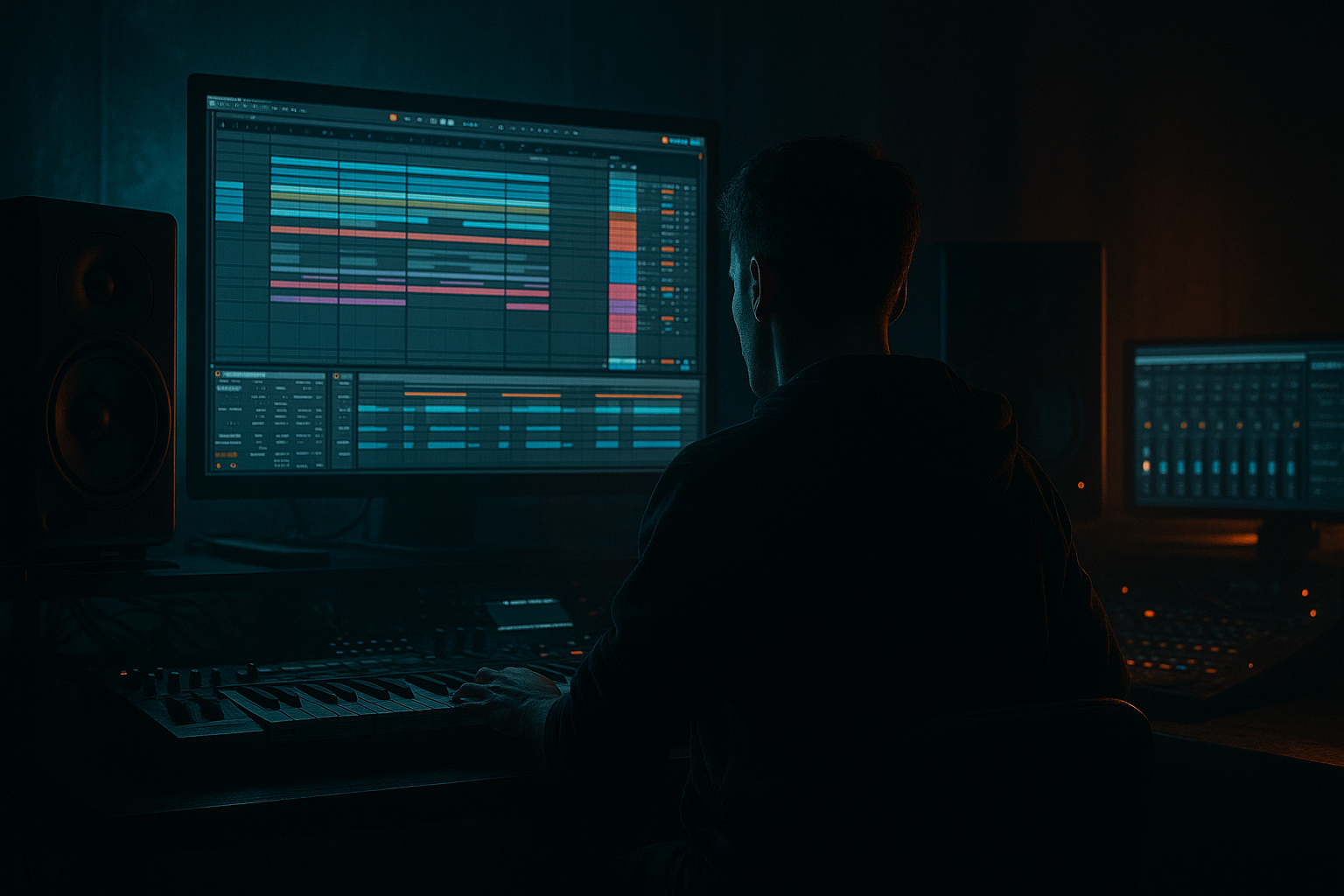
We’ll build this directly in Ableton Live 12 using stock devices, focusing on oscillator layering, distortion staging, movement, stereo discipline, and resampling. The end result should feel like a dirty, detuned, pirate-transmitted Reese atmosphere that still leaves space for drums and sub.
Why this works in DnB: the genre thrives on tension, low-end control, and textural identity. A well-shaped Reese can add emotion and menace without cluttering the arrangement, especially when you treat distortion as a tonal tool rather than just “more aggression.”
What You Will Build
By the end, you’ll have a dark Reese atmosphere patch with:
Musically, it should work as:
You’ll also learn how to keep the sound heavy but mix-safe, which is essential in DnB where the kick, break, and sub all need authority.
Step-by-Step Walkthrough
1. Start with a clean instrument rack and set the tonal role
Create a new MIDI track and load Wavetable. This is a strong stock choice for modern Ableton Live 12 bass design because it gives you stable oscillators, fine modulation control, and good control over the harmonic content before distortion.
Set the track up at 174 BPM and think of this patch as a mid-bass atmosphere, not the actual sub. Program a single MIDI note around F1–A1 to start, or use a few note changes if you want a more musical phrase later.
In Wavetable:
- Oscillator 1: use a saw-style wavetable or a simple bright analog waveform
- Oscillator 2: duplicate a similar waveform, detune slightly
- Unison: keep it modest, around 2–4 voices
- Detune: small amounts, roughly 0.08–0.18
- Phase: slightly randomized if available, or vary the start behavior so each note feels less static
The aim is to create a dense harmonic source before distortion. In oldskool DnB, that thick, slightly unstable harmonic bed is what makes the Reese feel alive.
2. Shape the Reese movement before distortion
Add slow modulation so the patch has that classic “moving teeth” feeling. Use Wavetable’s LFO or Auto Filter after the synth.
Good movement targets:
- Wavetable position or oscillator blend
- Fine detune
- Filter cutoff
- Stereo width on the upper harmonics
Try these starting points:
- LFO rate: 1/2 bar to 2 bars
- LFO amount on wavetable position: subtle, around 5–15%
- Filter cutoff: start around 180–350 Hz if the patch is too bright, then open as needed
- Resonance: low to moderate, around 10–25%
If you want a more authentic jungle tension feel, use a slow evolving LFO rather than an obvious wobble. The movement should feel like the sound is “breathing through broken circuitry,” not doing a modern EDM bass wobble.
3. Build the pirate radio distortion chain with staging
Now add the character. Place an Audio Effect Rack after the instrument and set up three chains if you want better control:
- Sub safety chain
- Main distorted Reese chain
- High/mid grit chain
If you prefer a simpler setup, a straight chain works too:
- Saturator
- Overdrive
- Drum Buss
- EQ Eight
- Utility
Suggested starting values:
- Saturator: Drive +4 to +10 dB, Soft Clip on
- Overdrive: Frequency around 250–700 Hz, Drive 15–35%
- Drum Buss: Drive 5–20%, Crunch 5–15%, Boom very low or off for now
- EQ Eight: high-pass only if needed, usually around 25–35 Hz on the overall bass bus, not aggressively on the Reese itself
- Utility: Width 70–120% depending on how wide the patch gets
The key is to distort in stages. That gives you the pirate-radio flavor without instantly wrecking the sound. In DnB, this matters because the distortion must add presence and attitude while still leaving room for the kick and sub.
4. Separate sub from grit so the low end stays powerful
Reese patches often get weak when they’re distorted full-range. For DnB, the sub should stay stable and mono while the distortion lives mostly in the midrange.
Best practice in Ableton:
- Duplicate the MIDI track, or use an Audio Effect Rack with split bands
- Make one chain for sub only
- Make another chain for mid/high Reese texture
For the sub chain:
- Use Operator, Wavetable, or even a simple sine from Wavetable
- Keep it mono with Utility
- Low-pass around 80–120 Hz
- Keep distortion minimal or none
For the Reese chain:
- High-pass around 90–150 Hz so the distortion doesn’t muddy the sub
- Focus the grit in 150 Hz–2 kHz
- You can even add Auto Filter before the distortion to narrow the tonal band, then reopen it later for automation
A useful starting split is:
- Sub: everything below 100 Hz
- Reese body: 100 Hz–1.5 kHz
- Buzz/air: 1.5–5 kHz
Why this works in DnB: the genre’s punch depends on the bass occupying a clear lane. A mono sub gives weight, while the distorted Reese adds character above it. That separation keeps the drop hitting hard instead of turning into fuzzy low-mid soup.
5. Add pirate-radio texture with resampling and degradation
The “pirate radio” feeling comes from imperfection. Once the core patch is good, resample it to audio.
In Ableton Live 12:
- Create a new audio track
- Set input from the Reese track or resample the master if you’re printing the whole vibe
- Record a few bars of sustained notes and movement
- Then edit the audio clip for tight control
After resampling, add:
- Redux for bit reduction and sample-rate reduction
- Erosion for gritty upper-mid noise
- Auto Filter for sweeping bandpass or low-pass moves
- Frequency Shifter very subtly for unstable radio drift
Try these starting settings:
- Redux: Bit Reduction light, around 8–12 bits, Sample Rate 12–20 kHz
- Erosion: Mode noise or sine, Amount subtle, just enough to roughen the top
- Frequency Shifter: Shift 0.10–1.00 Hz if you want slow phase drift, not obvious pitch bending
This is a strong workflow for DnB atmospheres because resampling turns a “sound design patch” into a performance-ready texture. Once it’s audio, you can chop, reverse, warp, and automate it like a classic jungle production element.
6. Control the stereo image like a proper bass record
Oldskool DnB can feel huge, but the low end still needs discipline. Use Utility and EQ Eight to keep the patch mix-friendly.
Practical guidance:
- Keep everything below 120 Hz mono
- Widen only the upper harmonics
- If the patch gets phasey, reduce width until it locks in
- Check in mono regularly
On the Reese bus, try:
- Utility Width: 80–100% as a starting point
- If using Auto Pan for movement, set phase low or use slow subtle motion
- EQ Eight: if there’s harshness, cut gently around 2.5–4.5 kHz by 2–4 dB
In a jungle context, stereo movement is most effective when it feels like the sound is swirling above the sub rather than breaking apart the center. Your kick and sub should feel like they’re driving forward; the Reese should occupy the emotional air around them.
7. Automate filter and distortion for arrangement energy
A Reese patch in DnB usually works best when it evolves over time, not when it just loops static. Use automation to make the sound participate in the arrangement.
Good automation targets:
- Auto Filter cutoff
- Saturator Drive
- Overdrive Tone/Frequency
- Utility Width
- Reverb Send amount if you want a washier intro section
Arrangement ideas:
- Intro: low-pass the Reese heavily and let it creep in under breaks
- Pre-drop: open the filter over 4–8 bars while increasing drive
- Drop: pull the low end out of the Reese briefly, then bring it back for impact
- Switch-up: mute the sub layer for 1 bar and let the distorted midrange stab alone
A strong oldskool DnB trick is to let the Reese answer the break. For example, after a two-bar break edit, open the filter on beat 3 so the Reese swells into the next phrase. That tension-release pattern keeps the arrangement moving and gives the bassline a conversational feel.
8. Turn the patch into a usable musical phrase
Now make it feel like part of a track, not just a sound design exercise. Program a simple bass phrase in F minor, G minor, or D minor, which are reliable keys for darker DnB atmospheres.
Example musical context:
- Bars 1–2: hold a low note with filter closed
- Bar 3: jump up a fifth or octave for tension
- Bar 4: drop back down and automate more distortion on the last half-beat
Keep the notes sparse. In jungle and rollers, the gap between notes is often where the groove lives. A Reese patch can become a call-and-response partner to the break if you leave room for the drums to speak.
If the pattern feels too static, use:
- note length differences
- short rests
- velocity variation if it affects filter/amp
- slightly different octave placements for transition bars
9. Reshape the attack so the bass sits with the break
A lot of DnB bass sounds fail because they fight the transient of the drums. Use Envelope settings, Compressor, or even Shaper-like control via Amp/Filter to make space.
On the instrument or rack:
- short attack for punchy phrase starts
- slightly longer release if you want the Reese to smear into the gap
- compress gently if the movement causes big level swings
Useful stock devices:
- Compressor: only a few dB of gain reduction if the patch is spiky
- Glue Compressor on the bass bus if the layers feel disconnected
- EQ Eight to trim mud around 200–400 Hz if the break and bass are clouding each other
In darker DnB, a little transient restraint can make the whole mix feel more expensive. You want the bass to feel like it’s pushing air, not popping over the break.
10. Print variants and build your atmosphere palette
Make at least two bounced versions:
- Version A: cleaner Reese with moderate distortion
- Version B: brutal pirate-radio version with more crunch and filtering
Then use them as arrangement tools:
- Layer Version A under the main drop
- Use Version B for intro and switch-up moments
- Chop short slices and reverse them into transitions
- Automate delay throws or reverb swells for fills
This is especially useful in oldskool-inspired DnB because the track benefits from contrast: clean-ish low-end authority in the drop, degraded radio grime in the transitions. That contrast makes the tune feel intentional rather than overprocessed.
Common Mistakes
- Fix: split the sub from the Reese body. Keep sub mono and clean.
- Fix: collapse below 120 Hz to mono and reduce width if the bass loses focus.
- Fix: tame 2.5–5 kHz with EQ Eight or reduce Redux/Erosion intensity.
- Fix: choose one or two moving parameters per section, usually filter plus drive.
- Fix: carve space with EQ, shorten notes, or duck the bass slightly with sidechain from the kick/snare if needed.
- Fix: simplify the movement. Slow detune, rough saturation, and degraded harmonic texture are more on-style than hyper-edited bass gymnastics.
Pro Tips for Darker / Heavier DnB
Mini Practice Exercise
Spend 10–20 minutes building a usable version of this sound:
1. Load Wavetable and make a simple dual-oscillator Reese.
2. Write a 4-bar MIDI phrase in F minor with only 2–3 notes.
3. Add Saturator, Overdrive, Drum Buss, and Utility.
4. Split off or duplicate a clean sub layer and keep it mono.
5. Resample 8 bars to audio.
6. Add Redux and Erosion to the printed audio.
7. Automate filter cutoff and distortion drive across the 4 bars.
8. Bounce two variants: one cleaner, one more destroyed.
9. Check both in mono and decide which one sits better with a break loop.
Goal: by the end, you should have one dark pirate radio Reese atmosphere that could realistically sit under a jungle intro or a roller drop.

