Main tutorial
Lesson Overview
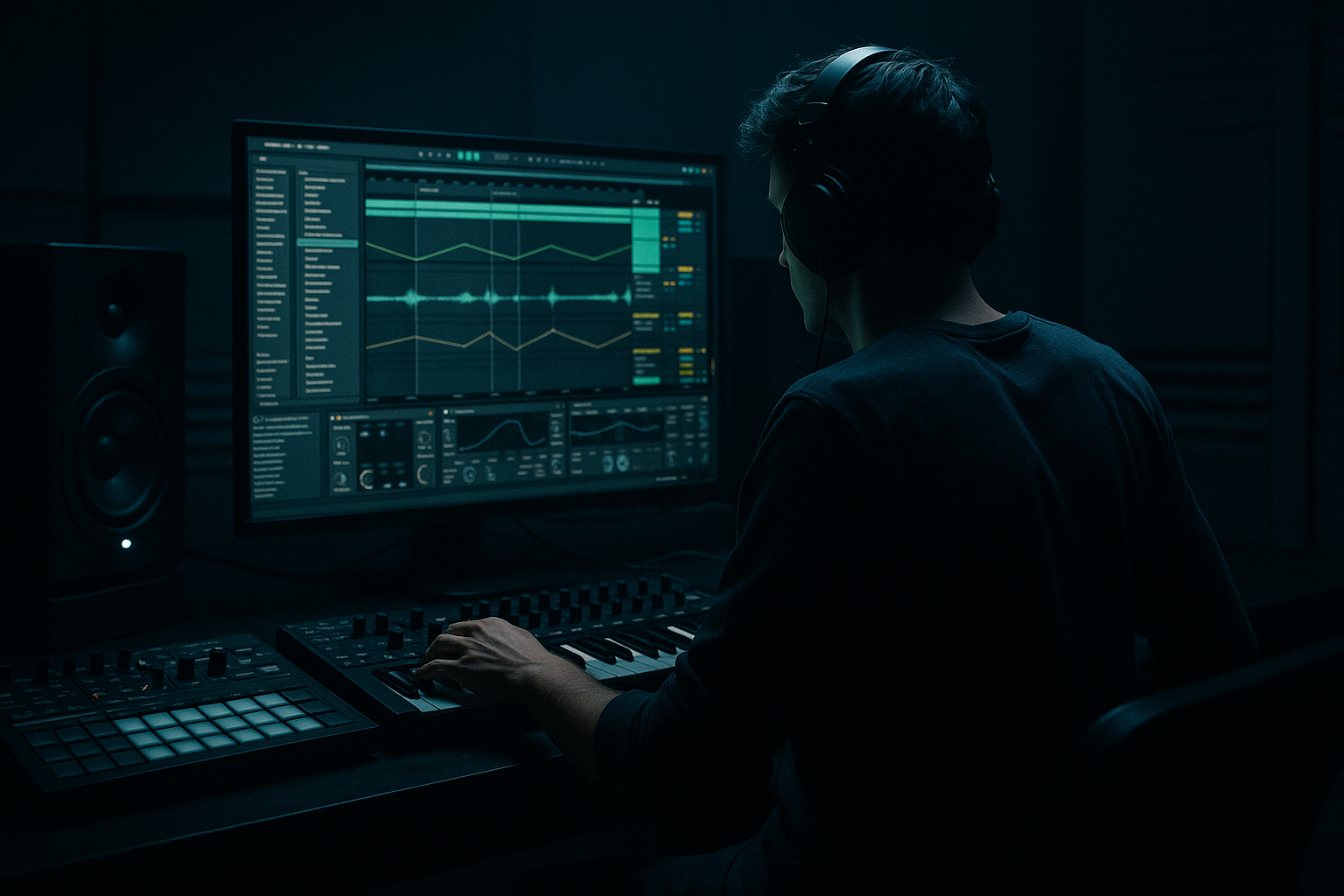
The Pirate Signal approach is all about taking a classic amen break and shaping it into something that feels like a coded message: chopped, answered, twisted, and re-assembled into a DnB phrase with motion. In Ableton Live 12, this is especially powerful because you can move quickly between warped break editing, resampling, and arrangement automation without leaving the Session or Arrangement workflow.
In a real DnB track, this technique usually lives in the drop phrase, pre-drop build, or switch-up section. You’re not just making a drum loop — you’re creating a recognisable amen identity that can act like a hook, support a bass call-and-response, or inject tension before the next 16-bar idea. That’s what makes it valuable in jungle, rollers, darker halftime-inflected DnB, and neuro-adjacent energy: it gives your drums a human, restless, slightly unpredictable shape that still stays locked to the grid.
Why it matters for mastering-minded producers: an amen variation shape forces you to think beyond sound selection and into arrangement density, transient control, low-end separation, and stereo discipline. If the break is too busy, the master gets harsh and messy. If it’s shaped well, it gives you impact while leaving room for sub, bass movement, and clean limiting later.
---
What You Will Build
You will build a 4-bar amen variation shape in Ableton Live 12 that works like a Pirate Signal-style drum phrase:
- Bar 1: recognizable amen statement
- Bar 2: variation with slice edits and ghost hits
- Bar 3: call-and-response with bass space
- Bar 4: tension fill or reset into the next phrase
- punchy sliced amen transients
- controlled sub space for the bassline
- light resampling grit
- movement from automation and drum bus processing
- a mix-friendly structure that can slot into an 8-bar drop or transition
- Making every bar equally busy
- Over-editing the amen until it loses identity
- Ignoring low-end collisions with the kick/sub
- Too much stereo width on drums
- Overdriving the drum bus before mastering
- Random ghost notes with no rhythmic purpose
- Skipping resampling
- Layer a sub-ghost under the main kick only in selected bars using a very short sine from Operator. Keep it subtle so the kick feels larger without clouding the low end.
- Use short reverse slices before snares to create menace and forward motion.
- Add controlled grit with Saturator on only the snare or break group. Try Drive 3–5 dB and adjust Output so peaks stay tame.
- Use Drum Buss transient shaping sparingly to make the amen hit harder without flattening the groove.
- Low-pass the break briefly in transitions and then reopen it for impact. This works great in dark rollers and neuro-influenced sections.
- Keep the bass mono below roughly 120 Hz with Utility, and let only the mid-bass movement spread.
- Use call-and-response arrangement: drums answer on bars 1–2, bass answers on bars 3–4. That’s a classic tension strategy for underground DnB.
- Resample with reverb or delay printed only on selected hits if you want a grimy pirate-radio vibe. Don’t overdo it; one or two moments are enough.
- Check the phrase at lower volume. If the ghost notes and break shape still feel alive quietly, your arrangement is strong.
- Automate less than you think. In darker styles, a small filter move or a single fill often feels heavier than constant motion.
- Slice the amen into a playable MIDI-style drum instrument
- Build a 4-bar phrase with anchor hits, ghost notes, and a clear variation arc
- Resample early so you can edit like an arranger, not just a loop designer
- Use stock Ableton devices like Simpler, Drum Buss, EQ Eight, Compressor, Utility, and Saturator
- Keep the low end disciplined so the bass and drums can trade space cleanly
- Treat the break as part of the arrangement and mastering workflow, not just a drum loop
The result will feel like a dark, coded drum message with:
You’ll also end with a drum bus that is already halfway toward mix-ready, meaning your mastering chain won’t need to fight the drums.
---
Step-by-Step Walkthrough
1. Load and prep the amen in a clean audio track
Drag a clean amen break into an audio track in Arrangement View. Use a break with enough top-end detail and natural transient variation. If you already have a jungle break archive, choose one with a strong kick/snare pocket and a little room tone.
In Clip View:
- Set warp mode to Beats
- Try transient preservation around 8–12 ms if the break is too chopped
- Set loop braces to exactly 1 or 2 bars to start
- Turn on the clip’s groove only later, not immediately
This first stage is about preserving the identity of the break. You want the amen to still feel like a break, not a flat loop.
2. Slice the break into playable drum logic
Right-click the clip and choose Slice to New MIDI Track. For an intermediate workflow, use:
- Slice by Transient
- Create a new MIDI track with Simpler loaded for each slice
Now open the MIDI clip generated by Ableton. You can fire slices like a drum kit, which is perfect for building a Pirate Signal-style variation shape.
Practical move:
- Keep the original amen audio muted but available
- Rename the MIDI track to something like Amen Slices
- Color-code it with your main drum group so you don’t lose the thread later
This is where the “signal” part starts: you’re no longer looping; you’re composing a phrase from break fragments.
3. Build the core 4-bar shape with recognizable anchor hits
Start by placing the anchor snare on bar 2 and bar 4, or whatever your break source naturally suggests. Then place the kick and hat fragments around it so the phrase has a backbone.
A strong Pirate Signal shape usually has:
- a clear first bar statement
- a mid-phrase displacement in bar 2 or 3
- a fill or break-up in bar 4
Use the following as a practical starting idea:
- Bar 1: kick, ghost snare, hat tail, one quick pickup
- Bar 2: strong snare, small double-hit before it
- Bar 3: create space for bass with fewer hits
- Bar 4: snare roll, reverse slice, or a late-kick pickup into the loop
Why this works in DnB: the listener needs a repeatable pulse to lock into 170–175 BPM energy, but the break also needs variation so it doesn’t feel like a looped sample pack. The amen becomes a rhythmic narrator rather than background texture.
4. Shape the slices with Simpler for punch and tone
Open the Simpler instances on your slices and focus on a few key sounds: kick, snare, ghost snare, and hat. Use Filter and Amp envelopes to make them behave like a tight performance kit.
Good starting settings:
- Kick slice: shorten decay, keep it tight, filter slightly if the low-mid is too boxy
- Snare slice: add a little more sustain than the kick
- Ghost hits: reduce volume, trim the attack slightly, and keep them short
- Hat slices: high-pass or simply reduce body by shortening the sample
You can also use:
- Saturator after Simpler on key slices for extra density
- Drum Buss on the slice group for glue and controlled knock
- EQ Eight to remove ugly low-mid buildup around the break fragments
Suggested parameter ranges:
- Saturator Drive: 2–6 dB
- Drum Buss Drive: 5–15%
- Drum Buss Crunch: 2–8%
- EQ Eight low cut on hats: around 150–300 Hz
Keep it tight. The slice kit should hit like a programmed drum kit, not smear like raw audio.
5. Add ghost notes, stutters, and answer phrases
This is where the Pirate Signal personality appears. Use tiny repositioned hits and micro-edits to create call-and-response inside the break. In DnB, this is crucial because the drums often need to answer the bassline rather than just repeat.
Try these moves:
- duplicate a snare tail and place it 1/16 or 1/32 before the main snare
- place a quiet ghost kick after a fill
- add one hat-only pickup before bar 4
- copy a slice and slightly reduce its velocity for a whispered echo effect
In Ableton Live 12, you can use the MIDI note velocity lane to shape this quickly. Keep ghost notes low enough that they support the groove, not clutter it.
Musical context example: if your bassline hits a long reese note on beat 1 of bar 3, strip the break down there and let a ghost snare answer on the “and” of 2. That creates the classic drums breathe / bass speaks / drums reply relationship common in rollers and darker jump-up-adjacent DnB.
6. Resample the full phrase and edit it like audio
Once the MIDI slice pattern feels good, resample it to a new audio track. Route the Amen Slices track to a new audio track set to Resampling or the correct internal input.
Record 4 or 8 bars, then cut the recorded audio into sections. This lets you:
- tighten timing manually
- reverse select hits
- exaggerate transitions
- bounce the phrase into a single controllable performance file
This step matters because resampling lets you commit to a vibe and then sculpt it like an arrangement element. For mastering workflows, it also simplifies the session and reduces CPU while giving you a more controlled drum bus.
After recording:
- consolidate the best 4-bar phrase
- fade short clicks
- use clip gain if one slice spikes too hard
- keep the peak level sensible so the master bus isn’t getting hammered
7. Process the drum bus for weight, clarity, and glue
Group your amen elements into a Drum Bus and apply restrained but purposeful processing. For mastering-aware DnB, the bus should feel finished without becoming crushed.
Suggested stock chain:
- EQ Eight: remove mud or harshness
- Drum Buss: add density and transient control
- Glue Compressor: mild cohesion
- Saturator or Soft Clip style limiting via Saturator’s output discipline
Practical settings:
- Glue Compressor ratio: 2:1
- Attack: 10–30 ms
- Release: Auto or 0.1–0.3 s
- Gain reduction: around 1–2 dB
- EQ Eight cut around 250–500 Hz if the break gets cloudy
- Gentle high shelf trim if hats get brittle around 8–12 kHz
Keep the drum bus punchy, not flattened. If the bus is doing too much, the mastering limiter will exaggerate distortion later.
8. Leave space for sub and bass movement
A Pirate Signal amen variation only works if the bass has room to interact with it. In DnB, the sub and reese are not just under the drums — they’re part of the arrangement conversation.
Use your bass track to complement the phrase:
- allow the sub to hit on the empty spaces between kick/snare accents
- use a reese with movement in the upper mids, but keep the low end mono
- sidechain the bass lightly to the kick or the main drum group
In Ableton Live, use:
- Compressor sidechain from the drum group
- Utility to keep the bass low end mono
- EQ Eight to carve bass frequencies around the kick’s main body
Good sidechain starting point:
- Ratio: 2:1 to 4:1
- Attack: 1–10 ms
- Release: 60–150 ms, depending on groove
This is a big “why it works in DnB” moment: fast music needs controlled collision, not constant full-spectrum density. The break variation creates rhythmic interest, and the bass answers in the gaps. That makes the drop feel larger without getting louder.
9. Automate movement across the phrase
Now turn the 4-bar shape into a real arrangement tool. Add automation on the resampled break or drum bus to create tension and signal changes.
Useful automation ideas:
- Auto Filter on the break for a subtle low-pass sweep into a fill
- Reverb send for one or two hit accents before a switch-up
- Delay on a ghost snare or tail for a pirate-radio style bounce
- Utility width reduction in a build-up section, then open it on the drop
- Drum Buss Boom very lightly for a subby tension hit, if the mix can handle it
Try this arrangement move:
- Bar 1–2: dry and tight
- Bar 3: slightly thinner drums to create anticipation
- Bar 4: add a reversed slice or small filter opening
- Next 8-bar phrase: return bigger, maybe with extra hat detail or a second snare layer
This keeps the break from feeling static and helps the track breathe in DJ-friendly 16- or 32-bar sections.
10. Check the phrase like a mastering engineer
Before you move on, do a quick reality check on the drums in the context of the track.
Listen for:
- snare not clipping the mix bus
- kick and sub not fighting
- harsh hat slices around the upper mids
- mono compatibility on the low end
- whether the variation still hits when played quietly
Use:
- Utility on the master or drum bus to check mono
- Spectrum to see low-end overlap
- Limiter only as a safety check, not as a crutch
If the phrase sounds exciting but the master starts to harden, reduce drum bus drive before you chase more loudness. In darker DnB, clarity is often heavier than sheer distortion.
---
Common Mistakes
Fix: leave one bar with more space so the bassline can breathe and the drop has contour.
Fix: keep at least one clear snare anchor or break signature hit in each phrase.
Fix: use EQ Eight and sidechain compression to create separation instead of just turning things down.
Fix: keep the core kick, snare, and low percussion centered; widen only tops or FX.
Fix: pull back Drum Buss or Saturator output and preserve headroom.
Fix: place ghosts as answers to bass hits, fills, or phrase transitions.
Fix: bounce the best idea to audio so you can edit arrangement energy faster and commit to the vibe.
---
Pro Tips for Darker / Heavier DnB
---
Mini Practice Exercise
Spend 10–20 minutes building a 4-bar Pirate Signal amen variation in Ableton Live 12:
1. Pick one amen break and slice it to MIDI.
2. Build a 4-bar phrase with at least:
- 2 anchor snares
- 2 ghost notes
- 1 fill or reverse slice
3. Resample the phrase to audio.
4. Group it and apply a light drum bus chain:
- EQ Eight
- Drum Buss
- Glue Compressor
5. Add one bass note or reese phrase that leaves space for the main snare hits.
6. Automate one transition move:
- low-pass filter, reverb send, or width change
7. Print the loop and listen in context with a kick/sub or bassline.
Goal: make the phrase feel like a recognisable DnB statement with variation, not just a chopped break.
---
Recap
The Pirate Signal approach turns an amen break into a shaped DnB phrase with identity, tension, and space.
Key takeaways:
If the drums feel coded, tense, and still danceable, you’ve got the right shape ⚡

