Main tutorial
Lesson Overview
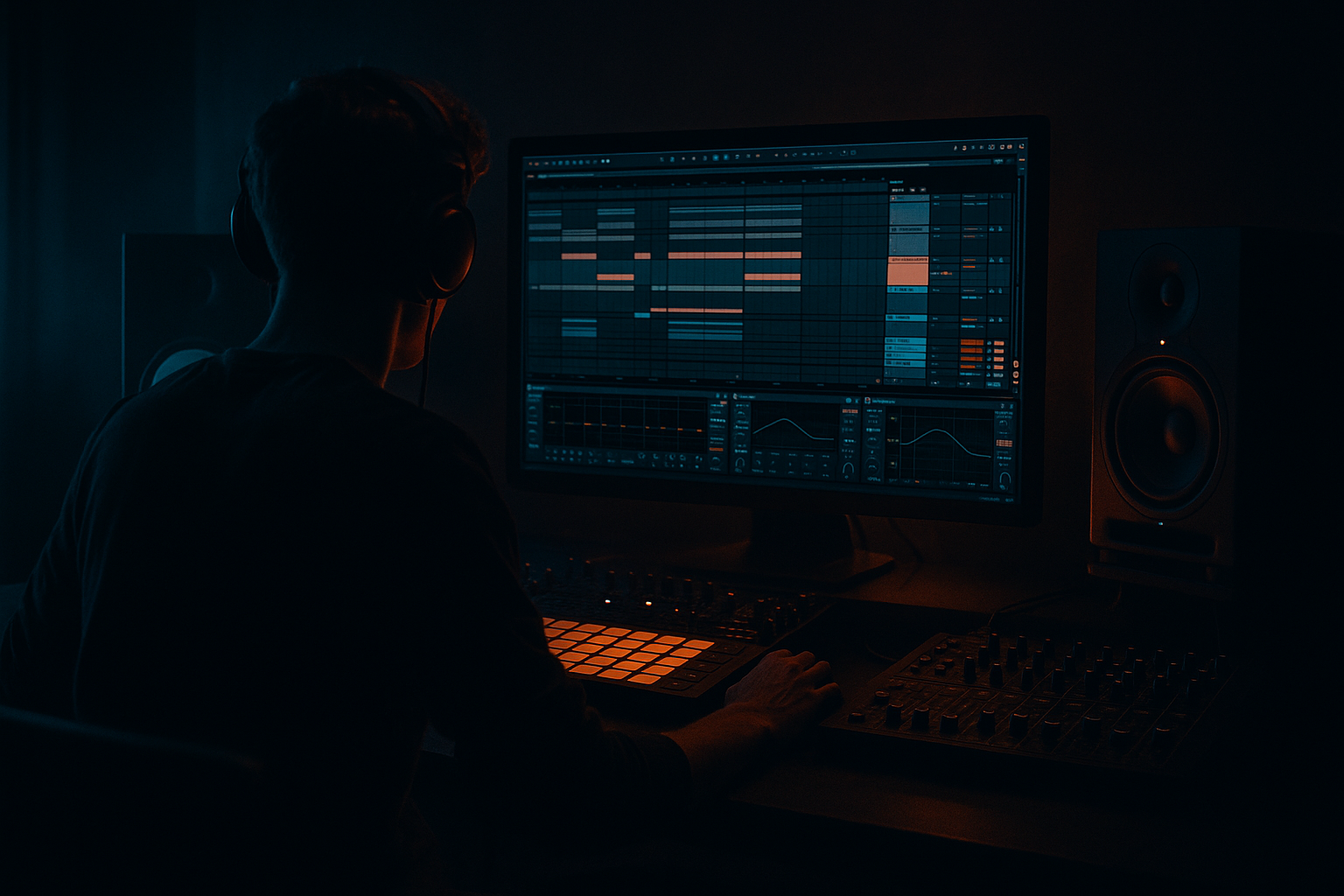
Ragga method in Drum & Bass is about making the vocal feel like a rhythmic instrument, not just a phrase sitting on top of the track. In the classic jungle and ragga-DnB tradition, short vocal chops, call-and-response hooks, and “impact bounce” create that unmistakable push-pull energy that keeps a roller moving and gives a drop personality. In Ableton Live 12, you can build this efficiently with stock tools: slicing, warping, envelope shaping, delay throws, saturation, and tight routing.
The goal of this lesson is to teach you how to create impact bounce from ragga-style vocals in a way that works inside a modern DnB arrangement. That means: vocal hits that land like percussion, bounce against the drums and bass, and add tension before drops or switch-ups without crowding the mix.
Why this matters in DnB: the genre relies on momentum. If your vocal phrasing is static, the track can feel flat. If you shape the vocal as a bounce element, it creates syncopation, groove, and character—especially in darker rollers, jungle-leaning cuts, and neuro-influenced arrangements where every sound needs a job. 🔥
What You Will Build
By the end of this lesson, you’ll have a ragga vocal treatment that does all of the following:
- A short, punchy vocal bounce pattern that locks with your snare and ghost notes
- A call-and-response vocal chain that answers your bass or drum accents
- A drop-ready impact phrase with delay throws, filtering, and controlled stereo width
- A resampled vocal rack you can reuse across intro, build, drop, and breakdown sections
- A vocal that feels gritty, rhythmic, and DJ-friendly, not overly melodic or pop-polished
- a 174 BPM roller with a half-time snare pocket
- a jungle break edit with chopped reggae/ragga phrases
- a dark minimal drop where the vocal punctuates the first 8 bars
- a neuro-ish second drop where the vocal becomes a textural hook
- Using full vocal phrases with too much information
- Letting the vocal sit on top of the drum groove without syncing to it
- Over-widening the vocal
- Too much low-mid buildup
- Using too much reverb
- Ignoring the bassline’s phrasing
- Layer a dirty duplicate quietly under the main vocal
- Process one copy for impact, one for atmosphere
- Use drum-group sidechain style rhythm on the vocal throw only
- Cut the vocal into the same rhythmic grid as your break edits
- Combine ragga phrasing with neuro-style precision
- Use repeated one-word hooks for underground pressure
- Resample through saturation once the timing is right
- Use short, characterful vocal fragments
- Lock them to the drum groove before adding effects
- Shape them with stock Ableton tools like EQ Eight, Saturator, Compressor, Auto Filter, and Echo
- Build call-and-response phrasing that works with your bassline
- Keep the main vocal punchy, mono-friendly, and arrangement-aware
- Resample when the rhythm feels right so you can perform and edit faster
Musically, this is the kind of thing that can sit over:
Step-by-Step Walkthrough
1. Choose a vocal phrase with bounce potential
Start with a ragga or reggae-style vocal sample that has strong consonants, short syllables, and attitude. Look for phrases with natural rhythmic shape: “come again,” “run it,” “pull up,” “selecta,” or any short shout with a strong attack.
In Ableton Live 12:
- Drag the sample into an audio track.
- Turn Warp on.
- Set Warp Mode to:
- Complex Pro for cleaner phrases
- Beats for chopped, percussive shouts
- If the sample is too long, slice it into smaller regions and keep only the most usable syllables.
Practical target:
- Keep phrases around 1/2 bar to 2 bars
- Trim silence aggressively
- Aim for 2–5 strong syllables, not full sentences
Why this works in DnB: short vocal gestures leave room for the drums and sub, and the rhythmic gaps help the vocal “bounce” instead of smearing across the groove.
2. Lock the vocal to the drum grid first, then make it human
Don’t start with effects. Start with groove placement.
Place the vocal hits against a simple DnB drum loop:
- Kick on 1
- Snare on 2 and 4
- Ghost notes or break hats around the offbeats
Then move the vocal so it sits:
- slightly before the snare for urgency
- or slightly after the snare for laid-back ragga swing
In Live 12, use:
- Set Start Marker for each chopped clip
- Transient markers if you’re using warping/chopping on a beat sample
- Quantize only lightly if the phrasing feels too loose
Good starting placement:
- Main vocal hit on the “and” before beat 2
- Response syllable on the “and” before beat 4
- A third hit or tail into bar 2 to create a repeating loop
Think of it as a rhythmic conversation with the drums, not a lead melody. That’s the “impact bounce” idea: the vocal lands, leaves space, then answers the groove.
3. Shape the vocal with an Ableton stock effect chain
Build a simple vocal rack on the vocal track. Keep it practical and easy to revise.
Suggested chain:
- EQ Eight
- Saturator
- Compressor or Glue Compressor
- Auto Filter
- Echo
- Utility
Suggested starting settings:
- EQ Eight
- High-pass around 120–180 Hz
- Cut mud gently around 250–400 Hz if needed
- Add a small presence lift around 2.5–5 kHz if the vocal is dull
- Saturator
- Drive: 2–6 dB
- Soft Clip: On
- Compressor
- Ratio: 2:1 to 4:1
- Attack: 10–30 ms
- Release: 50–120 ms
- Aim for 2–5 dB of gain reduction
- Auto Filter
- Use a low-pass sweep or band-pass for transitions
- Resonance: 10–25% for movement, not whistling
- Echo
- Time: 1/8 or 1/8 dotted
- Feedback: 15–35%
- Filter the repeats so they stay behind the dry vocal
- Utility
- Keep the main vocal mostly mono
- Use Width only if you’re creating a special effect layer
Keep the dry vocal upfront and let effects support it. In DnB, the vocal should read quickly, especially in a dense drum/bass section.
4. Create a bounce pattern with clip editing and call-and-response
Now make the vocal behave like percussion.
In Arrangement View or Session View, duplicate the vocal clip and create a 1-bar or 2-bar motif:
- Hit 1: main phrase
- Hit 2: chopped answer
- Hit 3: silence or filtered tail
- Hit 4: accent or reversed pickup
Useful workflow in Live 12:
- Consolidate chopped bits when the rhythm feels right
- Use Reverse on one or two slices for pickups
- Change Clip Gain so each syllable hits with intention
- Add Fade handles to avoid clicks
A strong pattern might be:
- Bar 1: “Come” on the offbeat
- Bar 1 late: “again” after the snare
- Bar 2: a reversed breath into the next snare
- Bar 2 late: a short delay throw on the final syllable
This gives you a call-and-response structure that mirrors bassline phrasing. If your bass plays a 2-bar call with a hole on beat 3, let the vocal answer in that hole.
5. Use Send/Return effects for depth without clutter
Instead of loading heavy effects directly on every clip, set up a few Returns.
Create three Return tracks:
- A: Short Delay
- B: Long Throw
- C: Space/Atmosphere
Suggested return setups:
- Return A
- Echo set to 1/16 or 1/8
- Low feedback, high-pass filter on repeats
- Great for keeping bounce alive
- Return B
- Echo or Delay with 1/4 or 1/8 dotted
- More feedback for phrase-end throws
- Automate send only on the last word of a bar
- Return C
- Reverb with short decay, dark tone
- Keep it subtle so the vocal doesn’t wash out the groove
For ragga impact bounce, the trick is controlled dryness:
- Dry vocal = impact
- Return send = movement
- Delay throw = transition
Automation idea:
- Increase Send B only on the last hit before a drop
- Cut the reverb send right before the drop so the vocal “falls” into the bass
6. Resample the vocal bounce to turn it into a performance element
Once the phrase feels good, resample it. This is a classic DnB workflow because it gives you a committed audio object you can edit faster.
In Live:
- Create a new audio track
- Set input to Resampling
- Record the vocal chain performing over the drums
- Capture both dry and effected versions if possible
After resampling:
- Slice the audio to a new MIDI track using Slice to New MIDI Track
- Choose slicing by transients or warp markers
- Play the slices like a drum rack pattern
This is where the vocal becomes really “impact bounce” ready:
- one pad for the main hit
- one pad for the tail
- one pad for the reverse pickup
- one pad for the delay burst
The advantage is speed. Instead of fiddling with clip automation forever, you get a playable performance tool that can evolve with your arrangement.
7. Place the vocal in the arrangement like a DJ tool
Ragga vocals are strongest when they support arrangement energy, not when they dominate every bar.
Suggested arrangement use:
- Intro: filtered vocal fragments + distant delay throws
- Build: increasing vocal density and filter opening
- Drop 1: one strong hook every 2 or 4 bars
- Breakdown: more space, more atmosphere, maybe a longer vocal phrase
- Drop 2: chopped re-entry with extra grit or doubled layers
Musical example:
- In an 8-bar intro, use a single ragga phrase once every 2 bars.
- In the first drop, repeat a 1-bar vocal hit on bars 1 and 3 only.
- In bar 8 of the phrase, use a reversed vocal plus delay throw to signal the switch.
This is crucial for DnB because the energy curve matters. A vocal that fires too often can flatten the drop. A vocal that appears strategically can make the bassline feel bigger.
8. Tighten the mix so the vocal punches without fighting the bass
Vocals and bass in DnB can clash fast, especially in the 200–800 Hz range.
Check:
- Mono compatibility with Utility
- Low-end removal on the vocal
- Harshness around 3–6 kHz
- Overly wide delay returns that smear the center
Practical mix moves:
- High-pass the vocal to keep sub space clear
- If the vocal feels nasal, cut a little around 700–1.2 kHz
- If it’s too spiky, tame 4–5 kHz with EQ Eight or a gentle Compressor
- Keep the bass and kick more centered than the vocal effects
If the vocal still gets buried:
- Sidechain the vocal slightly to the kick/snare bus with a light Compressor
- Or automate a small volume lift on key words instead of over-processing
Why this works in DnB: the groove is fast, and clarity is everything. A vocal with controlled mids and tight timing reads louder than a huge muddy one.
9. Add movement with automation, not just extra layers
The final step is giving the vocal a sense of performance.
Automate:
- Auto Filter cutoff
- Echo feedback
- Reverb send
- Saturator drive on selected words
- Utility width only for transition moments
Good automation gestures:
- Open a low-pass filter over 4 or 8 bars in a build
- Increase delay feedback on the last word before a drop
- Pull the vocal dry again right when the drums return
- Add a brief saturation boost on a “pull up” or “come again” hit
In darker DnB, less is often more. A few sharp automation moves hit harder than a constant effect wash.
Common Mistakes
Fix: chop down to short, rhythmic fragments. DnB needs quick readability.
Fix: place hits against the snare pocket and offbeats.
Fix: keep the main vocal mostly mono; use width on returns or special throws only.
Fix: high-pass around 120–180 Hz and cut muddy resonances around 250–400 Hz.
Fix: shorten decay and push more of the atmosphere into filtered delays instead.
Fix: make the vocal answer the bass, not fight it. Leave space where the bass moves.
Pro Tips for Darker / Heavier DnB
Use Saturator, Redux very subtly, or a darker EQ curve to create grit. Keep it low in the mix.
Main vocal stays dry and punchy. A second layer can be filtered, delayed, and wide for transition energy.
This keeps the throw moving with the kit while the dry vocal stays stable.
If your drums use 1/16 or 1/32 edits, align vocal stabs to that language for cohesion.
Let the vocal be raw, but automate it tightly. That contrast works brilliantly in heavier rollers.
Short phrases like “move,” “run,” “step,” or “pull up” can feel more menacing than a long lyric.
A committed print can sound more integrated than endless plugin tweaking, especially in dense bass music.
Mini Practice Exercise
Spend 10–20 minutes building one 2-bar vocal bounce idea:
1. Pick a short ragga vocal phrase from your sample library.
2. Warp it and trim it down to 2–4 syllables.
3. Place it over a basic 174 BPM DnB drum loop.
4. Create a call-and-response pattern using two chopped versions of the same phrase.
5. Add EQ Eight, Saturator, and Echo.
6. Automate a filter sweep into the second bar.
7. Resample the result and slice it back into a Drum Rack or simpler audio clips.
8. Make one version dry and punchy, one version dark and filtered.
Goal: by the end, you should have a loop that feels like it could sit in an intro, a drop, or a switch-up.
Recap
Ragga method impact bounce is about turning vocals into rhythmic energy for DnB.
Key takeaways:
If the vocal bounces with the snare and leaves room for the sub, you’ve nailed it. That’s the sound: raw, tight, and ready for the drop.

