Main tutorial
Lesson Overview
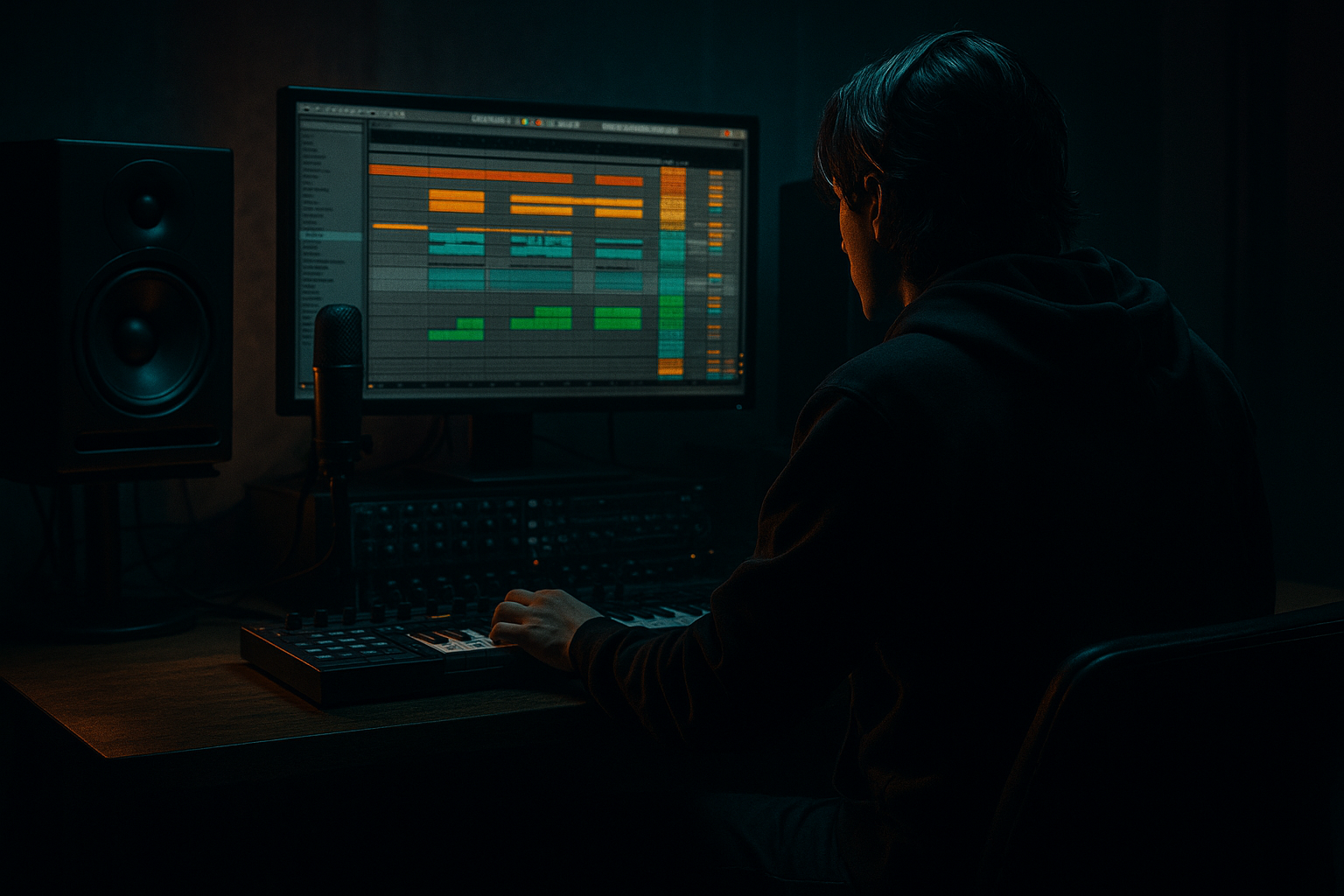
In this lesson, you’ll rebuild a top loop in the style of Rave Pressure inside Ableton Live 12, with a focus on vocals as the main hook element. In Drum & Bass, a top loop is the high-frequency rhythmic layer that sits above the kick, snare, and sub: think shuffles, hats, vocal chops, tiny atmospheres, and sliced rave phrases that keep the drop moving.
This matters because in DnB, the top loop often does a lot of the emotional heavy lifting. A strong top loop can make a bare drum pattern feel alive, make a drop sound bigger without adding too much low-end clutter, and create that urgent, “keep rolling forward” feeling that works so well in rollers, darkstep, and neuro-influenced tracks.
The specific goal here is to take a vocal idea — a phrase, shout, chant, or chopped vocal texture — and turn it into a tight, percussive, club-ready top loop using Ableton stock tools. You’ll learn how to slice, shape, layer, and automate vocals so they sit naturally above a DnB rhythm section.
This is beginner-friendly, but it’s also the kind of workflow you can reuse in almost any dark DnB project. The key idea: don’t treat vocals like a full lead song part. In this context, vocals become rhythmic material, atmosphere, and tension — part of the groove, not floating on top of it.
What You Will Build
By the end of this lesson, you’ll build a 16-step vocal-driven top loop that feels like a gritty rave texture for a DnB drop.
Specifically, you’ll create:
- A short vocal phrase chopped into rhythmic hits
- A top loop with hats, ghost percussion, and vocal slices
- A filtered, delayed, slightly distorted vocal layer for movement
- A loop that can sit above a roller-style drum groove or a darker halftime-to-double-time drop
- A version that works in A minor / D minor style dark DnB territory, with a tense, ravey character
- a vocal stab answering the snare,
- a sliced phrase bouncing in the gaps,
- and a loop that keeps energy high without crowding the kick, snare, or sub.
- intros that need tension,
- drop sections that need extra identity,
- or switch-ups where the track briefly opens up before slamming back into the groove.
- Using a vocal that is too melodic
- Leaving too much low end in the vocal
- Placing vocal hits directly on top of the snare
- Overusing reverb
- Making every bar identical
- Too much stereo widening
- Use distortion as texture, not just loudness
- Layer a second vocal texture quietly underneath
- Reverse one slice into the next hit
- Sidechain the top loop slightly to the kick or snare group
- Use automation for pressure
- Keep the vocal in a narrow frequency lane
- Think like a DJ
- one cleaner and more ravey,
- one darker and more distorted.
- use Warp and Slice to New MIDI Track
- high-pass the vocal to protect the low end
- add subtle Saturator, Echo, and maybe Erosion
- vary the loop every 2 bars
- keep the top loop separate from sub and kick
- check mono and keep the mix clean
Musically, the result should feel like:
This is perfect for:
Step-by-Step Walkthrough
1. Set up a clean DnB template first
Start with a blank Ableton Live 12 set at 174 BPM. That tempo is a sweet spot for modern DnB: fast enough for urgency, slow enough to keep groove clarity.
Create these tracks:
- Drum rack or audio track for main drums
- Audio track for vocal sample
- Return track for delay
- Return track for reverb
- Optional group for all top-loop elements
Keep your sub and main drum bus separate from this lesson’s top loop work. That makes it easier to judge how the vocal layer sits in the mix.
If you already have a basic drum loop, loop 2 bars first. For DnB, 2-bar phrasing is a strong place to build top-loop variations because it matches the natural tension/release of a drop.
2. Choose a vocal with attitude, not too much melody
For this style, use a vocal that is:
- short,
- slightly aggressive,
- or rhythmically distinctive.
Good options:
- a spoken rave phrase,
- a shouted one-word vocal,
- a chopped chant,
- or a dry acapella fragment with space between words.
You do not need a full vocal take. In fact, for a beginner, a single phrase works better. Something like:
- “Pressure”
- “Move”
- “Run it”
- “No escape”
- “Rave”
Import the vocal into an audio track and turn on Warp. In many DnB workflows, the vocal needs to lock tightly to the grid so it can act like percussion.
Suggested starting warp mode:
- Complex Pro for smoother vocal tone
- Beats if the sample is already percussive and chopped
Keep the clip short. You want a loopable source, not a full verse.
3. Slice the vocal into playable pieces
Right-click the vocal clip and choose Slice to New MIDI Track. In the slice settings, use:
- Transient slicing for spoken or punchy vocals
- 1/8 or 1/16 slicing if the sample is very clean and rhythmic
Ableton will create a Drum Rack with each slice on pads. This is ideal for a beginner because it turns the vocal into something you can play like drums.
Now make a simple 2-bar MIDI clip and place slices in a call-and-response pattern:
- put a vocal hit on beat 1,
- another after the snare,
- and a shorter answer on the last half of bar 2.
A classic DnB idea here is space after the snare. The vocal shouldn’t fight the snare transient. Let the snare hit first, then let the vocal answer. That creates forward motion.
If you need a quick pattern idea, try:
- bar 1: vocal hit on 1.2 and 1.4
- bar 2: vocal hit on 2.1, 2.3, and a tiny pickup before bar 3
Keep the rhythm simple first. In DnB, groove often comes from placement, not complexity.
4. Shape the vocal slices so they feel percussive
Open the Drum Rack chain with the most useful slice and add an Audio Effect Rack or simple stock devices after it.
Start with these Ableton stock devices:
- EQ Eight
- Saturator
- Drum Buss if you want more punch and density
Suggested settings:
- EQ Eight: high-pass around 150–250 Hz to remove low junk
- Saturator: Drive between 2–6 dB
- Drum Buss: Drive low to moderate, around 5–20%, and use Boom very carefully or leave it off for a top loop
Why this works in DnB: the vocal needs to live in the upper-mid and high-mid range so it can cut through dense drums and bass. Removing low-end mud means your kick and sub stay clean, which is essential in jungle, rollers, and neuro-style mixes.
If the vocal feels too smooth, use Erosion lightly for grain:
- Mode: Wide Noise
- Amount: just enough to rough it up
- Keep it subtle so it reads as texture, not hiss
5. Build the loop around the drums, not above them
Now audition the vocal slices together with your core drum groove. If you haven’t made a drum pattern yet, use a simple DnB starter:
- kick on 1 and the “and” of 2
- snare on 2 and 4
- hats or shuffles filling the spaces
Your vocal loop should support that groove. In darker DnB, the top loop often works best when it emphasizes:
- off-beats,
- snare follow-ups,
- and syncopated gaps.
Try leaving the vocal out of the strongest kick moments. That gives the drums more impact.
Add a Utility after the vocal chain and use:
- Width at 0% if the vocal is too wide
- Mono check briefly to make sure the loop still works in mono
If the vocal feels too stiff, add Groove Pool swing to the MIDI clip:
- try a subtle swing like 55–58%
- avoid extreme swing at first
That small amount of swing can help the vocal slices feel more human and less grid-locked.
6. Turn the vocal into a “rave pressure” layer with delay and filtering
Create a Return track with Echo on it. This is where the rave pressure vibe starts to appear.
Suggested Echo settings:
- Time: 1/8 or 1/8 dotted
- Feedback: 15–35%
- Filter: low cut around 300–500 Hz, high cut around 6–9 kHz
- Add a small amount of modulation if needed, but keep it controlled
Send the vocal slices into the delay sparingly. You want echo tails that fill gaps, not a washed-out mess.
Then automate the vocal track’s Auto Filter:
- open the filter slightly in the lead-up to the drop
- close it a little during dense drum sections
- use a high-pass to thin the vocal when the arrangement gets busy
This is especially useful in a DnB drop where the main energy comes from rhythm. A moving filter makes the vocal feel alive without needing a new sample every bar.
7. Add micro-variation for every 2 bars
A strong DnB top loop usually changes slightly every 2 bars. If it stays exactly the same, it can feel static.
In Ableton Live 12, duplicate your 2-bar MIDI clip and make one small change:
- remove one vocal chop,
- add a tiny pickup,
- reverse one slice,
- or shift one hit early by a 16th note.
You can also use Simpler in Classic or Slice mode if you prefer playing the vocal more directly.
Useful beginner automation ideas:
- automate filter cutoff a little higher in bar 2
- automate reverb send only on the last word
- automate delay send on a transition hit
- automate transposition by a small amount for one slice if it adds tension
Musical context example: in a 16-bar drop, bars 1–4 can be the main phrase, bars 5–8 can remove the vocal for tension, bars 9–12 can reintroduce a chopped answer, and bars 13–16 can bring in a brighter or more distorted version to push toward the next section.
8. Glue the top loop with the drum bus, but keep it separate from sub
Group the vocal slices and any supporting hats into a Top Loop Group. On the group, use subtle bus processing:
- Glue Compressor with slow-ish attack and medium release
- very gentle gain reduction, around 1–2 dB
- or skip compression entirely if the loop already feels tight
If you use compression, don’t crush it. In DnB, transients matter.
Keep this group away from the sub path. Your low-end should remain:
- kick,
- sub,
- maybe a little low bass texture only if needed.
The vocal top loop should reinforce the rhythm, not add low-frequency buildup. This separation is one reason DnB mixdowns stay punchy even when they sound full.
Do a quick level check:
- lower the vocal until you can miss it,
- then bring it up until you just feel the groove lock in.
That’s often the right balance for a top loop in a darker track.
Common Mistakes
- Fix: choose a short phrase or shout with clear rhythm. In this style, the vocal should function like a rhythmic accent, not a pop lead.
- Fix: use EQ Eight high-pass around 150–250 Hz or higher if needed.
- Fix: move them slightly after the snare or into the gaps. DnB groove often feels better when the vocal answers the drum rather than colliding with it.
- Fix: keep reverb short and controlled, or use more delay than reverb. Too much wash can blur the groove and weaken the drop.
- Fix: change one or two things every 2 bars. Even tiny edits create movement and keep the loop from sounding looped.
- Fix: keep the vocal mostly centered or only slightly wide. Check mono regularly so the top loop stays solid in clubs.
Pro Tips for Darker / Heavier DnB
- Try Saturator or Overdrive lightly on the vocal chop to make it sit in a more aggressive mix.
- A whisper, breath, crowd chant, or noise-hit layer can add depth. Keep it low in the mix and filtered.
- A reversed vocal snippet before a phrase is a classic tension tool. It works especially well before a snare or drop restart.
- Use Compressor with sidechain input if needed. Keep it subtle. The goal is space, not pumping.
- Slowly open a filter over 4 or 8 bars, then snap it back down at the drop. That contrast helps the vocal feel like it’s driving the arrangement.
- In a heavy roller, the vocal often lives best around the 1 kHz to 6 kHz zone, depending on the sample. Use EQ to carve space around harshness if it fights the cymbals or snare crack.
- If this loop is for a track intro or switch-up, make sure it works when layered with other records. A tighter, less busy vocal top loop is usually more mix-friendly.
Mini Practice Exercise
Spend 10–20 minutes creating one 2-bar vocal top loop in Ableton Live:
1. Find or record a short vocal phrase.
2. Slice it to a Drum Rack.
3. Build a 2-bar pattern with at least 4 vocal hits.
4. Add EQ Eight and high-pass the vocal.
5. Add Saturator or Erosion for character.
6. Send a little signal to Echo on a return track.
7. Duplicate the loop and make one variation in bar 2.
8. Loop it with a simple DnB drum pattern and listen in mono.
Goal: make the vocal feel like part of the groove, not a separate layer.
If you finish early, try two versions:
Recap
A strong Rave Pressure-style top loop in DnB comes from turning vocals into rhythm. Keep the vocal short, slice it tightly, shape it with stock Ableton devices, and place it around the drum groove so it supports the snare, not fights it.
Remember the essentials:
If it feels urgent, tight, and slightly menacing, you’re on the right track 🔥

