Main tutorial
Lesson Overview
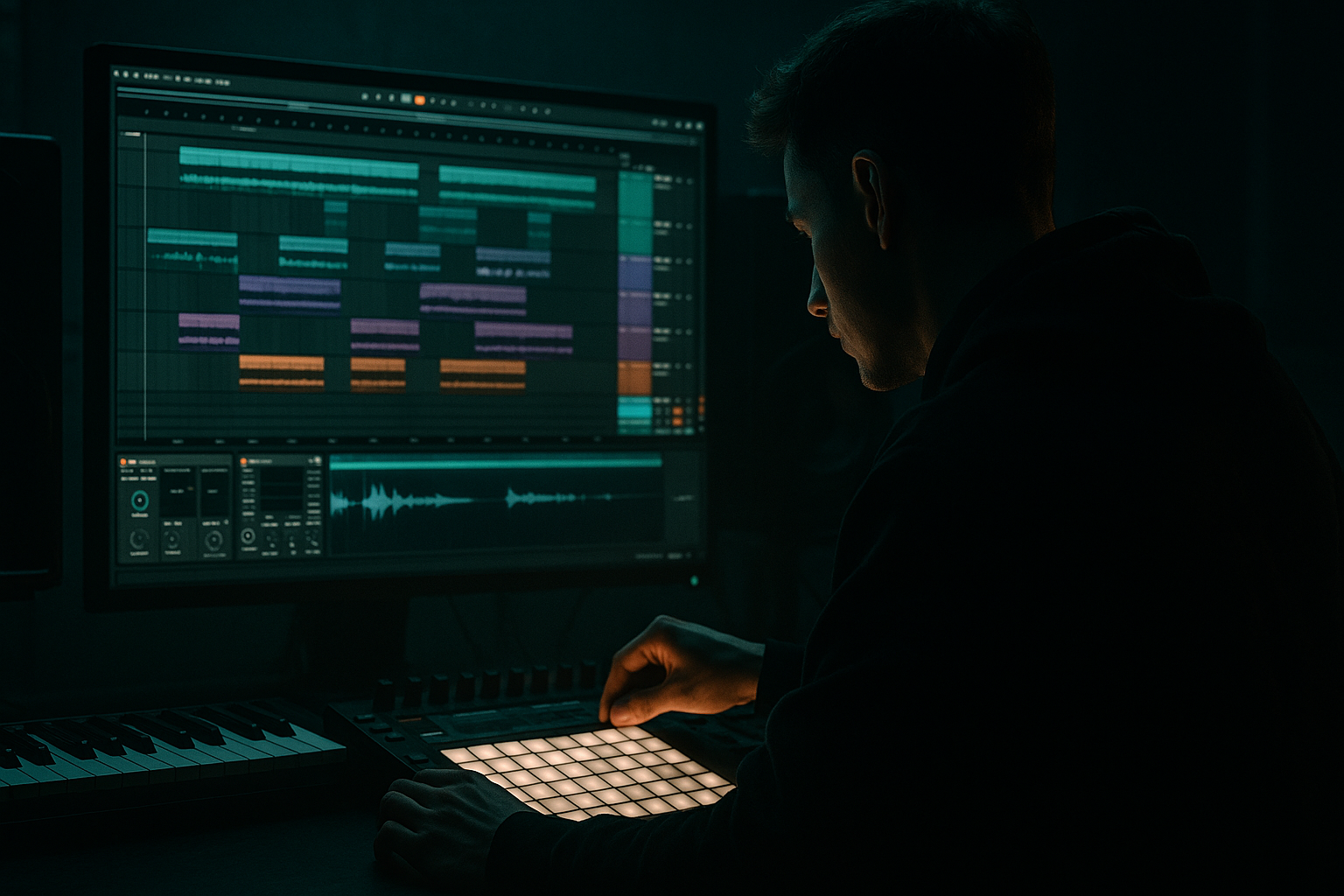
In this lesson, you are building a retro rave oldskool DnB ride groove and learning how to control it, print it, and arrange it inside Ableton Live 12 so it behaves like a real track element, not a loose loop.
This sits right in the zone between ride cymbal energy, breakbeat momentum, and rave-styled tension. In Drum & Bass, a ride groove is often the thing that makes a drop feel like it is moving forward even when the bassline is repeating. For oldskool, jungle, rollers, or darker dancefloor material, this matters because the ride can add:
- constant forward motion
- classic rave urgency
- high-end excitement without overloading the snare space
- a sense of scale during build-ups, drops, and second-drop lift
- energetic but not messy
- bright but not harsh
- oldskool in character without sounding dated in a weak way
- tight enough to sit in a drop, intro, or transition without smearing the mix
- oldskool-inspired DnB
- jungle rollers
- rave-leaning halftime or full-energy drops
- darker club DnB where you want motion without extra percussion clutter
- a bright metallic top with controlled fizz
- enough transient to cut through drums
- subtle motion from filtering or texture changes
- a slightly ravey, oldskool feel rather than a sterile modern click
- sit in the pocket with the break or programmed drums
- reinforce forward motion on off-beats or stepped syncopation
- leave room for the snare and bass hits
- feel consistent enough for a club loop, but human enough to avoid sounding like a looped metronome
- supporting the main drop groove
- creating lift in a build
- adding energy variation in the second half of an 8-bar phrase
- helping a break-beat section feel bigger without adding another busy layer
- Use the ride as tension, not decoration. In darker DnB, the ride can act like a pressure layer. Keep it slightly restrained in the lower sections so the drop has somewhere to go.
- Shorten the tail before adding more processing. A shorter ride sample often feels heavier because it clears space for the snare and bass to hit harder.
- Layer movement with control. A tiny Auto Filter motion over 4 or 8 bars can make a ride feel alive without making it obvious. Small moves are usually more believable in a club context.
- Keep the center defined. If the ride is wide, make sure the key rhythmic energy still feels stable in the middle. That helps the track survive on big systems and in mono.
- Use tiny fill edits at phrase ends. A short reversed cymbal slice or a doubled hit in the last half-bar can create oldskool lift without needing a big riser.
- Let the bass own the low drama. The ride should add urgency in the top band, not compete with the bass for emotional weight. In darker tracks, that separation makes the drop feel more powerful.
- Print two brightness levels. One version can be slightly darker for the main drop; another can be brighter for the second drop or final 8 bars. That keeps the arrangement moving without changing the core groove.
- Use only Ableton stock devices and stock samples
- Start with one simple ride pattern
- Print it to audio
- Make only two processing moves maximum after resampling
- Include one automation change across the 8 bars
- one 8-bar ride groove
- one stripped intro version or one brighter drop version
- one short phrase-ending variation
- Can you still clearly hear the snare?
- Does the ride add forward motion without sounding harsh?
- Does the groove feel better with drums and bass than it did alone?
- If you collapse to mono, does the ride still hold together cleanly?
- keep the rhythm simple and purposeful
- resample to audio so you can control the tails and timing
- shape the tone lightly before overprocessing
- check the ride in context with drums and bass
- use arrangement changes to create energy, not just volume
- keep the top end exciting, but never at the expense of snare punch or mix clarity
Technically, this lesson is about resampling a ride pattern into something more controlled and usable, then arranging it so it supports the drums and bass instead of fighting them. By the end, you should be able to hear a ride groove that feels:
This technique suits:
A successful result should sound like a musical, driving ride pulse that lifts the section, locks to the groove, and can be dropped in and out like a proper arrangement tool.
What You Will Build
You will build a resampled ride groove made from a simple cymbal pattern, then shape it into a playable audio part that can be arranged across 8-bar phrases.
Sonically, it should have:
Rhythmically, it should:
Its role in the track is usually one of these:
Mix-ready does not mean fully mastered. It means the ride should be clean, controlled, and already balanced enough that it can live with drums and bass without harsh spikes or low-end contamination.
Step-by-Step Walkthrough
1. Start with a simple ride source and keep the pattern honest
In Ableton, load a stock ride cymbal or bright cymbal sample onto a new audio or MIDI track. Keep the first pattern very simple: start with off-beat hits or a steady 1/8 or 1/16 pulse depending on the energy you want.
For a retro rave DnB feel, the classic starting point is often:
- off-beat ride hits for lift
- a few extra strikes before the snare or at bar endings
- slight variation at the end of every 2 or 4 bars
If you are programming MIDI, keep velocities varied rather than identical. A good beginner range is around 75–110 velocity, with the strongest hits reserved for phrase accents. If you are using audio, duplicate the sample and edit the timing later.
Why this works in DnB: the ride is not there to dominate the groove. It is there to create continuous forward pressure while the kick and snare keep the main identity.
What to listen for: the ride should feel like it is driving the section forward without making the snare feel smaller.
2. Place the ride against the drums, not in isolation
Now loop 2 or 4 bars with your kick and snare already in place. Do not tune the ride groove only by itself. In DnB, a ride that feels exciting alone can become annoying once the snare enters.
Check the relationship:
- does the ride mask the snare transient?
- does it make the kick feel smaller?
- does it create a nice sense of lift right after the snare?
If your drums are break-based, let the ride support the break rather than sit on top like a separate disco loop. If your drums are programmed, use the ride to add motion in the gaps between the kick/snare anchors.
A good beginner rule: keep the ride pattern busy enough to energize, but sparse enough to let the drum backbone breathe.
3. Resample the ride into audio so you can control it like a real track element
This is the core resampling move. Route or record the ride pattern into a new audio track and print it as audio. Once it is audio, you can:
- chop out weak hits
- tighten timing
- reverse tiny sections
- fade the edges
- process it as a single musical layer
This is especially useful in DnB because repeated high-frequency material gets tiring fast if it is not controlled. Printed audio gives you more precision than leaving the ride as a raw MIDI loop.
Stop here if the ride is already too bright or too long. Fix the source first before adding effects. If the raw hit is too splashy, choose a shorter sample or shorten the decay at the source if you are using a device that allows it.
Workflow efficiency tip: once you print a usable 2-bar version, duplicate it across the arrangement and make changes by editing audio clips, not rebuilding the pattern from scratch.
4. Shape the ride with a stock effect chain
Use a simple chain on the resampled audio. Two realistic stock-device examples:
Chain A: Cleaner oldskool lift
- EQ Eight
- Saturator
- Auto Filter
Suggested starting points:
- EQ Eight: high-pass somewhere around 200–400 Hz to remove any unnecessary body
- EQ Eight: if the ride is harsh, dip a narrow area around 6–9 kHz
- Saturator: 1–4 dB Drive for a little edge, not obvious distortion
- Auto Filter: gentle high-pass or band-pass movement for transitions, with small automation moves rather than huge sweeps
Chain B: Dirtier rave print
- Drum Buss
- EQ Eight
- Utility
Suggested starting points:
- Drum Buss: low Drive, not extreme; aim for a bit of grit and density rather than crushed cymbal spray
- EQ Eight: clean up low-mid buildup if the resample picked up room tone
- Utility: reduce width if the top end starts spreading too far
Why this works: resampling plus light processing turns the ride into a more arranged, more intentional texture. That is the difference between a loop and a section tool.
What to listen for: the processed ride should feel present but less spiky, and it should remain audible when the bass enters.
5. Decide between two valid flavours: tight and mechanical, or loose and ravey
This is your first real creative choice.
Option A: Tight and mechanical
- quantize the audio clips more strictly
- remove messy tails
- keep timing locked to the grid
- use this if your track is more modern, rolling, or neuro-adjacent
Option B: Loose and ravey
- leave tiny timing imperfections
- let some hits overlap slightly
- allow a bit more natural cymbal wash
- use this if you want a stronger oldskool/jungle identity
Both work. The difference is character. In DnB, the wrong choice is not “too loose” or “too tight” in general; the wrong choice is picking a feel that does not match the drums and bass.
If your drums are already busy with break chops, the tighter option usually wins. If your beat is more stripped and you want a nostalgic rave pulse, the looser option can feel bigger.
6. Trim the groove so it supports the snare and bass pockets
Zoom in and edit the audio. Remove or reduce any ride hits that collide with key snare moments or big bass changes. In many DnB drops, the ride works best when it leans into the space after the snare, not directly on top of it.
A useful arrangement habit:
- strongest ride activity in the second half of an 8-bar phrase
- lighter ride in the first 4 bars
- small fills or doubled hits at the end of bars 4 and 8
If you are using a break, check the ride against ghost notes. You may need to carve the ride so the break’s groove stays readable. If the ride is too dense, the break stops feeling like a break and starts feeling like white noise.
What to listen for: the snare should still sound like the main backbeat anchor. If the ride steals that role, reduce the ride level before EQ’ing harder.
7. Use automation to make the ride feel arranged, not looped
This is where the idea becomes track material. Automate one or two parameters across 8 bars:
- Auto Filter cutoff
- Saturator Drive
- Utility gain
- reverb send if you are using a return for space
Keep the changes subtle. For example:
- open the filter slightly over 4 or 8 bars
- increase Drive a little before a drop or switch-up
- lower the ride level during a breakdown so the return is more effective when it re-enters
A good phrasing example:
- Bars 1–4: restrained ride, thinner tone
- Bars 5–8: wider or brighter ride, a few extra accents
- Bar 8: one short fill or reversed slice to cue the next section
This matters because DnB arrangements live or die on energy curve. If the ride never changes, the section feels flat even when the bassline is strong.
8. Check it in the full drop and make the low-end decision
Now bring in the bass and listen in context. This is where the idea either earns its place or gets simplified.
Check:
- does the ride pull attention away from the sub?
- does the top end feel exciting or tiring?
- does the groove still feel clear on smaller speakers?
If the ride is too aggressive, reduce the level first, then EQ. In DnB, lowering the volume often fixes the problem better than adding more processing.
Mono compatibility note: if you have widened the ride at any point, check the track in mono or with Utility collapsed to mono on the ride layer. The low-end should be irrelevant here, but the high-end image should not disappear into phasey haze. If it gets thin or unstable, reduce width or simplify the processing.
Decision point:
- If the track needs DJ-friendly clarity, keep the ride narrower and drier.
- If the track needs rave scale, allow a little more width and space, but keep the center strong and avoid washing out the snare zone.
9. Commit the usable version to audio and build your arrangement around it
Once the ride groove works, duplicate it across your arrangement and commit the version that feels strongest. In Ableton, this means you can keep one printed version for the drop and a second simplified version for the intro or breakdown.
A practical arrangement idea:
- Intro: filtered ride fragments or sparse hits
- Drop 1: full controlled ride groove
- Mid-section: remove the ride for contrast or thin it out
- Second drop: bring it back with one extra layer or a slightly brighter print
This is where resampling pays off. Instead of having one generic loop, you now have a section tool you can arrange like a real record.
Commit this to audio if the groove feels right but you are starting to over-edit it. Too much tweaking kills momentum. In DnB, momentum is the point.
Common Mistakes
1. Mistake: leaving the ride too loud in the mix
Why it hurts: the ride takes over the top end, makes the snare feel smaller, and turns the drop into cymbal fatigue.
Fix: pull the clip gain down first. Then use EQ Eight to trim harshness around 6–9 kHz if needed.
2. Mistake: keeping the ride unedited as a full-length loop
Why it hurts: repeated cymbal tails blur the groove and make the arrangement feel lazy.
Fix: resample to audio, then cut unwanted tails and leave only the useful hits.
3. Mistake: boosting too much high end instead of controlling it
Why it hurts: more top does not equal more energy if the ride becomes brittle and fatiguing.
Fix: try a small Saturator drive or Drum Buss grit first, then only a gentle EQ lift if the track truly needs it.
4. Mistake: placing the ride directly on top of the snare every time
Why it hurts: the backbeat loses weight and the groove feels crowded.
Fix: move or remove some ride hits so the snare remains the main impact point.
5. Mistake: making the ride wide without checking mono
Why it hurts: stereo tricks can make the ride feel impressive in headphones but weak or phasey on club systems.
Fix: use Utility to reduce width or check mono and simplify the processing chain if the image collapses.
6. Mistake: ignoring the bassline when shaping the ride
Why it hurts: the ride can seem fine alone but ruin the track balance once the bass enters.
Fix: always audition the ride with kick, snare, and bass together before finalizing the resample.
7. Mistake: using the same ride energy in every section
Why it hurts: the arrangement loses contrast and the track stops feeling like it evolves.
Fix: print at least two versions: a stripped one for intro/break parts and a fuller one for the drop.
Pro Tips for Darker / Heavier DnB
Mini Practice Exercise
Goal: build one usable resampled ride groove for a DnB drop and arrange it across 8 bars.
Time box: 15 minutes
Constraints:
Deliverable:
Quick self-check:
Recap
The key idea is simple: build a ride groove, resample it, then arrange it like a real DnB element.
Remember the essentials:

