Main tutorial
Lesson Overview
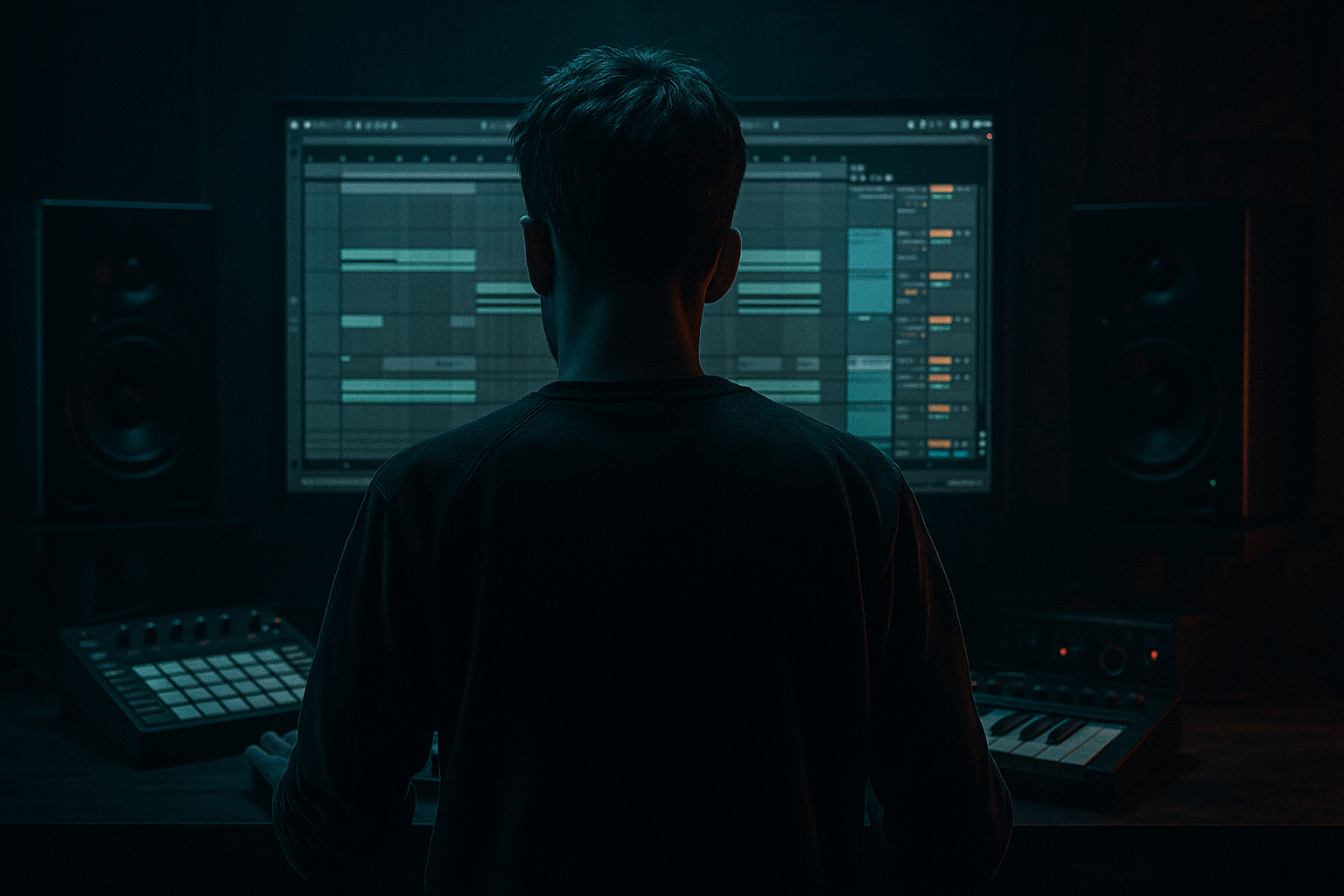
In this lesson, you’re building a roller-style ghost note framework in Ableton Live 12 that gives your track that oldskool rave pressure without needing a huge sound design setup. The focus is on vocals used as rhythmic material: chopped phrases, whispered ghosts, short call-and-response hits, and tiny off-grid edits that sit around the kick and snare instead of fighting them.
This technique matters because in DnB, especially rollers, the groove often comes from what you don’t fully hear. Ghost notes create forward motion, tension, and swing. In jungle and oldskool-inspired drum & bass, that “almost there” energy is a big part of the pressure: little vocal stabs, muted repeats, and tiny answer phrases can make a simple loop feel alive and dangerous ⚡
You’ll learn how to build a vocal-based framework that:
- locks to a drum-and-bass pocket at 170–174 BPM
- leaves space for the kick, snare, and sub
- adds rave attitude with short vocal ghosts
- works as a repeatable template for intros, drops, and switch-ups
- stays clean enough to mix into a proper roller arrangement
- a main vocal phrase chopped into tiny stabs
- quieter ghost repeats tucked behind the main hits
- a simple answer phrase for call-and-response
- subtle delay/reverb movement for rave atmosphere
- drum-friendly timing that leaves room for the snare backbeat
- a version you can duplicate into a breakdown, drop, and variation section
- the main vocal hit lands with the snare or just before it
- ghost notes fill the spaces between kick hits
- a short delayed vocal tail creates oldskool rave width and pressure
- the whole part supports the bassline instead of competing with it
- Making the vocal too loud
- Too much reverb and delay
- Chopping the vocal randomly
- Masking the snare
- Ignoring the bassline
- Too many vocal pieces
- No variation across the arrangement
- Use a darker vocal source: whispers, low talk, crowd shouts, or heavily textural phrases work well in rollers and jungle.
- Try Resonators very subtly on a vocal ghost for eerie tonal movement, but keep it low in the mix.
- Use Filter Delay or Echo with filtered highs for rave-style trails that don’t dominate the drums.
- Add Saturator or Overdrive lightly to give ghosts a gritty club edge.
- For heavier energy, duplicate the vocal ghost track and process the duplicate with:
- Automate the vocal to duck under the snare by a couple of dB on heavy sections.
- If you want a more neuro-leaning feel, tighten the vocal into a very short, almost percussive motif and use it like a rhythmic texture rather than a lyrical feature.
- Keep the sub in mono and let the vocal live in the mids. That separation is a huge part of making dark DnB feel expensive and powerful.
- Ghost notes in DnB are about rhythm, space, and tension.
- Keep vocal chops short, purposeful, and tied to the snare pocket.
- Use Ableton stock tools like EQ Eight, Compressor, Saturator, Echo, Utility, and Reverb to shape the vocal.
- Let the vocal answer the bassline instead of fighting it.
- Build arrangement variation so the loop works in a real roller track.
- In darker DnB, less is often more: a few well-placed vocal ghosts can create serious oldskool rave pressure.
This is beginner-friendly, but the result will feel like something you can actually drop into a full DnB tune.
What You Will Build
By the end, you’ll have a 4- or 8-bar vocal ghost note loop that behaves like a rhythmic layer in a roller:
Musically, think of it like this:
You’ll end with a loop that sounds like a vocal pressure grid around your drums and bass — perfect for rollers, jungle-inspired drops, and darker rave sections.
Step-by-Step Walkthrough
1. Set up a clean DnB loop and choose your vocal source
Start by setting Ableton Live to around 172 BPM. That’s a very usable middle ground for rollers, jungle, and darker drum & bass.
Build or import a simple drum loop:
- kick on the 1
- snare on the 2 and 4
- hats or breaks filling the gaps
- keep it basic for now
Then choose a vocal source that works for ghost notes:
- a short spoken phrase
- a one-word chant
- a rave-style crowd vocal
- a phrase with attitude, like “ride,” “hold tight,” “bass,” “pressure,” or “move”
Keep the source short. For beginner workflow, shorter vocals are easier to chop into rhythmic bits. If the phrase is too long, you’ll spend time editing instead of grooving.
In Ableton, drag the vocal into an audio track and turn on warp if needed. For a steady loop, use:
- Warp Mode: Complex Pro for fuller phrases
- Warp Mode: Beats for very chopped, percussive bits
If your vocal is long, trim it down to a small usable region first. This makes the whole lesson faster and cleaner.
2. Find one strong anchor hit and place it like a drum element
Before chopping everything, find the single best vocal syllable or word in the phrase. This becomes your anchor.
Good anchor choices:
- a sharp consonant like “t,” “k,” or “p”
- a short vowel hit with attitude
- a phrase ending that naturally cuts off cleanly
Place that anchor hit on a strong rhythmic point:
- just before the snare
- on the “&” after the snare
- or right with the snare for emphasis
In a roller, this anchor hit acts like a ghost snare companion or a call-out. It should feel rhythmic, not like a full lead vocal.
Useful edit approach in Ableton:
- slice the vocal clip at the phrase start and the anchor syllable
- drag the anchor onto a separate audio track or leave it in place and duplicate the region
- lower its clip gain so it sits under the drums
Suggested level range:
- main anchor vocal: about -12 to -18 dB below the drum peak
- ghost repeats: another 3–6 dB lower than the anchor
Why this works in DnB: the snare is already a major event in the genre. Placing a vocal “ghost” near the snare creates tension without cluttering the backbeat.
3. Chop the vocal into ghost notes and make a repeat pattern
Now create the actual ghost note framework. Use Cmd/Ctrl + E to split the vocal clip into small pieces around useful syllables, breaths, and consonants.
You are not trying to make a full vocal performance. You are making a rhythmic layer.
Build a simple 1- or 2-bar pattern:
- one main hit near the snare
- one quieter ghost hit before the kick
- one tiny tail or breath after the snare
- one extra answer hit in the second bar
Beginner-friendly pattern idea at 172 BPM:
- Bar 1: main vocal hit on beat 2, ghost on the “a” of 2, tiny breath on the “&” of 3
- Bar 2: answer hit on beat 4, ghost repeat on the “&” of 4
You can nudge clips by very small amounts to create groove:
- move some ghosts 5–15 ms early for urgency
- move others 5–10 ms late for laid-back pressure
Don’t overdo timing shifts. In DnB, small moves are enough.
If you want a quick workflow trick, duplicate your best loop once, then mute and unmute individual hits until the rhythm feels right. This is a fast beginner way to hear what actually contributes to the groove.
4. Shape the ghosts with stock Ableton devices
Put the vocal track through a simple effect chain using stock devices. Keep it practical and focused.
Suggested chain:
- EQ Eight
- Compressor
- Saturator
- Echo or Delay
- Reverb if needed, used lightly
Start with EQ Eight:
- high-pass around 120–180 Hz to remove low rumble
- reduce harshness around 2.5–5 kHz if the vocal bites too hard
- if needed, add a small presence boost around 1.5–3 kHz for intelligibility
Then use Compressor:
- Ratio: 2:1 to 4:1
- Attack: 10–30 ms
- Release: 50–120 ms
- Aim for gentle control, not heavy squashing
Add Saturator for edge:
- Drive: 1–5 dB
- keep Soft Clip on if the vocal is peaky
- use just enough to make the ghost notes feel more present in the mix
For delay:
- Echo time: 1/8, 1/8 dotted, or 1/16
- Feedback: 10–25%
- Filter the delay so it doesn’t crowd the sub
- keep the wet level subtle
For reverb:
- small or medium room
- short decay
- low wet amount
- high-cut the reverb if it gets bright and splashy
This is where the “oldskool rave” character starts to appear: short, haunted vocal repeats bouncing around the drums.
5. Build call-and-response with the bassline
A proper roller lives on interaction. Your vocal ghosts should answer the bass, not sit on top of it.
If you already have a bassline, keep it simple:
- sub weight on the root notes
- reese or mid-bass movement in the gaps
- leave some empty space for the vocal ghosts
If you’re building the bassline from scratch, make sure the vocal hits don’t mask the strongest bass moments. A good beginner rule:
- let the bass dominate the low end
- let the vocal handle midrange attitude
- let the drums define the pocket
Try this arrangement idea:
- vocal ghost hit after the snare
- bass answer on the next offbeat
- another vocal ghost before the next snare
This back-and-forth creates the roller feeling: pressure, release, pressure again.
If needed, use Utility on the vocal track and set Width slightly narrower, around 70–90%, so the vocal stays focused. Keep the sub and kick in mono. Don’t let the vocal smear the center.
Why this works in DnB: the genre depends on tightly controlled lane separation. A vocal ghost framework gives rhythmic excitement while leaving the low-end lane open for the sub and kick.
6. Use Ableton Live 12 clip automation and variation for motion
Now make the loop feel less static. In Live 12, small automation moves make a huge difference.
On your vocal clips or audio track, automate:
- filter cutoff
- delay feedback
- reverb send
- volume drops on ghost hits
- pan movement on tiny tails
Good automation ideas:
- automate a low-pass filter opening slightly on the last ghost note of each 4-bar phrase
- increase delay feedback only at the end of bar 4
- mute the vocal for half a bar before the drop, then bring it back hard
If you want a quick tension trick:
- automate the vocal volume down by 2–4 dB on the first hit
- then bring the second hit back full-ish
This creates a subtle “lean in” feeling.
Use scene or clip variation to make two versions:
- Version A: fewer ghost notes, more space
- Version B: extra chop on the last bar
- Version C: more delay for transitions
This keeps your arrangement moving without needing new sound design every 8 bars.
7. Place the vocal framework into a realistic DnB arrangement
A strong roller arrangement gives the vocal ghosts a purpose.
Use this simple structure:
- Intro: filtered vocal ghosts, maybe just one phrase and atmosphere
- Build: add more chopped repeats and delay throws
- Drop 1: full vocal ghost framework with drums and bass
- Switch-up: drop out one or two ghosts, then bring them back
- Drop 2: altered pattern or higher energy version
- Outro: strip back to the anchor hit and a filtered echo
Musical context example:
- In a 32-bar drop, use the vocal ghost framework heavily in bars 1–8
- Reduce it in 9–16 to make room for a bass variation
- Reintroduce a higher-energy call-and-response in 17–24
- Use a delay-heavy fill in 25–32 leading into the next section
This gives DJs something useful: clear phrasing, tension, and transitions that make the tune mix-friendly.
8. Check the mix so the ghosts stay powerful but not messy
Use the master of restraint here. Ghost notes only work if the mix stays controlled.
Do these checks:
- listen at low volume
- mute the vocal briefly and see if the groove collapses
- switch to mono and ensure the vocal doesn’t disappear
- check that the snare still hits cleanly
- verify the sub still owns the bottom end
On the vocal track, if it starts masking the snare:
- cut a little around 200–400 Hz if it sounds boxy
- reduce 3–5 kHz if it competes with snare crack
- lower the track by 1–3 dB before reaching for more EQ
On the return/reverb, high-pass aggressively if needed:
- try 200 Hz or higher on reverb returns
- keep delay feedback modest so the vocal doesn’t blur the groove
The goal is not a huge vocal. The goal is a tight rhythmic apparition 👻
Common Mistakes
- Fix: lower the clip gain or track fader until it feels like part of the rhythm section, not the lead.
- Fix: shorten decay, lower feedback, and high-pass the wet signal.
- Fix: anchor the pattern to the snare and offbeats. Ghost notes need a pocket.
- Fix: reduce the vocal around the 2–5 kHz area or move hits slightly earlier/later.
- Fix: make sure the vocal answers the bass, not every bass note.
- Fix: use fewer hits. In DnB, space often sounds more expensive than clutter.
- Fix: make at least two versions of the pattern: one sparse, one more active.
Pro Tips for Darker / Heavier DnB
- more distortion
- narrower stereo width
- slightly darker EQ
Blend it in quietly for density.
Mini Practice Exercise
Set a timer for 15 minutes and do this:
1. Load a drum loop at 172 BPM.
2. Import one short vocal phrase.
3. Chop it into 4 to 8 pieces.
4. Make a 2-bar ghost note pattern with one main hit and at least two quieter repeats.
5. Add EQ Eight and high-pass the vocal around 140–180 Hz.
6. Add Saturator with 1–3 dB drive.
7. Add Echo with 1/8 or 1/16 timing and low feedback.
8. Create one variation with fewer hits and one variation with more delay.
9. Listen in mono and lower the vocal if it fights the snare.
10. Bounce or loop it and decide: does it feel like it belongs in a roller?
If you finish early, duplicate the loop and make a second version that feels more jungle/oldskool by making the vocal chops more abrupt and slightly more off-grid.

