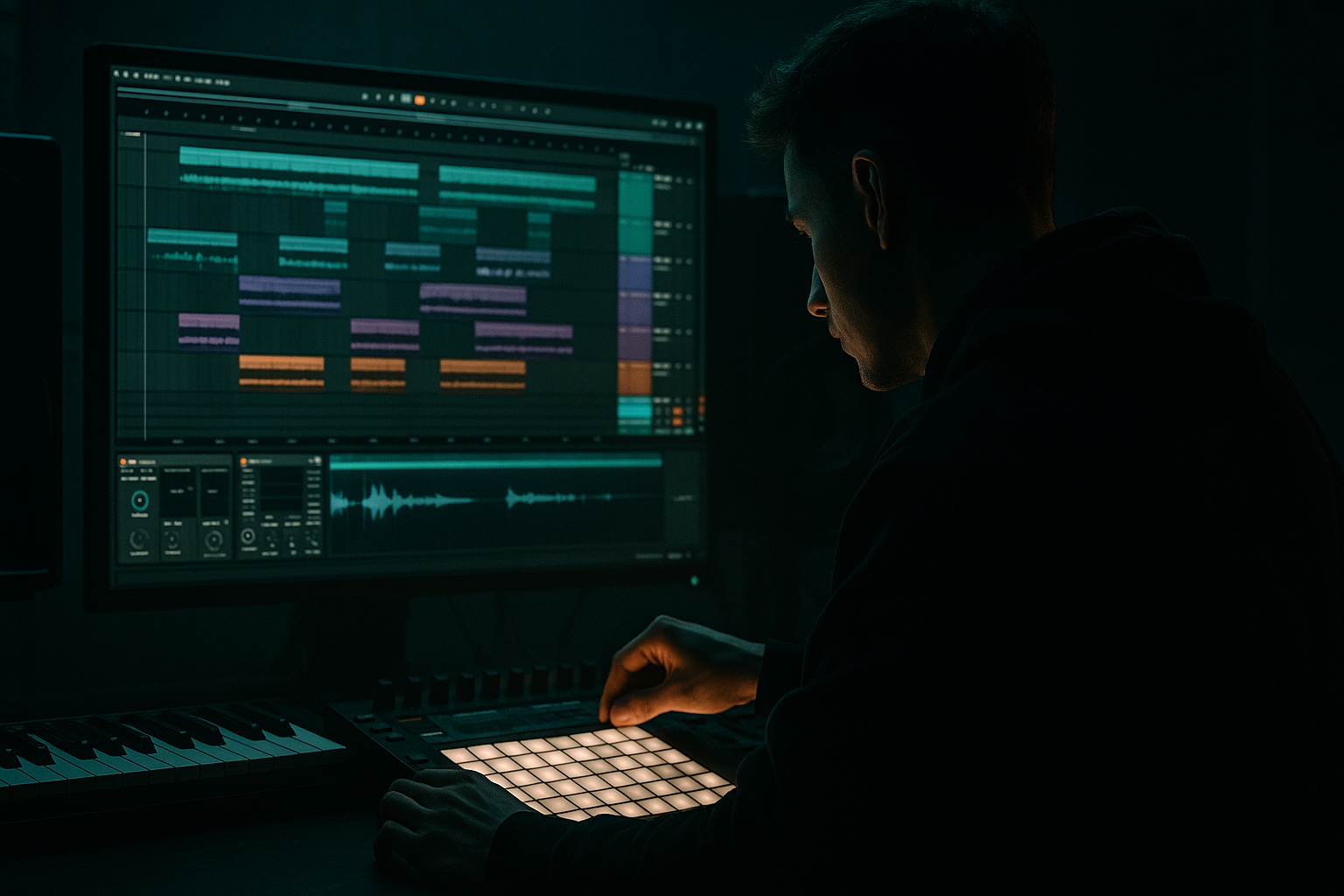
Main tutorial
Lesson Overview
An Amen-style percussion layer is one of the fastest ways to inject oldskool rave pressure into a Drum & Bass track. In this lesson, you’ll learn how to build a tight, energetic percussion layer around an Amen break inside Ableton Live 12, then shape it so it sits under a modern DnB drum kit without turning into a messy loop.
This technique matters because DnB lives and dies on drum identity. Even when the bassline is huge, the drums are what make the track feel like jungle, roller, neuro, or darker club DnB. An Amen layer gives you that instantly recognisable swing, snare snap, and chopped human energy that can make a track feel alive. It also works brilliantly as a supporting layer in:
- jungle and oldskool rave-inspired DnB
- rollers that need more movement
- darker halftime-to-fulltime switches
- breakdowns that need tension before the drop
- fills and transition bars leading into the drop
- a chopped Amen-style layer in Ableton Live 12
- a percussion part with swing, ghost notes, and edited transients
- a layer that can sit under a modern DnB drum bus without fighting it
- a simple drum processing chain using stock Ableton devices
- optional automation and arrangement moves to make the layer evolve across the track
- a driving 174 BPM drum layer with oldskool jungle energy
- snare hits that support your main backbeat
- little break fragments that add motion between the main hits
- enough grit and movement to feel underground, but still mix-clean
- Using the full Amen loop unchanged
- Letting the break fight the main snare
- Too much low end in the break
- Over-compressing the layer
- Making the pattern too busy for a beginner arrangement
- Ignoring velocity and timing
- Not checking the break with the bassline
- High-pass the break, then saturate lightly
- Use ghost notes to imply speed
- Duplicate the layer and filter one copy heavily
- Add a tiny Auto Filter movement
- Keep the bass and break in a conversation
- Use Utility for mono discipline
- Resample the best groove
- Think in 2-bar phrases
- slice the Amen break and use only the most useful fragments
- keep the main drum pattern clear and let the break add motion
- use velocity, groove, EQ, and light compression to shape the feel
- high-pass the layer so it doesn’t fight the kick and sub
- automate filtering and arrangement changes to keep it evolving
- always test the Amen layer with bass in context
We’re not trying to make a full raw breakbeat track here. We’re building a controlled percussion layer that adds character and drive while keeping your main kick/snare and bass clear. The goal is to make the Amen feel like a weapon, not a blur.
What You Will Build
By the end of this lesson, you will have:
Musically, the result should feel like:
Think of it as the difference between “just a loop” and “a break layer that makes the drop breathe.” 🔥
Step-by-Step Walkthrough
1. Set up the project and load a clean drum foundation
Start with a new Ableton Live set and set the tempo to a classic DnB range:
- 172–176 BPM for modern DnB
- 174 BPM is a great default for this lesson
Create two tracks:
- one Drum Rack or audio track for your main kick/snare
- one audio track for the Amen-style layer
For the main drum foundation, keep it simple:
- kick on the 1 and occasional syncopations
- snare on 2 and 4, or a strong DnB backbeat pattern
Why this matters: the Amen layer is there to support the groove, not replace your core drum identity. In DnB, a clear kick/snare anchor makes the break layer feel intentional instead of chaotic.
2. Find and place an Amen break sample
Drag a classic Amen-style break sample into the audio track. If you don’t already have one, use a clean break from your own sample library and keep it close to the original rhythm feel: snare-led, fast hats, and natural swing.
In Ableton, switch the clip to Warp if needed. For a beginner-friendly workflow:
- set Warp Mode to Beats
- choose Preserve for transient-heavy breaks
- start with Transient Loop Length around 1/16 or 1/8 if the break is dense
Then listen for:
- a strong snare hit
- useful ghost notes
- tight hat fragments
- any kick pickups you can use for movement
Don’t worry if the break is too busy. You’re going to carve out the bits that work.
3. Slice the break into playable chunks
Right-click the break clip and choose Slice to New MIDI Track. In the slice settings:
- use Transient slicing
- create a new Drum Rack
- keep the slices as individual hits or small fragments
Once sliced, audition the pads and identify these useful pieces:
- main snare hit
- ghost snare
- closed hat or shuffle fragment
- kick pickup
- small break tail or fill hit
Your goal is to build a percussion layer from selected fragments, not to use every slice. A beginner mistake is keeping too much information. In DnB, clarity wins.
Good starting choice:
- place the main snare on strong beats
- add 1–2 ghost hits before or after the snare
- use hat slices on offbeats or syncopated 16ths
4. Program a simple 1-bar Amen-style pattern
In the Drum Rack MIDI clip, start with a 1-bar loop. Keep it minimal at first:
- put the main snare on beat 2
- add a quieter ghost snare just before beat 2
- add a hat or tick on the “and” after beat 2
- place a short break fragment near beat 4 to lead into the next bar
Use velocity to create movement:
- main snare: 100–127
- ghost hits: 35–70
- hat/tick layers: 20–50
If you want an oldskool rave feel, try a slightly loose, humanised placement:
- nudge some ghost notes a tiny bit late
- keep the main snare locked
- let the hats feel slightly messy but controlled
A good beginner rule: if the groove disappears when the bass comes in, the break is too busy. Strip it back until it feels like a layer rather than a lead performance.
5. Shape the groove with Ableton’s Groove Pool
Open Ableton’s Groove Pool and try a subtle swing groove. For jungle and Amen-inspired patterns, this can add life without making the rhythm sound off-grid.
Good starting points:
- Swing amount: 54–58%
- Timing: 10–25%
- Random: 0–10%
- Velocity: 5–15%
Drag a groove onto your MIDI clip or audio clip, then audition it against the main drums.
If your main drum pattern is very straight, use the Amen layer to bring in a slightly swung feel. If your main drums already have swing, keep the break more restrained.
Why this works in DnB: the genre often uses a push-pull relationship between the programmed kick/snare and the chopped break. That contrast creates momentum. A little swing makes the rhythm feel human and forward-driving, especially at 174 BPM.
6. Clean the layer with EQ Eight, Compressor, and Saturator
Now shape the break so it supports your track instead of muddying it.
Add these stock devices to the Amen layer:
- EQ Eight
- Compressor
- Saturator
Start with EQ Eight:
- high-pass around 120–200 Hz to leave room for the kick and sub
- if the break is harsh, dip 3–6 kHz slightly by 1–3 dB
- if the hats are fizzy, reduce some top end above 10 kHz
Then use Compressor:
- Ratio around 2:1 to 4:1
- Attack around 10–30 ms
- Release around 50–120 ms
- aim for just 2–4 dB of gain reduction
This keeps the break punchy but controlled. A slower attack lets the snare transient through, which is important for DnB impact.
Finally add Saturator:
- Drive: 2–6 dB
- enable Soft Clip if needed
- use it lightly to thicken the break
If the layer starts to feel boxy, pull back the drive and re-check EQ. The goal is character, not distortion for its own sake.
7. Use transient control and resampling to make the layer tighter
If the break still feels too loose, try a beginner-friendly resampling move.
Create a new audio track and set its input to Resampling or route the Amen layer into it. Record 1–2 bars of the processed break. Then:
- cut the best bar
- warp it lightly if needed
- trim any late tails
- consolidate the cleanest section
This gives you a more controlled break performance you can arrange like a building block.
You can also use Transient shaping inside simpler clip editing decisions:
- shorten slice lengths in the Drum Rack
- cut the tail of long samples
- leave space between hits if the groove is getting cluttered
In darker DnB, tight editing is everything. The Amen feel comes more from the rhythm and texture than from leaving every hit untouched.
8. Blend the layer with your main drums using routing and buses
Route the Amen track and your main drum track into a Drum Bus or Group track. This makes it easier to shape both layers together.
On the drum group, try:
- Glue Compressor for light bus cohesion
- attack around 10 ms
- release on Auto or around 0.1–0.3 s
- keep compression gentle, around 1–2 dB of movement
If the Amen layer is competing with the main snare, reduce its level before over-processing it. In DnB mixing, balance beats aggressive EQ almost every time.
Practical level guide:
- main kick/snare stays the reference
- Amen layer sits 6–12 dB lower than the main backbeat, depending on arrangement
- turn it up in fills, break sections, and drop transitions
This is where a lot of beginner producers win or lose the track: not by making a better break, but by placing it at the right level in the arrangement.
9. Automate movement for arrangement and tension
A static break loop gets old fast. Add simple automation in Ableton to make it feel like part of the track’s energy design.
Good automation ideas:
- automate Auto Filter cutoff on the Amen layer
- lower the cutoff in breakdowns for darker tension
- open it up into the drop for impact
- automate Reverb send briefly on a snare fill
- use Utility to widen or narrow the layer subtly
Example arrangement move:
- bars 1–8: filtered Amen layer under a sparse intro
- bars 9–16: bring in more of the break and open the hats
- drop: keep only the tightest snare/ghost fragments under the main drums
- second 8 bars: automate a small fill or reverse-tail transition into the next phrase
For an oldskool rave pressure moment, try muting the layer for half a bar before the drop, then bringing it back in on the downbeat with full snare energy. That contrast makes the return hit harder.
10. Check the layer in the full mix and simplify if needed
Always audition the Amen layer with bass and synths on. A break that sounds amazing solo can disappear or clutter the mix in context.
Do these checks:
- mono check with Utility if the layer feels wide and messy
- listen for snare clash with the main drum
- make sure the sub and kick still feel solid
- remove any break fragments that fight the bass rhythm
If the bassline is busy, simplify the Amen layer. In neuro or darker rollers, the drums often need to leave more room for bass movement. A smaller break layer with the right groove can feel heavier than a packed one.
Common Mistakes
Fix: slice it and keep only the fragments that support your track.
Fix: reduce the Amen snare level or remove the duplicate hit on the same beat.
Fix: high-pass with EQ Eight around 120–200 Hz.
Fix: keep compression light so the groove still breathes.
Fix: start with 1 bar, then build to 2 bars only if the groove stays clear.
Fix: ghost notes should be quieter and slightly less rigid than the main hits.
Fix: always audition in context; DnB is about the drum-bass relationship.
Pro Tips for Darker / Heavier DnB
This keeps the layer gritty without stealing sub space.
A few soft snare and hat fragments can create more urgency than a louder loop.
One clean copy + one muffled copy can create depth without clutter.
Slow cutoff automation on the break can make an 8-bar loop feel alive.
If the bassline lands on a phrase ending, let the break fill the gap rather than clash with it.
If the layer is wide, narrow it in the low mids so your mix stays focused.
Once the break feels right, print it. Audio editing is often faster than endlessly tweaking MIDI.
Oldskool pressure usually lands harder when the break changes every 2 bars with a small fill, mute, or snare variation.
Mini Practice Exercise
Spend 10–20 minutes making a 2-bar Amen-style percussion layer.
1. Set your project to 174 BPM.
2. Drag in one Amen break sample.
3. Slice it to a Drum Rack.
4. Build a 1-bar loop using only:
- 1 main snare
- 2 ghost notes
- 1 hat fragment
- 1 fill hit
5. Duplicate it into 2 bars and change just one detail in bar 2.
6. Add EQ Eight and high-pass the layer.
7. Add a little Saturator drive.
8. Route it through a drum group and compare it with a simple kick/snare pattern.
9. If it feels messy, remove 2 slices and try again.
10. Save the best version as a reusable Amen layer preset clip in your project.
Goal: make it feel like a real DnB support layer, not just a loop playing in the background.
Recap
The key ideas from this lesson are:
If you get this right, your drums will instantly feel more like proper DnB / jungle pressure and less like a generic loop.

