Main tutorial
Lesson Overview
This lesson is about turning a clean bass wobble into a sliced, reworked, resampled phrase that hits with modern punch but still carries that dusty, vintage jungle soul. In Ableton Live 12, that means you’ll take a bass sound with movement, print it to audio, cut it into rhythmic pieces, and re-sequence those pieces so the bass feels more like a performed edit than a static loop.
In a DnB track, this technique usually lives in the drop, the second phrase of a drop, or a switch-up before a reset. It’s especially useful in oldskool jungle, rollers with character, darkside breaks-led tracks, and modern DnB that wants a nod to chopped-up Amen-era energy without sounding dated. The musical goal is not just “sound design.” It’s groove. You want a bassline that breathes with the drums, leaves space for the kick and snare, and still feels alive when looped over 8 or 16 bars.
Technically, slicing a wobble gives you control over transient shape, note length, and phrasing in a way MIDI automation alone often can’t. Once you print the wobble to audio, you can carve the best moments, tighten the attacks, leave little gaps for the snare, and create call-and-response between sub hits and gritty midrange bursts. That is a huge part of why this works in DnB: the genre rewards rhythmic bass edits that lock to breaks and create forward motion without overcomplicating the low end.
By the end, you should be able to hear a bassline that feels chopped, purposeful, and dancefloor-ready: solid in mono, punchy against the drums, with enough vintage irregularity to feel human and enough modern control to stay clean in a club system.
What You Will Build
You will build a resampled bass phrase that starts as a simple wobble, then becomes a sliced audio pattern with a tight sub foundation, a gritty mid layer, and rhythmic gaps that make the drums hit harder.
The finished result should feel like this:
- sonic character: warm, slightly dirty, with a controlled wobble and a chopped, oldskool-jungle-style rhythm
- rhythmic feel: syncopated, off-grid in the right places, but still locked to the snare and kick
- role in the track: a drop bass or mid-drop variation that answers the break, not a sound design exercise floating on top
- mix readiness: strong in mono, not too wide, not masking the kick, and not over-hyped in the highs
- Keep one “anchor” slice that always returns on bar 1 or the start of the phrase. That repeat point gives the listener something to hold onto while the rest of the pattern mutates.
- Use dirt on the mid layer, not the sub. A saturated, slightly crushed wobble layer can sound nasty while the sub stays pure and heavy underneath.
- If the bass feels too polite, shorten one slice right before the snare and let the next slice answer late by a tiny amount. That small delay can create menace without sounding sloppy.
- For a darker vibe, bias the wobble toward the lower mids and upper bass, not the shiny top end. You want pressure, not EDM gloss.
- Print a second version with a little more saturation and compare it against the cleaner one. In heavy DnB, often the best answer is not “more effects,” but “which print feels more dangerous with the drums?”
- Try a brief filter dip on the last slice before a drop reset. That creates a tiny vacuum effect that makes the re-entry hit harder.
- If the bassline needs more oldskool soul, keep one slightly imperfect tail from the original print instead of trimming everything to a grid. That imperfect decay can make the sequence feel more like chopped tape or edited hardware.
- For mono compatibility, check the sliced layer with Utility set to zero width if needed. If the idea falls apart, the stereo information was carrying too much of the identity.
- use only stock Ableton devices
- keep the sub separate from the sliced layer
- use no more than 6 slices in the final phrase
- one slice must be left longer than the others
- test it with kick and snare before finishing
- one 4-bar audio phrase with a clear call-and-response feel, plus a second variation where you change only one slice placement or one slice length
- does the kick still punch through?
- does the snare still feel like the main backbeat?
- does the bass sound stronger in mono than you expected, not weaker?
Success sounds like a bass that “talks” to the beat: the low end stays firm, the sliced mids add attitude, and every edit feels intentional rather than random.
Step-by-Step Walkthrough
1. Build a simple wobble source first, not the final sound
Start with a plain bass in MIDI. Use a stock Ableton synth like Wavetable or Operator if that’s already in your template. Keep the patch simple:
- one main oscillator or basic saw/pulse layer
- low-pass filter with moderate movement
- a slow LFO or automation on filter cutoff or wavetable position
- a short amp envelope so the note is not too long and smeared
Good starting points:
- filter cutoff around 120 Hz to 500 Hz depending on how dark you want it
- resonance low to moderate, around 10–25%
- envelope decay around 150–400 ms for a wobble that still leaves room for the drums
- bass note length around 1/8 or 1/4 notes to begin with
Why this matters: you are building a controllable source that will later be chopped. If the original wobble is already too busy, the resampled version will turn into mush.
Listen for:
- a clean body in the mid-bass
- enough movement to make slices interesting
- no excessive sub distortion before you’ve even printed it
2. Separate the job of sub and movement
For DnB, especially jungle-influenced material, the sub should stay stable while the sliced character happens above it. The easiest beginner-friendly way is to make two layers:
- Layer 1: a simple sub bass, ideally a sine or very clean low source in Operator
- Layer 2: the wobble/mid layer that will be resampled and sliced
Keep the sub mono and simple. Let the wobble layer carry the rhythm and texture. If you only use one sound, the slicing will affect the low end too much, and the drop may lose weight every time a slice gets cut short.
Useful stock-device chain example 1:
- Operator for sub
- Wavetable for wobble layer
- EQ Eight on the wobble layer to high-pass gently around 90–140 Hz so the sub stays clear
- Saturator on the wobble layer for harmonics, drive around 2–6 dB depending on the sound
Why this works in DnB: the kick and sub relationship is sacred. If the slice edits start stealing your true low end, the groove gets weaker instead of stronger.
3. Program a 1- or 2-bar phrase with space in it
Write a simple bass MIDI phrase before resampling. Keep it very playable:
- use 1 to 3 notes at first
- leave gaps where the snare lands
- let one note ring across the end of a bar for movement
- avoid filling every sixteenth note
A good beginner pattern might be:
- bar 1: note on beat 1, short rest, note before beat 3
- bar 2: call-and-response with a shorter note on the offbeat
- leave room on beats 2 and 4 for the snare to speak
If your drums are already in place, build the phrase against them. This is where the DnB feel starts. A sliced bass that ignores the snare will feel clumsy fast.
What to listen for:
- does the bass phrase leave the snare punch exposed?
- does the bass answer the break instead of stepping on it?
4. Add movement before printing, but keep it restrained
Before resampling, add just enough motion that the audio edits will have something interesting to bite into. Use one or two of these:
- Filter movement on the wobble layer
- Very light Auto Filter LFO movement
- Saturator or overdrive-style harmonics
- A touch of Chorus-Ensemble only on the mid layer if you want vintage smear
Keep the effect chain sane. A practical chain for the wobble layer could be:
- Auto Filter
- Saturator
- EQ Eight
- Utility
Suggested ranges:
- Saturator drive: 2–8 dB
- Auto Filter cutoff sweep: small to medium range, not a full sweep unless you want a big transition
- Utility gain trim: keep enough headroom so the print doesn’t clip
A versus B decision point:
- A: clean wobble with tight movement for a more modern, punch-first roller
- B: dirtier wobble with more saturation and a slightly rougher filter sweep for a more vintage jungle feel
Choose A if the track is already busy with breaks and vocal chops. Choose B if the drop needs more grime and the bass is carrying the character.
5. Resample or consolidate the phrase into audio
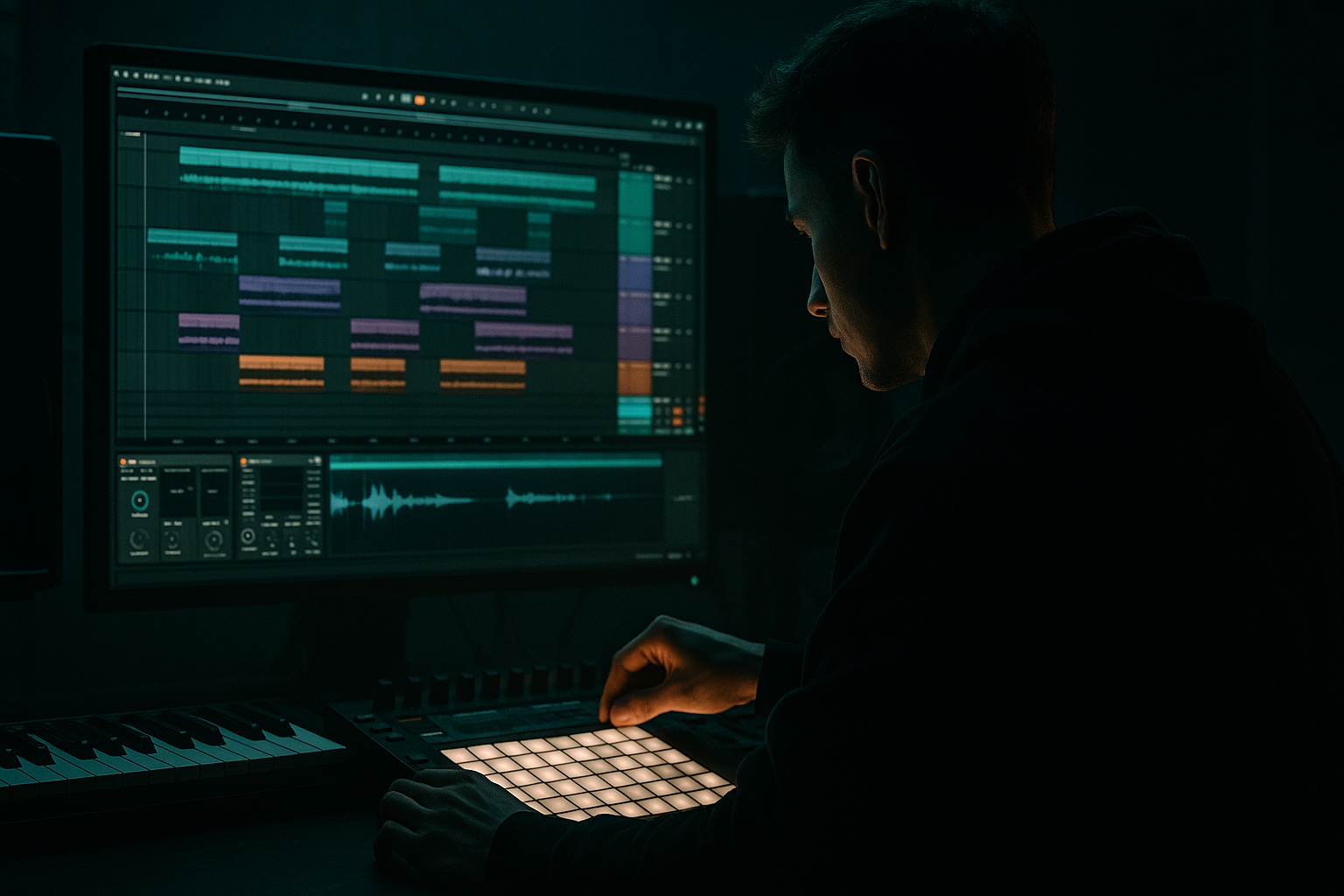
Now print the wobble. You can resample the bass output into a new audio track, then record the phrase. Or, if your routing is already straightforward, record the MIDI bass as audio on a separate track. The important thing is to commit the moving sound into editable audio.
Once printed, zoom in and look at the waveform. You want clean, obvious sections where the bass opens up or hits harder. Those are your slice points.
Workflow efficiency tip: name the printed take immediately, like “Bass_Wobble_Print_01.” If you make multiple versions, version them clearly. In DnB, this saves you from burying a great edit under ten similar bounces.
Stop here if the audio print already feels dead. If the printed sound has no pulse or texture, go back and increase the movement before slicing. Slicing a flat sound usually produces a flat result.
6. Slice the audio on musical points, not randomly
Use Ableton’s audio clip editing to cut the printed bass into pieces. Start by slicing at note changes, strong transients, and moments where the filter or harmonic shape changes. You do not need to cut every beat. In fact, too many cuts can remove the bounce.
Good slice targets:
- note starts
- places where the wobble opens up
- a tiny slice just before the snare for a ghost response
- a longer slice on beat 1 or the bar end to anchor the phrase
Think in bars:
- one bar can be the “statement”
- the next bar can be the “response”
- a third variation can add one extra cut or a tail chop for the second half of the drop
Why this works in DnB: the genre loves micro-edits that feel like a human re-performance. That’s part of the jungle legacy. The bass becomes rhythmic percussion as much as harmony.
7. Re-sequence slices to create punch and vintage soul
Now move the slices around to create a new phrase. Don’t just repeat the original. Try this logic:
- keep the strongest slice on beat 1 or the “and” before 2
- place a shorter slice before the snare to create tension
- use one longer slice as a sustain moment
- leave at least one empty space where the kick or snare can breathe
A useful phrase shape is:
- bar 1: longer hit, short gap, short answer, rest
- bar 2: chopped response, slightly different ending
- bar 3 or 4: variation with one extra slice for lift into the next section
What to listen for:
- does the bass phrase feel like it is pushing the drums forward?
- do the slices create anticipation instead of clutter?
If the groove gets too stiff, nudge one or two slices slightly late by a tiny amount. Even a very small delay can make the line feel more human and more “played.” But don’t overdo it, or the kick-snare grid will lose its snap.
8. Add a second processing chain after slicing for control and identity
Once the slices are rearranged, process the audio like a bass record, not a MIDI patch.
Useful stock-device chain example 2:
- EQ Eight to clean mud and shape the mids
- Saturator for bite and density
- Compressor or Glue Compressor for steadier slice levels
- Utility to keep the image narrow if needed
Practical starting points:
- EQ Eight: high-pass the sliced mid layer around 90–150 Hz if your sub is separate
- gentle cut around 200–400 Hz if it feels boxy
- small presence lift around 700 Hz to 2 kHz if you need the slices to speak
- Saturator drive: 1–5 dB for control, more if you want obvious dirt
- Utility width: keep close to mono for the low bass; if there’s stereo, keep it in the upper mids only
Important mix-clarity note: check the sliced bass in mono. If the edits rely on stereo widening to feel exciting, they may disappear on club systems. The core of the groove must survive collapsed to mono.
9. Check the bass with drums in context and shape the pocket
Bring the kick and snare back in and loop 4 or 8 bars. This is the real test. A sliced bass can sound exciting solo and then collapse once the break returns. In DnB, that is where most beginner edits fail.
Now listen for:
- kick transient still landing clearly
- snare still sounding like the main backbeat
- bass slices not masking the kick body around 50–100 Hz
- the bass landing slightly before or after the snare in a way that creates groove, not conflict
If the kick disappears, reduce the bass low end around the kick’s main energy zone, or shorten slices that overlap the kick. If the snare loses impact, pull back any bass slice that lands too close to the snare crack.
This is the key “why this works in DnB” moment: the sliced bass makes the drums feel more animated because it creates gaps and accents around the break. The drums remain the anchor; the bass becomes the dancer around them.
10. Decide whether the phrase should stay as audio or become a reusable instrument
At this point, you have a choice.
- Keep it as audio if the exact slice timing and texture are the hook. This is often best for a drop phrase, a fill, or a signature 8-bar moment.
- Convert it into a simpler rack or reusable pattern if you want a cleaner version for the rest of the tune.
Commit this to audio if the slice rhythm itself is the idea. In jungle and oldskool DnB, the exact edits often carry the identity. If you keep tweaking MIDI after that, you may flatten the personality.
A strong result should sound like a bassline that has been performed through editing: punchy, slightly ragged, low-end stable, and strong enough to loop under a break without losing impact.
11. Build arrangement movement with one variation, not a full rewrite
For a beginner-friendly arrangement move, keep the main sliced bass phrase for 8 bars, then change only one thing in the next 8 bars:
- remove one slice on bar 7
- add a short answer phrase before the snare on bar 8
- swap one dirty slice for a cleaner sustain
- bring in a reversed slice or a short fill into the next section
This gives you evolution without destroying the groove. In DnB, too many bass changes can weaken DJ usability. You want enough shift to keep energy rising, but not so much that the drop stops feeling like a loopable club section.
A solid arrangement example:
- Bars 1–8: main sliced bass with break
- Bars 9–16: one extra chop and a slight harmonic lift
- Bar 16 into next section: short gap, bass fill, then reset
Common Mistakes
1. Slicing the bass before the phrase has any real movement
Why it hurts: the edits end up sounding random and flat instead of musical.
Fix: go back and automate filter movement or add harmonics before printing, then resample again.
2. Letting the sliced audio include too much sub
Why it hurts: every edit changes the low-end weight, which makes the drop unstable.
Fix: split the job into a clean sub layer and a separate mid-bass slice layer. High-pass the sliced layer gently and keep the sub mono.
3. Cutting every transient too tightly
Why it hurts: the groove becomes sterile and the bass loses its bounce.
Fix: leave some notes longer, especially on bar starts and phrase anchors. Let a few slices ring.
4. Over-widening the bass slices
Why it hurts: stereo movement can disappear in mono and weaken club translation.
Fix: keep the low bass centered with Utility, and only let stereo effects live in upper mids if needed.
5. Ignoring the snare when placing slices
Why it hurts: the bass and snare fight for attention, which makes the track feel crowded.
Fix: mute or shorten slices that land directly on top of the snare crack, then test the loop again.
6. Using too much saturation after slicing
Why it hurts: the bass becomes gritty but loses definition and starts to blur the kick.
Fix: reduce drive, then use EQ Eight to trim mud around 200–400 Hz before boosting anything else.
7. Keeping the same slice pattern for too long
Why it hurts: the drop loses momentum after the first few bars.
Fix: create a second version with one extra chop, one missing chop, or a short fill at the end of the 8-bar phrase.
Pro Tips for Darker / Heavier DnB
Mini Practice Exercise
Goal: create a 4-bar sliced wobble bass that works with a breakbeat and feels ready for a drop.
Time box: 15 minutes.
Constraints:
Deliverable:
Quick self-check:
Recap
Slice the wobble after it already has movement. Keep sub and mid movement separate. Resample to audio, cut on musical points, and re-sequence for groove, not chaos. Check the phrase against kick and snare early, keep the low end mono and stable, and make one small variation for arrangement payoff. If it feels like a chopped performance that still locks the drop together, you’ve got it.

