Main tutorial
Lesson Overview
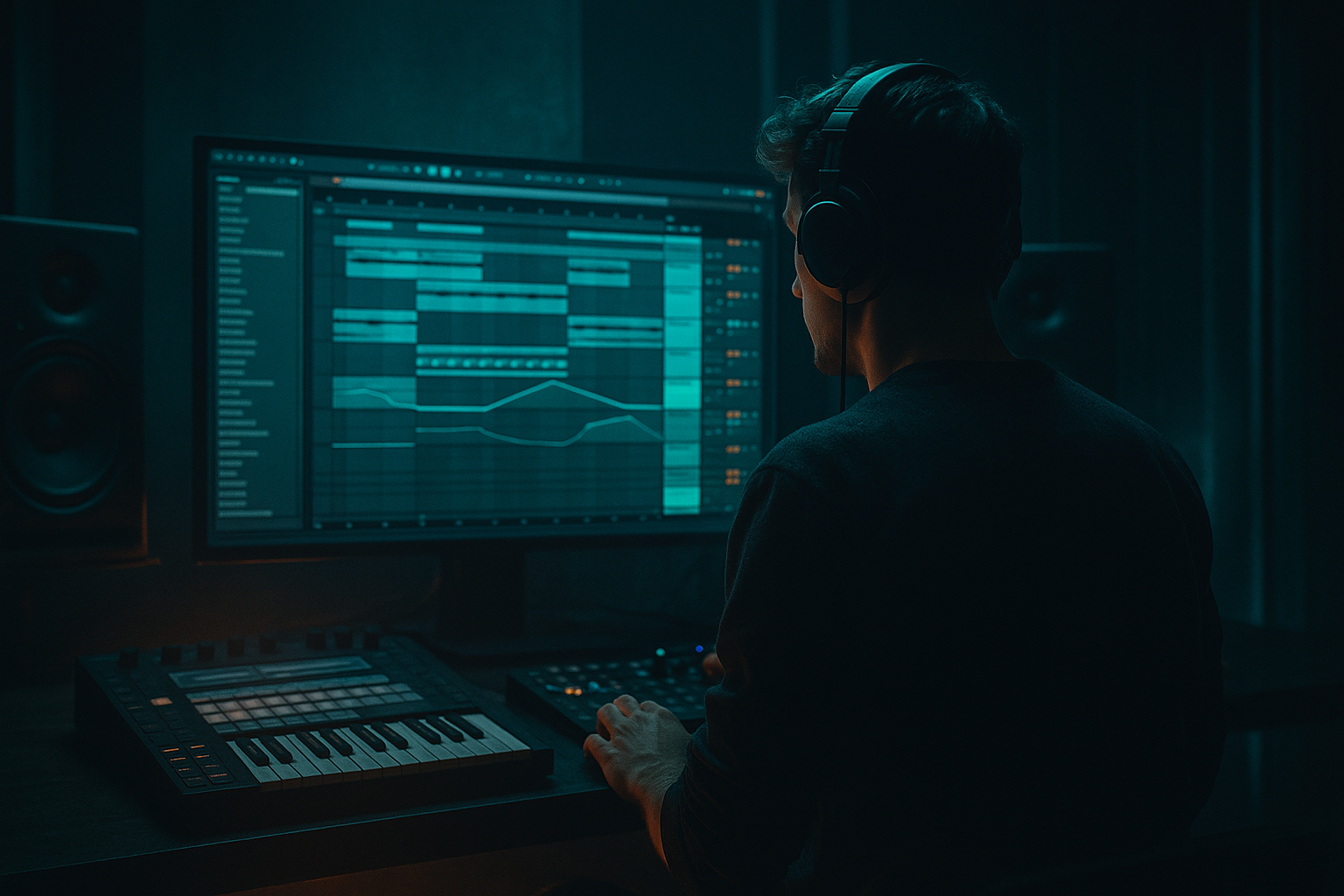
In this lesson, you’re building a Soul Pride-style pad playbook for oldskool jungle / crunchy DnB arrangements inside Ableton Live 12. The goal is not just to make a pad sound cool — it’s to make it function in the arrangement: as emotional glue in the intro, as tension under the drop, as a dark harmony layer in the breakdown, and as a subtle ear-candy element that helps the track feel finished.
This matters because in DnB, pads can do three jobs at once:
1. Set the vibe fast in the intro or breakdown.
2. Create harmonic identity without fighting the bass or drums.
3. Add movement and grit so the track feels alive, especially when the drums are stripped back.
For jungle and oldskool-inspired DnB, a pad is rarely clean and pristine. It often needs a crunchy sampler texture, a bit of aliasing, wobble, and bandwidth loss, and a sense that it came from a musical fragment that was resampled, chopped, and re-contextualized. That grime is part of the aesthetic.
The arrangement goal here is to make a pad that feels like it belongs in a DJ-friendly intro, a 16-bar breakdown, and a tension-building pre-drop, while staying out of the way of your drums and sub. Think atmosphere, memory, and pressure — not lush ambient wallpaper.
Why this works in DnB: the genre thrives on contrast. Heavy drums and sub need a harmonic counterweight, but that counterweight must leave room for the groove. A crunchy, sampled pad gives you emotional width without needing big chord stacks or endless reverb. It’s efficient, nostalgic, and extremely usable in arrangement.
What You Will Build
You’ll build a dark, crunchy, sampled pad layer in Ableton Live 12 that feels like it could sit in a Soul Pride-influenced jungle section:
- a wide but controlled pad
- with gritty sampler texture
- gentle pitch drift and filter movement
- a broken, slightly unstable feel
- and arrangement-ready automation for intros, breakdowns, and drop transitions
- a minor-key or modal chord bed
- with short, emotional stabs or held chords
- that can be filtered, muted, reversed, or ghosted
- under a roller / jungle / darker DnB arrangement
- without masking the kick, snare, sub, or main bass movement
- Making the pad too wide in the low mids
- Using too much reverb
- Leaving the pad constant through the drop
- Over-crushing the source until it loses musical identity
- Clashing with the bassline
- Ignoring arrangement context
- Use a filtered noise layer under the pad for extra air and menace. Keep it subtle and high-passed.
- Automate a narrow band-pass sweep before the drop to create pressure without adding volume.
- Resample a reversed pad tail and place it one beat early before key transitions.
- Use sidechain compression lightly if the pad pumps in a good way, but don’t make it obvious unless the track wants that feel.
- Try parallel distortion: keep one clean pad layer and blend in a dirtier duplicate at low level.
- Mono-check the arrangement regularly so the pad doesn’t disappear or smear when the club system collapses stereo width.
- For neuro-leaning sections, modulate the pad’s filter with very slow movement so it feels like the atmosphere is breathing behind the bass.
- For oldskool jungle vibes, make the pad slightly unstable and imperfect — sampled character beats perfect polish every time.
- Build the pad as an arrangement tool, not just a sound.
- Use Simpler or Sampler, then add saturation, filtering, and controlled grit.
- Keep the low end clear so the sub and drums stay powerful.
- Resample the pad into audio so you can chop, reverse, and automate it like proper DnB arrangement material.
- Shape it across sections: intro, breakdown, pre-drop, ghost layer, outro.
- In jungle and oldskool DnB, the best pad textures feel sampled, emotional, and slightly damaged — that’s the magic ✨
Musically, the result should feel like:
You’ll end up with a chain that can be resampled into audio and then edited like an arrangement tool: chopped, reversed, filtered, and tucked into the tune as a signature layer.
Step-by-Step Walkthrough
1. Choose a short, soulful source and keep it emotionally simple
Start with a musical phrase that has identity but not too much harmonic clutter. Good sources for this style are:
- a single chord stab
- a Rhodes or electric piano phrase
- a vocal-ish synth chord
- a small loop from a sample pack or your own MIDI piano part
In Ableton, place the source on a MIDI track with a stock instrument like Sampler, Simpler, or even Instrument Rack if you want layering. For this lesson, use Simpler in Classic or One-Shot mode if you’re working with audio, or Sampler if you want more control over modulation and key tracking.
Keep the phrase harmonically restrained:
- minor 7th, minor 9th, sus2, sus4, or modal voicings
- avoid huge jazz chords with too many extensions unless you thin them out
- one chord can be enough if the movement comes from automation
Arrangement tip: pick a source that can survive being looped for 8 or 16 bars without sounding cheesy. In jungle, a short fragment repeated with filter motion often feels more authentic than a big evolving pad wash.
2. Crush the sampler texture for that oldskool crunchy feel
Load your source into Simpler and make it behave less like a clean instrument and more like a sampled artifact.
Suggested starting points:
- Mode: Classic
- Transpose: try -3 to +2 semitones depending on the source
- Filter: Low-pass, cutoff around 2.5 kHz to 6 kHz
- Resonance: 10–25% for a bit of nasal character
- Glide: low or off unless you want eerie note overlap
- Warp: if using audio in a clip, try Texture or Complex only if needed; for oldskool grit, don’t over-polish it
Then add Saturator after Simpler:
- Drive: 2 to 6 dB
- Soft Clip: On
- Output: trim to keep level under control
Follow with Redux very subtly if you want sampler-style crunch:
- Downsample: just enough to hear edge, not obvious aliasing
- Bits: 10–14 is usually a useful zone
Why this works in DnB: oldskool jungle often feels exciting because the source has texture and memory. Slight bit-crush, saturation, and bandwidth limitation make the pad sit like a sampled record fragment rather than a modern polished synth wash. That makes it feel believable in a break-heavy arrangement.
3. Shape the pad into a playable arrangement element with note length and voicing
If you’re using MIDI, write a simple chord pattern with room to breathe. Don’t fill every bar. DnB arrangements often work better when harmonic layers appear, disappear, and re-enter rather than sit constantly underneath everything.
A strong starting pattern:
- 2-bar chord loop
- chord hits on bar 1 and bar 2 offbeat
- held notes in the breakdown
- shorter stabs in the build or pre-drop
Try voicing choices like:
- root + minor third + fifth + ninth
- rootless voicings with the bass handling the root
- spread chord notes so the pad has width but not mud
Keep the low notes under control:
- if the pad contains strong low mids, consider moving the chord up an octave
- let the sub handle anything below roughly 90 Hz
- high-pass later if needed
Arrangement context example: in a 174 BPM tune, use the pad in the first 16 bars as a filtered intro bed, then switch to short stabs in bars 17–32 as the break moves in, then remove it at the drop so the drums and bass hit harder. That contrast is a classic DnB move.
4. Add movement with filter automation and subtle pitch instability
Static pads get boring fast in DnB. The trick is to animate them without making them obviously “effect-y.”
Use Auto Filter after Simpler or Sampler:
- filter type: low-pass 24 or band-pass depending on tone
- cutoff: automate between 300 Hz and 4 kHz
- resonance: keep moderate, around 5–20%
- envelope amount: light, unless you want a pluckier character
Add movement with one of these:
- LFO inside Sampler if you’re using it
- M4L LFO if you already use Max devices in your workflow
- Frequency Shifter very subtly for unstable side movement
- Chorus-Ensemble with low mix for width and wobble
For pitch instability, keep it subtle:
- a few cents of detune between layers
- slow modulation, not chorus overload
- resample if you like the movement
Automation idea:
- intro: low-pass closed, pad distant
- pre-drop: open cutoff gradually over 8 bars
- breakdown: small filter dips every 2 bars for breathing motion
- drop: cut most of the pad, keep only a filtered ghost layer
The key is to make the pad feel like it’s reacting to the arrangement. In DnB, automation is part of the groove.
5. Build the crunch chain: distortion, EQ, and controlled width
After your sampler and filter, shape the texture with stock Ableton devices in a practical order.
A reliable chain:
- EQ Eight
- Saturator
- Redux or Erosion if needed
- Chorus-Ensemble or Utility
- Reverb or Hybrid Reverb
EQ Eight suggestions:
- high-pass around 120–250 Hz depending on how busy the arrangement is
- cut muddy areas around 250–500 Hz if the pad clouds the break
- tame harshness around 2.5–5 kHz if the crunch gets brittle
Saturator:
- use soft clipping for density
- drive just until the pad gains audible edge in a busy mix
- don’t flatten the transients if it’s meant to breathe
Width control:
- use Utility to keep the low end mono if necessary
- if the pad has stereo movement, check it with Utility > Bass Mono or simply reduce width on low-supporting layers
- keep the actual sub area clean and centered
If the pad needs more oldskool “sample bounce,” try Erosion:
- Amount very low
- Noise mode or sine mode depending on texture
- use it as a sheen, not a main effect
The mix goal is to let the pad feel crunchy and nostalgic while still leaving the drum transients and bassline readable.
6. Resample the pad and turn it into arrangement material
This is where the lesson becomes truly useful for arrangement. Once the pad sound is good, resample it to audio.
In Ableton:
- create a new audio track
- set input to the pad track or resample from master if you’re careful
- record 8–16 bars of pad movement
- freeze/consolidate if you prefer a faster route
Then edit the audio:
- chop the first hit for an intro swell
- reverse a tail into a transition
- create a one-bar loop with the most interesting motion
- duplicate and offset slices for call-and-response
Arrangement use cases:
- intro: filtered pad loop under break atmospheres
- pre-drop: rising automation with a chopped reverse tail
- breakdown: full resampled pad with reverb tail
- outro: strip to pad + break for DJ mix compatibility
This resampling workflow is important because DnB arrangement often benefits from committing to sound. Once the pad is printed, you can treat it like an arrangement object instead of endlessly tweaking synthesis.
7. Pair the pad with drums and bass without masking the groove
Now test the pad against the core DnB engine: drums and bass.
With drums:
- let the snare transient cut through
- if the pad sits on the snare’s midrange, carve a small dip around 180–250 Hz or 1–3 kHz depending on conflict
- if the break loses snap, shorten the pad’s reverb and reduce sustain
With bass:
- keep sub separate and mono
- avoid strong pad energy below 120 Hz
- if using a reese or mid-bass, check whether the pad and bass are occupying the same midrange band
- if they clash, automate the pad lower during bass-heavy sections
A good DnB arrangement trick is call-and-response:
- pad blooms in the gaps
- bass answers on the downbeat or offbeat
- the pad retracts when the bassline becomes active
This creates tension without clutter, especially in rollers and darker tracks where the bassline has to remain relentless.
8. Use arrangement automation to make the pad feel like part of the story
Don’t leave the pad static across the song. Shape it across sections.
Practical arrangement map:
- Bars 1–8: low-pass filtered pad with break intro
- Bars 9–16: open filter slightly, add delay throws or reverse tails
- Bars 17–32: pad stabs become shorter, more rhythmic
- Drop: pad mostly muted or reduced to a ghost layer
- Breakdown after drop: full pad returns with higher reverb and wider stereo
- Outro: filter closes again for DJ-friendly exit
Automate:
- filter cutoff
- reverb send amount
- width via Utility
- saturator drive for tension builds
- volume rides for impact on section transitions
Use Return tracks for ambience if you want consistent space:
- one return for short room reverb
- one for longer dark reverb
- one for tempo-synced delay
Keep the pad evolving in small ways every 4 or 8 bars. In DnB, that’s often enough to make the arrangement feel intentional and pro.
9. Freeze the character and make one version clean, one version nasty
Create two pad versions:
- Clean-ish version: filtered, wide, supportive
- Nasty version: more saturated, more crunchy, more distorted, used for transitions or breakdown peaks
In Ableton, duplicate the track and process the second version harder:
- more Saturator drive
- slightly more Redux
- narrower EQ focus
- stronger filter movement
Then automate between them or layer them quietly together. This gives you arrangement flexibility:
- clean pad under vocals or main bass movement
- nasty pad for tension scenes, fills, and breakdown lifts
This is especially effective in darker DnB where you want atmosphere that can turn dangerous without taking over the mix.
Common Mistakes
- Fix: high-pass it earlier and keep sub and bass centered.
- Fix: shorten decay, reduce send, and use filtered reverb so the pad doesn’t blur the snare.
- Fix: mute it, strip it down, or automate it to become a ghost layer.
- Fix: keep the chord tone readable; grind the texture, not the harmony.
- Fix: carve midrange, automate pad level down during busy bass phrases, and keep clear note spacing.
- Fix: decide whether the pad is intro glue, breakdown emotion, or transition tension before you over-design the sound.
Pro Tips for Darker / Heavier DnB
Mini Practice Exercise
Spend 10–20 minutes building one usable pad scene:
1. Choose a 1–2 bar chord phrase in a minor or modal key.
2. Load it into Simpler and make a crunchy version with saturation and light bit reduction.
3. Add Auto Filter and automate the cutoff across 8 bars.
4. High-pass the pad and remove mud with EQ Eight.
5. Resample 8 bars of the moving pad to audio.
6. Chop one reverse swell, one filtered intro loop, and one breakdown texture.
7. Test the pad against a simple break and sub bass.
8. Decide where the pad should disappear for the drop.
9. Automate a final transition where the pad opens, then cuts hard before the snare.
Goal: end with at least one intro loop, one transition swell, and one breakdown version you can drop into a real arrangement.

