Main tutorial
Lesson Overview
In this lesson, you’ll build a chopped-vinyl texture from scratch in Ableton Live 12 and turn it into an arrangement-ready loop that sounds right at home in jungle, oldskool DnB, rollers, or darker halftime sections. The goal is not just to make a cool sample—it’s to make a texture that can sit behind drums, support a drop, and help your track feel like it has history and movement.
This technique matters because chopped-vinyl textures bring instant character. In DnB, especially jungle and oldskool-inspired music, short dusty chops, stretch artifacts, and rhythmic slicing can create tension without needing a huge melody. They work well in intros, breakdowns, drop builds, and between drum phrases where you want atmosphere and grit without cluttering the sub.
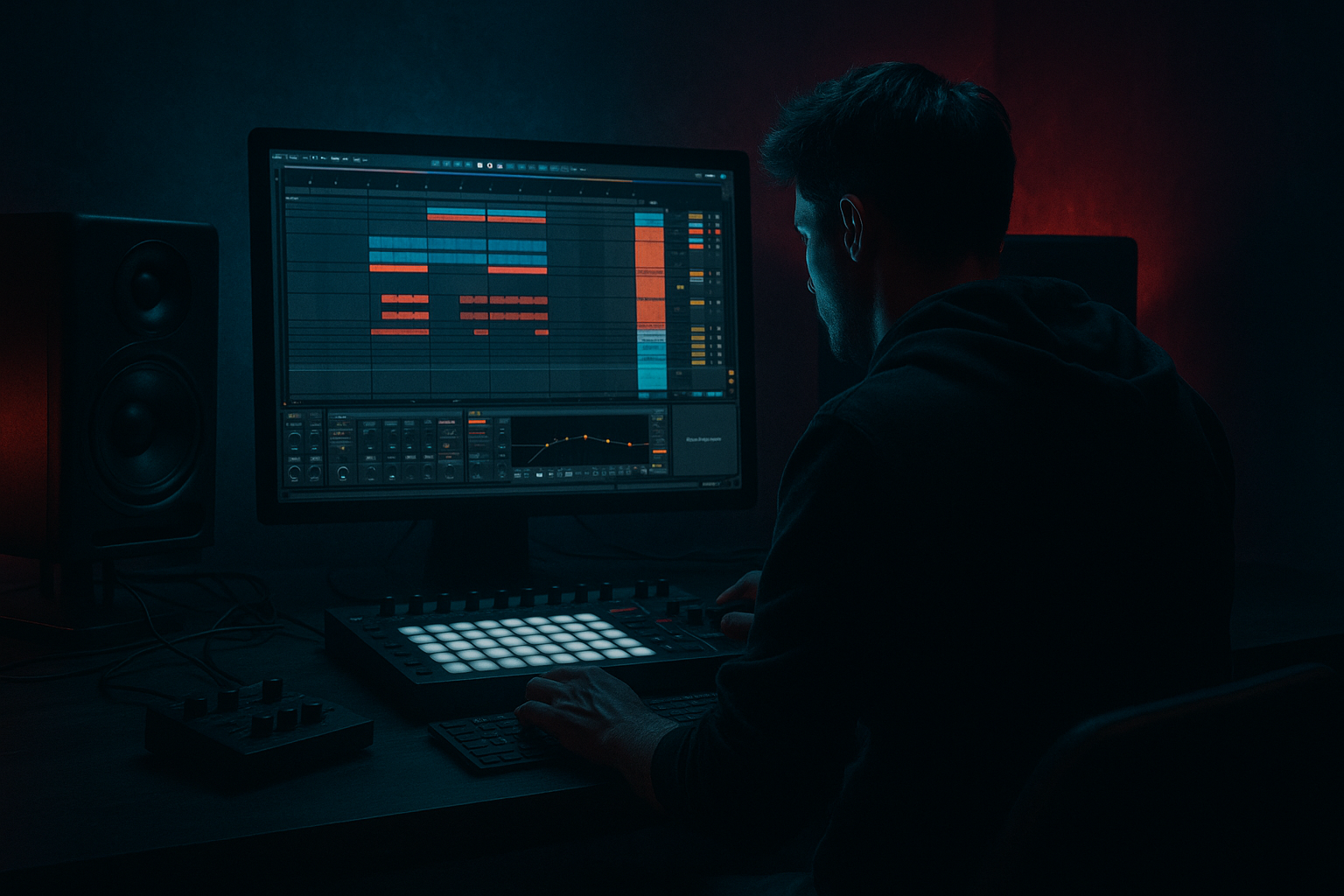
We’ll use Ableton Live 12 stock tools only, and we’ll keep the process beginner-friendly: pick a source, warp it, slice it, stretch it, process it, and arrange it into a section of a track. By the end, you’ll have a practical texture loop that can be repeated, automated, and evolved across an arrangement. 🎛️
What You Will Build
You’ll create a chopped-vinyl texture that sounds like a dusty record snippet being time-stretched and rhythmically reshaped for DnB.
Musically, it will:
- sit in the midrange and upper mids without fighting the kick and sub
- have a broken, swung, slightly unstable groove
- include audible stretch movement and chop changes
- work as a loop in an intro, build, or 8-bar drop support layer
- feel like old sample-based jungle material, but made in modern Ableton Live 12
- open a DJ-friendly intro with atmosphere
- add lift in bars 5–8 before a drop
- support a halftime break with gritty syncopation
- layer under drums during a switch-up to make the section feel more alive
- Making the texture too loud
- Letting the low end clutter the mix
- Over-warping until it sounds fake or watery
- Using too much reverb
- Chopping randomly without a phrase plan
- Making every bar identical
- Forgetting mono compatibility
- Use Saturator before Echo
- Add Auto Filter movement with automation
- Keep the texture narrow in the drop
- Layer a subtle break underneath
- Try Reverse on one or two slices
- Use short delay times for metallic grit
- Automate only one or two things at a time
- Resample after processing
- Bars 1–2: A
- Bars 3–4: A + B
- Bars 5–6: B
- Bars 7–8: C
- Choose a source with character: dusty, tonal, or rhythmic.
- Warp it in Ableton Live so it locks to DnB tempo.
- Chop it into short phrases and shape them into a musical pattern.
- Use stock effects like EQ Eight, Saturator, Auto Filter, Echo, and Reverb to add grit and movement.
- Keep the low end clean so your kick and sub stay strong.
- Arrange the texture across intro, build, drop support, and switch-up sections.
- Resample when it sounds good to capture more character and commit to the vibe.
You’ll end up with a texture that can do things like:
Step-by-Step Walkthrough
1. Choose a source that sounds like vinyl, dust, or old media
Start by finding or recording a short source that already has texture. For beginner workflow, use one of these:
- a vinyl crackle or record noise sample
- a dusty chord stab
- a chopped soul fragment
- a short percussive loop with noise and tone
- a spoken word or ambience sample with character
If you want the most authentic jungle feel, pick something with midrange content and uneven dynamics. You do not need a clean sample. In fact, slightly messy is better.
Drag the sample into an Audio Track in Arrangement View. Keep the clip short at first, around 1–4 bars. If the source is too clean, you can still make it feel vinyl-like later with warping and saturation.
Good beginner rule: choose something with a clear transient or a recognizable tone, because Ableton can stretch and chop it more musically than a completely flat noise bed.
2. Warp the sample so it locks to tempo
Double-click the audio clip and open Clip View. Turn Warp on if it isn’t already. This is the key step that lets you stretch the sample into DnB timing.
Try these starting settings:
- Warp Mode: Complex Pro for tonal samples, Beats for rhythmic chops, Texture for noisy material
- Seg. BPM: leave it auto-detected first, then correct if needed
- Preserve: for Complex Pro, keep it around 80–100 for a smoother source; lower it if you want more grain
For jungle-style chopped texture, you do not need perfect transparent stretching. In fact, a little smear is useful. If the sample sounds too shiny or too clean, switch Warp Mode to Texture and raise Grain Size a little. If it gets too cloudy, go back to Complex Pro or Beats.
Set the project tempo to something in the DnB zone, like 170–174 BPM. The chopped-vinyl texture will now feel faster and more urgent, which is part of the oldskool vibe.
Why this works in DnB: fast tempos exaggerate the rhythmic character of short samples. Small warp changes become noticeable movement, which helps a simple texture feel alive in a high-energy arrangement.
3. Chop the clip into smaller phrases
Now create your chopped texture. There are two beginner-friendly ways in Ableton:
- Duplicate the clip on the timeline and trim each copy differently
- Or right-click and use Split to cut the sample into pieces
Start with 1/2-bar and 1-bar fragments, then add a few shorter slices like 1/4 notes or even smaller cuts. Don’t overdo it at first. You want a pattern, not chaos.
A strong oldskool DnB structure is:
- one longer phrase for the start of the bar
- one short answer at the end of the bar
- one tiny pickup before the next bar
Example arrangement idea:
- Bars 1–2: a longer dusty chop repeating every bar
- Bars 3–4: add a smaller slice on the last 1/8 note
- Bars 5–8: introduce a more broken pattern with gaps
If you want a faster workflow, slice the clip to a new MIDI track later using Simpler. But for beginners, editing directly in Arrangement View is simpler and more visual.
4. Turn the chopped sample into a playable texture with Simpler
Drag your sample into a new MIDI track using Simpler. This gives you more control over each chop. If you dragged multiple slices, you can also use Slice mode in Simpler for easy triggering.
For a beginner-friendly setup:
- Open Simpler
- Set Mode to Slice if you have multiple chops, or Classic if you have one source sample
- Use Warp in Simpler if needed, but keep it simple if the source is already warped in the clip
- Reduce Voices if the texture gets messy
Helpful parameter starting points:
- Filter cutoff: around 800 Hz to 4 kHz depending on brightness
- Attack: 0–10 ms for a punchy chop, or up to 20 ms for softer start
- Decay/Release: short if you want a tight rhythmic feel, longer if you want a smeared bed
- Glide/Portamento: only a little, if you want a sliding, degraded feel
Play a few MIDI notes in a simple rhythm, like:
- bar 1: two hits
- bar 2: three hits with one gap
- bar 3: repeat bar 1 with a different ending
This is where the texture starts becoming arrangement material rather than just audio.
5. Add movement with stock Ableton effects
Now process the texture so it sounds like part of a DnB record rather than a raw sample parked on top.
Build a simple device chain:
- EQ Eight
- Saturator
- Auto Filter
- Echo or Simple Delay
- Reverb
- Utility
Starting points:
- EQ Eight: high-pass around 120–250 Hz to keep space for kick and sub; gentle dip around 2.5–5 kHz if it gets harsh
- Saturator: Drive 2–6 dB, Soft Clip on
- Auto Filter: low-pass or band-pass with slow automation for movement
- Echo: short delay times like 1/8 or 1/16, low feedback, filter the repeats
- Reverb: small to medium size, short decay, keep it subtle
- Utility: use Width carefully; keep it narrower if the sound is too wide for the mix
Use this chain to make the sample feel worn and animated:
- Saturator adds harmonic grit
- Auto Filter lets you sweep tension in arrangement sections
- Echo creates ghost reflections that feel like fragments in space
- EQ keeps it out of the sub range
Keep the texture mostly midrange-only. In DnB, the kick, sub, and main bass need the low end. Your chopped-vinyl layer should decorate the groove, not steal its weight.
6. Make it rhythmic with groove and micro-variation
Jungle and oldskool DnB feel great because the rhythm is never too perfect. You can use groove to make your chopped texture bounce naturally.
Try this:
- Open the Groove Pool
- Add a swing groove, or use one from a breakbeat-style groove
- Apply a small amount, around 10–30%
- Adjust Timing and Velocity if needed
If you are not using Groove Pool, you can manually move a few chops slightly late or early. Tiny timing changes are enough. Do not push things so far that the texture sounds broken unless that is the goal.
Add expression with automation:
- automate Filter Cutoff opening over 4 or 8 bars
- automate Send level to Reverb for the last hit of a phrase
- automate Echo feedback very slightly for tension before a drop
- automate volume dips to create call-and-response with the drums
Arrangement example:
- Bars 1–4: chopped texture sits quietly behind drums
- Bars 5–8: cutoff opens and a delay tail appears
- Bar 9: drop into full drums and bass with the texture briefly muted
- Bars 13–16: bring it back with more filter movement for a switch-up
7. Shape the texture for arrangement roles
Now decide where this sound belongs in the track. In DnB, textures have different jobs depending on section.
Good arrangement uses:
- Intro: filtered and wide, with fewer chops
- Build-up: more frequent chops, rising filter, increased feedback
- Drop support: short and tight, tucked under drums
- Switch-up: more obvious rhythmic edits for one or two bars
- Outro: strip it back to a loop that DJs can mix out of
A simple 16-bar arrangement plan:
- Bars 1–4: filtered vinyl texture alone or with light percussion
- Bars 5–8: add breakbeat and a few chopped hits
- Bars 9–12: full drop, texture lower in the mix, supporting drums
- Bars 13–16: automate a stronger filter opening and one delayed hit as a transition
Keep your texture in a supporting role. If you want it more upfront, make it briefly prominent during fills or turnarounds, then tuck it back under the main drum-bass conversation.
8. Bounce or resample if you want more character
A great DnB workflow is to resample your own processing. This can make the chopped-vinyl texture feel more committed and less like a generic loop.
In Ableton:
- create a new Audio Track
- set Audio From to your processed texture track or the Master if you want the full result
- record a few bars of the texture
- then drag the recorded audio back into Arrangement View
Once resampled, you can:
- warp again for more movement
- reverse a few slices
- cut out a tiny fill
- apply additional Saturator or Redux for dirt
- duplicate one bar and make a variation
This is especially useful in jungle and darker rollers, where a sample often goes through multiple stages before it becomes the final texture.
Common Mistakes
Fix: pull it down until it supports the drums instead of competing with them. It should feel present, not dominant.
Fix: use EQ Eight high-pass around 120–250 Hz, depending on the source. Keep sub frequencies reserved for kick and bass.
Fix: try another Warp Mode. Complex Pro for tonal material, Beats for rhythmic slices, Texture for noisy material.
Fix: shorten decay, lower wet level, or automate reverb only on transitions. DnB needs space and punch.
Fix: think in 2-bar or 4-bar call-and-response shapes. Even dirty textures need arrangement logic.
Fix: vary one detail every 4 or 8 bars: a filter change, a reversed chop, or a delayed tail.
Fix: use Utility to check width and make sure the texture doesn’t disappear or smear when folded down.
Pro Tips for Darker / Heavier DnB
This makes the delay repeats dirtier and more characterful, which is great for underground rollers.
A slow low-pass sweep over 8 bars can create tension before a drop without needing a riser.
In heavier DnB, wide highs are fine, but too much stereo wash can blur the kick and bass punch. Use Utility to tighten width.
A very quiet breakbeat or ghost percussion layer can make the chopped-vinyl texture feel glued to the drum groove.
Reversed fragments are excellent for small turnarounds and dark switch-ups.
Echo at 1/16 or 1/32 with filtered repeats can create a broken, nervous energy that suits neuro-influenced textures.
For darker DnB, restrained automation often feels more professional than constant sweeping.
Once it sounds right, print it. Committed audio often feels more “record-like” and less sterile.
Mini Practice Exercise
Spend 10–20 minutes making three versions of the same chopped-vinyl texture:
1. Version A: Intro texture
- Warp a dusty sample
- High-pass it
- Add light reverb
- Make it 4 bars long and loopable
2. Version B: Drop support texture
- Duplicate the source
- Chop it tighter
- Add Saturator and a little Echo
- Keep it lower in the mix and more rhythmic
3. Version C: Switch-up texture
- Reverse one slice
- Automate an Auto Filter open
- Add one obvious delay tail at the end of bar 4
Then arrange them across 8 bars:
Focus on contrast, not perfection. The goal is to hear how small edits change the energy of a DnB section.
Recap
If you can make one chopped-vinyl texture feel like it belongs in a full arrangement, you’re already thinking like a proper DnB producer.

