Main tutorial
Lesson Overview
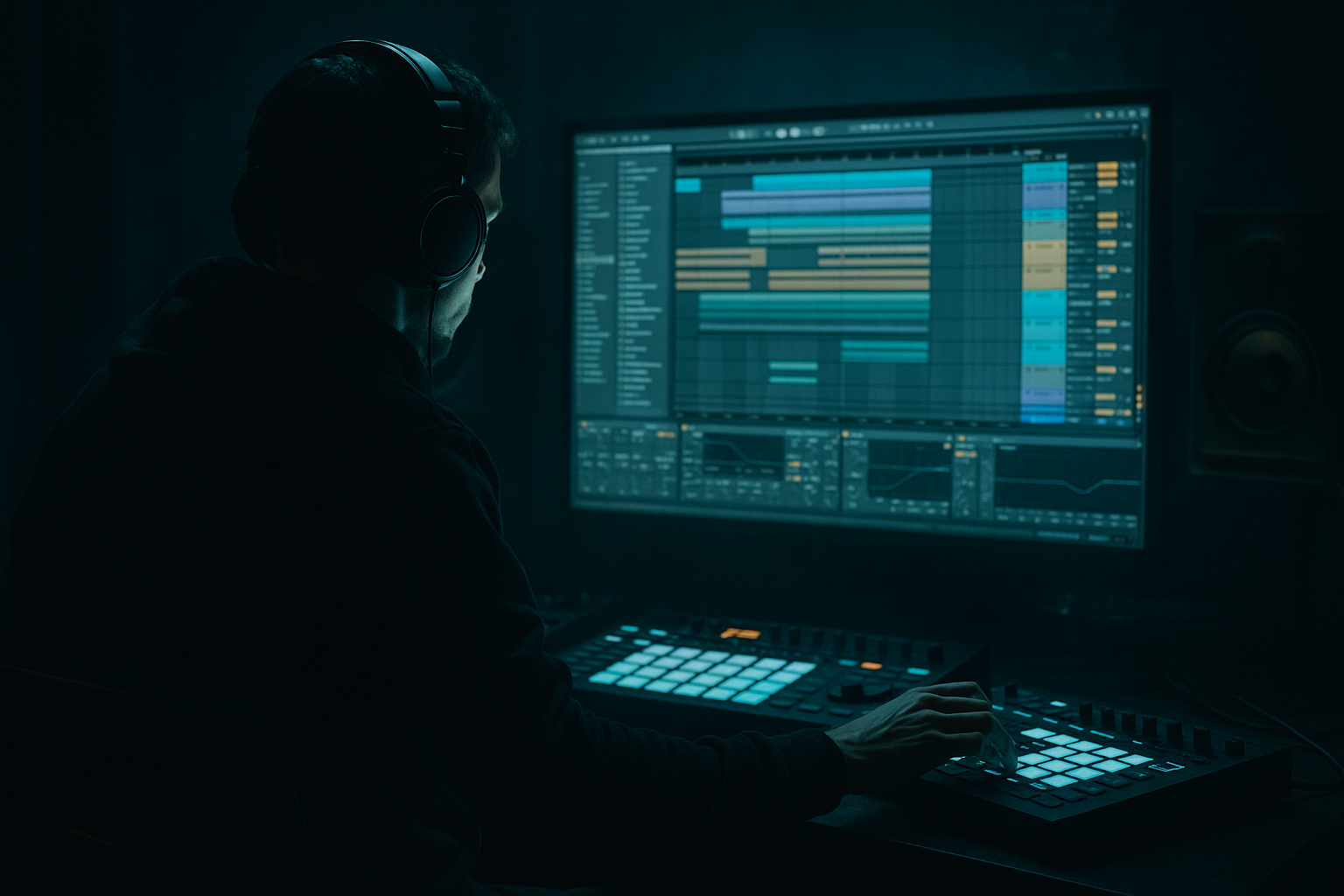
A Tape Dust jungle top loop is one of those deceptively small elements that can make a DnB arrangement feel instantly alive. In this lesson, you’ll take a dusty, rhythmic loop with tape wobble, high-end grit, and jungle-style motion, then carve it into a usable riser / tension layer that can lead into drops, switch-ups, and phrase changes inside Ableton Live 12.
This sits right in the sweet spot between drums and FX: it’s not a full riser synth, and it’s not just a loop dropped on top. You’re going to shape the loop so it behaves like a musical transition tool in a DnB track — especially useful for roller intros, jungle break sections, neuro-style build energy, and darker halftime-to-drop transitions. 🔥
Why this matters in DnB: the genre depends on forward momentum. A top loop with tape character gives you movement without overcrowding the sub or main drum groove. If you carve it properly, it can create tension while preserving the snare authority, sub space, and break clarity that DnB lives or dies by.
---
What You Will Build
By the end of this lesson, you’ll have a 16-bar Tape Dust jungle top loop riser that:
- starts as a dusty top-end break loop or percussion loop
- is carved with EQ, transient control, filtering, and automation
- develops from a lo-fi textured groove into a tight, tension-building riser
- can be arranged as:
- rollers that need rolling top-end motion
- dark jungle with break edits and atmosphere
- neuro / minimal DnB where tension is built through texture rather than huge synths
- DJ-friendly intros/outros where the loop can carry energy without stealing the mix
- Leaving too much low-mid in the loop
- Making the riser too bright too early
- Using a loop that fights the snare
- Over-widening the top loop
- Too much reverb or delay wash
- No phrase logic
- Parallel grit for underground character
- Mono the low end of the loop bus
- Use tiny reverse edits before key downbeats
- Automate harshness, not just volume
- Let the loop disappear at the drop
- Layer with a hidden atmosphere bed
- high-pass and clean the loop first
- use Ableton stock devices to shape grit, brightness, and motion
- automate filter, width, and gain to create tension
- arrange in clear DnB phrases
- keep the loop supporting the snare, sub, and drop impact
- a 4-bar intro pulse
- an 8-bar build
- a 1-bar pre-drop lift
- a switch-up tool between drop phrases
Musically, it will feel like a jungle ghost loop meeting a tape-worn FX bed. Think chopped hat ticks, break fizz, filtered noise, and subtle pitch/tape motion that climbs into a drop without sounding like a generic EDM uplifter.
You’ll finish with a loop that works especially well in:
---
Step-by-Step Walkthrough
1. Choose the right source loop and trim it like a DnB editor
Start with a loop that already has top-end movement: break hats, dusty shakers, chopped break fragments, or vinyl/tape-style noise. In Ableton’s Browser, audition loops that sit roughly in the 160–175 BPM range, or use a loop from a jungle sample pack and warp it to your project tempo.
In the Clip View:
- turn Warp on
- try Beats mode for percussive loops
- set transient preservation around 80–100 for crisp top hits
- if the loop has more smeared tape texture than hard transients, try Complex Pro and keep it subtle
Trim aggressively. For this style, you want only the part of the loop that has useful motion — usually the hiss, hat chatter, or break top. If there’s a messy kick or snare body in the sample, shorten the clip so the low-mid junk doesn’t fight your drums.
DnB reason: top loops work best when they add rhythmic shimmer above the snare and sub, not extra low-end clutter. The cleaner your source, the more you can automate it later.
2. Build a dedicated Audio Track chain for carving
Put the loop on its own audio track and create a simple processing chain using stock Ableton devices:
- EQ Eight
- Drum Buss or Saturator
- Auto Filter
- optional Redux for grit
- optional Utility for mono checks and gain control
Start with EQ Eight:
- high-pass around 180–300 Hz
- if the loop has honk or boxiness, dip 300–600 Hz by 2–4 dB
- if it’s too sharp, soften around 7–10 kHz with a narrow or medium cut
Then add Drum Buss gently:
- Drive: 5–15%
- Crunch: very low or off initially
- Transients: slightly positive if the loop needs more bite, or slightly negative if it’s too spiky
- Boom: off for this task unless you want a deliberately dirty low smear, which is usually risky on a riser
Add Auto Filter after that:
- start with a High-Pass filter
- cutoff around 200–500 Hz
- resonance around 0.7–1.5
- map this to automation later for the rise
Why this works in DnB: you’re shaping the loop into a high-frequency motion layer, which lets it energize the arrangement without stepping on the kick/sub relationship.
3. Create the “tape dust” motion with saturation and modulation
The “dust” part should feel worn, unstable, and slightly animated — not just static noise. Use Saturator or Redux to add texture, then automate that texture over time.
Try this:
- Saturator
- Drive: 2–6 dB
- Soft Clip: on if the loop gets spiky
- Redux
- Bit reduction: subtle, around 10–14 bits
- Downsample very lightly if you want a more broken tape feel, but don’t destroy the hats
For movement, use one of these stock modulation ideas:
- automate Auto Filter cutoff
- automate Saturator Drive
- use Shaper LFO via Max for Live only if it’s already part of your workflow; otherwise keep it simple with clip automation
- if the loop is stereo and wide, use Utility and automate Width from 100% down to 70% as you approach the drop for a tighter build
Concrete automation idea:
- Bars 1–4: Auto Filter cutoff slowly rises from 250 Hz to 1.2 kHz
- Bars 5–8: rise from 1.2 kHz to 6–8 kHz
- Final 1–2 beats: very quick open to full brightness, then cut on the drop
This creates the feeling of the loop “waking up” and becoming more urgent.
4. Carve the loop rhythmically so it locks with DnB phrasing
A strong jungle top loop should not just repeat. It needs phrase logic. Use Ableton’s clip editing to cut the loop into smaller pieces or duplicate clips and alter them.
In Arrangement View:
- slice the loop into 1-bar or 2-bar phrases
- mute a few hits in the final bar to create lift
- leave tiny gaps before the downbeat so the drop lands harder
Practical edits:
- remove a hat or tick before beat 1 of the drop
- duplicate a short burst of hats in the last half-bar
- reverse a small snippet of the loop and tuck it before a snare pickup
- create a two-hit “tease” in the final bar that suggests the groove but doesn’t fully resolve
If you want extra control, right-click and Freeze/Flatten the processed loop, then reslice it if needed. That gives you a more committed audio part you can chop like a drum edit.
Musical context example: if your main drop is a roller with a steady reese and sparse snare fills, let the top loop become more active only in the last 4 bars before the drop. In the earlier section, keep it sparse enough that the listener notices the tension increase.
5. Use envelope automation to turn the loop into a riser, not just a texture
The key move in this lesson is arrangement automation. In Ableton, you can make the same loop feel like it’s constantly escalating.
Automate:
- Auto Filter cutoff
- Filter resonance
- Reverb Dry/Wet if you want space to bloom before the drop
- Delay feedback for a few moments of smear
- Utility gain for a small volume lift into the transition
Suggested ranges:
- Reverb Dry/Wet: 5–20% max, unless you want a huge wash
- Delay feedback: 10–30% for short movement, not endless echoes
- Utility gain: a subtle rise of 1–3 dB into the pre-drop
- Filter resonance: keep moderate; too much resonance can get whistle-y and distracting
A very effective move:
- automate the loop to get slightly brighter, narrower, and louder
- then cut it abruptly on the drop
- add a drum fill or impact under the cut
This is classic DnB tension design: you’re not just making it louder — you’re making it more focused and more urgent.
6. Shape the transient profile so it sits around the snare
Jungle top loops often clash with the snare transient if you don’t manage attack. Use Drum Buss, Transient shaping inside clips if available in your workflow, or simply clip gain and EQ.
Try:
- if the loop attacks too hard, reduce Drum Buss Transients slightly
- if it feels too flat, add a bit of transient bite
- use an EQ dip around 2–5 kHz if the loop fights the snare crack
- if the loop masks hi-hats or ride energy, make a narrow dip around 8–12 kHz
Then listen in context with:
- kick
- sub
- main snare
- any rides or hats
A good DnB top loop supports the groove without turning the mix into white noise. It should feel like air and motion, not a second drum kit dominating the bar.
7. Arrange it in classic DnB phrases: 8s, 16s, and switch-ups
DnB arrangement usually rewards clear phrase logic. Place the carved loop in one of these roles:
- Intro: filtered and sparse for 8 or 16 bars
- Pre-drop build: increase automation over 4 or 8 bars
- Drop support: use only the top-end bits for the first 8 bars
- Switch-up / mid-drop break: let the loop briefly dominate for 2 bars, then strip it back
A solid arrangement example:
- Bars 1–8: loop starts low-passed, dusty, and understated
- Bars 9–16: filter opens, small volume lift, a few added chops
- Bars 17–18: half-bar reverse snippet + snare fill
- Bar 19: full drop lands, loop cuts or gets heavily reduced
- Bars 20–23: loop returns in a tighter, more clipped version under the drums
This kind of arrangement is especially effective in darker DnB because the tension comes from contrast: old tape dust versus clean drop impact.
8. Glue the loop into the mix with bus processing and headroom discipline
Route your loop to a drum/top FX bus if it’s part of a larger drum texture section. On the bus, keep processing light:
- Glue Compressor with only 1–2 dB gain reduction if needed
- gentle EQ Eight cleanup if multiple layers stack up
- avoid over-compressing the loop itself; the point is movement, not flattening
Check the mix:
- keep the master with headroom; don’t let the transition stack clip
- use Utility on the loop bus to check mono compatibility
- if the loop becomes too wide, reduce Width before the drop so the main groove feels bigger when it hits
Why this works in DnB: the drop needs space to feel huge. If the riser layer already fills every frequency and every stereo inch, the arrangement loses impact.
---
Common Mistakes
Fix: high-pass more aggressively, often 200–300 Hz or even higher if the sample is thick.
Fix: hold the filter down longer and let the final 1–2 bars do the real lift.
Fix: carve 2–5 kHz or reduce transient emphasis so the snare stays dominant.
Fix: keep width controlled, especially before the drop. A narrower pre-drop often makes the drop feel wider.
Fix: use short tails and automation, not constant fog. In DnB, clarity is part of the impact.
Fix: arrange in 4-, 8-, or 16-bar blocks and create a clear change before the drop.
---
Pro Tips for Darker / Heavier DnB
Duplicate the loop, distort the duplicate with Saturator or Redux, then blend it quietly underneath the clean version. This keeps the top loop sounding dusty without trashing the main layer.
Use Utility to keep everything below the audible top range focused. Even if the loop is mostly high-frequency, any stray low content should be tightly controlled.
A 1/16 or 1/8 reverse slice before the snare or drop can add that classic jungle “pull” feeling without needing a big synthetic riser.
Increasing brightness, resonance, and saturation slightly over time often feels more intense than simply turning the loop up.
Sometimes the most powerful move is to let the tension layer cut out completely right on the downbeat. That negative space makes the drum and bass hit harder.
Tuck a very low-level vinyl, tape hiss, or field texture underneath the loop, but high-pass it and keep it subtle. It adds depth and makes the top loop feel part of a wider sonic world.
---
Mini Practice Exercise
Spend 10–20 minutes making a 4-bar pre-drop riser from a single Tape Dust jungle top loop.
1. Load one dusty top loop into Ableton Live 12.
2. Warp it and trim it to the cleanest 1- or 2-bar section.
3. Add EQ Eight, Saturator, and Auto Filter.
4. High-pass it and remove any muddy mids.
5. Automate the filter so it opens gradually over 4 bars.
6. Add one small reverse slice in the final bar.
7. Duplicate the clip and make the second version slightly brighter and louder for the last 2 bars.
8. Check it against your kick, snare, and sub.
Goal: make it feel like it’s rising toward a drop without becoming too obvious or cheesy. If it sounds too “EDM riser,” pull back the filter sweep and make the movement more rhythmic and dusty.
---
Recap
A strong Tape Dust jungle top loop in DnB is all about carving, movement, and arrangement discipline.
Remember the essentials:
If it feels like the loop is getting more urgent without taking over the track, you’ve nailed it.

