Main tutorial
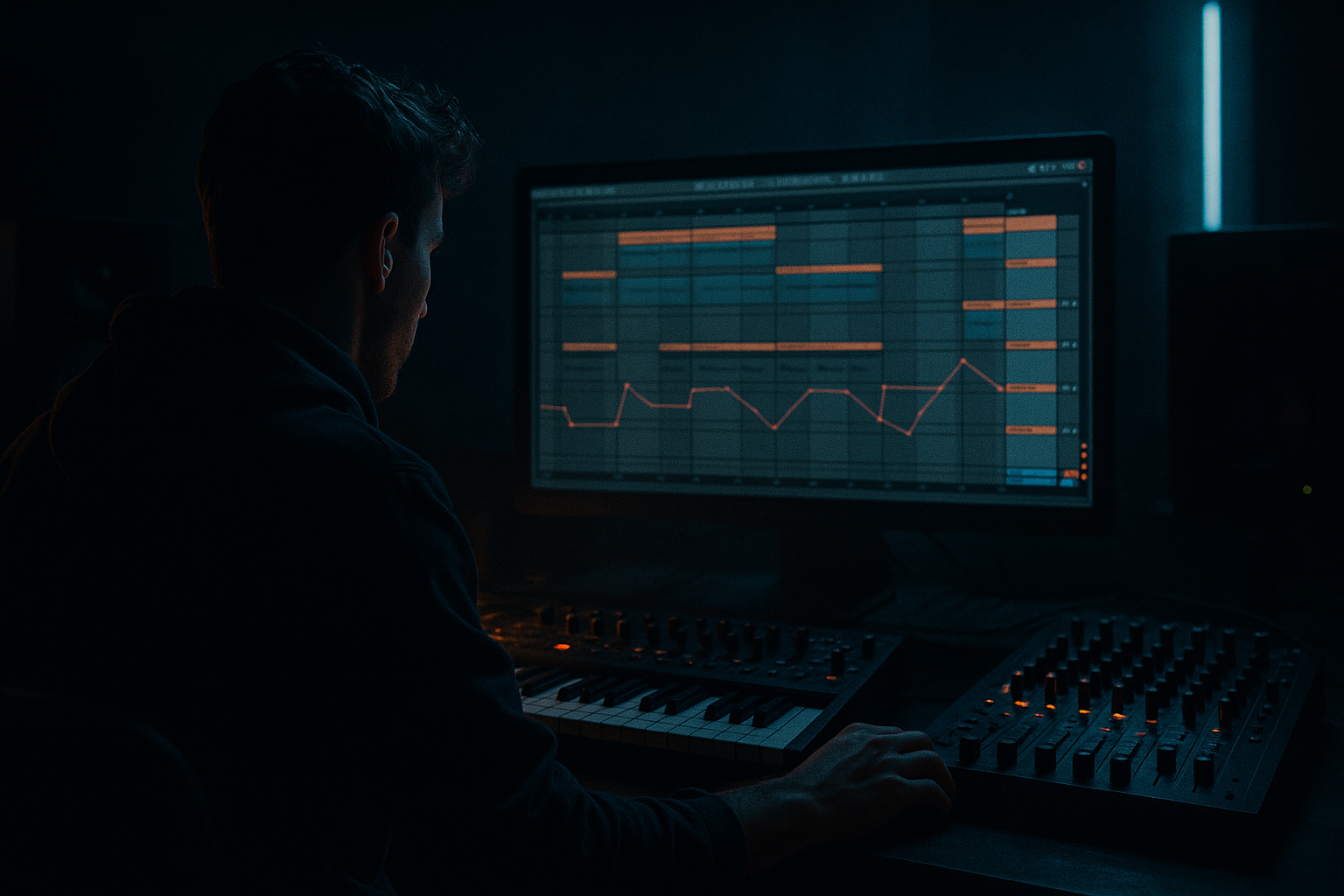
Transition Arrange Course for Sunrise Set Emotion in Ableton Live 12
Intermediate Drum & Bass / Jungle Sampling Tutorial
1. Lesson overview
In this lesson, you’ll learn how to build a sunrise-style transition in Ableton Live 12 that feels emotional, open, and cinematic while still keeping that jungle / oldskool DnB energy alive. 🌅🥁
We’re focusing on sampling-based arrangement techniques: taking a vocal phrase, pad hit, atmospheric record noise, amen chop, or chord stab and turning it into a scene change that lifts the track from a darker section into a hopeful, dawn-lit one.
This is not just “add a reverb riser and hope for the best.”
We’re going to shape the transition with:
- sample selection
- warp and timing
- filter automation
- reverb/delay design
- break edits
- tension and release arrangement
- subtle harmony movement
- energy control for DnB tempos
- Starts with a darker, more closed texture
- Introduces space, air, and melody
- Uses a sampled vocal or tonal phrase to hint at sunrise emotion
- Blends in oldskool jungle percussion
- Creates a smooth but exciting lift into the next section
- Feels authentic to rolling DnB / jungle, not generic EDM
- A soulful vocal one-shot or phrase
- A minor-to-major sounding chord stab
- A pad/atmosphere sample
- A field recording: birds, wind, distant city noise, rain, dawn ambience
- A classic break fragment with cymbals and snare tails
- A reverse piano note or single guitar harmonic
- Slightly imperfect
- A little dusty or lo-fi
- Emotionally clear, but not overproduced
- Easy to slice and process
- Drag the sample into an Audio Track
- Turn on Warp
- Try Complex Pro for vocals and tonal samples
- Try Beats for rhythmic break fragments
- Set the project to 172 BPM if that’s your track speed
- “Hold on”
- “Morning light”
- “Come back”
- A sung vowel texture
- A Rhodes chord
- A minor 7th stab
- A sampled pad from vinyl
- A reversed piano chord
- EQ Eight
- Saturator
- Reverb
- Echo
- Mode: Algorithm or Convolution + Algorithm
- Decay: 6–12 seconds
- Low Cut: 250 Hz
- High Cut: 8–9 kHz
- Dry/Wet: 100% on the send/duplicate track
- Reverb
- EQ Eight after reverb
- High-pass the return at 250 Hz
- Slight shelf dip above 10 kHz if harsh
- Start around -18 dB to -12 dB
- Automate upward into the transition
- Amen
- Think break
- Funky Drummer-style ghost section
- Any oldskool loop with strong hats/snare tail
- Simpler for quick break manipulation
- Drum Rack for slicing and layering
- Beat Repeat for tension fills
- Auto Filter for buildup automation
- Start with a high-pass filter around 250–400 Hz
- Slowly lower the cutoff to open up the break
- Increase resonance slightly for a little bite
- Add Beat Repeat only on the last 1–2 bars for a controlled glitch
- Interval: 1 Bar
- Grid: 1/16
- Chance: 20–40%
- Gate: 50–80%
- Offset: automate as needed
- Auto Filter cutoff
- EQ Eight high-pass cutoff
- Reverb send amount
- Echo feedback
- Drum bus saturation
- Noise layer volume
- Keep the mix narrow
- Low-pass or band-limit the tonal sample
- Breaks stay filtered and distant
- Open the filter more
- Increase reverb send
- Add a light delay ping on the vocal or chord
- Bring in more high percussion
- Let the sample breathe fully
- Reduce low-pass effect
- Introduce snare rolls or amen fills
- Emphasize cymbal tails and uplifters
- Remove most filtering
- Let the kick or sub drop prepare the next section
- Cut reverb tail just before impact if needed
- Vinyl crackle
- Wind
- Dawn birds
- City ambience
- Tape hiss
- Soft white noise
- High-pass: 200–500 Hz
- Low-pass: move from 6 kHz to 12 kHz depending on brightness
- Chorus-Ensemble: very subtle depth
- Reverb: short to medium decay
- Shakers
- Closed hats
- Rim shots
- Snare pickups
- Ride hits
- Tiny break stutters
- Drive: 2–6
- Boom: light or off, depending on your low end
- Transients: slightly up for crispness
- Damp: adjust to taste
- Ratio: 2:1
- Attack: 10–30 ms
- Release: Auto or 0.3–0.6 s
- Gain reduction: keep modest, around 1–2 dB
- Snare drag into the downbeat
- Amen fill with reverb tail cut
- Reverse cymbal into kick
- Vocal chop repeated 3 times faster
- Short sub riser
- Impact layered with break hit
- Simpler for reverse one-shots
- Warp markers to tighten fills
- Sampler if you want more detailed pitch control
- Delay for a one-hit repeat
- Auto Pan for stereo motion on the pickup
- Beat 1–2: sparse
- Beat 3: fill appears
- Beat 4: tension spike
- Downbeat: full drop or section change
- Don’t let the reverb swamp the kick/sub when the drop arrives
- Use high-pass filtering on atmos and tails
- Keep low-end mono and stable
- Leave room for the drum transients to punch through
- Compare the transition level to your main drop section
- Utility for width and mono control
- EQ Eight for surgical cleanup
- Glue Compressor for bus glue
- Saturator for harmonic warmth
- Hybrid Reverb for lushness
- Echo for movement
- Use minor-key or ambiguous samples
- Filter highs more aggressively
- Let the atmosphere feel misty, not uplifting
- Drum Buss
- Saturator
- Pedal if you want character
- minor 2nd fragments
- diminished chord textures
- reversed vocal shards
- detuned samples
- low sine swell
- pitch-rising sub
- filtered bass noise
- Bit of sample decay
- Slight swing
- Ghost snares
- Lo-fi break layering
- Controlled clipping on the drum bus
- 1 vocal chop or chord sample
- 1 amen break fragment
- 1 ambience layer
- 1 reverse one-shot
- 1 reverb return
- Choose samples with real character
- Use filter automation to open the spectrum gradually
- Layer reverb and delay with discipline
- Keep breakbeat rhythm alive under the atmosphere
- Manage low end carefully
- Use arrangement to create a clear emotional arc
- Simpler
- Drum Rack
- EQ Eight
- Auto Filter
- Hybrid Reverb
- Echo
- Saturator
- Glue Compressor
- Drum Buss
- Utility
- Beat Repeat
You can apply this to a full tune, a DJ intro, or a breakdown-to-drop transition at 170–174 BPM.
---
2. What you will build
By the end, you’ll have a transition section that does this:
Example transition concept
Imagine this arrangement:
1. 8 bars of darker groove
2. A chopped break and bass line begin thinning out
3. A vocal phrase or chord sample appears with heavy reverb
4. High-pass filtering and reverse texture create lift
5. Amen fills and ghost percussion reintroduce momentum
6. Final 1-bar drum pickup leads into the “sunrise” drop or next section
---
3. Step-by-step walkthrough
Step 1: Choose the right source samples
For a sunrise-emotion transition in jungle/DnB, pick samples with tonal identity and textural character.
Good sample types:
Best character traits:
Ableton workflow:
---
Step 2: Build the emotional core with a tonal sample
This is the centerpiece of the transition. In jungle/DnB, a small harmonic idea can carry huge emotional weight.
Option A: Vocal phrase
Take a short vocal like:
Option B: Chord stab or sample
Use:
Process it in Ableton:
Add this device chain:
Utility → EQ Eight → Saturator → Reverb → Echo
#### Suggested settings:
- High-pass around 120–200 Hz
- Gentle dip around 250–400 Hz if muddy
- Tiny boost around 4–8 kHz if it needs air
- Drive: 1–4 dB
- Soft Clip: On
- Decay: 4–8 seconds
- Pre-delay: 15–30 ms
- Low Cut: 200–400 Hz
- High Cut: 7–10 kHz
- Time: 1/4 or 1/8 dotted
- Feedback: 20–40%
- Filter: roll off lows below 300 Hz
Arrangement idea:
Place the sample slightly before the bar line or on the “and” of 4 to create anticipation.
That little timing push matters a lot in DnB. It makes the transition feel alive.
---
Step 3: Create a washed, cinematic tail
Sunrise emotion comes from space. But in DnB, if you overdo reverb, you lose punch. So we’re going to use controlled wash.
Method:
1. Duplicate your main tonal sample to a second track
2. Process the duplicate as a reverb-only layer
3. Automate the dry signal down while the tail blooms up
Device chain for the reverb layer:
EQ Eight → Hybrid Reverb → Utility
#### Hybrid Reverb suggestions:
Pro move:
Use a Return Track for reverb instead of inserting it directly. That gives you better control across multiple samples.
#### Return A:
#### Send level:
---
Step 4: Add jungle rhythmic movement with break edits
Now we bring in the DNA of the style. A sunrise transition in oldskool DnB still needs drums breathing underneath it.
Use a classic break fragment:
How to build it:
1. Load the break into Simpler or audio track
2. Slice it into a Drum Rack if you want manual control
3. Keep it sparse at first
4. Bring in snare ghosts, ride hits, and hat chatter gradually
Ableton devices:
Practical break automation:
Suggested Beat Repeat settings:
Use this sparingly. You want tension, not chaos.
---
Step 5: Design the lift with filter automation
The sunrise effect is often created by opening the frequency spectrum over time.
Main automation targets:
Recommended automation arc:
#### Bars 1–2 of the transition:
#### Bars 3–4:
#### Bars 5–6:
#### Final bar:
Automation curve tip:
Use smooth, gradual automation for emotional rise.
Use sharp cuts only for surprise moments or switch-ups.
---
Step 6: Use sampled noise and ambient layers for sunrise depth
A great sunrise transition often has atmospheric glue. This can be sampled noise, vinyl crackle, rain, crowd ambience, or a field recording.
Good layers:
Processing chain:
EQ Eight → Auto Filter → Chorus-Ensemble or Phaser-Flanger → Reverb
#### Settings:
Arrangement idea:
Fade the ambient layer in before the drums return, so the ear perceives a new space opening up.
That makes the transition feel like the track is literally entering a new environment.
---
Step 7: Reintroduce momentum with percussion details
Once the emotional bed is established, you need to keep the listener moving. DnB transitions must still roll.
Add:
Arrangement trick:
Layer a simple hi-hat pattern under the wash. Even one tight 16th note hat can keep forward motion.
Device chain for percussion bus:
EQ Eight → Drum Buss → Glue Compressor
#### Drum Buss suggestions:
#### Glue Compressor:
This helps the transition feel tighter without crushing the vibe.
---
Step 8: Use a final pickup or turnaround
The final measure before the next section should feel like a door opening.
Common DnB pickup techniques:
Great Ableton tools:
Final bar formula:
---
Step 9: Mix the transition so it feels big but controlled
A transition is not just arrangement; it is also mix balance.
Keep these principles:
Important low-end rule:
Anything below about 120 Hz should usually remain clean and deliberate.
Your sunrise emotion lives above the sub region.
Helpful stock devices:
---
4. Common mistakes
1. Too much reverb everywhere
If everything is washed out, the transition loses shape.
Use reverb as a feature, not a blanket.
2. Not enough drum identity
This is still DnB. If you remove all rhythmic DNA, it starts sounding like ambient or cinematic music instead of jungle.
3. Weak sample choice
A bland vocal or chord sample won’t carry the emotional lift. Pick samples with character.
4. Overcrowding the arrangement
If you have too many fills, risers, chops, and atmospheres, the transition becomes cluttered.
5. No low-end management
Mud in the low mids and uncontrolled subs can make the entire section collapse.
6. Static automation
A sunrise transition needs motion. If nothing changes over time, it feels flat.
---
5. Pro tips for darker/heavier DnB
If you want the same transition idea but with a darker, heavier edge, here’s how to adapt it. 🔥
1. Keep the emotion but reduce brightness
2. Add distortion to the break
Use:
Keep it subtle if you want authenticity, heavier if you want menace.
3. Use tense harmonic intervals
Try:
4. Bring in a sub swell instead of a clean riser
A dark transition can use:
5. Make the drums sound older and rougher
6. Let the sunrise be implied, not obvious
Instead of a bright happy lift, use a hopeful opening through darkness. That’s a very strong jungle emotion.
---
6. Mini practice exercise
Goal:
Build an 8-bar sunrise transition from a darker jungle loop into a more emotional section.
What to use:
Exercise steps:
1. Create an 8-bar loop at 172 BPM
2. Start with a dark drum and bass groove
3. Mute the bass on bars 5–8
4. Introduce the vocal/chord sample on bar 5
5. Automate a high-pass filter opening from 300 Hz down to 80 Hz
6. Add ambient noise slowly from bar 5 to bar 8
7. Bring in chopped break elements on bars 6–8
8. Add a reverse cymbal or reversed chord into the final downbeat
9. Bounce the transition and listen from start to finish
Challenge:
Do a second version where the transition becomes darker and heavier instead of brighter, using the same source samples.
---
7. Recap
A strong sunrise transition in Ableton Live 12 for jungle and oldskool DnB is all about controlled emotional movement.
Key takeaways:
Stock Ableton devices to remember:
If you approach the transition like a drummer, sampler, and arranger all at once, you’ll get that sunrise-after-the-rave feeling that works so well in jungle and DnB. 🌅🥁
If you want, I can also turn this into a bar-by-bar Ableton arrangement template or a rack chain preset guide for this exact style.

