Main tutorial
Lesson Overview
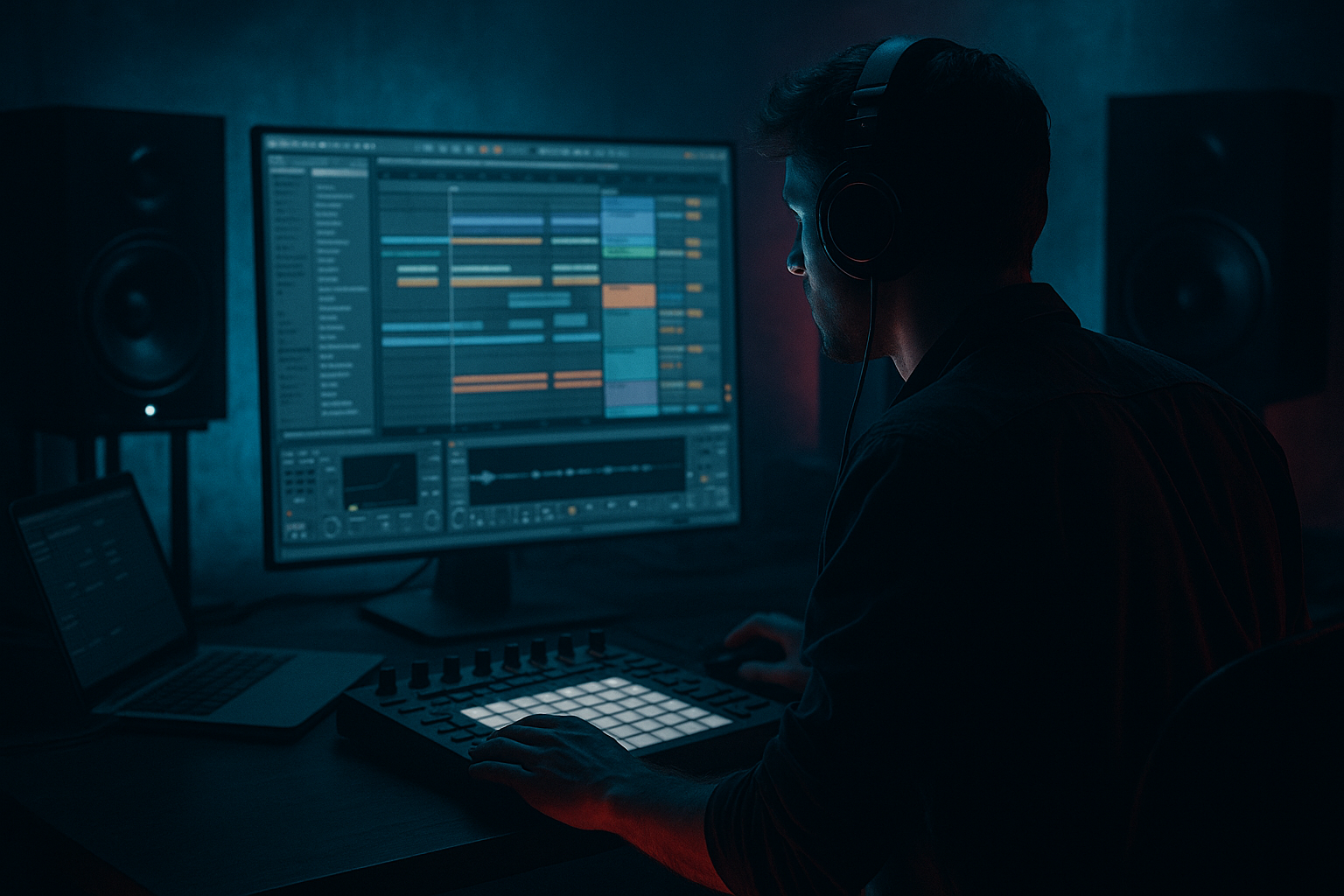
This lesson is about creating a Vinyl Heat bass wobble pull in Ableton Live 12: a gritty, oldskool-jungle-style bass movement that feels like it’s being tugged forward by pressure, attitude, and a little bit of tape-worn instability. The goal is not just “make the bass wobble.” The real target is a musical bass edit that gives your DnB arrangement character in the bars between drum phrases, especially in 8-bar drops, 2-bar turnarounds, call-and-response sections, and DJ-friendly edit moments.
In authentic Drum & Bass, especially jungle and oldskool-inspired rollers, bass movement often does more than fill space. It pushes the groove, answers the break, and creates tension before a snare or phrase switch. The “pull” part matters because the best bass edits feel like the sound is being dragged, opened, and released rather than just modulated on autopilot. That gives you movement with intent.
In Ableton Live, this is a perfect Edits workflow: build one strong bass sound, wrap it in a macro-controlled rack, then automate the macros to perform different versions of the same phrase across your arrangement. You’ll end up with a bassline that can shift from subby and contained to wobbly, raspy, and vinyl-hot without rebuilding the sound every time.
Why this matters in DnB: the genre lives on repetition with variation. A good edit keeps the loop identity intact while subtly changing the energy every 2, 4, or 8 bars. This technique gives you that classic “one-bar violence, next-bar release” feeling that sits right in jungle, rollers, darker halftime-to-DnB crossovers, and oldskool throwback sections. 🔥
What You Will Build
You’ll build a macro-controlled bass rack in Ableton Live 12 that can move between:
- a tight sub-led foundation
- a midrange wobble-pull with rhythmic opening and closing
- a grittier vinyl heat character using saturation, filtering, and controlled instability
- an edit-ready performance setup where one automation lane can transform the bass phrase across the drop
- hold a root-note or two-note motif
- wobble in a way that feels synced to the drums, not random
- “pull” upward in tension before a snare or fill
- break into a more aggressive, rattling tone for 1–2 bars
- snap back to a heavier, cleaner low-end for the next phrase
- Making the wobble too wide in the low end
- Automating too many things at once
- Using too much resonance
- Letting saturation crush the kick and break
- Creating a wobble that ignores the groove
- Forgetting the arrangement
- Use subtle pitch movement on the bass end
- Resample the best 4 bars and chop them
- Add parallel grit, not just more distortion
- Make the pull happen before the snare
- Keep one version of the bass almost boring
- Use break edits to frame the bass
- Check the groove in mono
- Control harshness around 2–5 kHz
- Build the bass sound first, then control it with an Instrument Rack and macros.
- Keep the sub stable and let the wobble happen in the mids.
- Use filter cutoff, resonance, saturation, and output as your main performance controls.
- Resample the movement and turn it into an edit, not just a loop.
- Shape the bass around the drums, snare placement, and 2-bar phrasing.
- For oldskool/jungle vibes, aim for movement with restraint, grit with clarity, and tension with release.
Musically, the result will feel like an oldskool/jungle bassline that can:
Think: a rolling 160–170 BPM DnB drop with a breakbeat looping under it, where the bass uses macro motion to create a call-and-response with the drums. This is ideal for section edits, drop switch-ups, and 8-bar arrangement evolution without needing 10 different bass patches.
Step-by-Step Walkthrough
1. Start with a simple bass source that can survive heavy editing
In Ableton Live 12, create a new MIDI track and load Wavetable, Operator, or Analog. For this lesson, Operator is great because it gives a clean low-end foundation and responds well to saturation.
Set up a bass patch with:
- Operator Oscillator A: sine wave for the sub
- Oscillator B: saw or square wave very low in level for mid movement
- Filter: low-pass around 120–250 Hz to start
- Amp envelope: short attack, medium decay, low sustain if you want a plucky edit feel
For an oldskool DnB vibe, keep the source fairly plain. The character will come from movement and processing, not a complicated synth patch. If you want a more aggressive tone, use Wavetable and start with a saw-based table, but keep the sub clean and separate.
Target note range: try MIDI notes around F1–A1 for a darker roller, or C2–D#2 if you want more audible mid bass on smaller systems.
2. Build a bass rack so your movement is controllable with macros
Group the bass instrument into an Instrument Rack. Inside the rack, create a chain with your synth followed by a few stock devices for shaping:
- Saturator
- Auto Filter
- EQ Eight
- Utility
Map the key controls to macros:
- Macro 1: Filter Cutoff
- Macro 2: Resonance
- Macro 3: Saturator Drive
- Macro 4: Auto Filter LFO Amount or frequency modulation feel
- Macro 5: Utility Width
- Macro 6: Output Level
- Macro 7: Distortion Tone/Color if using Saturator’s Soft Clip
- Macro 8: Sub-to-mid balance if your synth allows it
Keep the rack clean and performance-friendly. This is your edit instrument, not just a sound design sketch. You want to be able to automate the whole vibe with a single lane later.
Two good starting parameter ranges:
- Auto Filter cutoff macro range: map roughly from 120 Hz to 2.5 kHz
- Saturator drive macro range: map from 0 dB to +10 dB, with soft clip on if needed
3. Create the “Vinyl Heat” character with controlled grit
Now add the heat that makes the bass feel like it belongs in a jungle refix or oldskool tape-style drop. Use Saturator first. Set:
- Drive: around +3 to +7 dB
- Soft Clip: on
- Output: compensate so the level doesn’t jump too much
Then add Auto Filter after the saturation. Try:
- LP24 mode for a classic dark pull
- Cutoff: start around 180–300 Hz
- Resonance: 15–35% depending on how vocal you want the wobble to feel
For extra vinyl-like wobble, use LFO modulation inside Auto Filter if you want a moving filter tone, but keep it subtle. You want “heat,” not wobble soup. A small amount of movement makes the bass feel alive when the note is held.
If you want a rougher, more vintage texture, insert Redux before the filter and keep it light:
- Bit reduction: small amounts only
- Downsample: just enough to thicken the edge, not destroy the sub
This helps create the “worn record” edge that works especially well in oldskool DnB edits.
4. Program the wobble pull as a musical phrase, not an effect
Write a short MIDI pattern of 1–2 bars. Use a simple rhythmic motif:
- Root note on beat 1
- A syncopated answer on the “and” of 2 or 3
- Occasional longer note into the bar ending
For jungle and rollers, the bass often locks to the snare placement rather than forcing constant motion. If your snare lands on 2 and 4, let the bass “pull” into the spaces around it.
Now automate the rack macros to create the wobble pull:
- Open the filter during the first half of the bar
- Increase resonance slightly before a snare
- Add drive as the phrase rises
- Pull the cutoff back down at the turnaround
A good edit shape for 4 bars:
- Bars 1–2: restrained sub, low cutoff, minimal drive
- Bar 3: more filter opening, more saturation, slightly louder mid
- Bar 4: strongest wobble pull, then a quick reset for the next phrase
This works because DnB tension is often built through incremental shifts, not giant EDM-style drops. The listener feels the bass “lean in” before the drums slam back.
5. Turn the bass into an Edit by resampling the movement
This is where the lesson becomes very usable in real production. Once the rack is moving well, resample a pass of the bass into audio on a new track. In Ableton Live:
- Set the audio track input to Resampling
- Record 4–8 bars of your macro automation
- Capture the best version of the wobble pull
Now chop the audio in Arrangement View or Simpler if you want a playable edit. This is a classic DnB workflow because it lets you turn one synth phrase into a tight, edited performance with new timing options.
Once resampled, use audio edits to:
- shorten the tail before snare hits
- leave a tiny gap for groove
- reverse a small slice into a fill
- repeat a half-bar section for tension
This is especially useful for jungle-style bass punctuation, where a short bass stab can act like a drum hit with pitch content.
6. Use drum context to make the bass wobble feel authentic
Put the bass against a break or programmed breakbeat. A strong DnB edit is always about the relationship between bass and drums, not bass in isolation.
If you have a classic break, try:
- Drum Buss on the break track for extra punch
- light Glue Compressor on the drum bus
- transient shaping by editing clip gains or using Simpler slice mode
Now check how the bass pull interacts with the snare and ghost notes. The wobble should answer the groove, not obscure it. If the bass is too wide or too loud in the mids, it will fight the break.
Arrangement example:
- Intro: filtered bass hint, maybe only 2 hits every 8 bars
- Drop 1: simple wobble pull on bars 1–4
- Bar 5/6 switch-up: resampled edit with a more open filter and extra grit
- Bar 7/8: pull back to sub and leave space for a drum fill
This gives you a proper DnB phrase structure: build, lock, vary, reset.
7. Map macro automation to arrangement movement
In Ableton Live 12, use automation lanes on the rack macros so you can shape the sound over time instead of drawing endless filter curves on individual devices.
Suggested macro automation moves:
- Macro 1 (Cutoff): rise gradually over 2 bars, then snap down before the phrase restart
- Macro 3 (Drive): increase only on the second half of a 4-bar phrase
- Macro 5 (Width): keep low or mono in the sub-heavy parts, widen only the midrange section
- Macro 6 (Output): lower slightly when the filter opens to keep headroom stable
Keep automation musical:
- slow curves for builds
- quick drops for switch-ups
- small 1/8-note pulses for urgency
- one macro move per phrase is often enough
The best edits often feel like they were played live, even if they were drawn with precision.
8. Lock the low end and leave the character in the mids
A common DnB mistake is letting the wobble energy spread into the sub. Use Utility to keep the low end solid:
- keep the sub section mono
- avoid unnecessary stereo widening below 120 Hz
- if your rack has too much movement, split the sound into sub and mid layers
You can do this by duplicating the bass chain:
- one chain with low-pass filtering for pure sub
- one chain with high-pass filtering around 120 Hz for the wobble character
This makes the bass edit hit harder because the sub stays stable while the upper bass does the pulling. That stability is what lets the groove feel heavy without turning muddy.
Useful stock tools:
- EQ Eight for splitting bands
- Utility for mono control
- Drum Buss if you want the mid layer to bite more
- Glue Compressor gently on the bass bus if the dynamics get too spiky
9. Finish with call-and-response and a DJ-friendly edit mindset
In DnB, especially jungle and rollers, your bass should leave room for breathing edits. Think in 2-bar statements:
- Bar 1: bass answers drums
- Bar 2: bass pulls harder
- Bar 3: reduced movement
- Bar 4: fill or turnaround
For a DJ-friendly arrangement, create:
- a clean 16-bar intro with filtered bass hints
- a 32-bar drop section with one or two evolving edit moves
- an 8-bar outro where the bass pulls back into a stripped version
If you want extra movement, automate a brief reverb send on a thrown bass hit or use a tiny Delay on one chopped response note. Keep it short and dark so it doesn’t blur the low end. A little echo on a bass stab can feel very oldskool when used sparingly.
Common Mistakes
- Fix: keep sub mono with Utility, and split sub/mid layers if needed.
- Fix: choose one or two macros per phrase. In DnB, clarity beats over-animation.
- Fix: reduce filter resonance or automate it only for specific notes. Too much resonance can make the bass whistle and steal space from the snare.
- Fix: lower Saturator Drive or use output compensation. Check gain staging against the drums.
- Fix: align your filter movement to the snare or break accents. DnB bass should feel like it’s dancing with the drums.
- Fix: don’t keep the same bass motion for 64 bars. Make edits every 2, 4, or 8 bars so the track evolves.
Pro Tips for Darker / Heavier DnB
- A tiny pitch bend or note slide between root notes can create tension without sounding too melodic.
- Oldskool and jungle edits often sound more convincing when they’re treated like audio performance pieces.
- Duplicate the bass mid layer, distort one copy heavily, then blend it low. This keeps the center clean.
- A pre-snare open or drive increase makes the hit after it feel bigger.
- The contrast between a plain sub hit and an exaggerated wobble pull is what creates impact.
- A ghost note, chopped rim, or reversed break slice can make the bass wobble feel more intentional.
- If the edit still feels strong in mono, it will usually translate better on club systems and subs.
- If the wobble gets too aggressive, use EQ Eight to tame the bite without dulling the whole sound.
Mini Practice Exercise
Spend 10–20 minutes building a two-bar bass edit in Ableton Live:
1. Load Operator or Wavetable and create a simple bass patch.
2. Group it into an Instrument Rack and map cutoff, resonance, drive, and output to macros.
3. Write a 2-bar MIDI pattern using only 2–3 notes.
4. Automate the macros so bar 1 is restrained and bar 2 opens into a stronger wobble pull.
5. Add Saturator and Auto Filter if they’re not already in the rack.
6. Resample the result to audio.
7. Slice the audio into 4–8 edits and rearrange them so one version lands before the snare and another after it.
8. Compare the edit in stereo and mono.
Goal: end with a loop that feels like an oldskool DnB bass phrase with modern control.

