Main tutorial
Lesson Overview
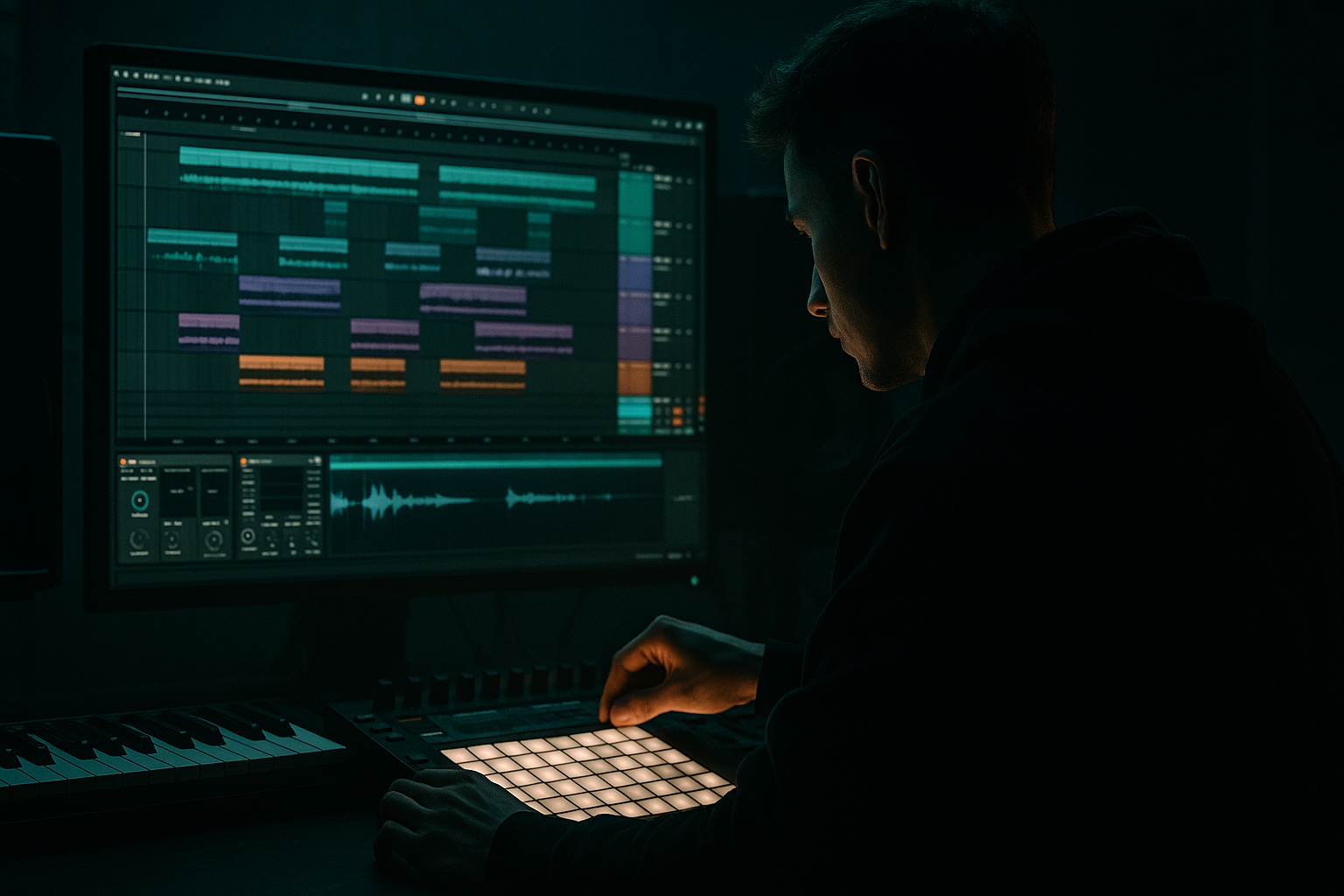
In this lesson, you’ll learn how to turn a vocal phrase into a bouncy, textured rhythmic layer that drives a DnB roller without stealing focus from the drums and bass. The goal is not to make the vocal “sing” like a pop hook — it’s to make it behave like a musical percussion element: chopped, bounced, ghosted, smeared, and re-phrased so it adds momentum, atmosphere, and identity.
This is especially useful in oldskool jungle-inspired rollers, timeless liquid rollers, and darker DnB arrangements where the vocal becomes part of the groove architecture. Think of it as a way to make a vocal sit between a hat pattern and a synth stab: it can answer the snare, push into the next bar, and create tension between sections.
Why this matters in DnB:
A good roller lives on forward motion. If the drums are solid but the arrangement feels flat, a vocal texture can add human swing, tension, and release without crowding the sub or reese. In Ableton Live 12, you can do this quickly with stock tools like Warp, Simpler, Sampler, Beat Repeat, Echo, Delay, Auto Filter, Redux, Saturator, and Drum Rack. The trick is to shape the vocal so it behaves like part of the rhythm section, not a separate element sitting on top.
What You Will Build
You’ll build a vocal texture layer made from a short phrase or single word, chopped into rhythmic hits, bounced into audio, and processed into a gritty, rolling DnB texture.
By the end, you’ll have:
- A 2- or 4-bar vocal motif that supports a roller groove
- A call-and-response pattern with the snare and bass
- A texture version for intro/build-up sections
- A heavier, distorted variation for drop energy
- Automation moves that make the vocal feel like it’s breathing with the track
- a whispered “run it”
- a chopped “listen”
- a pitched-up “come again”
- a smoky ad-lib phrase stretched and re-triggered on offbeats
- a hard attack: “run”, “come”, “step”, “feel”
- a trailing tail or breath
- enough room to chop into syncopated hits
- Complex Pro for full phrases
- Beats for percussive chopped vocals
- Tones if it’s a simple monophonic vocal tone
- Right-click the clip and choose Slice to New MIDI Track
- Slice by Transient or 1/8 Notes if the phrase is already rhythmic
- Choose Simpler as the instrument
- the consonant start
- the vowel body
- the breath/tail
- a cut-off or whispered end
- Put the main syllable on the offbeat
- Place a short tail just before the snare
- Use a chopped response after the snare to create a push-pull feel
- Route the vocal slice track to a new audio track set to Resampling
- Or Freeze and Flatten the slice track once the pattern is locked
- a tiny breath before the word
- a chopped vowel stretched slightly longer
- a clipped consonant that becomes a transient
- a tail that can be reversed into the next hit
- shorten some hits
- stretch one phrase across 2 beats
- reverse a tail into a snare
- place a one-shot vocal into the gap before a bass response
- Shift a vocal chop 5–20 ms late to feel laid-back and smoky
- Push a short vocal slightly early before a snare for urgency
- Use Groove Pool with a subtle swing groove around 52–58% if the track needs more human bounce
- Keep the vocal’s strongest syllable away from the kick transient unless you want a deliberate clash
- bar 1: sparse phrase
- bar 2: more dense call-and-response
- bar 4: a delayed or reversed response leading into the next section
- EQ Eight
- Saturator
- Redux
- Auto Filter
- Echo or Delay
- Reverb on a return track or lightly on the chain
- Optional Compressor for control
- EQ Eight: high-pass around 120–200 Hz to clear sub territory; cut harshness around 2.5–5 kHz if the vocal bites too hard
- Saturator: Drive 2–6 dB, Soft Clip on if needed
- Redux: downsample lightly for grit, try 12–16 bits and subtle downsampling
- Auto Filter: low-pass sweep between 1.5 kHz and 8 kHz for movement
- Echo: 1/8 or dotted 1/8, Feedback 15–35%, Filter engaged so the repeats stay dark
- kick
- snare
- sub
- bass midrange movement
- a vocal stab on the upbeat after the snare
- a tail that lands just before the next snare
- a chopped response right after a bass phrase ends
- Kick-snare groove
- Vocal hit after snare 2
- Bass fill in the gap
- Vocal answer before bar loop reset
- one dry and short
- one filtered
- one with more delay/reverb
- one pitched or reversed for transition moments
- Auto Filter cutoff opening over 4 or 8 bars
- Echo feedback increasing before a switch-up
- Reverb dry/wet rising in the last bar of a phrase
- Saturator drive pushed harder in the drop’s second phrase
- Utility gain for quick dynamic rides
- Intro: filtered vocal texture, wide reverb, no dry lead
- Drop 1: dry chopped vocal with subtle delay
- Drop 2: heavier distortion or octave variation
- Breakdown: stretched and washed-out vocal tail
- High-pass the vocal texture so it doesn’t cloud the sub
- Use Utility to narrow the stereo field if the vocal has too much wide reverb
- Check the mix in mono to make sure the vocal still reads
- If the vocal is masking the snare, notch a small dip around the snare’s presence area or reduce vocal brightness
- Keep the vocal texture around -12 to -18 dB below the main drums depending on arrangement role
- If the vocal is a featured texture, let it peak a little higher during transitions but pull it back in the drop body
- Using too much vocal length
- Letting the vocal fight the snare
- Over-widening the vocal
- Too much reverb washing out the groove
- Ignoring timing after chopping
- Forgetting the bass relationship
- Layer a dry vocal chop with a degraded duplicate using Redux + Saturator. Keep the clean layer for intelligibility and the dirty layer for attitude.
- Reverse a tail into the snare for a classic tension lift. This works especially well before a drop turn.
- Use a band-pass filter sweep on the vocal texture to make it feel haunted and cinematic without adding new notes.
- Create ghost vocal hits at very low volume behind the snare pattern. They add subconscious momentum and oldskool sample character.
- Duck the vocal slightly from the snare or bass with Compressor sidechain if the phrasing starts competing. Keep it subtle so the groove stays natural.
- Try ping-pong delay only on selected words, not the entire phrase. A single echoed syllable can create more depth than a constant delay wash.
- Resample the vocal after processing and then chop the resample again. That double-bounce approach often produces the gritty “sampled from a record” feeling that suits jungle and darker rollers.
- Filter automation works best when tied to arrangement landmarks: every 8 or 16 bars, not constantly. DnB needs motion, but it also needs confidence and repetition.
- Start with a vocal phrase that has strong rhythm and usable transients.
- Chop it into playable parts, then bounce it to audio for tighter control and character.
- Place the vocal in conversation with the snare and bass, not over them.
- Use Ableton stock tools like Simpler, Drum Rack, EQ Eight, Saturator, Redux, Auto Filter, Echo, and Utility to shape tone and movement.
- Keep the vocal mostly supportive, with automation and variation used to build tension across the arrangement.
- In DnB, the best vocal textures feel like part of the groove machine: bounced, gritty, and always moving forward.
Musically, this could be something like:
The result should feel like a sampled jungle vocal, but designed inside Ableton Live with modern control and arrangement intention.
Step-by-Step Walkthrough
1) Choose a vocal phrase that has rhythm, not just meaning
Start with a vocal that has clear consonants and a strong envelope. Short phrases work best: one to three words, or even a single syllable. In DnB, the most useful vocal textures usually have:
Drag the vocal into an audio track and set the Warp mode to:
If the vocal has a strong transient, try Beats mode with Transient Loop Mode off and Preserve set around 1/8 or 1/16 depending on the phrase length. This keeps the vocal punchy and easy to slice.
Why this works in DnB: drum and bass grooves rely on precise rhythmic tension. A vocal with sharp syllables can lock into the drum grid like a percussion hit, which helps the track feel intentional and dancefloor-ready.
2) Slice the vocal into playable chunks in Simpler or a Drum Rack
Once you’ve found the best phrase, consolidate or resample it to an audio clip and place it into a Sampler or, more commonly for this workflow, slice it into a Drum Rack.
In Ableton:
Now you can play the slices like drum hits. Map the most useful parts:
Set a short Release in Simpler, around 40–120 ms, so the slices don’t smear too much. If you want a tighter roller texture, keep Voices low and avoid long release tails.
Programming idea:
Try building a 1-bar loop where the vocal answers the groove rather than leading it. In DnB, that leaves space for the kick-snare engine to stay dominant.
3) Bounce the phrase into a new audio clip for control and character
This is the “bounce it” part. Once the chopped vocal pattern feels good, resample or freeze/flatten it to audio. This gives you more freedom to warp, process, and re-chop without getting distracted by the original source.
Two fast Ableton ways:
After bouncing, listen for the most musical moments. Often the best texture comes from:
Now you can warp the bounced audio with more intent:
This is where the texture starts feeling timeless and sampled rather than overly polished.
4) Shape the vocal into a rhythmic instrument with groove and micro-timing
Open the Clip View and focus on timing. In rollers and jungle, vocal placement is everything. You want the vocal to feel slightly behind or ahead depending on the energy.
Try these moves:
A great DnB vocal texture often works like this:
If your bass is syncopated, place the vocal on the empty spaces. If the bass is simple, the vocal can provide the syncopation.
Arrangement example:
In an 8-bar roller section, let the vocal appear only in bars 3–4 and 7–8, so the listener feels a phrase that “wakes up” just before the loop turns over. That creates momentum without cluttering the front of the drop.
5) Process the texture with stock Ableton devices for grit and space
Now make it feel like a DnB record, not a clean vocal edit. Build an effect chain on the vocal texture track:
Suggested chain:
Useful starting settings:
If you want oldskool jungle flavor, keep the vocal slightly lo-fi and filtered. If you want a more modern darker roller vibe, make the texture drier and use short delays rather than huge reverb.
A strong technique: send only the chopped vowels to a return with Reverb and keep the consonants dry. That preserves the groove while adding atmosphere.
6) Build call-and-response with the snare and bass
This is where the composition becomes believable. In DnB, vocals work best when they interact with the main rhythmic pillars:
Place the vocal so it responds to the snare rather than fighting it. Good placement options:
If your bassline uses a reese movement or a rolling midbass phrase, leave space in the same frequency and rhythmic pocket. Don’t let the vocal and bass speak at the exact same moment unless that’s the intended clash.
Try this simple pattern structure:
This creates a proper DnB conversation instead of a vocal overlay. If the vocal phrase is strong enough, you can even mute the bass for a half bar just before the vocal returns, which makes the drop feel larger when everything comes back in.
7) Add motion with automation, clip variations, and resampled layers
A roller becomes memorable when the vocal changes over time. Duplicate the clip and create 2–4 variations:
Use clip automation or track automation for:
You can also automate pitch in Simpler for tension. Even a small change of +3 to +7 semitones on a background layer can create a haunted, oldskool sample feel. Keep the main vocal in the original register if it needs clarity.
A useful arrangement move:
This gives the track narrative without needing a full sung hook.
8) Lock the vocal into the mix so it supports the low end
Vocals in DnB can easily fight the snare crack and upper bass if you overdo the processing. Keep the vocal focused with mixing discipline:
Two practical starting points:
For a darker roller, the vocal often works best when it feels like an embedded sample rather than a lead vocal. The listener should hear it as part of the whole machine.
Common Mistakes
Fix: cut it smaller. In DnB, short often hits harder. One clean syllable can do more than a full phrase.
Fix: move the vocal slightly off the snare transient or reduce the midrange around 2–5 kHz.
Fix: keep the main texture more mono-compatible and use width only on returns or background layers.
Fix: shorten decay, use pre-delay, or move reverb to a return so you can control sends per phrase.
Fix: zoom in and nudge slices. A few milliseconds can make the difference between sloppy and rolling.
Fix: if the vocal and bass both occupy the same rhythmic pocket, one of them should step back.
Pro Tips for Darker / Heavier DnB
Mini Practice Exercise
Spend 10–20 minutes building a vocal texture over a basic roller loop.
1. Pick a short vocal phrase or one syllable.
2. Slice it into a Drum Rack or Simpler.
3. Program a 1-bar pattern that answers the snare.
4. Bounce that pattern to audio.
5. Add EQ Eight, Saturator, and Auto Filter.
6. Duplicate the clip and make one version filtered, one dirty, one reversed.
7. Arrange the three versions across 8 bars:
- bars 1–2: filtered intro texture
- bars 3–4: dry chopped version
- bars 5–6: dirty version with more drive
- bars 7–8: reversed tail into loop restart
8. Check mono compatibility and adjust levels so the vocal supports the drums instead of leading them.
Goal: by the end, the vocal should feel like a rhythmic instrument in the roller, not an extra layer pasted on top.

