Main tutorial
Lesson Overview
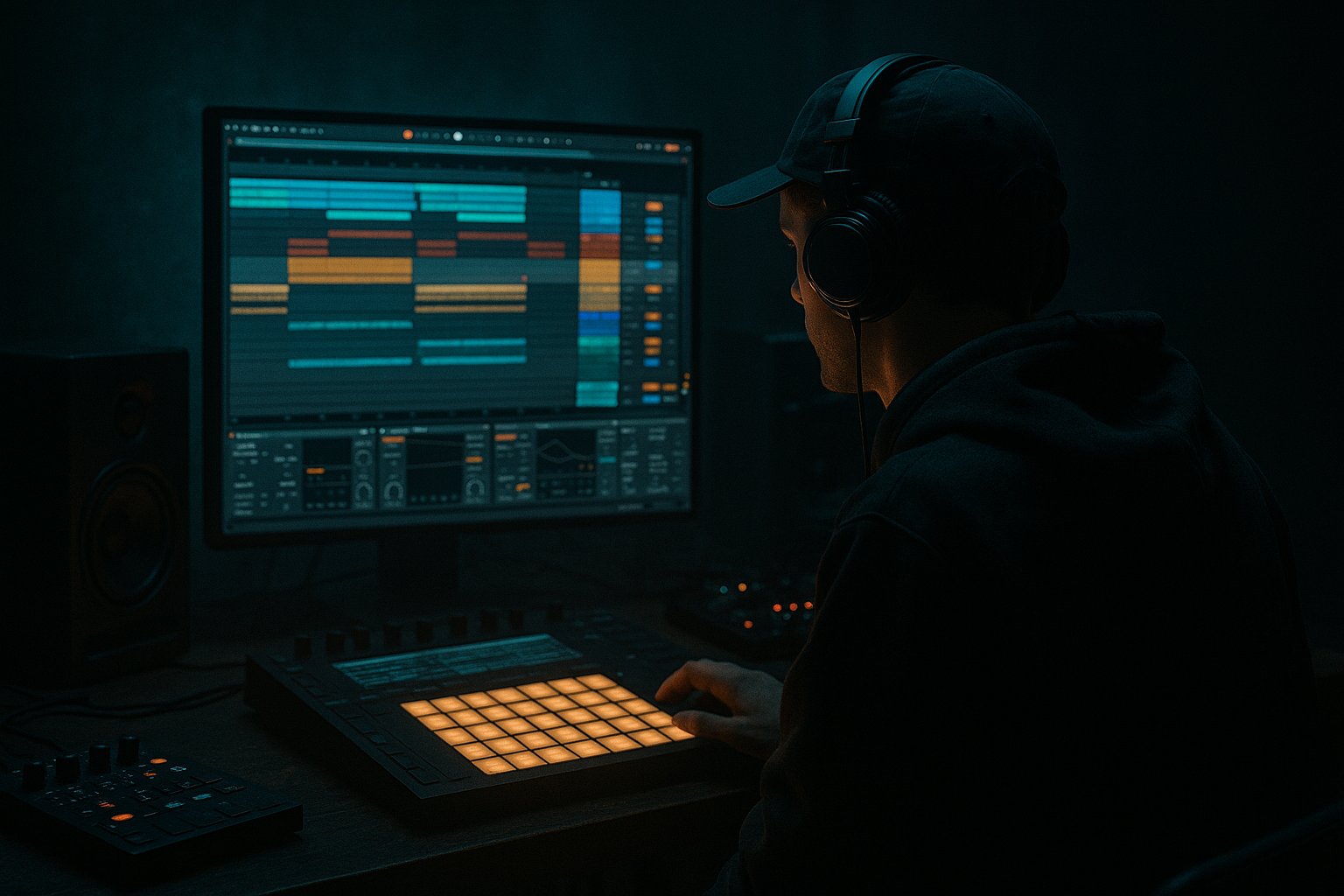
Warping a jungle drum bus with macro controls is one of the fastest ways to make your Drum & Bass drums feel alive, controlled, and arrangement-ready inside Ableton Live 12. Instead of treating your break or drum loop as a static audio clip, you’ll build a single drum bus with a few linked controls that can shape tone, impact, space, and movement in real time.
This matters a lot in DnB because drums are not just “keeping time” — they are part of the hook. In jungle, rollers, darker half-time sections, and neuro-inspired drops, the drum bus often needs to shift from tight and dry to wide, gritty, and explosive over the course of 8 or 16 bars. Macro controls let you do that fast, without opening ten devices every time.
In mastering terms, this lesson is about controlling your drum energy before the final limiter stage. A well-shaped drum bus gives you:
- more punch without over-compressing the whole mix
- better low-end separation from the sub
- more interesting movement in drops and switch-ups
- safer headroom for final mastering later
- a tight, clean, DJ-friendly drum groove
- a heavier, more saturated drop version
- a wider, more aggressive section for fills and switch-ups
- a slightly broken-up, movement-heavy texture for darker DnB intros or second drops
- drum brightness
- transient punch
- saturation amount
- reverb send/space
- filtering for tension
- glue/compression intensity
- stereo width management
- 170–174 BPM jungle and modern DnB loops
- 2-step roller drums with evolving bus movement
- halftime or switch-up sections in the breakdown
- 8-bar drop phrasing where the second 4 bars need more energy
- Making the drum bus too aggressive too early
- Widening the low end
- Overusing reverb on breaks
- Letting the snare lose its snap
- Automating too many parameters at once
- Ignoring mono checks
- Use saturation as tone, not just distortion
- Add subtle parallel-style energy with Drum Buss
- Use filter automation to fake arrangement movement
- Let the snare stay proud
- Keep the kick/sub relationship clean
- Use macro ranges generously but responsibly
- Design drop contrast
- Put your drums in a group track and shape them with an Audio Effect Rack
- Use macros to control grit, punch, space, tone, and width
- Keep the kick and snare strong, and don’t wreck the low end
- Automate macro moves across 4, 8, or 16 bars for real DnB arrangement energy
- Think like mastering: preserve headroom, check mono, and make every move serve clarity and impact
We’ll use stock Ableton devices only, and keep it beginner-friendly while still sounding like real DnB workflow. 🔥
What You Will Build
By the end, you’ll have a warpable jungle drum bus rack in Ableton Live 12 that can morph between:
The rack will use macro controls to change:
Musically, this is ideal for:
Step-by-Step Walkthrough
1. Start with a solid drum bus and a short loop
Build or load a simple 1-bar or 2-bar DnB drum loop. For beginner practice, use:
- kick on 1 and occasionally before the snare
- snare on 2 and 4
- ghost notes or break chops between hits
- a hat loop or ride pattern for motion
Put all drum elements into a Group Track called something like `DRUM BUS`. This is your mastering-friendly control point.
Good starting rule: keep the raw drum loop a little quieter than you think you need. Aim for plenty of headroom so the bus processing has room to work.
2. Open an Audio Effect Rack on the drum bus
On the `DRUM BUS` group track, drop in an Audio Effect Rack. This is the core of the lesson because it lets you assign macro knobs to several effects at once.
Inside the rack, build a basic drum-processing chain using stock Ableton devices:
- EQ Eight
- Drum Buss
- Saturator
- Compressor or Glue Compressor
- Auto Filter
- optional Hybrid Reverb or Reverb for space
Keep it simple. You are not trying to “master” the track here — you are building a controllable drum performance layer.
3. Shape the clean foundation first
Before mapping macros, set sensible defaults.
Suggested starting settings:
- EQ Eight: high-pass gently at 25–30 Hz to remove sub-rumble
- Drum Buss: Drive around 5–15%, Transients around +5 to +20, Boom low or off at first
- Saturator: Soft Clip on, Drive 2–5 dB
- Compressor/Glue Compressor: light glue only, 1–2 dB gain reduction on peaks
- Auto Filter: low-pass initially wide open, around 18–20 kHz, so it does nothing until automated
Why this works in DnB: the drum bus needs to stay powerful but not over-cooked. Jungle and roller drums depend on sharp transient contrast. If you crush the bus too hard too early, the break loses swing and the groove gets flat.
4. Create your first macro: “Tight ↔ Dirty”
Map the most useful controls to one macro that changes the drum mood.
Suggested macro assignments:
- Saturator Drive
- Drum Buss Drive
- EQ Eight high shelf or a gentle high boost cut
- Glue Compressor threshold
Suggested range idea:
- Macro at 0% = clean drum bus
- Macro at 50% = moderate grit
- Macro at 100% = heavier, more aggressive drop sound
Practical target ranges:
- Saturator Drive: 0 to +6 dB
- Drum Buss Drive: 0 to 20%
- Glue Compressor gain reduction: 0 to 3 dB
- High shelf or EQ tilt: subtle 1–3 dB change
This is excellent for DnB drop design because a single knob can move the drums from “intro-tight” to “first drop harder.” You can automate this across 4 or 8 bars for easy arrangement movement.
5. Build a “Punch ↔ Wash” macro for transient control
Add another macro that changes how forward the drums feel.
Map:
- Drum Buss Transients
- Compressor attack/release
- Auto Filter resonance slightly, if needed
- optionally a small EQ Eight boost around 2–5 kHz for crack
Suggested settings:
- Drum Buss Transients: -10 to +20
- Compressor attack: 1 ms to 10 ms
- Compressor release: 50 ms to 150 ms
Beginner tip: keep the compressor gentle. In DnB, the snare and break transients are part of the energy. You want to shape them, not erase them.
Why this works in DnB: jungle and darker rollers often need the snare to punch through dense bass and atmospheres. A macro that opens up transients helps the groove cut through when the sub and reese are busy.
6. Add a “Space” macro for tension and switch-ups
Now create a movement macro that introduces space only when you need it.
Map:
- Reverb Dry/Wet
- Reverb Decay Time
- Auto Filter cutoff
- optionally a small Ping Pong Delay on a send if you use one
Safe starting ranges:
- Reverb Dry/Wet: 0 to 12%
- Decay Time: 0.4 s to 1.4 s
- Auto Filter cutoff: 20 kHz down to 2–5 kHz
Use this sparingly. In DnB, space is most effective as a contrast tool:
- before a fill
- during a breakdown
- on the last hit before a drop
- on the second bar of a call-and-response phrase
Musical context example: in an 8-bar roller drop, keep the drum bus dry for bars 1–4, then open the Space macro slightly in bar 5 or 7 to make the incoming variation feel bigger without changing the actual drum pattern.
7. Create a “Width ↔ Mono” safety macro
Drums in DnB need to stay solid in the center, especially when the sub is heavy. This macro helps you widen the top end without wrecking club translation.
Map:
- Utility Width
- EQ Eight high band or mid-high shelf
- possibly a tiny Auto Pan amount for hats only, if used carefully
Suggested settings:
- Utility Width: 90% to 140%
- Keep bass-heavy elements out of the widened area
- Never widen the low end of the drum bus aggressively
Important mastering idea: when the track hits a limiter later, wide low-mid drum content can smear the kick/snare impact. Use this macro mainly for hats, break texture, and high percussion energy.
If your break sounds too wide, check in mono. The kick and snare should still feel strong and centered.
8. Map a “Tone” macro for dark-to-bright movement
This is useful for arrangement and mix polish.
Map:
- EQ Eight high shelf
- Auto Filter cutoff
- optionally a small dip or boost in the harsh zone around 3–6 kHz
Suggested tonal range:
- Darker section: low-pass down to 8–12 kHz
- Brighter section: open back up to 16–20 kHz
This is especially handy for:
- darker intro drums that feel tucked behind atmospheres
- riser-like lift into a drop
- moving from verse/roller energy into a more aggressive second drop
This gives you arrangement control without needing to redraw the entire drum pattern. A 1-bar automation ramp on the Tone macro can make a simple loop feel much more produced.
9. Automate the macros in a real DnB arrangement
Now place your rack into a song context. For beginners, focus on a simple arrangement shape:
- 16-bar intro
- 16-bar first drop
- 8-bar breakdown
- 16-bar second drop
Example use:
- Intro bars 1–8: Tight, clean, slightly filtered drums
- Intro bars 9–16: Open Tone macro gradually, add a little Space on the last 2 bars
- Drop 1 bars 1–8: Punch macro higher, Tight ↔ Dirty at medium level
- Drop 1 bars 9–16: increase grit and width slightly for variation
- Breakdown: reduce punch, close the filter, add reverb tail for transition
- Second drop: all macros move more aggressively, but keep the kick/snare centered
Good automation move: instead of jumping a macro instantly, draw small ramps over 1/2 bar to 2 bars. That feels more musical and less like an effect demo.
10. Check the drum bus in the mastering mindset
Even though this is not final mastering, you should think like you are preparing for it.
Check:
- peak level on the drum bus
- balance against the bassline and sub
- mono compatibility
- harshness around 3–8 kHz
- whether the bus is fighting the limiter later
Keep some safety room. If your drum bus is already slamming, the master chain will have less room to breathe. In DnB, a cleaner pre-master often sounds bigger than a hyper-compressed one.
If needed, reduce output from the Audio Effect Rack by a few dB so the bus stays controlled.
Common Mistakes
- Fix: reduce Drive, soften compressor gain reduction, and keep the clean macro position available.
- Fix: keep kick and snare centered. Use width only on higher drum detail.
- Fix: use very small wet amounts and automate it only for transitions. DnB needs clarity.
- Fix: lower compressor intensity, increase Drum Buss Transients slightly, or reduce saturation before the transient stage.
- Fix: start with 3–5 strong macro moves, not 12 tiny ones. Simpler macro design is easier to remember and reuse.
- Fix: switch to mono occasionally, especially if you are using width or stereo effects. Your drums must still hit hard in a club.
Pro Tips for Darker / Heavier DnB
- A little Saturator drive can make breaks feel denser and more “pressed” without obvious fuzz.
- Great starting point: 2–4 dB Drive with Soft Clip on.
- Keep the main chain relatively controlled, and let Drum Buss add character.
- Try Transients at +10 to +20 on heavier sections only.
- A low-pass closing from 20 kHz to 10 kHz over 4 bars can make the groove feel like it’s pulling into the drop.
- This is especially effective for jungle intros and darker rollers.
- In darker DnB, the snare often carries the attitude.
- If the bus gets muddy, cut a little low-mid around 250–500 Hz before you keep pushing saturation.
- Your drum bus should energize the track, not steal the sub’s job.
- If the kick feels masked, reduce low-mid buildup on the drum bus rather than simply turning everything up.
- A macro that moves only 5% is often too subtle for beginners.
- Aim for clearly audible differences between clean and heavy positions, but stop before it sounds broken.
- For underground DnB, the magic is often in contrast: dry intro drums, gritty drop drums, then a stripped-back breakdown.
- Macros make that contrast fast and repeatable.
Mini Practice Exercise
Spend 10–20 minutes making a reusable drum bus macro rack.
1. Load a 1-bar jungle or roller drum loop into a group track.
2. Add an Audio Effect Rack with:
- EQ Eight
- Drum Buss
- Saturator
- Glue Compressor
- Auto Filter
- optional Reverb
3. Create 4 macros:
- Tight ↔ Dirty
- Punch ↔ Wash
- Space
- Tone
4. Set each macro so it clearly changes the sound.
5. Write a simple 8-bar arrangement:
- bars 1–4 clean
- bars 5–8 more saturated and slightly wider
6. Automate at least 2 macros across the 8 bars.
7. Flip to mono and check whether the kick/snare still hit.
8. Export a short bounce and listen back at low volume. Ask: does the drum bus feel more alive than the original loop?
If you want a tougher version, repeat the exercise with a second drum bus for fills or break edits only.

