Main tutorial
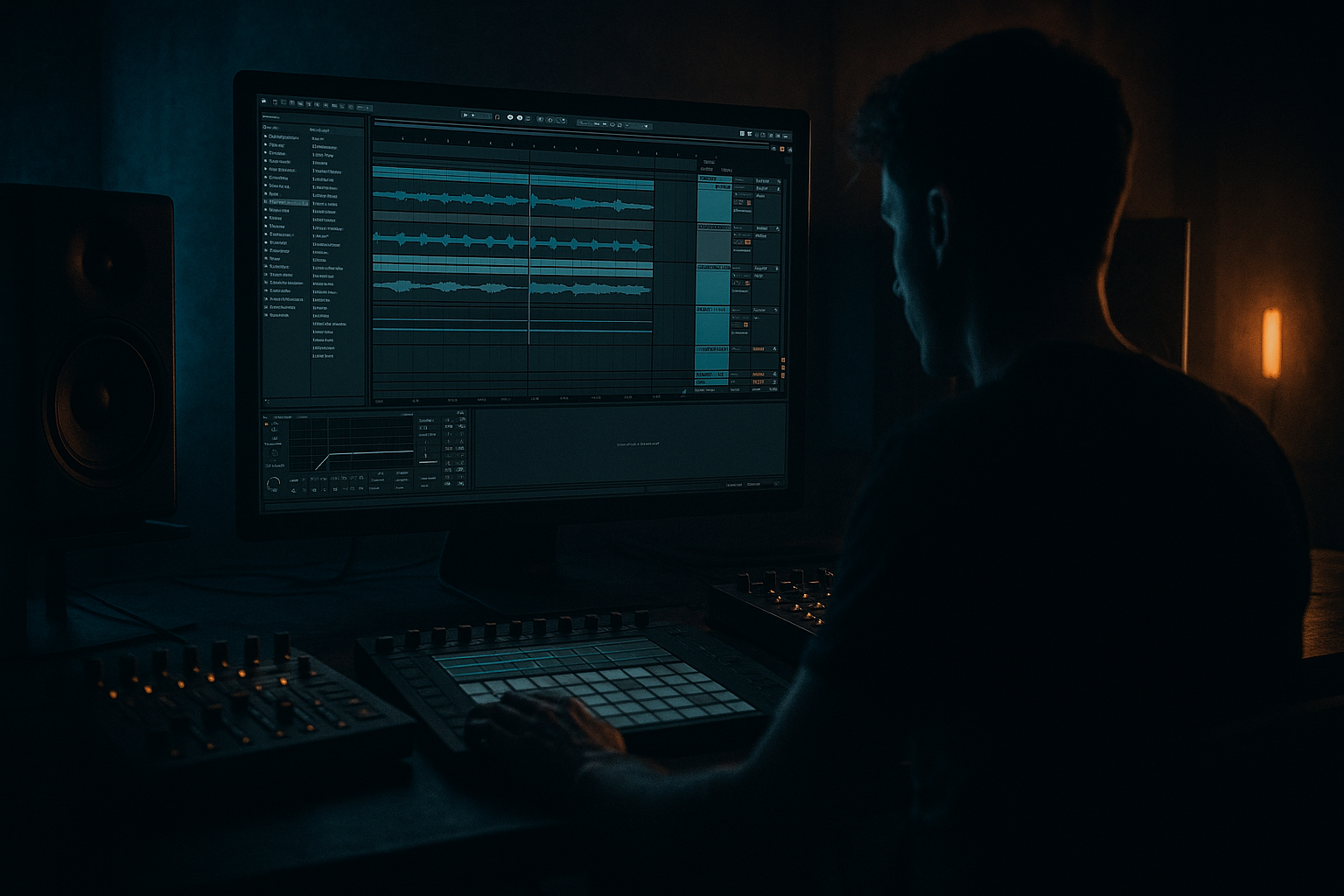
Warp Oldskool DnB DJ Intro from Scratch in Ableton Live 12
If you want to build a proper oldskool drum & bass / jungle DJ intro in Ableton Live 12, the goal is simple: make it mixable, musical, and instantly genre-readable. That means a clean, tension-building intro with the right breaks, stabs, atmospherics, and warping discipline so it behaves like a real record cue or a club-ready edit. 🎛️🔥
---
1. Lesson overview
In this lesson, you’ll learn how to build a DJ-friendly DnB intro from scratch in Ableton Live 12, using:
- Warping techniques for oldskool material
- Drum & bass intro arrangement logic
- Stock Ableton devices to clean, shape, and enhance your material
- A workflow that keeps the intro tight for mixing into a full DnB tune
- accurate warp point placement
- breakbeat timing correction without killing groove
- intro energy design
- making the intro feel like it came from a proper jungle/dnb record
- work as a DJ intro
- serve as a launchpad into the drop
- sound authentic in oldskool / rolling / darker DnB contexts
- Bars 1–4: atmosphere + filtered vinyl/break texture
- Bars 5–8: stripped breakbeat + distant stab
- Bars 9–12: more percussion + riser tension
- Bars 13–16: full intro groove, leaving space for the mix
- Bars 17–32: optional pre-drop extension with fills, FX, and bass teaser
- One classic break or break layer
- One subtle room/ambient layer
- One stab or chord hit
- One noise sweep / reverse FX
- Optional bass teaser or sub pulse
- DJ-style 8/16/32-bar phrasing for seamless transitions
- 170–174 BPM for modern DnB
- 165–168 BPM if you want a more jungle / oldskool feel
- 174 BPM is the safest club standard
- Leave it at 4/4
- Preferences > Record/Warp/Launch
- Set default warp mode to:
- Beats for break manipulation
- Complex Pro for pads or sampled chords
- Repitch for creative pitch/time feel on full samples
- oldskool break recordings
- isolated drum loops
- dusty chord stabs
- vinyl noise / room tone
- classic jungle FX phrases
- DRUMS
- MUSIC
- FX
- BASS
- zoom in on the first kick or snare transient
- set the 1.1.1 marker on the first meaningful downbeat, not on silence
- Use Beats
- Start with:
- keep small timing imperfections
- allow some push/pull between hits
- prioritize snare alignment over microscopic kick perfection if the break feels better that way
- Mode: Beats
- Preserve: 1/16
- Transient Envelope: 80–120
- Loop: Off unless you want a looped texture
- Gain: adjust clip gain before adding effects
- high-pass around 25–35 Hz
- reduce mud around 200–400 Hz if needed
- tame harshness around 7–10 kHz if the cymbals are spiky
- Attack: 3 ms or 10 ms
- Release: Auto or 0.3–0.6 s
- Ratio: 2:1
- aim for 1–3 dB of gain reduction
- Drive: low to moderate
- Crunch: subtle
- Boom: use carefully; tune it to the track key if you want extra sub movement
- Transients: slightly positive if you need more snap
- add a small amount of drive
- keep Soft Clip on
- use a subtle curve
- reduce width if the break is too wide
- mono the low end if needed
- adjust overall gain before the next processing stage
- vinyl crackle
- rain/room tone
- reverb tail from a chord
- field recording texture
- filtered pad
- reversed cymbal wash
- start with high-pass
- sweep from 200 Hz down to 40–60 Hz over the intro
- use a gentle slope to avoid obvious filtering artifacts
- Feedback: low to moderate
- Dry/Wet: 10–25%
- Filter: roll off lows and some highs
- Ping Pong: on if you want width without crowding the center
- use a small room or plate
- keep pre-delay moderate
- don’t wash out the transients
- short minor chord stab
- detuned piano hit
- rave stab
- filtered orchestral hit
- chopped vocal one-shot
- one hit every 2 or 4 bars early on
- increase frequency leading into the drop
- leave holes for the DJ to mix
- 8 bars minimum
- 16 bars more useful
- 32 bars if you want a proper blend-in intro
- Bars 1–8: stripped drums + atmosphere
- Bars 9–16: add a break layer or ghost percussion
- Bars 17–24: add stabs and FX
- Bars 25–32: hint at bass or fill before drop
- space in the low end
- space in the midrange
- a predictable 4/8/16-bar structure
- Auto Filter cutoff
- Reverb dry/wet
- Echo feedback
- Utility width
- Volume fades
- Drum Buss drive
- Bars 1–4: filtered break, heavy atmosphere
- Bars 5–8: slightly open filter, a bit more transient
- Bars 9–12: widen the FX, add delay throws
- Bars 13–16: open the filter more, tease the drop energy
- narrow early intro
- gradually widen before the drop
- this creates a satisfying spatial expansion
- single sub note
- offbeat bass pulse
- filtered Reese fragment
- low FM wobble ghost
- keep the bass teaser minimal
- low-pass it early
- open it only in the last 4–8 bars
- vinyl noise / room tone
- filtered break ghosting in
- no full bass
- break fully enters
- one stab on bar 7 or 8
- subtle reverb tail
- extra percussion layer
- reverse cymbal or rewind FX
- filter opens slightly
- fuller groove
- bass teaser or impact
- prepare transition into main section
- repeat the first 8 bars with slight variation
- introduce a new break layer in bars 9–16
- add a tension builder in bars 17–24
- reserve a pre-drop cue in bars 25–32
- filter cutoff
- volume swells
- transposition
- delay send levels
- use take lanes to audition multiple versions
- comp the best intro fills quickly
- use Follow Actions on break loops or FX clips
- great for generating evolving intro texture before committing to Arrangement View
- Freeze/Flatten if needed for CPU
- consolidate clips once the timing is locked
- overlimit the intro
- squash the transients
- hide timing issues with heavy compression
- Saturator
- Drum Buss
- EQ Eight
- Wavetable
- Chorus-Ensemble
- Auto Filter
- Saturator
- Compressor sidechain
- low rumble risers
- metallic hits
- reversed impacts
- distant sub drops
- short mechanical delays
- band-passed atmospheres
- distorted drum ghosts
- tuned percussion
- negative space around the snare
- cleaner arrangement
- stronger contrast
- more intentional density
- 1 breakbeat loop
- 1 atmosphere
- 1 stab
- 1 FX sweep
- 1 bass teaser
- Warp the break manually
- Use only stock Ableton devices
- Keep the first 8 bars bass-free
- Make the final 4 bars feel like a cue into a drop
- [ ] break is warped tightly but not robotic
- [ ] intro has clear 4/8/16-bar phrasing
- [ ] atmosphere supports the groove without washing it out
- [ ] stab appears sparingly
- [ ] last section creates anticipation
- [ ] mix feels DJ-friendly
- set the project around 170–174 BPM
- warp breaks carefully with Beats mode
- preserve groove by avoiding over-correction
- use EQ Eight, Glue Compressor, Drum Buss, Saturator, Utility, Auto Filter, Echo, and Hybrid Reverb
- build the intro around 8/16/32-bar DJ phrasing
- automate filters, width, and FX for movement
- keep the low end controlled and the arrangement mix-friendly
This is aimed at advanced producers, so we’ll skip beginner explanations and focus on:
You’ll end up with an intro that can:
---
2. What you will build
You’ll create a 16-bar to 32-bar DnB intro with this structure:
Example structure
Sonic ingredients
The aim is not to overproduce it. A real DnB intro should feel functional first, and musical second.
---
3. Step-by-step walkthrough
Step 1: Set up your project for DnB workflow
Global tempo
Set the project tempo to:
Time signature
Warp preferences
Before loading audio, go to:
- Beats for drums/breaks
- Complex Pro for full musical loops or atmospheres
- Repitch if you want authentic oldschool tape-speed-style movement
For an oldskool intro, you’ll often use multiple warp modes in one project:
---
Step 2: Import your source material
Start with 3–5 audio clips:
1. A breakbeat loop
2. An atmospheric sample or noise bed
3. A stab/chord hit
4. Optional vocal chop, rewind FX, or impact
5. Optional bass hit or sub teaser
Good source types for this style
Pro workflow tip
Create groups right away:
This keeps your intro building process fast and clean.
---
Step 3: Warp the break properly
This is the heart of the lesson. If the break is wrong, everything feels amateur. If it’s tight, the whole intro works.
A. Find the first true transient
Open the break clip in Clip View and:
B. Choose the right warp mode
For a classic break:
- Preserve: 1/16 or 1/8
- Transient Loop Mode: Off
- Clip Loop: On only if needed
C. Correct the warp markers
Oldskool breaks often drift. Don’t over-grid them instantly.
Workflow:
1. Identify the first solid downbeat
2. Place a warp marker there
3. Move to the next strong transient around bar 2
4. Align only the important hits:
- kick
- snare
- major ghost note groupings
D. Keep the groove alive
If you warp every transient dead-on, the break will sound robotic.
Instead:
Suggested Beat warp settings for breaks
---
Step 4: Clean the break with stock Ableton devices
Place the break on its own audio track and build a simple device chain.
Recommended break chain
1. EQ Eight
2. Glue Compressor
3. Drum Buss
4. Optional Saturator
5. Optional Utility
EQ Eight
Use it to:
For oldskool vibes, don’t over-polish it. You want grit, not clinical cleanliness.
Glue Compressor
Suggested starting point:
This helps the break feel cohesive without crushing the transient shape.
Drum Buss
This is very useful for jungle/dnb intro weight:
Saturator
If the break feels too clean:
Utility
Use Utility to:
---
Step 5: Build the atmospheric bed
Oldskool DnB intros often work because of the space around the drums. The atmosphere is just as important as the break.
Good atmospheric elements
Suggested chain for atmospheres
1. Auto Filter
2. Echo
3. Hybrid Reverb
4. EQ Eight
Auto Filter settings
Echo
Use it to create depth:
Hybrid Reverb
For jungle atmospheres:
---
Step 6: Add stabs or chord hits for oldskool identity
This is where the intro starts to feel like a record, not just a drum loop.
Options
Processing chain for stabs
1. Auto Filter
2. Chorus-Ensemble or Phaser-Flanger
3. Reverb
4. EQ Eight
5. Optional Redux for grit
Arrangement advice
Drop the stabs sparingly:
Pro oldskool move
Bounce your stab to audio and warp it in Repitch if you want a more authentic sample-era feel. Small pitch changes can create that classic tension you hear in early jungle and rave-inflected DnB.
---
Step 7: Create the DJ intro phrasing
A DJ intro needs space for mixing. Think like a selector, not just a producer.
Ideal intro phrasing
A strong DJ intro formula
Mix-friendly rule
The intro should leave:
This allows a DJ to bring in the next tune cleanly.
---
Step 8: Use automation to create movement
Without automation, the intro will feel flat.
Best automation targets
Example automation curve
Useful tactic
Automate Utility Width:
---
Step 9: Add a bass teaser without giving away the drop
In DnB, you don’t always want the full bassline in the intro. But a hint of bass can be powerful.
Bass teaser options
Simple bass chain
1. Operator or Wavetable
2. Saturator
3. EQ Eight
4. Utility
5. Optional Compressor sidechained to the kick
Settings idea
Sidechain tip
Use Compressor with sidechain from the kick if the bass teaser competes with the drum intro. Keep the intro breathing.
---
Step 10: Arrange like an actual DnB tune
Here’s a practical arrangement blueprint:
16-bar intro example
Bars 1–4
Bars 5–8
Bars 9–12
Bars 13–16
32-bar intro example
Use the same logic, but:
---
Step 11: Use Live 12 tools to speed up the workflow
Clip envelopes
Use clip envelopes to control:
Comping and lane workflow
If you record your own intro FX or drum edits:
Follow Actions
If you’re building variations in Session View:
Converting to simpler audio
Once your warp and arrangement are set:
---
Step 12: Final polish on the master bus
Keep master processing very light while producing.
Safe mastering-style chain for sketching
1. EQ Eight
2. Glue Compressor
3. Optional Limiter for protection only
Do not
DnB intros need punch and space. If the intro sounds exciting at moderate level, it’ll usually translate well in a club mix.
---
4. Common mistakes
1. Over-warping the break
If every hit is locked to the grid, the groove dies.
Fix: warp only key transients and preserve human swing.
2. Too much low end too early
A DJ intro should leave room for the next track’s bass.
Fix: high-pass atmosphere, keep sub minimal until later.
3. Too much reverb
Huge reverb can blur the break and destroy the mix point.
Fix: use short plates/rooms and automate tastefully.
4. No phrase structure
Random FX everywhere makes the intro unusable for DJs.
Fix: build in 4/8/16-bar logic.
5. Cleaning the break too much
Oldskool DnB often lives in the grit.
Fix: preserve some dust, crunch, and transient edge.
6. Poor stereo discipline
Wide low end or overly wide drums can cause club translation problems.
Fix: mono the low end with Utility and keep the kick/sub centered.
---
5. Pro tips for darker/heavier DnB
If you want this intro to lean darker and heavier, here’s how to push it. 🖤
A. Use parallel drum distortion
Create a Return track with:
Send the break to it lightly for extra aggression without destroying the main drum signal.
B. Add a filtered Reese hint
Even in the intro, a tiny Reese fragment can imply the drop.
Chain idea:
Keep it muted early, then reveal it in the final 4–8 bars.
C. Use dark space FX
Good darker intro elements:
D. Emphasize midrange tension
Dark DnB lives in the 200 Hz–2 kHz area more than people think.
Use:
E. Let the break breathe
A heavier intro does not mean more layers. It often means:
---
6. Mini practice exercise
Try this in one session:
Task
Build a 16-bar oldskool DnB DJ intro using only:
Rules
Checklist
Bonus challenge
Render the intro and test it against another DnB track in your playlist. If the transition feels natural, your phrasing is working.
---
7. Recap
To warp and build an oldskool DnB DJ intro from scratch in Ableton Live 12:
The key mindset is this:
a great DnB intro is functional first, atmospheric second, and flashy last.
Get the warp right, keep the energy disciplined, and you’ll have an intro that feels ready for a proper jungle or rolling DnB set. 🚀
If you want, I can also turn this into:
1. a Live 12 session template,
2. a track-by-track device chain diagram, or
3. a 32-bar intro arrangement blueprint you can directly copy into your project.

