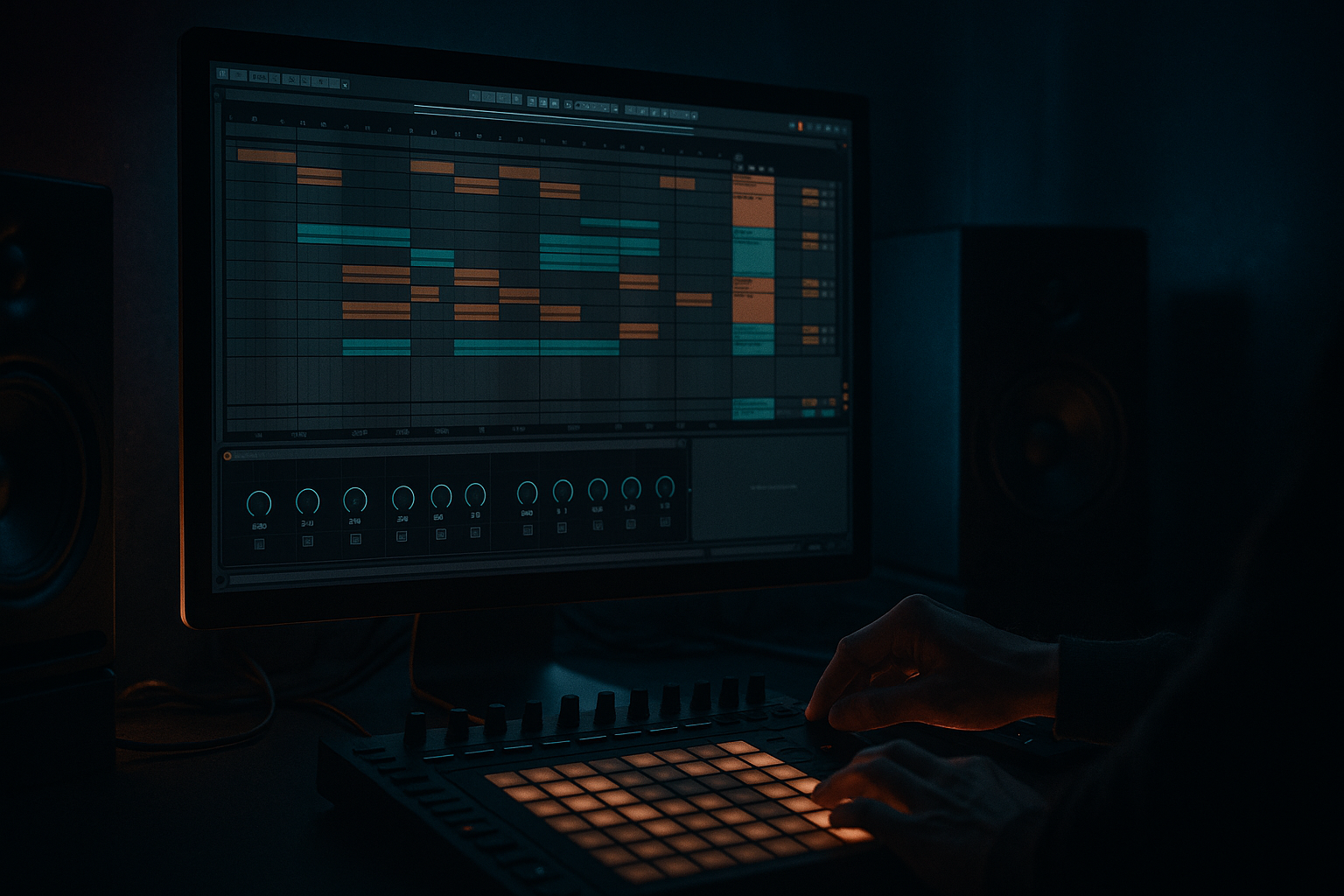
Main tutorial
Widen an Amen-style Top Loop Using Groove Pool Tricks in Ableton Live 12
1. Lesson overview
If you want your Amen top loop to feel wider, more alive, and more “finished” in a drum and bass / jungle mix, the Groove Pool in Ableton Live 12 is a seriously underrated tool. Instead of just straight-up stereo widening with chorus or reverb, we’re going to use timing, velocity, and feel to create width that sounds more musical and less fake.
This lesson is about making a top loop feel wider by:
- adding micro-timing contrast
- using groove-based variation
- creating left/right movement with layered loop processing
- keeping the core punch mono-compatible
- making the loop sit properly over your sub and bassline 🎛️
- fast
- aggressive
- clear
- wide enough to feel exciting
- but still tight in the center
- a classic Amen-style top loop
- a Groove Pool setup that adds swing and human variation
- a stereo-widened top layer that still hits clean in mono
- a simple drum rack / audio chain for shaping the loop
- an arrangement-ready loop that can evolve across a drop, intro, or switch-up
- rollers
- darkstep
- jungle edits
- half-time switch sections
- DJ intro/outro tools for transitions
- hats
- ghost snare bits
- ride or cymbal hits
- shuffles and offbeat detail
- Audio clip containing just the top break layer
- Warp mode: Beats
- Preserve transients: transients on important hits
- Loop length: 1–2 bars
- High-pass around 180–300 Hz
- If the loop is harsh, dip a little around 3–6 kHz
- If it needs air, add a gentle high shelf at 9–12 kHz
- MPC 16 Swing
- MPC 16-57
- Logic Swing-style groove if you want a looser pocket
- Or extract groove from a classic break if you want authentic drum feel
- Timing: 10–25%
- Random: 0–8%
- Velocity: 10–20%
- Base: leave as original at first
- hats slightly breathe
- ghost hits feel less robotic
- repeated patterns feel more “performed”
- the loop may seem wider because timing variation spreads transients in the stereo field once processed
- reduce timing amount
- reduce velocity amount
- use a tighter groove
- or apply groove only to selected clips, not everything
- top loops
- percussion layers
- shaker layers
- ghost-note break layers
- a center/anchor layer
- a wider/more animated layer
- EQ Eight high-passing around 200 Hz
- very light compression if needed
- minimal stereo processing
- Groove amount: 20–40%
- Keep timing tighter
- Less randomization
- Groove amount: 40–70%
- Slightly more velocity variation
- Potentially more random timing if the loop can handle it
- One layer stays in the pocket
- The other shifts just enough to create separation
- The listener hears motion instead of a flat mono break
- Delay time: very short, around 1/16 to 1/32
- Feedback: 0–10%
- Dry/Wet: 5–12%
- Filter the repeats heavily so they don’t clutter the groove
- Left/Right offset: tiny difference
- Feedback: low
- Dry/Wet: low
- Width: 120–150%
- If the break gets too loose, bring it back to 110–120%
- Keep the low end mono
- If needed, use Utility before any final bus processing to reduce width on bass-heavy elements
- sub bass = mono
- kick = mostly center
- snare = center with possible room/stereo tail
- top loop = where the width lives
- Drive: subtle
- Crunch: low
- Damp: adjust to keep hats smooth
- Boom: usually off for a top loop
- Drive: 1–4 dB
- Soft Clip: on if needed
- Use it gently to bring out the break texture
- Very subtle bit reduction
- Downsample lightly
- Blend in parallel if needed
- increase groove amount in the build-up
- reduce width in the drop impact so the snare feels focused
- bring the wide top loop in gradually during the second 8 bars
- automate Utility Width from 100% to 140% over 4–8 bars
- mute the wide layer for the first 1–2 bars of a drop, then bring it in for lift
- Bars 1–4: anchor layer only
- Bars 5–8: bring in widened layer quietly
- Bars 9–16: full loop width, with groove variation
- Switch-up: filter the loop, then reintroduce it wider for impact
- temporarily set Width to 0%
- listen for:
- reduce chorus depth
- reduce width
- reduce random timing
- make the anchor layer louder relative to the widened layer
- use Chorus-Ensemble very subtly
- use Auto Pan slow and low depth
- filter the widened layer with Auto Filter to keep it dark
- Saturator
- Drum Buss
- Roar if you want modern edge and harmonic movement
- bass drops out for a beat
- top loop blooms wider
- bass re-enters with a snare hit
- duplicate the top loop again
- band-pass or high-pass it
- crush it with Redux, Saturator, or Overdrive
- pan it subtly or make it wider
- blend it very low
- keep it dry
- keep it centered
- apply Groove Pool timing at 15–20%
- add Chorus-Ensemble
- add Utility width at 130%
- add slightly more groove, around 40–50%
- optionally add Simple Delay at very low mix
- Track 1 only
- Track 2 only
- both together
- off for first 2 bars
- fade in over bars 3–4
- full in bars 5–8
- Use Groove Pool for feel
- Split the loop into an anchor layer and a widened layer
- Keep the center tight and mono-friendly
- Add width mostly to high-frequency percussion
- Use subtle modulation, not obvious stereo gimmicks
- Automate the width for arrangement movement 🎧
- a follow-up tutorial for widening the full Amen break without losing punch
- a preset-style Ableton device chain for dark DnB tops
- or a step-by-step jungle top loop resampling workflow in Live 12
This is especially useful in DnB because your drums need to sound:
We’re not trying to smear the break. We’re trying to make it feel like it’s opening up around the listener.
---
2. What you will build
By the end of this tutorial, you’ll build:
This works great for:
---
3. Step-by-step walkthrough
Step 1: Load or prepare your Amen-style top loop
Start with a clean Amen top loop or a chopped break layer that contains:
You want a loop that already has movement in the top end. If your loop is too full-range, high-pass it first so we’re only enhancing the upper rhythmic texture.
Suggested starting point:
#### Quick cleanup
Put an EQ Eight on the loop:
Keep the low mids out of the way so the loop sits above your kick, snare, and bass.
---
Step 2: Open the Groove Pool
In Ableton Live 12:
1. Go to Groove Pool from the browser or the clip view groove area.
2. Drag in a groove from the library.
For drum and bass, start with something subtle:
#### Good starting groove settings
Once the groove is loaded, try:
For a top loop, you usually do not want huge timing values. The goal is a barely behind / slightly leaning / human groove, not a messy loop.
---
Step 3: Apply the groove to the top loop
Now drag the groove from the Groove Pool onto your loop clip.
Listen for these changes:
If the loop becomes too lazy or loses impact:
#### Important DnB rule
Your kick and main snare should usually stay tight and stable.
Use groove mostly on:
This keeps the track driving hard while giving the top layer width and motion.
---
Step 4: Split the top loop into two layers for width
This is the core trick. We’ll build width by separating the loop into:
#### Option A: Simple duplicate method
1. Duplicate the top loop track.
2. Leave Track 1 fairly dry and centered.
3. On Track 2, make it wider and slightly more varied.
#### Track 1: Anchor layer
Use:
Keep this layer stable so the groove still reads clearly in mono.
#### Track 2: Widened layer
On the duplicate, use a wider processing chain like this:
Device chain example:
1. EQ Eight
- High-pass at 250–400 Hz
- Slight dip if harsh around 4–6 kHz
2. Drum Buss
- Drive: subtle, around 5–15%
- Crunch: minimal or off
- Damp the top if it gets fizzy
3. Chorus-Ensemble
- Use a subtle mode
- Amount low
- Dry/Wet around 5–20%
4. Utility
- Width: 120–160% depending on mono safety
5. Optional: Auto Pan
- Phase: 180°
- Amount: very low
- Rate: sync to 1/8 or 1/16
- This creates gentle motion, not obvious wobble
This layer should feel like the top loop is blooming around the center rather than just being “stereo widened.”
---
Step 5: Use groove differently on each layer
Here’s where the Groove Pool trick gets more interesting.
Apply the same groove to both layers, but adjust the clip settings differently:
#### Anchor layer
#### Widened layer
That difference creates phase-like perceived width without relying purely on artificial stereo tricks.
Why it works:
---
Step 6: Add micro delay for width, not echo
If you want even more spread, add Echo or Delay very lightly on the widened layer only.
#### Safe settings
Using Echo:
Or use Simple Delay:
This is not about creating an audible delay effect. It’s about widening the transient field.
---
Step 7: Shape the stereo image with Utility
Use Utility carefully.
#### On the widened layer:
#### On the master drum bus:
For a clean DnB mix:
That’s the classic arrangement logic.
---
Step 8: Add transient contrast with Drum Buss or Saturator
Width feels more exciting when the loop has contrast in the transient and tail.
Try one of these:
#### Option A: Drum Buss
This can make the loop feel thicker without losing attack.
#### Option B: Saturator
#### Option C: Redux for gritty jungle texture
Great for darker jungle-style top loops, but don’t overdo it unless you want a rougher rave feel.
---
Step 9: Automate groove and width across the arrangement
Don’t leave it static. In DnB, arrangement movement matters.
Try these automation ideas:
#### Great arrangement pattern
This creates the feeling of a track opening up, which works very well in jungle and rolling DnB.
---
Step 10: Check mono compatibility
Always check mono.
Use Utility on the master or drum bus:
- disappearing hats
- thinness
- phase cancellation
- snare weakening
If the loop collapses badly:
A good widened top loop still sounds solid in mono. It just feels more spacious in stereo.
---
4. Common mistakes
1. Over-widening the loop
If you push width too far, the loop sounds disconnected from the track.
Fix:
Back off Utility width, chorus depth, and delay mix.
---
2. Applying too much groove
A top loop that’s too loose loses the DnB drive.
Fix:
Use smaller groove values and keep kicks/snares tighter than the top loop.
---
3. Widening the wrong frequency range
If you stereo-widen low mids, the mix gets muddy fast.
Fix:
High-pass the loop before stereo processing. Keep width mainly above 200–400 Hz.
---
4. Making every layer wide
If everything is wide, nothing feels wide.
Fix:
Keep the core anchor centered. Let only selected top details move outward.
---
5. Ignoring mono
A wide loop that disappears in mono will cause problems on club systems and DJ rigs.
Fix:
Always mono-check before exporting.
---
6. Too much reverb instead of width
Reverb can blur the break and mask the snare.
Fix:
Use short delays, groove contrast, and subtle modulation before reaching for big reverb.
---
5. Pro tips for darker/heavier DnB
Tip 1: Use darker stereo motion, not shiny widening
For neuro, darkstep, or heavier rollers:
This helps the loop feel huge without becoming glossy.
---
Tip 2: Distort the wide layer, not the center
Push aggression on the stereo layer only:
Keep the center layer cleaner so the break still punches through.
---
Tip 3: Pair width with bass call-and-response
Let the widened Amen top loop answer the bassline:
That classic DnB push-pull makes the arrangement feel alive.
---
Tip 4: Use ghost-note emphasis
If your loop has ghost snares or little hat flicks, make those slightly more prominent with velocity and groove. Those tiny details are what make the top loop feel like it’s moving around the room.
---
Tip 5: Add a parallel “trash” layer
For darker jungle texture:
This creates grit and width without taking over the main loop.
---
6. Mini practice exercise
Exercise: Build a wide Amen top loop in 10 minutes
#### Step 1
Load a 1-bar Amen top loop.
#### Step 2
High-pass it with EQ Eight around 250 Hz.
#### Step 3
Duplicate the track.
#### Step 4
On Track 1:
#### Step 5
On Track 2:
#### Step 6
Bounce or loop 8 bars and compare:
#### Step 7
Check mono by setting Utility width to 0% on the master briefly.
#### Step 8
Automate Track 2 in the arrangement:
Goal: make the loop feel wider without losing its jungle urgency.
---
7. Recap
To widen an Amen-style top loop in Ableton Live 12 using Groove Pool tricks, remember the core idea:
In DnB, the best width usually comes from rhythmic contrast and layering, not from simply turning a knob all the way up. If you treat the Amen top loop like a performance element instead of a static audio file, it will sit better, feel bigger, and make your drops hit harder.
If you want, I can also write:

